Share |

Tuesday, 25 January 2011

In bid to repair race relations, a map

Azman is rushing to set up the system before he retires in May. — Pictures by Jack Ooi

PUTRAJAYA, Jan 25 — A soon-to-be-completed electronic mapping (e-mapping) system will make it easier to spot, monitor and manage the recent rapid rise in race conflict hotspots nationwide.

According to National Unity and Integration Department (NUID) director-general Datuk Azman Amin Hassan, his outfit has already identified four such areas so far, most of which are concentrated in Selangor. They are Kampung Medan in Petaling Jaya; Kampung Sungai Terentak in Hulu Selangor, near Rawang; Bukit Botak, Selayang Baru; and Kampung Pokok Asam in Jelutong, Penang.

Race relations in multicultural Malaysia have been steadily declining in recent years and reached an all-time low in January last year when some 10 houses of worship were attacked following a controversial court ruling allowing Catholics the right to also use the word “Allah” beyond the Muslim context

Race and religion are tightly linked in this country of 28 million people, where some 60 per cent are Malay and Muslim.

The attacks, together with increased reports of racially-tinged remarks by high-ranking civil servants, have dented the global country’s image as a tolerant nation.

The ruling Barisan Nasional (BN) government has been scrambling to reverse the damage that its political rivals say have caused investors to shy away.

Once completed, the 12-layer e-mapping system developed by the NUID with the expert help of University Utara Malaysia (UUM) will show the geographical, social and political lay of the land at a glance in an easy-to-read colour code.

“I call it the traffic light system,” Azman told The Malaysian Insider in an exclusive interview this week.

Conflict-free zones will show up green, he said.

Less dangerous tension spots to be marked in yellow will warn the authorities to get ready; and dangerous racial hotspots will show up red on the digital map, he said.

“We want to be proactive,” said the 57-year-old who had mooted the idea five years ago, and roped in help from the Inspector-General of Police who had agreed to send one of his men from Bukit Aman to help set it up.

Azman said the map’s purpose was to enable enforcement authorities, including trained mediators, to move into the conflict areas and diffuse the situation quickly and efficiently.

An initial group of 300 people comprising NUID officers and Rukun Tetangga volunteers were trained last year.

Another 300 people, which will include community leaders, will undergo mediation training this year.

“How to feel the pulse of the nation? This is how we do it,” he said, his voice swelling with satisfaction at the accomplishment.

“My dream is to have a team [of mediators] in each state,” said the civil servant who will be retiring in May.

A “hotspot” is an area where domestic or community disputes have spiralled out of control and turned racial, Azman explained.

It is marked red if more than five fights have broken out in a month, he added.

No area has yet been designated red. The four hotspots identified earlier were also not classified as such.

According to Azman, Kampung Medan — where an inter-racial clash between Malays and ethnic Indians were reported to have caused six deaths in 2001 — still ranks as the No. 1 hotspot in the country.

He described the Petaling Jaya slum as a hotbed of racial tension, and said that three fights had broken out between Malay and Indian groups there last October.

Azman noted that temperatures in Kampung Sungai Teratak had risen when the majority Chinese residents, worried for their safety and health, opposed Tenaga Nasional Berhad (TNB) over the national power utility company’s plan to build high-tension power cables through their village.

The other two conflicts started out as land disputes, he said.

In Bukit Botak, a decades-long dispute came to a head in 2009 when the villagers cried foul over the state’s takeover of their land, claiming the titles had been given to outsiders instead of settlers.

In Kampung Pokok Asam in Jelutong, the Malay-majority residents had complained of racial bias by the Pakatan Rakyat-ruled state in a redevelopment project.

Azman added that the e-map’s use was not limited to efficiently combat conflict and foster unity but could be used for election work.

However, the system now could only show the situation on the ground in each state separately.

Once fully integrated, the system will be able to display what current issues are on the ground nationwide at a glance.

Asked if the e-mapping could be accessed publicly, Azman signalled that it was unlikely as the information was “sensitive”.

“If we mention the places, the property prices will drop because no one wants to live in a conflict zone,” he said, giving an example to illustrate what he meant by “sensitive”.

Activist and dentist latest MLCM candidates


KUALA LUMPUR: The Malaysian Civil Liberties Movement (MCLM) has named former Awam president Haslinah Yacob and dentist Dr Nedunchelian Vengu as its third and fourth candidates for the next general election.

Hajjah, 49, has been involved in grassroots and advocacy work on women’s rights and empowerment for the past decade. She is also MCLM’s first woman candidate.

“I’ve been doing social work for a long while now and it’s only the tip of the iceberg,” she said during a press conference today. “I no longer want to stay on the sidelines but roll up my sleeves and do something.”

“The two issues closest to my heart at ethnicity – because my husband is Chinese – and women empowerment. So I will push for substantive equality and a safe space for all,” she added.

Nedunchelian, a 42-year-old private practitioner, has served on a Health Ministry committee and is well-known for his social work as well as his efforts to raise industry standards.

“I’m not anti-establishment,” he clarified. “I just see things that are not done correctly. And I told myself that the change I want has to start with me.”

“There is a Tamil saying that those who are educated will be seen everywhere,” he added. “This will be the crux of my message. I grew up in the middle income group and understand the challenges they face.”

On Dec 12, MCLM unveiled prominent lawyer and National Human Rights Society president Malik Imtiaz Sarwar as its first candidate.

Its second candidate, human rights lawyer Sreekant Pillai, was announced at the movement’s first public forum on Dec 21.

Launched on Oct 30, MCLM is headed by blogger Raja Petra Kamaruddin as its chairman and lawyer Haris Ibrahim as its president. The movement aims to pick 30 candidates to be fielded in the 13th general election.

‘Longer it takes, stronger we get’

MCLM was meant to deploy its candidates during the last week of this month but the Tenang by-election threw it off schedule. However, Haris assured that full deployment would take place by early March.

“We plan to hold a roundtable session with non-Barisan Nasional parties at the end of February,” he said, but declined to disclose the parties that were expected to be present.

“The MCLM agenda is to push for the eradication of marginalisation of all human beings by the taking of federal power in the 13th general election,” he continued.

“There is marginalisation in all communities including that of the migrant community. We mustn’t forget them,” he said.

While Haris predicted that the general election would be held in the third quarter, he added that it would not affect MCLM.

“BN and Pakatan Rakyat have a practice of only deploying their candidates a few weeks before the election. We are deploying our candidates in March.

“So the longer that (Prime Minister) Najib (Tun Razak) takes to announce a date, the stronger our candidates will be because they will have time to work the ground,” he said.

Haris also clarified that while the purpose MCLM was to help political parties field better candidates, it was not necessary for the independents to belong to any party in order to contest.

He reasoned that if they had already become household names then association to a particular political party would not be a priority.

MCLM would announce three more candidates after Chinese New Year.

It was also in the final stages of setting up its Citizen Empowerment School which would offer training programmes in collaboration with the NGO, Saya Anak Bangsa Malaysia.

Interlok: Thousand ready to sue government


GEORGE TOWN: At least 1,000 people will file a joint civil action against the federal government if the controversial Interlok novel is not withdrawn from the Form Five syllabus by this week.

Breaking his silence over the issue, Hindraf Makkal Sakti supremo P Waythamoorthy issued the stern ultimatum to Prime Minister Najib Abdul Razak.

“Withdraw the fictitious and seditious Interlok from the education curriculum immediately or face a people’s civil action,” he said.

Waythamoorthy said Hindraf had some 1,000 people ready to file the suit to seek the withdrawal of the novel written by national laureate Abdullah Hussain.

He said the civil action would also seek a court declaration condemning the novel for allegedly sowing the seeds of racial hatred.

In view of this, Waythamoorthy said the Cabinet must make a decision, during its weekly meeting tomorrow, to revoke the book.

He warned that Hindraf would carry out a cohesive campaign to mobilise thousands of its supporters, both here and abroad, to force the issue if the Cabinet decided against the withdrawal.

He also claimed that the government’s sanction of a flawed, fictional and racially slanted novel as a compulsory study material underlined Umno’s “racist” agenda.

Why is Pakatan silent?

Waythamoorthy pointed out that no rational government would sanction a novel containing demeaning and degrading elements about a certain community for study in schools.

“The novel will only create disunity and misunderstanding among students but will also plant seeds of hatred, contempt, mistrust, ill will and hostility among students,” he said.

He also chided the government for dragging its feet even though there had been an uproar against the novel.

“Yet all the Umno government does is hold endless dialogue sessions with its Indian mandores and suggest various assuaging formulas, instead of making a straightforward decision to withdraw the novel. It’s a typical Umno delay tactic,” he said.

In the interim, he said, students would be compelled to read this racially tainted book for exam while Umno hoped to ultimately sweep the issue under the carpet.

He reminded the government that a curriculum philosophy was to contribute to an individual’s holistic development of mental, emotional, physical and spiritual growth by imparting knowledge and skills, fostering healthy attitudes and instilling accepted moral values.

“But, in contrary, this fictitious and seditious Interlok novel will contribute to producing bigoted attitudes among the young,” added the London-based activist.

Waythamoorthy also took a swipe at Opposition Leader Anwar Ibrahim and other Pakatan Rakyat leaders over the issue.

He said Hindraf was equally disappointed and upset with Anwar for claiming that Interlok did not contain any racial elements.

He also questioned other “multiracial” Pakatan leaders for being absolutely mute over the issue.

“Their deafening silence over such an important issue does not augur well for our multiracial nation and ethnic Indian community,” he said.

Devamany: Solve ammo depot issue fast


PETALING JAYA: Deputy Minister in the Prime Minister’s Department SK Devamany has called on the government to solve the ammunition depot issue in Sungai Petani, Kedah, as soon as possible.

“I feel that the government must look at this issue seriously. And I wish there is a fast solution. The relevant ministry (defence ministry) must ensure the safety of the people, which is of paramount importance to us,” he told FMT.

Devamany said he hoped that an amicable solution could be reached so that the main complainant, M Annamalai, could end his struggle concerning a plot of land near the ammunition depot.

“I wish him all the best and I think he has some valid grounds for his case. We can’t just let him sit there and have no solution to this,” he said.

Annamalai is asking the government to acquire a plot of his family’s land that is deemed dangerously close to the depot.

He had previously sought Devamany’s help, and the latter had last year written letters to Defence Minister Ahmad Zahid Hamidi and the National Security Council director appealing to them to assist Annamalai in acquiring the plot of land.

However, there had been no response thus far.

On Jan 4, FMT reported that residents living close to the depot located within the Sungai Layar army camp in the Kuala Muda district could be in danger of a possible explosion.

High risks

Annamalai, a 37-year-old interior designer, had warned that a disaster was waiting to happen based on government documents he obtained when he tried in vain to both develop and sell the plot of land, located some 300m from the depot, since 1995.

There were also several residential areas and two schools near the depot.

When FMT visited the area, residents wanted the government and the defence ministry to provide an assurance that the place was safe.

For years, documents and letters from government departments stated that the risks of “loss of life and damage to property” in the area were extremely high.

However, after Annamalai’s plight was reported in the media, the government last year told him that the land was “safe”.

Recently, Minister in Prime Minister’s Department Nazri Abdul Aziz had agreed to meet with Annamalai and vowed to do his best to help him.

Missing keris ‘rotting inside’


KOTA KINABALU: The iconic 30m-tall keris in the city, which “mysteriously” disappeared, was removed by the state government for safety reasons.

According to Tourism, Culture and Environment Minister Masidi Manjun, the monument was found “rotting inside”.

“The inside was rotting and so the Public Works Department (PWD) decided to remove it for safety reasons,” he told reporters here after questions were raised over the missing monument, one of the state’s earliest “Malaysia Day” monuments erected in the late 1960s.

“Many people thought it was made of metal. No, it is not… I think it is probably made of carbon or a different type of biodegradable material.

“So PWD needs to repair it or build a new one,” said Masidi.

He, however, was unable to say whether the keris would be repaired and placed on the same spot.
He said that PWD would decide in due course.

The keris was taken down without any announcement. City dwellers who noticed it went missing from the busy junction leading to the airport and the city were puzzled: some believed it was removed while others thought it was stolen.

The monument was erected by former chief minister Mustapha Harun to mark the formation of Malaysia and also to commemorate the name change (from Jesselton to Kota Kinabalu).

The giant dagger that has been standing at the same spot for over 40 years has always been a subject of discussion among Sabahans. Some believe the keris would bring bad luck to the state as the blade was pointing skyward.

Standing next to the keris is a statue of the country’s first prime minister Tunku Abdul Rahman.

The state government recently put up another keris on the ground of the Sabah State Legislative Assembly.

Interlok: Hujah penggulungan

COMMENT
Yang Arif,
Kavyan sudah bersedia untuk melakukan penggulungan hujah berhubung kontroversi novel Interlok edisi murid (2010) yang dijadikan teks Komponen Sastera Dalam Mata Pelajaran Bahasa Malaysia (Komsas).
Berdasarkan segala hujah dan bukti yang dibentangkan sejak hari pertama perbicaraan, berikut ringkasan pendirian tegas Kumpulan Sasterawan Kavyan (Kavyan) berhubung kes ini.
Pertama, Kavyan tetap teguh dengan pendirian bahawa Interlok edisi murid (2010) wajib dan wajar ‘dimurnikan’ seperti disarankan Kavyan, sebelum dimasukkan semula ke dalam sistem pendidikan negara sebagai teks Komsas bagi pelajar Tingkatan Lima di Selangor, Kuala Lumpur, Putrajaya dan Negeri Sembilan.
Kedua, novel Interlok ‘edisi dimurnikan’ seperti disarankan Kavyan perlu mengandungi Prakata, Kata Pengantar dan Sepatah Kata seperti yang terdapat dalam edisi 2003 kerana kehadirannya membantu ‘menjernihkan’ keadaan, sekali gus mengangkat martabat dan maruah Interlok dan Sasterawan Negara Datuk Abdullah Hussain (Pak Lah). Malah, boleh juga disertakan sedikit kata-kata (tulisan) berupa pengakuan bahawa segala ‘fakta’ mengenai budaya kaum India di dalam novel ini diperoleh oleh Pak Lah daripada seorang rakan kaum India serta dinyatakan namanya.
Ketiga, novel Interlok ‘edisi dimurnikan’ seperti disarankan Kavyan perlu mengandungi Glosari yang ‘bermaruah’ dan benar-benar membantu pemahaman pelajar.
Keempat, novel Interlok ‘edisi dimurnikan’ seperti disarankan Kavyan perlu menyebut dengan jelas pada Halaman Hak Cipta bahawa karya ini pertama kali terbit pada tahun 1971.
Kelima, Kavyan membantah sekeras-kerasnya tindakan mana-mana pihak yang didapati menghina khazanah ilmu negara (khususnya karya sastera) dan martabat Sasterawan Negara dalam apa keadaan sekali pun dan dengan apa cara sekali pun.
Keenam, Kavyan menuntut supaya semua pihak yang terlibat dalam kontroversi ini tidak lari daripada isu sebenar yang dibicarakan, iaitu penggunaan novel Interlok edisi murid (2010) sebagai teks Komsas.
Ketujuh, Pak Lah tidak boleh diheret masuk ke dalam kontroversi ini dalam apa jua keadaan. Tindakan memanipulasi situasi Pak Lah demi kepentingan peribadi atau organisasi tertentu juga mesti dihentikan segera. Sebarang usaha berbuat demikian perlulah ditakrifkan sebagai ‘berniat jahat’ secara langsung atau tidak langsung.
Kelapan, Kavyan membantah sebarang usaha mempolitikkan isu Interlok edisi murid (2010). Untuk rekod, kerja-kerja ‘mempolitikkan’ tidak hanya terhad kepada individu yang terlibat dalam ‘parti politik’, sebaliknya termasuk juga penglibatan badan bukan kerajaan (NGO); khususnya apabila kontroversi berhubung Interlok edisi murid dijadikan isu perkauman yang mampu menggugat keamanan negara.
Kesembilan, Kavyan tidak menjadi proksi mahu pun proletar kepada mana-mana pihak. Segala hujah yang dibentangkan sejak hari pertama adalah pendirian Kavyan tanpa dipengaruhi sesiapa. Sejak diasaskan pada 22 Ogos 1999, Kavyan tidak pernah – dan tidak akan, dengan izin Tuhan – bernaung di bawah mana-mana badan politik atau pertubuhan lain.
Kesepuluh, perlu direkodkan dan didokumentasikan sebagai catatan sejarah kesusasteraan negara bahawa Gapena dan sekutunya meluluskan lapan resolusi pada 15 Januari 2011, di mana salah satu resolusi itu adalah ‘membantah sekeras-kerasnya sebarang cadangan untuk meminda mana-mana teks dalam novel tersebut’ di mana ‘novel tersebut’ merujuk kepada novel Interlok karya Pak Lah.
Kesebelas, perlu direkodkan dan didokumentasikan sebagai catatan sejarah kesusasteraan negara bahawa Kavyan sudah pun mengemukakan bukti secara ringkas dan padat untuk menunjukkan bahawa Interlok edisi murid (2010) yang cuba dipertahankan Gapena dan sekutunya, secara ironi, sudah pun melalui proses asas ‘pemurnian’ berbanding karya asli Pak Lah (Hak Cipta 1971). Bagi mewakili ‘karya asli’ yang dimaksudkan, Kavyan berpegang pada edisi 2003 kerana Hak Cipta edisi berkenaan masih dipegang oleh Pak Lah, berbanding Hak Cipta edisi murid (2010) dipegang oleh DBP.
Kemenangan besar?
Yang Arif,
Kavyan sudah membuktikan tanpa sebarang keraguan munasabah bahawa Interlok edisi murid (2010) sudah pun melalui proses awal ‘pemurnian’ (termasuk tetapi tidak terhad kepada penyuntingan, penambahan, pembuangan, pembetulan) sebelum diterbitkan.
Bagaimanapun, Interlok edisi murid ini masih mempunyai terlalu banyak kelemahan, sebagaimana dihujahkan sejak hari pertama.
Sekiranya Yang Arif tetap memutuskan bahawa novel Interlok edisi murid (2010) perlu kekal dalam sistem pendidikan negara tanpa sebarang perubahan, maka keputusan itu nanti tidak pula bermakna Gapena dan sekutunya berjaya ‘menang besar’ dalam kes ini.
Saya katakan demikian kerana Gapena dan sekutunya ‘berjuang bermati-matian’ mempertahankan karya agung seorang Sasterawan Negara (Pak Lah) serta berpendirian tegas ‘membantah sekeras-kerasnya sebarang cadangan untuk meminda mana-mana teks dalam novel tersebut’.
Untuk rekod, Gapena dan sekutunya mempertahankan Interlok (Hak Cipta 1971) sebagaimana ditulis oleh Pak Lah.
Untuk rekod juga, Kavyan sudah pun mengemukakan bukti kukuh untuk menunjukkan bahawa Interlok edisi murid (2010) tidak lagi memenuhi kriteria ‘karya asli sebagaimana ditulis oleh Pak Lah’; tanpa sedikit pun menafikan hak moral dan hak royalti Pak Lah ke atas edisi murid ini.
Maka, sekiranya Interlok edisi murid (2010) dikekalkan dalam sistem pendidikan negara tanpa sebarang perubahan, bermakna Gapena dan sekutunya gagal dalam usaha besar-besaran mereka ‘membantah sekeras-kerasnya sebarang cadangan untuk meminda mana-mana teks dalam novel tersebut’ kerana mereka secara terang-terang sudah ‘mengizinkan’ karya asli Pak Lah (Hak Cipta 1971) dipinda (termasuk tetapi tidak terhad kepada penyuntingan, penambahan, pembuangan, pembetulan) dalam Interlok edisi murid (Hak Cipta DBP 2010).
Manakala di sisi Kavyan pula, walau apa pun keputusan pada akhir perbicaraan ini, kami tetap mendapat kemenangan moral (moral victory).
Seperti yang pernah ditegaskan Mahatma Gandhi, ‘jadilah perubahan yang mahu anda saksikan di dunia ini’ dan ‘tidak akan tercapai kebaikan sekiranya tidak ada sesiapa yang berani mengetengahkan kebenaran’. Kami ikut Mahatma Gandhi.
Yang Arif, I rest my case and let the Rakyat decide.
Catatan akhir: ‘Yang Arif’ yang dimaksudkan dalam perbicaraan ini sejak hari pertama adalah ‘Rakyat’ iaitu warganegara Malaysia (termasuk Semenanjung Malaysia) yang berhak menentukan hala tuju negara.

Publisher and analyst can now challenge unlawful book seizure

By M. Mageswari, The Star

KUALA LUMPUR: A political analyst and a book publisher succeeded in their bid to get a court order to challenge the Home Minister, police and Government over the unlawful seizure of 33 books last year.

High Court (Appellate and Special Powers) judge Justice Rohana Yusuf granted the leave application on grounds there was an arguable case.

Justice Rohana also dismissed a preliminary objection raised by the Attorney-General’s Chambers against the leave application after hearing submissions by parties in chambers yesterday.

The applicants’ were represented by K. Shanmuga while Senior Federal Counsel Noor Hisham Ismail acted for the respondents.

Speaking to reporters later, Shanmuga said the A-G’s Chambers has raised a preliminary objection against the leave application on grounds that it was frivolous and vexatious.

Shanmuga said the court has set Feb 24 for mention of substantive application of the judicial review.

Yong Thye Chong, also known by his pen name Kim Quek, was the author of the 361-page book The March to Putrajaya: Malaysia’s New Era Is At Hand which was banned on Sept 27 last year as being prejudicial to public order.

Yong, 73, claimed that the reasons for the ban implied that the book contained falsehoods, could arouse anxiety and anger among Malaysians, jeopardise the image of the Government and would incite hatred for the Federal Constitution.

He and the book’s publisher Oriengroup Sdn Bhd filed a judicial review application to quash the order in relation to the seizure.

The applicants said they were not given an opportunity to be heard before the minister banned the book.

They named the Home Minister, Inspector-General of Police, Asst Supt Zul Azhar Mokhtar, Chief Inspector Nahar Yamen, Asst Supt Mohd Fahmi Daraman Sah and the Government as respondents.

The applicants are seeking a declaration that the seizure of the books on Aug 19 last year at four locations was invalid and contravened various provisions of the Federal Constitution.

Explain why Malaysia topped the world in per capita illicit capital outflows, losing RM888 billion as a result of corruption and misgovernance, instead of campaign of lies and falsehoods in Tenang by-election

UMNO and MCA leaders should be explaining why Malaysia topped the world in per capita illicit capital outflows, losing RM888 billion in nine years from 2000 – 2008 as a result of corruption and misgovernance, instead of disseminating lies and falsehoods in the Tenang by-election in Johore.

It is five days since the Washington-based financial watchdog, Global Financial Integrity (GFI), reported that Malaysia is among the countries which registered the highest illicit financial outflows over a period of nine years in the last decade.

The five countries with the highest illicit financial outlays between 2000 and 2008 were:

1. China $2.18 trillion
2. Russia $427 billion
3. Mexico $416 billion
4. Saudi Arabia $302 billion
5. Malaysia $291 billion.

Capital outflows from Malaysia more than tripled from US$22.2 billion in 2000 to US$68.2 billion in 2008, totaling US$291 billion (or RM888 billion) in nine years between 2000 and 2008.

GFI warned that the massive and sharp increase of capital flight in Malaysia is “at a scale seen in few Asian countries”.

In per capita illicit outflows, Malaysia has the dubious distinction of topping the world – as seen from the following table (population figures for the other four countries based on CIA World Factbook 2010):

Illicit capital outflows per head 2000-2008

China (pop 1.3b) — US$1,677
Russia (pop 140m) — US$3,007
Mexico (pop 111m) — US$3,749
Saudi Arabia (pop 28.6 m) — US$10,559
Malaysia (pop 27m) — US$10,780 (RM33,000 approx)

It is more than five days since the publication of the GFI report but there has been conspicuous silence from the government, apart from the lame excuse by the Prime Minister, Datuk Seri Najib Razak, who is also Finance Minister, passing the buck to the Bank Negara on Friday when he said that Bank Negara would provide “specific comments” on the GFI report on the RM888 billion illicit capital outflows in nine years from 2000 to 2008 because of corruption and misgovernance.

Instead of resorting to irresponsible politicking and “scare-and-fear” campaign in the Tenang by-election, Umno and MCA leaders should explain the loss of such astronomical sums which cripple national development by depriving the public coffer of tax revenues crucial for providing public goods like public security and high educational standards and drain capital needed for various investment projects, poverty alleviation and economic growth.

http://blog.limkitsiang.com/2011/01/24/explain-why-malaysia-topped-the-world-in-per-capita-illicit-capital-outflows-losing-rm888-billion-as-a-result-of-corruption-and-misgovernance-instead-of-campaign-of-lies-and-falsehoods-in-tenang-b/#more-10776

new blog

Follow this new blog http://malaysia-police-brutality.blogspot.com/and track  UMNO's ethnic cleansing of Indians in Malaysia. Ethnic cleansing does not have to be only when the army comes in and shoots to kill mercilessly as we are all led to believe. There are many ways of doing it..
 
UMNO is trying to put away Uthaykumar on charges of sedition now for uttering the words ethnic cleansing - I say now that all these extrajudicial killings of the Indian young is ethnic cleansing and let UMNO charge me with sedition also. The string of police killing of wayward Indian youth is nothing short of ethnic cleansing. It is UMNO's way of trying to reduce this country of the Indian menace.So, come charge me with sedition too.
 
This is systematic and is only part of an overall scheme of doing away with us. UMNO's intrigues are many - they demean us psychologically, in attempts to reduce our self image, as they are now doing with school literature texts so they can continue to maintain moral high ground for all their atrocities, they render  a large section of our people stateless so they will continue to languish in poverty and crime and eventually get shot to death, to the most vulnerable amongst us, they cut off living opportunities,so they can drink themselves to death or commit suicide out of desperation .
 
God! When is all this going to stop!!!!!!!!!
 
Naragan

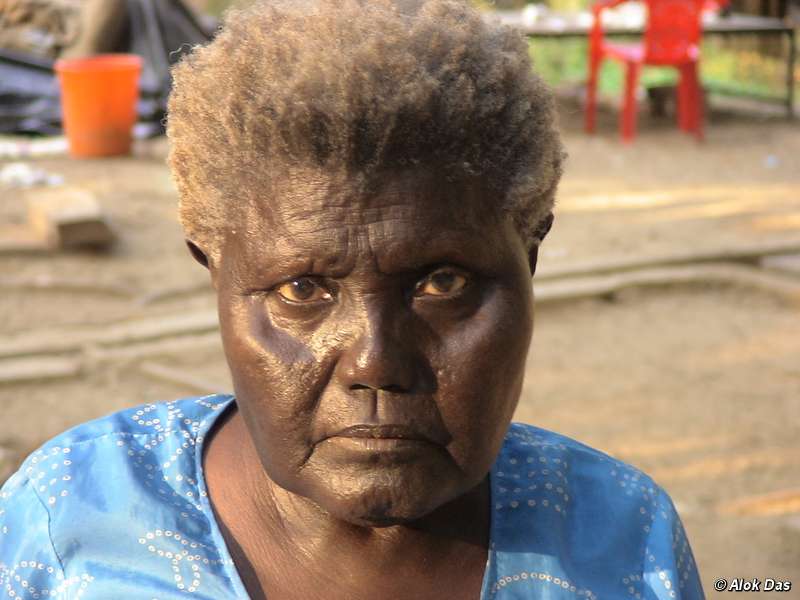
One year after extinction of Bo, Andaman tribe in danger

Boa Sr was the last member of the Bo tribe.
© Alok Das

Boa Sr was the last member of the Bo tribe. One year after the death of the last member of the Bo tribe of the Andaman Islands (January 26), Survival has warned that the neighbouring Jarawa tribe is also in danger.
Boa Sr, the last of the Bo, died last January aged around 85. The Jarawa tribe number 365 people, and fiercely resisted contact with outsiders until 1998.
Now an illegal road cuts through the Jarawa’s rainforest, and poachers and tourists invade their land. Poachers steal the animalsthe Jarawa need to survive and, like the tourists, risk introducing diseases to which the tribe have no immunity. Survival is urging the Indian government to close the road and to keep outsiders out of the tribe’s forest.
The MP for the Andaman Islands, who wants to keep the road open, called last month for India to ‘civilize’ the Jarawa.
The Bo, the Jarawa and other tribes are thought to have lived on the Andaman Islands for about 55,000 years, making them the descendants of some of the oldest human cultures on Earth.
The Bo were one of ten tribes now collectively known as the Great Andamanese. Most of the Great Andamanese were killed or died of diseases brought by the British, who colonized the islands in 1858. The British tried to ‘civilize’ them by capturing them and keeping them in an ‘Andaman Home’, where many died.
Survival’s Sophie Grig said today, ‘The Jarawa are perfectly capable of deciding their own future, as long as the forest they rely on is protected and they are not forced to live in the way someone else thinks best. History has shown that attempts to impose development on tribal people and remove them from their land are disastrous.’
Survival researchers who have visited the Andaman Islands are available for interview.

God will protect me, says Normala

Russian authorities: Terrorist bombing at Moscow airport kills 31

Moscow (CNN) -- The explosion that killed at least 31 people Monday at Moscow's busiest airport appears to be an act of terrorism, Russian President Dmitry Medvedev said on state TV.
Medvedev ordered additional security at Moscow's other airports and transportation hubs, and Moscow police went on high alert in case of additional bombs.
The explosion occurred about 4:30 p.m. at the entrance of the international arrivals section of Domodedovo Airport, Itar-Tass said, citing a spokeswoman for the Russian Investigative Committee, Tatyana Morozova.
State TV aired video of the smoke-filled terminal, including what act of a suicide bomber who stuffed a homemade bomb with small metal objects to make it more deadly, then activated it in a crowded area where many people were preparing for their flights. CNN could not independently verify those claims.
Incoming flights scheduled to land at Domodedovo were being diverted to Moscow's other airports, Sheremetyevo and Vnukovo, Russian TV said.
Lufthansa spkeswoman Claudia Lange said the airline has suspended all flights to Domodedovo until further notice.
Domodedovo is 22 kilometers (14 miles) southeast of Moscow. According to the airport's website, it is the largest of Moscow's three airports, as well as the busiest in terms of passenger traffic.
NATO Secretary General Anders Fogh Rasmussen condemned the attack and urged greater cooperation in the fight against terrorism.
British Foreign Secretary William Hague said British officials are "in urgent contact with Russian authorities to establish the facts and to provide consular support to any British nationals who may have been affected."
Russia has a long history of dealing with terror attacks.
Most recently, female suicide bombers struck the Moscow metro during rush hour in March, setting off two explosions that killed at least 38 people and wounded more than 60 others. Chechen rebels claimed responsibility for that attack.
In November 2009, an explosive device derailed an express train, killing at least 26 people.

Selangor fails to change state law


SHAH ALAM, Jan 24 — Pakatan Rakyat (PR) failed to amend the Selangor constitution over the appointment of top civil servants when it did not garner the required two-thirds majority in the state assembly today.

All 34 PR assemblymen voted in favour of the amendment to Article 52(1) of the state constitution while the 20 Barisan Nasional (BN) representatives present opposed it. The coalition needed 38 votes to pass the amendments.

Speaker Datuk Teng Chang Khim did not exercise his vote while Umno’s Port Klang assemblyman Badrul Hisham Abdullah was not allowed in the assembly hall as his seat had been declared vacant by Teng earlier this week.

“There will be no second and third reading of the bill because two-thirds of [votes] was not obtained,” Tend said outside the assembly today.

If passed, the amendment would have allowed the Sultan — under the mentri besar's counsel — to appoint the state secretary, legal advisor and financial officer instead of the federally-controlled Public Services Commission.

The issue first came to light when the state opposed Datuk Mohd Khusrin Munawi’s appointment as state secretary, arguing that Selangor Mentri Besar Tan Sri Khalid Ibrahim was not informed of the appointment and it was thus invalid.

Khalid said today that his administration would work harder in obtaining a two-thirds majority in the next state-level elections, and would continue to push for the same amendment in the near future.

Teng denied that today’s sitting was an exercise in futility, maintaining that the session was called to address a matter of great public importance.

Earlier, Khalid also said the state was considering allowing Khusrin to carry out his official duties as state secretary.

In response, state opposition leader Datuk Satim Diman said that Khalid’s decision was a “U-turn” and that the MB was “caught in his own political game.”

“Khalid knew we (Barisan Nasional) would not support these amendments, so now he is U-turning.

“If you are sincere, work hard and fast and get Khusrin to take the oath of secrecy,” Satim told reporters shortly after the sitting ended.

Muhyiddin to unlock Interlok

LABIS: Deputy Prime Minister Muhyiddin Yassin has a formula to resolve the Interlok controversy and will discuss it with MIC leaders.

He said he would meet with MIC deputy president Dr S Subramaniam tonight and later with MIC president G Palanivel.

“In the BN (Barisan Nasional) spirit, we want to discuss (the matter) with MIC, and I believe the formula will be delved into in a day or two.

“I hope that once a decision has been made, the issue will not be raised again because of more importance is the spirit of cooperation in the context of BN,” he was quoted as saying by Bernama.

Muhyiddin, who is also education minister, said all matters pertaining to the novel had been raised and the government was considering the best approach to resolve the issue.

He also said that certain quarters had twisted his statement on the matter and politicised the issue.

Many quarters had not read the novel but there had been many reactions because they could be easily influenced by such matters, he said.

Opposition getting desperate

Muhyiddin, who was in Labis ahead of the Tenang by-election, also accused the opposition of becoming more desperate and beginning to adopt various dirty tactics such as distributing slanderous pamphlets.

He, however, expressed confidence that the electorate would not be easily deceived by the slanders and lies spread by the opposition.

“We are aware that they (opposition) will not stop making up stories to scare the voters. That’s a normal tactic, but in most cases, the voters know the truth and are not deceived,” he said.

In the by-election, the BN is fielding Mohd Azahar Ibrahim as its candidate while PAS is fielding the Labis Wanita PAS head, Normala Sudirman.

Muhyiddin urged voters who had evidence on the dirty tactics adopted by the opposition that violated the law to report the matter directly to the uthorities such as the Election Commission (EC).

Besides the dissemination of slanderous pamphlets, there were also allegations that certain groups were taking the identity cards of the voters aimed at preventing them from casting their votes, he said.

Muhyiddin said there were also allegations made that Wanita Umno for the division was not supporting the BN candidate and this was being spread through pamphlets and banners.

He said issues concerning the BN candidate did not arise at all because everyone had given their full commitment to support Mohd Azahar.

“We have no problem, there is no personal issue on the candidate. Our candidate (Mohd Azahar) is the best. We have vetted our candidate 100%, otherwise we would not have fielded him,” said the deputy prime minister.

The opposition tried to discredit the BN candidate’s personal character although Mohd Azahar was clean and a good person, he said.

Asked on the chances of the BN candidate, Muhyiddin said the voters whom he had met had expressed confidence in Mohd Azahar who was widely known as the son of a former Tenang State Assemblyman, the late Ibrahim Daud.

On claims that Normala refused to shake hands with male voters, Muhyiddin said BN did not want to exploit the issue because it was a personal matter and left it to the voters to decide.

On another development, Muhyiddin questioned the motive of the special sitting of the Selangor State Legislative Assembly aimed at amending the Selangor state constitution.

Std One pupil slapped for not lining up


KUALA LUMPUR : A parent of a seven-year-old pupil in SRK Sri Delima in Jalan Ipoh has lodged a report against a teacher who beat her daughter for not lining up in the correct row after recess.

L Savatharaja, a journalist from Tamil daily, Malaysian Nanban, said his daughter Shanya had come home last Wednesday crying after a teacher known as Virda, hit her on the head, pinched her ears and slapped her hands.

“The incident frightened my daughter. Now she is too scared to go to school and is crying everyday,” he said, adding that he decided to lodge a police report against the teacher and the school authorties after failing to get a proper explanation from the school.

Recalling his visit to the school to inquire about what happened, Sarvantharaja said: “On Friday, I went to school to find out what had happened. But when I approached the teacher, I was shocked by her action.

“She told me off with ‘kalau encik tidak suka anak belajar disini, tukar sahajalah! Encik hendak pergi polis atau media, tiada masalah. Lebih baik tukar sahaja ke sekolah lain!’ (If you don’t like your child studying here then change lah! You can go to the police or the media, no problem. Better you change school.”)

“It was a irresponsible response to my question which was why she hit my daughter.

“I was angry and tried to take her photograph. But she covered her face and ran a few steps before stopping to turn back and say ‘janganlah ambil gambar saya belum solek lagi! bawa cermin dulu.(do not take my picture yet. I have no make-up. Bring me a mirror first!)

“I then went to see the afternoon session supervisor Rohizan Ibrahim. She promised to look into the matter. But there has been no reply from the school,” he said.

He pointed out that teachers handling Standard One pupils should be more understanding of the situation as the children were barely out of kindergarden.

“This is not a racial issue… it is not about a Malay teacher hitting an Indian student. This is about a teacher’s lack of patience and understanding of the situation. How can you beat a child who is just two weeks into her first school year? What kind of training are these teachers getting?” he asked.

As for his daughter, Sarvantharaj said the family had decided to find her another school with hopefully better teachers.

BN to win bigger in 13th GE, predicts MCA chief

(Bernama) - The Barisan Nasional (BN) is expected to win the 13th general election (GE) with a bigger majority, but it is difficult to predict whether it would be a simple or a "two-third" majority, said MCA president Datuk Seri Dr Chua Soi Lek.

He said Malaysian voters were also predicted to vote for BN again after having tried out the opposition in 2008.

These were among the projections that politicians had made for the 13th GE, based on the latest political developments in the country, Chua said in his lecture entitled "Barisan Nasional and the 13th General Election in Malaysia" at S.Rajaratnam School of International Studies (RSIS) Distinguished Lecture Series in Singapore, today.

The text of his lecture was faxed to Bernama today.

Chua said Malaysian voters were now more discerning in their choices. After trying the 'Pakatan' or opposition pact in 2008, many were now set to bet on Barisan in a redefined political landscape.

"I am confident that Barisan's consistent majorities will remain consistent for the 13th general election and after. A "new" Prime Minister (Datuk Seri) Najib (Tun Razak) is seeking his first general election victory, but all the signs suggest that BN will remain in power after the 13th General Election," he said.

However, he said that talks that the GE would be called this year was merely speculative as the current term was only due in 2013.

He also predicted that in the upcoming GE, the opposition might retain Kelantan and Penang but would struggle in Kedah, Perak and Selangor while Johor Sabah and Sarawak would continue to be the ruling coalition's "fixed deposit", which accounted for nearly 35 per cent of parliamentary seats in total.

"Barisan will win more parliamentary seats and a larger percentage of the popular vote. Meanwhile, more squabbling is expected within and between Pakatan parties.

"Even in states where Pakatan retains control, its state assembly strength may drop," he said.

Chua said there would also be increasing moves towards issues of public concern transcending race and religion, while political campaigns would be more issue-based, rather than posturing with one communal identity over another.

"The quality of governance is critical. The choice between BN and Pakatan Rakyat centres on delivery systems, growth prospects and public security," he added.

Pakatan Rakyat Menyokong Pindaan Mengembalikan Kuasa Sultan, BN Menolak

KENYATAAN AKHBAR
24 JANUARI 2011

Saya ingin menekankan di sini bahawa sidang Dewan Negeri Selangor yang diadakan hari ini bukan sidang tergempar. Mesyuarat ini diadakan di bawah Peraturan 10(3) Peraturan-peraturan Tetap Undang-undang Tubuh Negeri Selangor untuk membincangkan perkara-perkara spesifik, mendesak dan berkepentingan awam. Hari ini Dewan membincangkan pelantikan Setiausaha Kerajaan Negeri yang melibatkan kepentingan awam.

Saya mengambil kesempatan ini untuk mengucapkan terima kasih kepada Tuan Speaker, Dato Teng Chang Kim dan kakitangan Dewan Negeri kerana berjaya menganjurkan mesyuarat hari ini. Kebijaksanaan dan pendekatan profesional Tuan Speaker telah membimbing satu pembentangan usul yang sihat dan bermanfaat.

Hari ini Kerajaan Pakatan Rakyat Negeri Selangor telah mencipta sejarah apabila semua wakil rakyat Pakatan Rakyat bersatu menyokong cadangan pindaan Undang-undang Tubuh Kerajaan Selangor bagi mengembalikan kuasa DYMM Sultan dan Menteri Besar dalam pelantikan tiga pegawai ex-officio yang telah dimansuhkan selepas pindaan Perlembagaan 1993.

Dalam pada itu, semua wakil Kerajaan memberi perbahasan baik dan bernas berkenaan satu isu begitu penting kepada rakyat yang gagal disentuh oleh pentadbiran sebelum ini. Perbahasan Pakatan Rakyat hari telah berjaya memartabatkan kesucian Dewan Negeri Selangor dan Eksekutif.

Ini selari dengan keinginan rakyat Negeri Selangor yang mahukan satu pentadbiran professional bagi dua institusi tertinggi – Dewan dan Eksekutif – yang tidak diamalkan di peringkat Persekutuan.

Dari asas ini, usul hari ini adalah untuk meminda Fasal 52(1) Undang-Undang Tubuh Negeri Selangor supaya satu prosedur dibuat bagi pelantikan tiga pegawai ex-officio demi memastikan dasar-dasar kerajaan negeri dapat dilaksanakan dengan cekap dan sempurna.

Kami kesal dengan keputusan wakil-wakil Umno/Barisan Nasional untuk menolak usul ini. Lebih kesal lagi, Barisan Nasional gagal memberikan hujah-hujah yang konkrit dan berkualiti untuk menolak cadangan pindaan ini. Tiada satu pun soalan atau hujah yang kami kemukakan dijawab dengan baik dan professional.

Jelas, penolakan ini dibuat atas nama politik dan kesetiaan mereka kepada pihak-pihak yang berkuasa di Putrajaya. Sepatutnya sebagai wakil rakyat, keputusan mereka perlulah berdasarkan kepentingan rakyat.

Penolakan usul juga membuktikan bahawa Umno yang sebenarnya tidak menghormati sama sekali institusi Raja-raja Melayu dan tetap menghalang Raja-raja Melayu daripada memainkan peranan yang sepatutnya dalam institusi Raja Berperlembagaan.

Sikap hipokrit pihak Umno kini jelas ternampak dalam rekod mereka yang secara konsisten menafikan kuasa Raja-raja Melayu, terutamanya pada tahun 1983, 1993 dan kini, 2011.

Sidang Dewan hari ini membuktikan pemimpin Umno sebenarnya tidak layak untuk menyentuh soal kedaulatan Raja-Raja kerana belang mereka telah terbongkar. Mereka menuduh Pakatan Rakyat tidak menghormati peranan Raja-raja tetapi sebenarnya Umno yang menghakis kuasa Raja-raja melalui pindaan-pindaan Perlembagaan yang telah dilakukan.

Walaupun kita mungkin tidak berjaya untuk membuat pindaan, majoriti ahli Dewan telah menyokong. Ini tidak akan mematahkan semangat Pakatan Rakyat. Malah, isu ini telah menguatkan lagi tekad Pakatan Rakyat untuk membuktikan kewibawaan kami dan memperolehi majoriti dua pertiga dalam pilihan raya kelak supaya pindaan ini dapat dibangkitkan semula.

Kami masih berpendirian bahawa DYMM Sultan Selangor dan Kerajaan Negeri berhak untuk memainkan peranan dalam pemilihan 3 pegawai ex-officio demi memastikan dasar-dasar kerajaan negeri dapat dilaksanakan dengan sempurna.

Walaupun pihak Persekutuan nampaknya terus mengenepikan suara rakyat Selangor dan enggan menghormati semangat federalisme atau bertemu setengah jalan, Kerajaan Negeri akan berusaha untuk memastikan pentadbiran negeri akan terus dijalankan dengan baik dan selancar mungkin demi kebajikan rakyat Selangor.

Bersama menjunjung amanah yang diberi oleh rakyat, Kerajaan Pakatan Rakyat akan terus menggandakan usaha untuk melaksanakan tugas dan meneruskan agenda “Merakyatkan Ekonomi Selangor” yang memperjuangkan kebajikan dan kesejahteraan rakyat.

TAN SRI DATO SERI ABDUL KHALID IBRAHIM
DATO’ MENTERI BESAR SELANGOR

Nazir Razak: Diversity is our strength

The Nut Graph
by Jacqueline Ann Surin
This post is reproduced from here

“WHEN the word ‘Malaysian’ comes to me, I always think of diversity,” Datuk Seri  Nazir Razak says at the CIMB  headquarters in Kuala Lumpur, where he is the bank’s group chief executive. It is our diversity, he adds, that has allowed us to build what we have today.

Yet, Nazir, the youngest son of Malaysia’s second prime minister and the youngest sibling of the current prime minister, expresses disappointment that not enough is being done to harness this diversity. He suggests that what the nation needs is another national consultative council on national unity.

In a 30 Dec 2010 interview, this award-winning banker, who is currently on a Chevening Fellowship at the Oxford Centre for Islamic Studies, talks about his Bugis ancestry and what it means to him to be Malaysian. He also recounts his memories of 13 May 1969, and the need for a revised affirmative action policy.

TNG: When and where were you born, and where did you grow up?

Nazir Razak: KL (Kuala Lumpur). 1966.

At 13, you went off to England to boarding school, right?

[I was there] for the whole of the 1980s. From 13 to [when I was] 21.

You know, apart from the indigenous peoples in Malaysia, we’re all from “pendatang” stock. Can you trace your ancestry?

Oh, yeah, of course. We were from Sulawesi. [Editor’s note: The Razak family are direct descendants of one of the rulers of the ancient kingdom of Gowa, who left Sulawesi, also known as Makassar, and ended up in Pahang.]

So, that’s your father’s side of your ancestry…

I think my mother’s side is also Bugis, but through the Johor lineage. My father’s side, there were a few stories of how they got [to Kampung Makassar in Pahang] … and I’m not sure what the true story is. One [story] says [my ancestor] was actually the daughter of the sultan [who] married an admiral or something. Then they just sailed off like most Bugis do.

The earlier story was that they were just a bunch of pirates (laughs) along the east coast of Malaysia until they stopped at Pahang.

(Laughs) And which is the accurate version?

I think the latter one is what I heard from [Indonesian] Des Alwi. He was a good friend of my father’s. He says it was the princess story. I prefer that one anyway.

(Chuckles) Well, it’s a whole lot more appealing. What generation Malaysian are you?

I have no idea. I’m sure if you go to the [Tun Abdul Razak] museum [in KL], you can add it up.

So, where did you grow up for the most part?

KL. I left at 13. [I was at] St John’s [Institution] until I was [in] Standard 5. Then I went to  Alice Smith [School].

What is the strongest memory of the place where you grew up?

KL those days was about being in St John’s … I think it was a really different place then. I mean, it was the school. It was a national school but it was very Malaysian, very multiracial … And from the poorest to the richest Malays, Malaysians, [they] would be there at St John’s.

Were you aware of the notion of race at that point? Were your classmates aware?

Well, yes! And I think one will always be. And I’ve always maintained that there is nothing wrong with racial awareness. But at the forefront must be a Malaysian consciousness.

And you know, I’ve written a piece about strengthening diversity from a corporate perspective, and I do believe actually that the success of Malaysian companies abroad exceeds those of other Asean countries, and it’s primarily because we’re very comfortable with managing diversity.

When you say that there’s nothing wrong with identifying with race but that we should have a Malaysian consciousness upfront, does that translate into arguing that people should actually say, “I’m  Malaysian first”, rather than saying, “I’m Malay, Indian or Chinese first”?

I don’t like to answer that question because it’s become politicised. People get categorised because they say they’re “Malaysian first” or that they’re “Malay first”. And that’s completely unnecessary. I’m a Malay. I’m a Malaysian.

What kind of stories did you grow up with from your family?

I come from a political family. I guess a lot of conversations those days among the elders and the parents centred around politics.

And I remember [in] the early days being very conscious about May 1969. About what happened.

How old were you when 13 May happened?

I was [three years old]. But it wasn’t so much memories of the day itself. It was more the anniversaries of May 1969. And the early days were like, “Whoa!” As if it would happen on the same day again, you know. The anniversary would trigger something off. So, I was quite conscious about that growing up.

I remember May 1969 disturbed my late father tremendously. And strangely, if you look at the whole era, there was a cadre of nation builders around him. Malaysians – Malays, Chinese – who really believed in their responsibility of nation building within those [who] spearheaded the social re-engineering of the country.

Basically, all Malaysians at that point pulled their weight?

Yes. Well, you know, as I keep saying, [my father’s] main comment about the NEP (New Economic Policy) was that [it was] a blueprint for unity.

Do you sometimes feel that the fear [that 13 May would happen again] still exists today?

Yes, I think it remains something that we must be very conscious of and make sure that we manage the tensions such that it doesn’t repeat. It was tragic.

Do you think Malaysia could benefit from a kind of reconciliation process in the same way that South Africa did, for example?

(Pauses) No, I think there is probably a need to (pauses) … I don’t like the word “social contract”, but I think there probably is a need to reaffirm some of those values of nation building that came with the rebuilding of the nation post 1969. Many of the younger generation don’t remember that era, and many of the older generation don’t accept that things have changed. And therefore, some of the thinking and approaches need to be modernised for the present.

What does it mean to you to be Malaysian?

(Pauses) When the word “Malaysian” comes to me, I always think of diversity. Maybe it’s because of the political education that I had. And it’s about being a diverse, multiracial, multicultural country. At the same time, being proud of having this diversity and making a success of it.

You know, those days I remember. It was Malaysia [and] Sri Lanka in terms of this ethnic consciousness. And I remember [Prime Minister SWRD] Bandaranaike telling us, “You guys are just a few years behind us.” And of course, this was in the 60s. Sure enough, a few years after, they started imploding because of racial tensions. And we had 1969.

But there was a difference. We basically called on national unity, drew our leaders together, drew our people together, introduced the various policies to bring the nation together, whereas they didn’t. Thereafter, we went through a period of strong economic growth and stability whereas they continued to struggle.

So that’s what makes me proud. We, as Malaysians, have been able to build what we have today despite the diversity but also because of the diversity.

Do you think that enough is being done to tap into that diversity?

No.

What else do you think can be done to tap into this diversity?

I think the present PM (pauses), I think, acknowledges this in many respects in the various transformation plans that he has embarked on. The whole 1Malaysia concept is about unity in diversity.

And I think we don’t do enough [to tap into our diversity] because unfortunately over the years, positions have hardened, if you like. You know, just like with any policy, we need to acknowledge where mistakes were made as a first step towards improving them.

When you say “policy”, you’re referring to the NEP? Mistakes were made with the NEP?

NEP and various development policies where mistakes were made or execution has had its shortcomings, then you address them and make them  better.

And you think your brother as prime minister is slowly trying to address this?

Yes, he’s doing it at a pace that may be necessary, which, for some, may not be fast enough. But for others, it may be too fast. So, in a way, you got to get that balance. I think, you know, the NEP was right for its time, and we continue to need some form of affirmative action. But what form that should take and gaining national acceptance of a new version of the NEP is a process that we need to go through.

If you could, what kind of affirmative action would you put in place for Malaysia?

If we look at the two pillars of the New Economic Policy, which is ethnic rebalancing and also poverty eradication, I would advocate a third leg, which is the creation of a competitive bumiputera race. And I think if you bring that to the forefront, then that would mean creating NEP execution policies that acknowledge the need for introducing competition in everything we do.

My biggest grouse with the implementation of the NEP is the lack of competition among [the] bumiputera. And that, I think, is a flaw because it then creates [an] easy-come-easy-go [mentality]. It creates the kind of rent-seeking behaviour that I think is not helpful to the race in the long-term.

And of course, you know, in talking about needs-based affirmative action, [the] PM is making it very clear that there are many, many people who need support, economic support. And they are Malay, Chinese and Indian [Malaysians]. So, there should be a [policy] shift in bias towards [being] more needs-based.

You’ve come under attack though by the likes of (Datuk) Ibrahim Ali for just making these views known. How do you respond to these kinds of public criticisms?

Everyone is entitled to their views … But to be fair to Ibrahim Ali, I think (pauses) he misinterpreted my views inasmuch as others did as well. Some people think that I want the abandonment of affirmative action. Some people want me to believe that, so they twist my words as well. So, people on both sides took that opportunity. But the truth is, that is not my position.

What do you think of 1Malaysia as a campaign?

Well, I think it is something that is extremely powerful, and when [Najib] first introduced it, there were some, the extremists again, who said, “That’s Malaysian Malaysia”, “That’s abandonment of the New Economic Policy”, etc.

But I think over time, it is bedding down rather well. It is a call for unity in diversity. And you know it’s a powerful reminder that we’re all Malaysians.

Over the past several years, there’s been a trumpeting of this notion of “ketuanan Melayu” and a tendency to label non-Malay Malaysians as “pendatang” or “penumpang”. Do you think that is what it’ll take for Malay Malaysians to succeed and gain what is rightfully theirs? If not that, then what do you think it would take for Malays in this country to really be successful and not feel as if they’re being shortchanged in some way?

Well, you mustn’t (pauses) give too much credence to the views of extremists. That’s certainly not the majority view. So, I think at the end of the day, the PM is pushing forward with, first and foremost, the concept of 1Malaysia. I don’t think this discussion of “ketuanan Melayu” etc. is really something that’s necessary.

I think at the end of the day, if you go back to what I said earlier, we do need affirmative action. We do need to refine the way the NEP is being implemented, and I think that should be the basis of helping to achieve the initial objectives of the NEP in the first place.

And you know, (former Prime Minister Tun Dr) Mahathir (Mohamad) not so long ago was talking about Bangsa Malaysia as an eventuality.

Do you think we have the political will to do what is necessary to move in that direction?

(Pauses) Well, I think you have to have the right political environment to do that. And unfortunately, (pauses) the hard truth is, these kinds of big changes need to be made when the government is very strong. And with the new political landscape here, it makes it a lot tougher.

But you could take the other view – if the government is very strong, they might not be pressed to make these changes.

… When I look at what the PM is trying to do, I take my hat off. I think he’s right, but again, we go back to [the fact that] even a strong Mahathir struggled with some of the things that he wanted to do. Today, unfortunately, the government is not as strong as it used to be. And there’s a huge task of transforming the country that [Najib is] embarking on.

… One thing we have to remember is that there’s a lot of pushback … There’s also the lag time for implementation. And sometimes, more is being implemented than you think, which may not be said.

Sometimes, you know, we keep harping on these kinds of things. It’s not as if these issues are unknown. A lot of them are known. But the reality of implementation is very different – it is a challenge. So, the public needs to have more patience. And as I said, this voice of the moderates needs to be a bit louder.

What kind of Malaysia would you like for yourself and future generations?

(Pauses) Well, I think for the children, I want a Malaysia where more children can be what they aspire to be. And I want (pauses), I guess, for them to live in peace and harmony. And that’s about it.

I want Malaysia to be economically successful. And I think that obviously, there are concerns which have been well articulated about that.

They’re not big ones. I don’t think anyone really has big ones. And yet, one wonders whether we will get there.

Are you worried for Malaysia as a citizen, as a banker?

Ya, I have said it before. And today, I am less worried because I’m clear that the government knows of all these problems, and that’s a start. If you ask me what I’m worried about, it’s the implementation.

Let’s flip it around. What do you think Malaysian citizens can do to help turn this country around?

I think Malaysians have to be more patient. Be more supportive of the good things that have been done. Spend more time on the good things and less time on the bad things. But people are so skeptical.

I’m not saying don’t make noise. I’m saying, we should not always be negative about policies and things that are being done.

So, you’re convinced that your brother has the right ideas and vision for this country, but what’s holding him back is the implementation.

Yes, and that starts with execution.


The book Found in Malaysia , featuring 50 of our best interviews plus four previously unpublished ones with Datuk Zaid Ibrahim, Tan Sri Rafidah Aziz, Datin Paduka Marina Mahathir and Ramli Ibrahim, is now available at all good bookstores for RM45.

One- Year Maximum Period For Processing Citizenship - Home Minister

PUTRAJAYA, Jan 24 (Bernama) -- The Home Ministry through the National Registration Department (NRD) has set a one year maximum period for processing citizenship applications.

Home Minister Datuk Seri Hishammuddin Tun Hussein said previously there was no official time limit set for such applications.

"A time limit for applications involving citizenship, entry permits or late registration of births, did not exist in the past but now we have set a one year period as a guideline now.

"We want the applicants to know whether their application was approved or not during such period," he said at his ministry's 2009, 2010 Key Performance Index (KPI) achievement ceremony here Monday.

Hishammuddin said the initiative was to avoid a backlog of unresolved applications that have taken a long time, some that has even taken up to 10 years before a decision was made.

"It must be said that we are taking the initiative without compromising the aspects of safety and terms contained in the law of the country," he said.

Hishammuddin said over the past two years, the Home Ministry had processed 219,485 applications comprising 62,604 applications for citizenship, entry permit appeal (18,162) and late registration of births (138,719).

He added that the backlog had been cleared while those currently being processed are all applications received this year.

Fokus jangan sehingga menyusahkan rakan PR

Sejak 22 Jan, lewat petang che'GuBard mendapat banyak sms juga panggilan telefon yang bertanya betulkah SAMM dihalau oleh sebuah lagi 'NGO' yang menjadi front kepada PAS dalam menangani isu Felda iaitu ANAK ?

Setelah difahamkan rupanya semua spekulasi itu wujud ekoran satu posting dalam blog AMK Johor yang menggunakan nama Ketua AMKnya Zabidie Abas yang juga merupakan Setiausaha ANAK.che'GuBard segera mendapatkan respon Zabidie mengenai perkara ini. Beliau menafikan yang beliau terlibat menulis artikel tersebut, sebaliknya ditulis oleh seorang anggota AMK Johor yang juga punya akses ke blog http://amkj.blogspot.com tersebut.

Zabidie juga mengambil tindakan segera menarik keluar artikel tersebut yang seharusnya berada dalam link http://amkj.blogspot.com/2011/01/n5-nota-untuk-samm-di-prk-dun-tenang.html

Menerima penjelasan tersebut saya bersama beberapa teman SAMM mengambil keputusan meneruskan semua program yang dirancang tanpa mempedulikan provokasi murahan dari pihak tertentu itu tersebut. SAMM tak faham maksud pencetus perkara tersebut adakah mahu melihat SAMM bergaduh dengan ANAK atau mahu memberi ruang kepada Bn memanipulasi perkara ini ?

Namun che'GuBard selaku seorang pendiri SAMM ingin juga menjelaskan beberapa perkara :
  1. SAMM bukan dipunyai oleh mana- mana parti politik. SAMM ialah gerakan muda yang bebas politik kepartian tetapi mengambil sikap politik dan mendokong parti tertentu berdasar isu dan kepentingan anak muda ganerasi masa depan negara.
  2. SAMM yang wujud sejak 2004, menolak undang - undang kuno negara yang mengekang kebebasan berpesatuan rakyat maka kerana tidak mengiktiraf dan menolak maka kami tidak mendaftar dibawah akta pertubuhan. Kami tidak mahu dilihat 'menyanggah di depan akur dibelakang'. Namun kami berdaftar dibawah 'SSM' seperti mana banyak 'ngo' progresif lain dalam negara ini.
  3. Keputusan mendokong calon PAS di Tenang bukan diambil dengan mudah tetapi setelah perbincangan panjang sila rujuk http://chegubard.blogspot.com/2011/01/penjelasan-pendirian-samm-analisis-samm.html
  4. Untuk mengekalkan 'independent' SAMM berdiri sendiri sepanjang kempen PRK di Tenang tanpa bantuan kewangan dari mana - mana pihak termasuk PAS. Kewangan kami dari sumbangan semua penyelaras SAMM, sumbangan orang ramai melalui penjualan buku dan lain - lain barangan.
  5. Sebaik sahaja SAMM membuat keputusan untuk turun bersama berkempen di Tenang, SAMM menemui beberapa pimpinan PAS untuk memaklumkan dan meminta nasihat kerana PAS yang bertanding.
  6. Cuma ada pimpinan PKR yang melahirkan rasa kurang senang dan minta SAMM melaporkan program mereka kepada PKR, mungkin mereka tidak sedar SAMM bukan 'front' kepada PKR dan bukan anggota PKR, maka kami maklumkan dengan baik perkara ini.
  7. SAMM menamakan 3 orang Penyelarasnya Roslee Shariff, Khairul Fauzi Muhammud dan Azlan Ishak sebagai Penyelaras Kempen sepanjang PRK di Tenang dan mereka sudah pun membuat 'ground work' seawal 2 minggu sebelum penamaan. Menemui pimpinan PAS-PR tempatan, pimpinan masyarakat tempatan dan pimpinan NGO termasuk ANAK untuk penyelarasan gerak kerja.
  8. Maksudnya semua gerak kerja dirancang awal dan dimaklum oleh pihak terbabit khususnya menghormati PAS yang bertanding.
  9. Pada hemat kami perkara iniadalah angkara 'budak-budak nakal' dalam PKR yang tak senang dengan SAMM yang berjaya mengembeling tenaga muda baru walaupun dalam scale yang kecil berdasar kemampuan kewangan dan logistik kami.
  10. Perkara ini juga muncul kerana isu pemilihan yang tidak ada penghujung. Siasatan yang tiada hujung pangkal. Yang menuntut siasatan terus bercakap dan yang konon menang dari hasil penipuan terus mempertahankan kedudukan.
  11. PKR seharus melihat perkara ini dengan serius jika tidak mahu PKR ditertawakan.
  12. Nasihat che'GuBard bagi pihak SAMM kepada 'budak-budak nakal' tersebut kena belajar bila nak serang musuh dan bagaimana nak 'bergurau' dengan kawan. Jangan masa perang seperti ini, nanti jangan sampai kawan dalam PR lihat politik dalaman PKR ini menyusahkan mereka.
  13. Kepada pimpinan besar PKR lihat perkara ini segera. Jangan bila ada orang bangkit bercakap soal keadilan dan ketelusan dilihat kianat tetapi 'budak-budak nakal' yang duduk dalam politik naungan itu buat apa saja dibiarkan. Keadilan bukan sahaja perlu dilaksana tetapi perlu dilihat dilaksana.
  14. SAMM ingin ucap terima kasih kepada PAS kerana beri ruang SAMM teroka ruang baru dalam mendekati anak muda dan sesungguhnya kesempatan ini tidak dipersia. memang kemenangan sukar namun SAMM akan cuba bantu sebaik mungkin dengan sumbangan SAMM yang amat kecil dalam mendekati anak muda. Kepada ANAK dan organisasi masyarakat yang lain kesudian bekerjasama dalam menjayakan beberapa program juga amat dihargai.
  15. Dalam gerak kerja PRK ini SAMM menumpukan pendekatan mendidik anak muda menggunakan kuasa politik melalui pendidikan hak warga. Disamping dalam pendekatan penuh mesra dan meminimakan sebarang konfrantasi.
http://chegubard.blogspot.com/

Monday, 24 January 2011

DAP forced to allay Islamic state fears again


IPOH, Jan 24 — Forced into defense-mode, DAP leaders are again scrambling to allay fears among Chinese voters that Pakatan Rakyat (PR) endorses the Islamic state agenda.

DAP national vice-chairman M. Kulasegaran insisted today that the accusation was a “lie” used by Barisan Nasional (BN) and the MCA as a “killer weapon” against the opposition during elections.

In his speech at the launch of the “Year of the Rabbit-Change” campaign in Jelapang Market here today, the Ipoh Barat MP gave his assurance that implementing the Islamic state would never be PR’s policy.

“Islamic state is not and will not be the PR’s policy and agenda. DAP’s stand on the Islamic state is very clear,” he said.

He noted that during the previous Galas by-election in Kelantan, MCA had armed itself with the issue to score votes from the Chinese community.

BN trounced PAS in its Kelantan fortress during the Galas polls and the ruling coalition succeeded in increasing its Chinese votes by over 40 per cent from Elections 2008.

Taking a leaf from Galas, MCA kicked off its campaign in the ongoing Tenang polls by using the same Islamic state playbook against its opposition foes, warning the community that a vote for PAS’ candidate or for PR was a vote for Islamic state.

“There is no doubt that Islamic state issue will be the main issue MCA will want to exploit in the coming general election.

“But MCA’s campaign whether in the Tenang by election or coming general election that ‘A vote for Rocket is a vote for Islamic State’ or ‘ A vote for PR is a vote for Islamic State ‘ is not true and is a lie,” Kulasegaran said.

He added that DAP would hold strong to its belief that Malaysia should remain a secular democratic nation with Islam as its national religion.

“We will not compromise our stand and principle. PR has been formed to bring about political change and save Malaysia,” he said.

The Islamic state argument, he insisted, was a “non-issue”.

He urged voters to help the opposition spread PR’s message of “change” through their votes.

Today’s campaign, he said, was to register new voters and to help existing voters check their voting statuses.

Quoting statistics provided by Minister in the Prime Minister’s Department Datuk Seri Mohamed Nazri Aziz last year, Kulasegaran said that there were 4,304,620 eligible voters in the country that were yet to be registered.

“Thus nearly 30 per cent qualified citizens have yet to sign up as voters.

“It is imperative that those who want to see and bring political change in the next general election must quickly sigh up as voters,” he said.

As a part of PR’s bid to protect the environment through minimising the use of plastic bags, he said those who registered during the campaign will be given free recycle bags.

200 ahli Gaps, Perkasa bantah sidang Dun Selangor

Kumpulan itu berdemonstrasi dan menyerah memorandum membantah sidang Dun yang berlangsung bagi meminda perlembagaan negeri

SHAH ALAM: Kira-kira 200 ahli Gagasan Anti Penyelewengan Selangor (Gaps) dan Pertubuhan Pribumi Perkasa Malaysia (Perkasa) menunjuk perasaan hari ini membantah sidang Dewan Undangan Negeri Selangor (Dun) yang sedang berlangsung.

Seawal 9.30 pagi kumpulan tersebut mula berhimpun dan berarak di Dataran Shah Alam bagi menyerahkan memorandum bagi membantah pindaan Undang-undang Tubuh Kerajaan Negeri Selangor 1959 kepada Kerajaan Negeri pimpinan Pakatan Rakyat.

Kumpulan tersebut berarak daripada Dataran menuju ke bangunan SUK sehingga mengakibatkan keadaan lalu lintas tergendala di hadapan bangunan itu.

Kumpulan itu dihalang pasukan Polis Simpanan Persekutuan daripada menuju ke pintu utama bangunan SUK.
Namun hanya lima wakil sahaja dibenarkan untuk menyerahkan memorandum itu yang diterima Ahli Dewan Undangan Negeri (Adun) Sungai Burung, Shamsuddin Lias untuk diserahkan kepada Menteri Besar Tan Sri Khalid Ibrahim untuk dibawa ke dewan hari ini.

Mereka yang dibenarkan menyerahkan memorandum tersebut ialah Ketua Perkasa Selangor Abdullah Mansor, Pengerusi Gaps Hamizudin

Khairuddin, Ketua Pemuda Umno Selangor Ungku Salleh dan Ketua Umno Ampang, Ismail Kijo dan Ketua Umno Bahagian Shah Alam Ahmad Nawawi.

Ringkasan memorandum itu menyebut tentang pentadbiran Khalid yang lemah dan tidak mempunyai majoriti 2/3 untuk meminda perlembagaan negeri.

Malah tertera dalam memorandum itu bahawa pindaan tersebut sia-sia kerana bersifat ‘ultra vires’ (melampaui bidang kuasa) terhadap Perlembagaan Persekutuan mengenai kuasa Suruhanjaya Perkhidmatan Awam (SPA).

Persidangan Dun khas hari ini adalah untuk meminda perlembagaan negeri bagi mengembalikankuasa Sultan Selangor dan Menteri Besar untuk melantik Setiausaha Kerajaan Negeri, Penasihat Kewangan Negeri dan Penasihat Undang-Undang Negeri.

Keputusan untuk mengadakan sidang ini dibuat  berikutan pertemuan Khalid dengan Sultan Selangor,Sultan Sharafuddin Idris Shah di Istana Mestika, Shah Alam, di mana baginda bertitah bahawabaginda tidak mempunyai kuasa untuk menerima ataupun menolak perlantikan yang dibuat oleh SPA.

Set deadline for Interlok, Palanivel told


PETALING JAYA: MIC president G Palanivel has been urged to give the government until Friday, a day before the Tenang by-eletion, to remove the controversial Interlok book from schools.

Otherwise, DAP Klang MP Charles Santiago said, the MIC president’s latest call would be interpreted as a ploy to fish for votes.

“When I spoke to some Indians in Tenang, they informed me that MIC told them that the book will be withdrawn from schools soon,” he added.

To prove his sincerity, Santiago said Palanivel should set the deadline. “If not, it will call MIC’s bluff and prove that Indian’s cannot take MIC’s words seriously,” he added.

Book runs foul of 1Malaysia

Asked on his views about Interlok, Santiago said that he had no issues with the novel as it was a literary work.

“However, we cannot use the novel as a textbook. Our students are not matured enough to think critically on it and they will just accept the contents as it is. In the end, the younger generation will just think all Malaysian Indians are ‘pariah’ (outcaste),” he said.

He added that the book itself was contrary to Prime Minister Najib Tun Razak’s 1Malaysia concept, which aims to foster racial unity.

“The irony is that the book’s front cover has the 1Malaysia logo while the back cover states that the book promotes the aspiration,” he noted.

Yesterday, Palanivel called upon the government to withdraw the book, saying that it was not in line with Najib’s 1Malaysia.