Share |

Monday, 1 April 2013

Hindraf’s noble cause

All eyes are now on the BN to endorse the Hindraf blueprint paving the way for Hindraf to finally lead the Indians out of their misery.
COMMENT

Its more than 20 days now that Hindraf supremo P Waythamoorthy has gone on hunger viratham (hunger strike) and many have been following his divine thoughts throughout the period.

Yes, it is noble of him to go on a hunger strike for the marginalised Indians in this country, and many hopes that something good will eventually come out of it.

Lately, he has called upon Indians to perform a ‘strategic abstention’ from voting in the 13th general election. According to him, the Indian vote is valuable and should never be given away for free.

Neither coalition is willing to endorse the Hindraf blueprint, so why should the Indians be silly enough to endorse either one of them?

Whoever wins is not going to make a difference, as Indians will continue to lose; so it is very sensible of Waythamoorthy to express the truth.

Many Malaysians have questioned Hindraf’s stand on the issue, and a few things come to mind.

Hindraf is asking for RM4.5 billion a year for five years to be channelled towards the alleviation of the Indian plight.

In addition, they have asked for 10 parliament and 8 state seats, so that Hindraf leaders can serve the Indians better.

Although the question of money can be discussed, seat allocations to Hindraf are a sensitive issue and something that is next to impossible for both coalitions to agree on.

Most of the seat allocations are finalised and divided equally among the leaders of the coalition. It would be difficult for them to sacrifice so many seats even for such a good cause.

Hindraf promises of a better tomorrow

Waythamoorthy is no doubt a political maverick of sorts. His attempt to sue the British government for 4 trillion pounds and promising every Indian born in Malaysia a sum of one million pounds has endeared many Indians to his courage and valour.

Although, it has been quiet lately on the issue and the promise of making every Indian a millionaire in this country, many Indians have not given up hope.

Indians still support Hindraf for standing up to the government for sidelining them and marginalising them for half a century, after being abandoned by the British to this God forsaken peninsular.

DAP leader Lim Kit Siang’s prediction of the fall of seven states to Pakatan Rakyat in the next election would remain a dream if Indians refused to go to the polls.

It is sad that although Pakatan may emerge a clear winner, it would fail if the kingmakers (Indians) refuse to participate in the polls.

However, a ‘strategic abstention’ may pose another grave danger to our Malaysian democracy. Statistics have indicated that many pro-opposition Indians would not take heed of Hindraf’s noble call to abstain, and nearly 50 percent of Indians would still go to the polls to support Pakatan.

That leaves the other 50 percent abstaining from the voting process, which will affect Barisan Nasional’s chances to garner a simple minority. In fact, it would blow BN’s only hope in many strategic seats, and BN may fall like skittles.

That would be a very serious blunder, as a democratic Malaysia still needs a strong opposition in the form of BN.

Besides, it will be a double blow for the MIC as they will be totally decimated. What would become of the MIC if the other half heeds Hindraf’s call to abstain from voting?

It is time we heed our beloved prime minister’s call for Nambikei. Najib Tun Razak has done wonders for the Indians unlike other prime ministers in the past, according to the MIC, and it would not do well now to rock the boat again.

Hindraf must exercise restrain in such times of tribulation. BN needs a lifeline and so does MIC. It would be sad to see them disappear into the annals of history, just because of some hiccups from the great Hindraf.

And if BN goes down, who is going to fend for the poor Indians? Ananda?!! Waythamoorthy and Hindraf should give some credit to BN for giving him back his passport and allowing unrestricted entry back to Malaysia and for recognizing Hindraf as a legitimate NGO.

Even MIC has entertained the thought of working with Hindraf, so Hindraf should cool down and weigh their extensive options.

Pakatan is a deadwood

It is clear that Pakatan is still reeling from the euphoria of potentially attaining Putrajaya with the capture of not less than seven states, and they are not in a proper state of mind to kneel down to Hindraf’s demands.

Why in the first place did Hindraf side with Pakatan and cause BN to be denied a two thirds victory?

If Hindraf has sided with the government back in 2007 and a landslide victory for BN in 2008, Hindraf leaders would be sitting pretty tight by now enjoying the perks of government while there would be no more Indian plight.

Waythamoorthy would have spent four years of his precious life alleviating the Indian plight instead of going into exile. But all is not lost.

BN has promised to study the matter and give it greater thought and a 5-point blueprint isn’t that hard for BN to endorse.

Most important, BN must be given a lifeline to regain its two-thirds mandate, as the future of this country is at stake. Indians too would benefit as they always had since Malaysia became independent.

If BN loses, not only would the Indians lose out, but the millions of foreigners like the Bangladeshis, Pakistanis, Filipinos, Thais and Myanmarese would lose their livelihood as Pakatan has insisted to deport them in a feeble attempt to save Malaysian jobs.

Malaysians of Malay and Chinese descent should support Hindraf’s blueprint for the sake of the marginalised Indians who are worse of than their counterparts. By endorsing Hindraf, it would lead the way for Malays, Chinese, Indians, East Malaysians and foreign immigrants to live in peace and prosperity and share the cake.

Don’t trust Pakatan

Pakatan should not be allowed to govern as their nationalistic policies for a Malaysian Malaysia would cause the races to lose their identities and their culture. It would also be a sin to identify each other by race and religion. We may even lose our mother tongue one day.

Under Pakatan there would be no more supreme race and no more NEP. Everyone would have to work doubly hard to earn a living. Everything else would be cheaper from cars, toll and petrol; so how are Malaysian entrepreneurs going to profit from so much competition?

That is why there is good basis as to why BN has warned against changing our government. Hindraf can play a big role to ensure that Malaysia remains in good hands and at the same time ensure that the Indians would no longer be marginalised.

All eyes are now on the BN to endorse the Hindraf blueprint paving the way for Hindraf to finally lead the Indians out of their misery.

Malaysians should join hands and endorse Hindraf for its wonderful cause instead of pouring unwarranted criticism.

Tour consultant, sports pilot and naturalist Iskandar Dzulkarnain has been writing a few years now. He particularly enjoys writing satires. He is a FMT columnist.

MIC ready with its candidates list

However there could still be last minute changes, says party deputy president Dr S Subramaniam.

KUALA LUMPUR: MIC has finalised the names of candidates for nine Parliament and 19 state assembly seats ahead of the coming 13th general election said its Deputy President Dr S Subramaniam.

The MIC, a component party of Barisan Nasional (BN) said the allocation of seats was finalised after a series of discussions although initially there was a little uncertainty on the choice of candidates, he said.

Subramaniam said although the MIC had finalised the candidates, there could one or two changes in the choice of seats with BN component parties before the final announcement.

“We will make a final decision after discussing the possibility discreetly, unlike the opposition who openly clash over issue of seats in the public,” he told reporters after attending a memorial gathering for his late press secretary B Sivam, who was killed in an accident, last month.

Sivam, 35, and a driver from the Ministry of Human Resources were killed when their Sports Utility Vehicle (SUV) was involved in an accident at KM232 of the North South Expressway, near Rembau, on Feb 28.

In the 2008 general election, the MIC won three parliament seats, namely Tapah, Cameron Highlands and Segamat and later recaptured the Hulu Selangor seat during a by-election.

The 2008 general election, also known as the ‘tsunami’ saw the MIC win the Asahan state seat in Malacca; Gambir, Kahang, Permas, Tenggaroh (Johor); Sabai (Pahang) and Jeram Padang (Negeri Sembilan).

Speaking of the prayer for Sivam, Subramaniam said it was held to enable people to pay their last respects for the late Sivam who was also proficient in Tamil literature, having written poems, short stories and essays.

“He (Sivam) was a loyal and dedicated staff. Those were among qualities that brought me close to him. We were very close and his demise remains a big loss to me until today,” said an emotional Subramaniam.

Bernama

Waythamoorthy ends his 21-day hunger strike

He has been warded for observation with his next step would most likely be to obtain a second meeting with the prime minister.

PETALING JAYA: Hindraf chairman P Waythamoorthy tonight ended his 21-day hunger strike amid a chorus of approval from some 700 of his supporters.

Waythamoorthy started his hunger strike on March 10 at the Arulmigu Agora Veerabathrar Sanggili Karuppar Temple, in Kampung Benggali, 17 ½ mile, Rawang, to compel either or both Pakatan Rakyat and Barisan Nasional to endorse and implement the Hindraf blueprint for the betterment of marginalised Indian community.

“The hunger strike ended in beautiful manner, in the midst of Hindraf supporters. We now look forward for the second meeting with Prime Minister Najib Tun Razak,” said Hindraf advisor N Ganesan.

However the day had begun in a bad shape for Waythamoorthy who had started his 21st day of hunger strike in a very weaken condition.

He had then collapsed in the afternoon at about 3pm and was rushed to a private hospital in Kuala Lumpur.

After seeking several hours of treatment, Waythamoorthy had then insisted on going back to the temple to listen to what his supporters wanted him to do.

“We are transporting him back to the temple so that he will end his hunger strike there,” his wife K Nageswary told FMT.

Back at the temple, a large crowd of about 700 supporters had gathered upon hearing that Waythamoorthy has been hospitalised. When they saw him returning to the temple, they eagerly told him to break his fast.

“The crowd urged him to end his hunger strike. After asking them a couple of times, and after receiving a thunderous response urging him to end his fast, Waythamoorthy finally decided to listen to his supporters,” said Ganesan.

Second meeting with Najib

Waythamoorthy has been taken back to the hospital for further observation and for him to regain his strength.

Earlier the doctors informed his family that he was suffering from low sugar levels and high blood pressure.

“We expect him to be discharged tomorrow. We will then decide on how to pursue the promised second meeting with the prime minister,” said Ganesan.

Last Monday a three-member Hindraf delegation which included Waythamoorthy and Ganesan had met Prime Minister Najib at the Prime Minister’s Office in Putrajaya. Najib had then assured them that he would be holding a second meeting with them to discusss the Hindraf blueprint for the Indian community.

Ganesan said today that the second meeting would most likely take place in the next couple of days.

Hindraf had previously expressed disappointment with Pakatan for failing to agree with them on the blueprint.

Yesterday DAP supremo Karpal Singh had called on the Pakatan Rakyat leadership, led by Opposition Leader Anwar Ibrahim, to resume talks with the Hindraf leadership and find an amicable solution to end the Hindraf blueprint stalemate.

He had also urged Waythamoorthy to end his hunger strike and not to his life in danger.

“Waythamoorthy should not risk his life. He has made his point. He should end his fast before it endangers his health,” a visibly moved Karpal had said.

Hindraf’s blueprint, among others, highlights issues related to displaced Indian plantation workers, the need for tertiary-level education for Indian students, job opportunities in the government sector, financial loans to Indian entrepreneurs, and the establishment of a Minorities Affairs Ministry.

Karpal urges Waytha to end fast

Waythamoorthy's condition as a result of his hunger strike continues to cause concerns with him totally confined to his bed today.
UPDATED

GEORGE TOWN: DAP supremo Karpal Singh has urged Hindraf Makkal Sakti supremo P Waythamoorthy to end his hunger strike which will complete its 21 days on Sunday.

Karpal said Waythamoothy should not put his life in danger that would jeopardise his and Hindraf’s ethnic Indian cause.

Karpal also called on the Pakatan Rakyat leadership, led by Opposition Leader Anwar Ibrahim, to resume talks with the Hindraf leadership and find an amicable solution to end the Hindraf blueprint stalemate.

“Waythamoorthy should not risk his life. He has made his point.

“He should end his fast before it endangers his health,” a visibly moved Karpal told a press conference in Air Itam here today.

In the wake of Waythamoorthy’s hunger strike that began on March 10, the Bukit Gelugor two-term parliamentarian called on all parties to look into the predicament of Indians in the country in the light of Hindraf’s blueprint.

Karpal noted that Hindraf had presented the blueprint, designed to find a permanent solution to marginalised ethnic Indian issues, to both the Barisan Nasional federal government and Pakatan.

Hinting that gratitude must be shown, Karpal said that there was no doubt that Pakatan owed its victory in the 2008 general election to Hindraf’s political activities.

“I call upon in particular Pakatan leader Anwar to carefully consider the position and have a relook at the blueprint in a view to come into some consensus,” said the DAP national chairman.

Waythamoorthy started his hunger strike or unnaa virutham to compel either or both Pakatan and BN to endorse and implement its blueprint for the betterment of marginalisd Indian community.

During a candlelight vigil in Prai last night, some Hindraf supporters expressed fear of their leader’s deteriorating health after 20 days of fasting.

They want Waythamoorthy to end his fast soon because “we do not want to lose an honest, sincere and dedicated leader for the Indian community.”

After consuming only water for nearly 20 days, they said Waythamoorthy was now weak and disorientated, and suffering from erratic blood pressure.

Extremely weak, confined to bed

Meanwhile Waythamoorthy’s condition as a result of his hunger strike continued to cause concerns today with him totally confined to his bed.

“His speech is very muffled and he speaks only in very low tones. He is extremely weak and is noticeably getting weaker everyday,” said Hindraf national advisor N Ganesan.

Ganesan said it was imperative that both Pakatan Rakyat and Barisan Nasional took clear notice of Waythamoorthy’s situation and repond to the demands that they must endorse Hindraf’s 5-year blueprint without any further delay.

“We hope they do not fail him and the people he represents,” he said.

The Hindraf leadership is expected to make a decision on Sunday on whether or not to compel Waythamoorthy to end his fast.

MIC threatens action against Zul Noordin

The party wants the Inspector-General of Police and Attorney-General to investigate and charge the MP over his vicious remarks.

PETALING Jaya: Perkasa vice-president Zukifili Noordin must apologise to Malaysian Hindus for belittling their religion or face action from MIC, the party warned today.

MIC secretary general S Murugesan said in a statement that the independent Kulim-Bandar Baharu MP’s remarks were unbecoming of a MP and an insult not only to Hindus, but to all who profess freedom of religion.

“We view such transgressions seriously and would like to remind all leaders to respect each other’s religion and way of life in a multi racial, multi religious country.

“We do not want such reckless statements to wreck the harmony that has been built by our forefathers,” he added.

His statement comes in the wake of national outrage over a video of Zulkifli questioning the Hindu concept of God and mocking the Ganges River, which is considered sacred by Hindus.

“I have been to Sungai Ganga before. How can you say it’s pure? There are chicken carcasses and small sticks floating,” Zulkifli said.

He also recalled his conversation with a trader selling Hindu figurines and statues in the Masjid India area in Kuala Lumpur whose business was affected by a flood.

He described how the trader laughed when he questioned why the deities were not there to protect his business.

Zulkifli added that he then suggested to the trader that his god was unable to protect his business perhaps, because his god too was hit by the flood.

Commenting on this, Murugesan said: “Zulkifli questions the concept of the Hindu God and the purity of Hindus in what appears to be a recording at a religious lecture.”

“He had used his conversation with a street peddler as the basis of questioning the Hindu faith. It shows his shallowness and total disrespect of another’s faith.

“On what authority is Zulkifli speaking on the Hindu religion? Not only are his remarks wrong vis a vis the Hindu religion, but also betrays his prejudice,” he added.

Charge Zulkifli

MIC also joined the growing call for the authorities to take action against Zulkifli.

“Malaysia is a role model country on integrating multiculturalism and even First World Countries like Japan has high regard on this about Malaysia,” said Murugesan.

“We urge the Inspector General of Police and Attorney General to investigate and charge Zulkifli under Section 298A of the Penal Code. Enough is enough,” he said.

Section 298A is related to causing “disharmony, disunity, or feelings of enmity, hatred or ill-will, or prejudice, etc., the maintenance of harmony or unity, on grounds of religion. Anyone found guilty under the section may be imprisoned from two to five years.

DAP MP for Teluk Intan M Manogaran also criticised Zulkifli over his remark, saying that the latter should have known better than making such sensitive remarks.

“I am dumb founded that he actually said such a thing. We should be working together by understanding our respective beliefs and cultures…not make comments that would further divide us,” he told FMT.

Yesterday, about 30 NGOs and several PKR members lodged 20 police reports against Zulkifli at the Petaling Jaya district police headquarters.

Friday, 29 March 2013

Whither the Indian middle-ground politics?


COMMENT I was seated in an Umno office once when a MIC member unwittingly interrupted my meeting with the branch secretary. He made his way into the office cautiously, delivered a package and lifted the secretary's hands before planting a polite kiss. The secretary did nothing more than to wave him off.

I was made to understand later that the three MIC members whom I saw camping at the main entrance of the branch office remained permanently there and hardly ever returned to the MIC branch office that is located a short distance away from the Umno office.

The modus operandi, according to my source, was to linger around the Umno office so that they would get first word on small contracts, such as tarring the road or fixing a light on the main street in a largely semi-rural population.

NONEThey would then execute the job once the project had been approved, even before they are given any advance payment and later linger around to claim the money for work done. In short, they were constantly rolling on a deficit, their political inroads rather limited to finding work rather than actually helping fellow constituents.

The constituency where this practice took place is one where Indians make up 23 percent of the electorate and would be a deciding factor in the coming elections.

The Umno man I spoke to admitted that Indians are indeed the party's biggest catch in the constituency. He was, just like national-level BN sentiments, convinced that Indians are returning to the BN fold in the coming polls.

NONEBut I wanted more than rhetoric. I asked him for proof. He dived into the pool of files, soaked in stale cigarette smoke, and picked out one, exasperated. It was a list of ad-hoc beneficiaries of the MP's allocation for the constituency. Unmistakably, Indians were the majority in this list, receiving handouts ranging from RM100 to RM500.

The Umno man looked at me apologetically, "I hope you don't get me wrong," he pleaded. I asked him to make his statement.

"Indians, all they want is aids like this. One man meets an accident and he wants money to buy a metal plate for a broken leg. We even give money to them for house renovations."

Piecemeal approach

There is no policy for the Indians in this part of Malaysia, at least not specifically. They are given plenty of attention, yes.
But there is a scattershot approach for those who turn up at the office whenever they feel they have a concrete reason to demand some cash.

Even the opposition candidate in the area seemed rather hesitant when I raised the topic of Indian voters to him. He was, understandably, confident that Indians, who voted overwhelmingly his favour back in 2008 due to the Hindraf momentum, would remain with him. But something that he said stood out from the rest.

"Indians, you can't conduct ceramah for them like you do for others. They are better off when you just focus on them."

Yes, suckers for attention. Indian voters need that specific attention and that specific education about why they should vote for the opposition. The easiest way to talk to them however, seemed to be money.

NONERecently, MIC members allegedly approached a group of old MIC supporters from areas surrounding a small town and told them that the party will be bringing them on a "trip to Putrajaya and Twin Towers".

This generation of voters are the ones who have been told since their younger days to "vote for thedacing."

Buses ferried thousands of these veteran MIC supporters to Kuala Lumpur, only to told that due to traffic congestion, they would be diverted to a prime minister's function instead.

They were left reeling in the afternoon heat, with little food provided, to make up the numbers while waiting for five hours for the event to conclude. Some, to my knowledge, even fainted in the sweltering heat.

They were fuming. Regardless, ad-hoc cash handouts such as Bantuan Rakyat 1Malaysia (BR1M) will go a long way to appease the electorate. In fact, some still think that "if we vote out BN, who will pay our salaries?"

The Hindraf split

Then we come to the topic of Hindu Rights Action Force (Hindraf), something that for once, managed to get Indians in Malaysia all riled up and passionate.

The movement, at its height in 2007, was credited with generating the momentum that translated into BN losing its two-thirds majority in the 2008 elections. That was probably why Prime Minister Najib Abdul Razak instantly stopped the demonisation of Hindraf once he came into power in 2009.

But the Hindraf we have today has been split to a variety of factions. While Hindraf is still active under P Waythamoorthy, the movement's most recognisable face P Uthayakumar has gone largely silent and runs the Human Rights Party (HRP) on his own.

Another widely recognised Hindraf face, S Jayathas, is now a low key human rights bureau member in PKR.

The divide in this movement seems to reflect the ground sentiments of Indians in the country - volatile, uncertain and unable to consolidate their efforts for a common cause.

Hindraf seems to have deviated from its original path. After spending years demonising Umno-BN as an extension, the movement has softened its stand of late as it attempts to get either one of BN or Pakatan to endorse its blueprint.

While I do not see anything wrong in opening "line of communications" with PM Najib, I do, however, take issue with Hindraf's stand that it would throw its support to any party endorsing its blueprint.

NONEIn its attempts to remain an important cog in Malaysian politics, Hindraf is slowly allowing itself to be used as a tool, with many of its members and supporters believing that Pakatan had turned its back on them.

While Malaysians will forever keep in their memories the 2007 Hindraf rally, my contention with Hindraf's arguments is the same as I have with BN's arguments - you cannot live on your past glories.

You need to improvise and consolidate your position to go according to current times as six years is a long time in the current political climate.
You cannot expect the blind, nerve-pumping momentum that helped you six years ago to do the same again in an era where the government has become far too cautious to neglect the demands of any racial group.

It was at a protest once when I asked a Hindraf supporter why some prominent leaders of HRP (Hindraf was still considered outlawed back then) did not come to lent their voices.

The reply was rather curt, "They keep calling everyone mandores (Tamil for powerless messengers). We need to get things done sometimes, and not antagonise everyone. We asked them to stay away."

Too many cooks

Yes, things need to get done and Hindraf was good in its role as an NGO in its early days. As an Indian-centric movement, it was a good catalyst, but it is undoing all of its good work by merely putting up its blueprint to the highest bidder.

Najib's engagement of Hindraf also goes to show how insignificant MIC has become.

While MIC had spent years maligning Hindraf cause while talking about allocations to build more temples and schools, Najib has bypassed the party that supposedly represents the interests of Indians in the country to finally hear Hindraf out.

NONE"Just because the priest is not right, you should not criticise the temple," said a MIC national leader once when I opined to him that MIC is well past its its sell-by date.

The question is, how many priests are ruining the temple?

The Indian electorate's narrative in Malaysia is as scattered and volatile as these stories seem to suggest. Sometimes, we, Indians, tend to overlook the fact that we are but seven percent of the Malaysian population.

Despite our small numbers, we have the most parties that somehow attempt to represent us. We have MIC, People's Progressive Party (PPP), Indian Progressive Front (IPF) and Malaysia Makkal Sakthi Party (MMSP) to name a few.

While these parties jostle for a share of the political pie, they have translated very little results in educating Indians in the semi-rural areas, who remain dependant on ad-hoc financial aids to send their kids to schools, pay bus fares and, as pointed out earlier, to renovate homes.

Disconnect with grassroots

I once had the company of an opposition MP who lamented how big a headache the Indians in his constituency were giving him.

"They ask me to pay for everything - daughter's marriage, school fees, someone in the family ran away. They want RM100, RM200. The husbands drop the wives off at my service centre and they come in hoping for sympathy.

NONE"I have a hard time making them understand this 'Look, if I give you this money, I need to start giving to everyone for the same reason. I'm answerable to all people here, not just you.'"

His aide, hands in his head, chimed in "I don't know when we will lose this habit of putting our hands forth and asking for money from others."

As damning as it may be, that's the reality for many Indians in this country. This habit is the collective failure of politicians from both sides of the divide.

BN Indian leaders appear content to keep Indians as dependant entities who will rejoice when given money, the Pakatan's Indian leaders are so detached from the Indian grassroots that only a handful of their top leaders can converse in Tamil comfortably with the stateless people they want to represent.

In the midst of these two extremes, there are few Indian leaders who can thread the middle ground - a leader who has the ambition to uplift the community but has enough street knowledge, demographic knowledge and the oratory skills to educate the Indian electorate on self efficacy.

One thing is for sure, GE13 will not solve the woes of Indians in this country. Because the change this community must derive has to come from within the community itself, and not externally.

But voting patterns will go a long way to tell us whether the community is able to consolidate largely in one direction, or not.

RAM ANAND is a member of the Malaysiakini team.

Waytha's condition continues to deteriorate, claims Hindraf

Hindu Rights Action Force chairperson, P Waythamoorthy's condition is worsening as he enters the 19th day of his hunger viratham or fast, according to a statement from the organisation.

There are serious deterioration of his body functions, and Hindraf leaders are questioning the lack of concern over this from Pakatan Rakyat or BN leaders.

Waythamoorthy appears very weak and disorientated, and his blood pressure is erratic, the statement added.

A team of doctors, have been making periodic visits to oversee his general well being. Occasionally intravenous drips are given, it said.

NONEIt added that the doctors have recommended that Waythamoorthy (inwhite in photo) stop his fast immediately and seek proper medical attention at a hospital to prevent any further damage to his internal organs.

"The political leaders of both the BN and Pakatan Rakyat seem not to be worried about any adverse outcome for Waythamoorthy. They have it within them to review the proposals in the blueprint which are the focus of the hunger viratham and to accommodate them into national policy. 

"The proposals in the blueprint are entirely justifiable, but these leaders look askance. Hindraf believes this is the inevitable fate of the minorities in the country. Their rights and interests will forever be compromised. When they speak up, they will be beaten down as being sectarian or racist."

Despite all this, Waythamoorthy is continuing with his fast.

Accept Hindraf blueprint, win support
The first coalition either BN or Pakatan that gives an undertaking to implement the Hindraf blueprint would get the support from the movement in the coming election.

NONEHindraf adviser N Ganesan denied that the movement is turning its back on Pakatan bymeeting with Prime Minister Najib Abdul Razak on Monday.

He said it is up to Pakatan to embrace Hindraf's demands, and if the opposition coalition decides to do so then their support will be for it. 

"Our support has always been with Pakatan but we give our undertaking that whichever coalition vouches to implement the Hindraf blueprint would get our support," he said.

Ganesan was asked to comment on its Monday meeting with Najib and whether it is showing its supporters that they they should back BN and Umno.

The Hindraf blueprint includes, among others, addressing the issue of stateless Indians which number around 350,000, giving the community more job and business opportunities, the impunity of the Royal Malaysian Police, abiding by the standards of human rights, and improving education opportunities. 

On being told that Pakatan and BN may not be able to fulfill the demands within a short time span, he added that the priority on the implementation of the blueprint is towards having either Pakatan or BN give an undertaking on focusing on issues related to Tamil schools where 370 of them are in a dilapidated state since independence.

Displacement of the Indian community

"We are articulating on having permanent solutions for the Indian community, especially those who have been displaced in the estates. In the 1970s, there were more than 360 estates in Selangor and now there are only 50 to 70 estates, with many of the community being displaced. 

NONE"Pakatan or BN need to address the issues facing Tamil schools which are in a dilapidated state with some classroom operating in cargo containers, worn out buildings and lacking amenities, " said Ganesan (right). 

The worsening conditions in Tamil schools, Ganesan pointed out, had resulted in escalating social problems for the Indian community.

"This matter is of urgent importance and we calculated that RM1 billion is needed to help all the Tamil schools annually, meaning RM5 billion in five years.

"This is to give the Indian children equal access to quality education and not left behind in the social structure compared to others," he said.

PKR unfazed by Hindraf's meeting with PM

PKR believes its Indian support base will not be significantly affected even if the Hindu Rights Action Force (Hindraf) does not throw its weight behind Pakatan Rakyat in the coming general election.

PKR vice-president N Surendran remained optimistic that the Indian electorate “would know” what Pakatan, in particular PKR, has been doing for the community, even after Hindraf’s meeting with Prime Minister Najib Abdul Razak earlier this week.

“The Indian community knows what we have done for them. In fact, I would say that PKR has been leading the cause in helping the Indians for stateless, death in custody and litigation cases,” said Surendran, who has been at the forefront of championin Indians' welfare from within the party.

“It will absolutely not (affect Indian support). I’m not greatly concerned. We are confident, regardless of whether Hindraf is with us or not,” Surendran added, stressing that his party has already agreed “in principle” to the Hindraf blueprint.

NONEHowever, Surendran, appeared rather cautious when asked if the party would again welcome talks with Hindraf, now that the NGO leaders had chosen to meet Najib.

“We will work with any party that is genuinely interested in working for the welfare of the Indians,” he said.

‘Negotiations could've been better handled’

Meanwhile, DAP’s Klang MP, Charles Santiago, lamented the way Hindraf had approached the negotiations with Pakatan and also with the public statements that Hindraf’s leaders have issed about the opposition.

“It could have been done in a better way,” Charles said.

He predicted that Hindraf “will come around”, emphasising that the NGO has “no other alternative” than to return to the Pakatan fold.

However, should Hindraf not declare its support for Pakatan, Charles admitted, it will have an effect on a “small segment of the Indian electorate”.

“There are Hindraf supporters who want Hindraf to vote for Pakatan, but Hindraf leaders seem to have their own agenda,” he said, adding that it was “an exaggeration” to claim Pakatan had not done much to uplift the Indian community since 2008.

On Monday, Hindraf attended a one-hour meeting with Najib at his Putrajaya office, after which it said more meetings with the prime minister would take place soon.

The continuing saga of corrupt Umno culture

A former Umno veteran says most Umno Supreme Council members bought votes and now this culture, with the help of the prime minister, is trickling down to the rest of the country.

PETALING JAYA: Cash handouts, revised salaries and other financial perks given to Malaysians as polls approach are just an extension of Umno’s culture of buying votes for party positions, said former Umno veteran Abdul Kadir Sheikh Fadzir.

Abdul Kadir, who was an Umno member of 56 years until he quit last year, told FMT in an exclusive interview that most Umno Supreme Council members gained their positions by bribing members up to millions of ringgit.

“In Umno, three million members elect 2,000 amongst them as delegates to the Umno General Assembly who will then elect the members of the supreme council. But these 2,000 members go and sell their votes, not all of them, but some of them. And it works! In Umno, it works!” revealed Abdul Kadir.

“You can really gain top positions in Umno by just buying votes. You don’t have to bother going down to the division, to the branches, to work hard, be popular with the rakyat.”

Abdul Kadir said this practice was so prevalent that when Prime Minister Najib Tun Razak was elected as Umno president in 2009, the latter joked in his closing speech “Inilah kita Umno dalam dilemma. Beri [wang] salah, tak beri, kalah.” (“We in Umno are in a dilemma. If we give out [cash], we’re in the wrong, but if we don’t give it out, we lose”).

“And everybody down there, the delegates, started clapping and laughing because they have been receiving,” recounted Abdul Kadir.

“And those on stage, the Umno Supreme Council members, also clapped because they have been giving. So it became a joking matter, something light – a culture that has to be accepted. ”

He said not all Umno leaders were comfortable with the culture, but had no other choice if they wished to hold on to their positions.

“Some are very reluctant to use money. I know some friends of mine, they do not like it. But as Najib joked, beri salah, tak beri kalah. So you lose, you lose your menteriship, you lose your menteri besarship, you lose your supreme council position.”

Abdul Kadir said what began as handing out a few hundred ringgit to grassroots members snowballed into millions.

“So in Umno politics, to get position, you need to have money, so you start to close one eye about using your position to acquire money. You’ve got to be corrupted. This is not good at all,” said Abdul Kadir.

Cash for rakyat’s votes

He said that because this culture of cash-for-votes worked so well in Umno, the same culture was now being transferred to the rakyat, through the Bantuan Rakyat 1 Malaysia (BR1M) vouchers and other cash handouts.

“And I tell you, if it can work with the elite of Umno, these 2,000 or so delegates, I’m sure it can work with the rakyat. That’s why you see money is being distributed and financial handouts being announced practically everyday,” said Abdul Kadir.

Last Tuesday, Najib had promised that the BR1M programme, which he initiated, would continue to be an annual handout. The one-time cash handouts of RM500 reportedly helped nearly five million families at a cost of RM2.6 billion last year, increasing Najib’s approval ratings up to 69 per cent.

“Politicians will not talk about [BR1M], especially politicians who are going to contest elections. I’m not going to contest, so I’m free to say I do not agree with cash handouts,” Abdul Kadir said.

“I prefer the government facilitate the rakyat to be more productive. Teach them how to fish, don’t just feed them the fish.”

He lamented the billions of ringgit spent on the cash vouchers that could have instead be channelled towards projects with long-term benefits to all Malaysians, including the BR1M recipients.

“For example, increase the funds for Tekun [Tabung Ekonomi Kumpulan Usaha Niaga], Amanah Ikhtiar [Malaysia] by a few billions, and then encourage the rakyat to go and open small business and so on,” he suggested.

These past few weeks have also seen the prime minister promising a slew of goodies to the rakyat, including one-off cash of RM500 to all Telekom Malaysia staff, 1,000 individual permits to taxi drivers, pension to staff of government statutory bodies and 20 minutes of free Internet service to the poor.

Najib had justified the benefits by stating the economy was booming and the government merely wished to share the wealth with the people, but Abdul Kadir dismissed this.

“That sounds so beautiful, but no. Do you want the people to give votes because of the money [the government gave them], or because of policies of the government?” he said.

“I’m very worried about the future. That’s something very sad – that you try to win over votes by giving them money.”

But he said he saw no possible end to this vote-buying culture and corruption within Umno, which was why he eventually left the party and formed Parti Ikatan Bangsa Malaysia last year.

PKR demands Perkasa veep probed for insulting Hindus

PKR is calling for Malay rights pressure group Perkasa’s vice-president Zulkifli Noordin to be investigated under the Penal Code for allegedly making an inflammatory speech against the Hindu religion.

In a video, over five minutes long, Zulkifli made statements that “grossly insults and ridicules Hindus and their religion,” said PKR vice-president N Surendran in a statement today.

“The words uttered by Zulkifli amount to one of the worst ever attacks upon a major religion in this country.”

NONESurendran (left) urged the attorney-general and inspector-general of police to investigate the independent Kulim-Bandar Baharu MP under Section 298A of the Penal Code.
The law provides for a jail term between two to five years for causing disharmony.

In the video, Zulkifli was shown to be recounting a conversation with a trader selling statues of Hindu deities, after his shop was hit by a flood.

He claimed that the trader said his shop was ruined as a result, including the statues.

“Even the (statues of) deities were damaged? How come? They are supposed to be gods. Why didn’t you line up the gods in front of your shop to stop the flood from entering your shop and divert it to the Indian Muslim shops?

“Why didn’t you do that since God is supposed to protect us? They cannot even stop the water? And the trader tells me, ‘Hey brother, how is that possible. It is just stone’,” he allegedly said, among others.

The video was uploaded yesterday on pro-Pakatan Rakyat YouTube and Facebook pages, both named 'Chandra Lawan Tetap Lawan'.

However, it is unclear where or when the edited video was taken, when did it first surface, and whether Zulkifli's speech had been taken out of context.

Zulkifli was previously a PKR member but was sacked following disagreements over the party’s stance on use of the word ‘Allah’ as a Malay translation for the word ‘God’, which included him lodging police reports and making public statements against his then follow Pakatan Rakyat MPs.

Gutless Hindu MPs in Bangladesh. Plight of Bangladeshi Hindus as We are Guilty.

Look at ourselves to find Culprits for the Ethnic Cleansing of Hindus in Bangladesh.

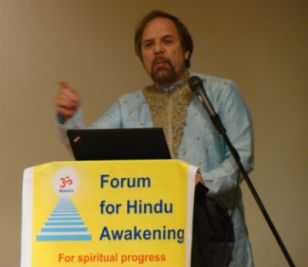
Dr Richard L. Benkin speaking in a public forumDr. Richard L. Benkin

If my recent trip to South Asia taught me anything, it is that the solution to stopping the ethnic cleansing of Hindus in Bangladesh lies within us. And so do the obstacles. This is a serious human rights travesty that has been flying under the world’s radar for at least 40 years as Hindus went from almost a fifth of the new nation of Bangladesh (1971) to less than eight percent today. Throughout that period, there has been a torrent of confirmed and specifically anti-Hindu atrocities that have proceeded with the tacit approval of successive governments representing all political stripes in Bangladesh. According to Professor Sachi Dastidar of the State University of New York, the number of Hindus murdered, forced to emigrate, and forced to convert to Islam, or never born as a direct result come to 50 million. That is a third of Bangladesh’s current population, which shows how that country is as much Hindu as Muslim—or would be were it not for this creeping jihad.

Bangladesh still has the world’s third largest Hindu population with about 12 million Hindus living without protection from radicals and others who can attack and abuse them with impunity because the government they helped vote into office turns a blind eye toward their victimization. And yet, what major media outlets report this ongoing ethnic cleansing? What internationally hailed human rights organizations champion a fight against it—or even mention it in any significant way? That the answer to both questions is “none” does not mean they all are anti-Hindu or funded by of petro dollars.

As Ceasar said in William Shakespeare’s play, “The fault dear Brutus is not in the stars but in ourselves.”

On February 18, I was in Bangladesh where I embraced Hindu victims and confronted their victimizers, stood with their defenders Hindu and Muslim, and confronted Bangladeshi officials participating in and allowing these atrocities. I had also spent a great deal of time with Advocate Rabindra Ghosh, who puts his own well-being aside to fight to stop the atrocities.

That night, I arrived at my hotel to find two Hindu Members of Parliament (MPs), waiting to speak with me. They came expecting well-wishes, photo-ops, and hand-wringing about how bad others are. But they represent Dinajpur and Khulna, two areas in Bangladesh where anti-Hindus abuse is a way of life, where the Awami League government continues its predecessors’ practice of purposely turning a blind eye to this “quiet case of ethnic cleansing,” and where these government officials who say they represent the Bangladeshi Hindu community sit silently while their co-religionists are slaughtered. Having freshly returned from one of them where I met victim after victim, I was in no mood for their sort of false solidarity. So, after a brief introduction, I asked, “Okay, tell me what you—as Hindu MPs—are doing about the ethnic cleansing of your people here.”

“We have done many things. “ Answered the man from Khulna where fresh atrocities are occurring even while I am writing this.

“Many things? You know that’s [a lie],” I replied sharply. “Hindus in your district are being raped and killed, their land snatched, Mandirs destroyed; and no prosecutions. So, don’t tell me that you’re doing ‘many things.’ How many Hindu Members of Parliament are there?”

“Seventeen.”

..“Seventeen? That’s a lot of people; and you mean to tell me that with that many in parliament, you still haven’t done anything?”

“Well, the party—“

“That’s your other mistake, and I tried to tell this to Hindus before the last election. Minorities need to form their own political party. Right now, the Awami League doesn’t have to do anything. They know you’ll vote for them anyway. And the BNP doesn’t have to do anything because they know you won’t vote for them.”

PIC_3916 (2)And I went on for some time, peppering them, demanding, egging them on, etc. I told them that they should be ashamed that I come half way around the world while they do nothing here for their own people. Pointing to Rabindra Ghosh, I said that “he has extensive evidence that there are Members of Parliament involved big time in grabbing Hindu land, even rapes and other atrocities. You know what your enemies think of you as you sit next to them smiling? ‘We can steal their land, rape their daughters and sisters, and just give them a few Taka.”

Someone started to say something about there being problems. “Problems? Problems? I don’t want to hear about problems,” I said. “You think I don’t have problems? Or that he [Rabindra Ghosh] has none? ‘Problems’ are just an excuse for not doing what’s right.”

They sat either with their face buried in their hands (people in the lobby were beginning to take notice) or looked up at the ceiling; but I would not let up. For years, we have been struggling against a system and a government that wants to keep the issue buried while keeping the destruction of Bangladesh’s Hindus going strong. People like these two men are in a position to do something about it but do not.

I reminded them that an American Christian, former US Congressman Bob Dold raised the issue of the Bangladeshi Hindus on the floor of the US House, while they remain silent. Referring again to Rabindra Ghosh, I noted that “this man has extensive, direct, and verified evidence of enough atrocities so that each Hindu MP can begin each session of the Jatiya Sangsad (Bangladeshi parliament) by reading a new one in the record. Perhaps they can be the agents who force the government to act or the world to take notice.”

Right now, however, they refuse to acknowledge their responsibility to act. And while they sit silently and watch their people being brutalized, organizations like Struggle for Hindu Existence under the leadership of Upananda Brhmachari, is providing a public forum to do what they are not: exposing the truth of what is happening to Hindus in Bangladesh so that people will act to stop the atrocities.

It has been more than a month since our encounter, and none of Bangladesh’s 17 Hindu MPs have taken any action or uttered a word of protest even while the atrocities continue and their constituents suffer. If these “leaders” are too cowardly to act, perhaps the voters in their districts should vote for people who are not.

GLOBAL VOICES: Social media joins war on harassment

A screen grab of the HarassMap website. A screen grab of the HarassMap website

Rebecca Chiao stepped out of her office into Cairo’s rush hour. She expected to meet a friend, but instead, the young Pennsylvania-born woman was accosted by a man who unzipped his pants and exposed his genitals.

Frozen in shock, Chiao desperately hoped for a passerby to intervene, but no one moved to stop the pervert. A few even glared at her as though she were somehow responsible for the sexual assault. Chiao’s friend arrived and she fled by car.

In the days that followed she related her story to female friends and co-workers. All shared stories of public sexual harassment.

This past week, Chiao travelled across Canada telling her story and the innovative solution she has developed to fight back. With the help of a grant from Canada’s International Development Research Centre, she is using online tools to help change Egyptian attitudes to sexual harassment and make the streets safer for women and men. It’s called HarassMap.

A 2008 survey by the Egyptian Centre for Women’s Rights found that 83 per cent of Egyptian women and had experienced sexual assault — anything from indecent exposure to groping to mob attacks, co-ordinated and politically-motivated attacks where 50 to 100 men will single out one woman, usually during a protest demonstration, and assault her.

Chiao says although Egypt has laws against sexual harassment they are poorly enforced by police. So through technology, Chiao empowers women to tackle harassment wherever it happens.

Sexual assault of women is climbing to the forefront of global issues. In India, a tidal wave of rage has risen over gang rapes. Last year’s election in the U.S. was punctuated by frighteningly ill-informed comments by high-profile political figures about rape.

Everywhere around the world, people need more information and awareness to combat sexual violence. That’s where social media can play a role.

Launched in 2010, HarassMap allows women in Egypt to report incidents of sexual harassment using Twitter, Facebook, SMS texting, email, mobile phone app, or the Harassmap.org website. Each incident report shows up as a red dot on the website’s map of Egypt pin pointing where the incident occurred. By clicking on the dot, you can read exactly what was written by the person reporting the assault.

When a woman reports an attack, she receives immediate help, including information on how and where she can get support, such as counselling or legal assistance.

The idea and technology behind HarassMap originated in Kenya, which was wracked by violence during the 2007 election. Kenyan activists created an online tool to report and map outbreaks of violence. Ushahidi, as it was called, was open sourced so anyone could easily create their own “crowdsourced” reporting system, gathering their own information to take on their own local issues.

HarassMap goes further: information gathered online supports offline activism in the streets of Cairo. It trains volunteers to talk to residents and businesses in their own neighbourhoods, teaching people about harassment and pushing them to step in when they see a woman under assault.

The information gleaned from HarassMap becomes invaluable ammunition to combat common myths about harassment. People who argue harassment doesn’t happen in their neighbourhood, or that the problem is exaggerated, are shocked when volunteers pull out the map and show them the dots, spread like measles across Cairo. Those who say women bring attacks on themselves by wearing revealing clothing are stunned to read reports from victims in conservative Muslim robes and veils.

Chiao says she and her colleagues check each report, and false ones are remarkably easy to spot. A bigger problem, she says, is misrepresentation of data. According to Chiao, 8.5 per cent of the reports to HarassMap identify a youth as the aggressor. Does that mean 8.5 per cent of all sexual harassment in Egypt is committed by youth? Not necessarily. Likewise, just because there are many reports from one particular neighbourhood, is that neighbourhood unsafe? Again no — people in that neighbourhood may simply be more aware of the HarassMap, and therefore more likely to report. Chiao says people must be very careful how they use and interpret crowdsourced data.

Chiao estimates that more than 11,000 initiatives like HarassMap have now borrowed the Ushahidi template to crowdsource solutions to a wide range of problems. The Ushahidi system was used to locate survivors after the Haiti earthquake. In the southern U.S., an environmental group called the Louisiana Bucket Brigade tracks petrochemical pollution. India Citizen Reports is an Ushahidi-based initiative tackling crime and corruption in India.

From Cairo to Mumbai to Port-au-Prince, social media is increasing the power of ordinary people to take on the big problems of our world and create positive change.

Craig and Marc Kielburger are founders of international charity and educational partner, Free The Children. Its youth empowerment event, We Day, is in eight cities across Canada this year, inspiring more than 100,000 attendees. For more information, visit www.weday.com or follow Craig on Twitter at @craigkielburger

Bangladesh widens crackdown on atheist bloggers

Bangladesh has widened a crackdown on allegedly blasphemous blogs after a threat by Islamists to march to the capital demanding the prosecution of atheist bloggers, an official said Wednesday.

The telecommunications regulator ordered two leading Internet sites to remove hundreds of posts by seven bloggers whose writings it said offended Muslims, according to its assistant director Rahman Khan.

"These writings have defamed Islam and the Prophet Mohammed. The two sites -- Somewhereinblog.net and Amarblog.com -- have removed most of the posts," Khan said.

The government that I truly want

By Ravi Navaratnam

GE13 looms and the time is at hand again to elect a new government for Malaysia.

I will be casting my vote in exercise of my fundamental right and responsibility as a citizen to express my choice for whom I would like to have lead the federal and state executive and legislature over the next five years.

So what am I looking for in a new government?

A forward-thinking government. One which is not afraid of changing the old ways of doing things.

One that will lead this country into a better future for me and my loved ones, present and future.

A government that leads with integrity and honour.

A government that is truly inclusive and embracing of the vibrant diversity of this nation.

A government that recognises the privilege it has been accorded by the voting citizens of this country.

A government that leads by example.

A government which lives up to its election promises.

A government that earns and retains our trust and respect.

A government that cherishes and upholds each and every tenet of our Rukun Negara as follows:

Our nation, Malaysia, is being dedicated to:

Achieving a greater unity of all her people;
Maintaining a democratic way of life;
Creating a just society in which the wealth of the nation shall be equitably shared;
Ensuring a liberal approach to her rich and diverse cultural tradition; and
Building a progressive society which shall be oriented to modern science and technology.

We, the people of Malaysia, pledge our united efforts to attain these ends, guided by these principles:

Belief in God
Loyalty to king and country
Upholding the constitution
Rule of the law, and
Good behaviour and morality

A government that is able to put the needs of the country ahead of race or politics.

A government which recognises that poverty is colour blind.

A government which treats all citizens equally; not on the basis of their social standing or political affiliations.

A government which ensures economic and social distributive policies are based on need and not ethnicity or race.

A government that encourages open discussion and debate and which accepts criticism as a means of improvement.

A government that has zero tolerance for corruption.

A government that takes the politics out of the crafting of our nation's education system.

A government that readily and fully accepts the right of assembly to civilly express views.

A government that upholds the independence of our judiciary and that recognises that justice must be seen to be done as well as done.

A government that believes in independent checks and balances.

All Malaysians are entitled to such a government!

Malaysia to buy 18 jet fighters, shortlists five makers

LANGKAWI, March 28 – Malaysia has shortlisted five manufacturers as it seeks to buy 18 combat The Eurofighter Typhoon plane is one of the five combat aircraft shortlisted by Malaysia to replace its ageing fleet of Russian-made MiG-29s. – Reuters picaircraft by 2015 to replace its ageing fleet of Russian-made MIG-29s, the defence minister said today.

The choice was between the Britain-backed Eurofighter Typhoon, Sweden’s SAAB JAS-39 Gripen, France’s Dassault Aviation Rafale, Boeing’s F/A 18E/F Super Hornet and Russia’s Sukhoi Su-30, Zahid Hamidi said.

“We’ve made the shortlist,” Zahid said on the sidelines of the Langkawi International Maritime and Aerospace Exhibition. “We don’t know the cost yet.”

Industry sources said the purchase could run into billions of dollars. The deal will help modernise the air power of the Southeast Asian nation, which is in dispute with China over parts of the South China Sea and with militants from the southern Philippines over its far eastern state of Sabah.

A decision on the fighters is only expected after the country holds elections, which Prime Minister Najib Razak has to call by the end of April. His Barisan Nasional coalition is predicted to win narrowly in a tight contest.

All five manufacturers were represented at the Langkawi airshow. Four manufacturers said they would be able to deliver aircraft to meet Malaysia’s requirements, while officials from Sukhoi were not immediately available for comment.

Mark Kane, managing director of the Combat Air division at BAE Systems, which is one of the manufacturers of the Typhoon, confirmed that the company has had informal talks with the Malaysian government.

“Of course there isn’t going to be a great deal of movement before the elections,” he added, speaking at a briefing also attended by British Defence Equipment Minister Philip Dunne.

The Eurofighter Typhoon is on prominent display at the entrance of the exhibition.

Dassault meanwhile said in a statement that it is ready to develop long-term business ties with Malaysia in major civil and military aviation programmes.

Industry sources said Dassault has initiated talks with Malaysian companies for support services should Malaysia choose to buy the Rafale aircraft.

On Tuesday, SAAB signed an agreement for industrial cooperation with Malaysian conglomerate DRB-HICOM Berhad with a view to including the firm in the global supply chain for the Gripen aircraft.

And Michael Gibbons, Boeing’s vice-president for the Super Hornet programme, said: “No doubt about it, we’re looking at industrial participation for Malaysian companies.” – Reuters

MP belittles Hindu beliefs

In a video recording, Zulkifli Noordin questions the concept of God and the purity of Hindus.

PETALING JAYA: Independent MP for Kulim-Bandar Baharu Zulkifli Noordin has belittled Hindu deities in a 5:34 minute video clip available on social networking site, Facebook.

Zulkifli questions the concept of God and the purity of Hindus in what appears to be a recording at a ceramah.

He recalls his conversation with a Hindu deity trader in the Masjid India area in Kuala Lumpur whose business was hit by a flood.

He then described how an Indian trader selling garlands and Hindu deities in the Masjid India area laughed when he asked the businessman why the Hindu deities did not protect the shop.

“I asked, was God hit by the flood and he said ‘yes’.” he said.

Zulkifli then said God is supposed not to get hit by the flood.

“Why didn’t you line up the Gods in front of your shop to stop the flood from entering your shop and divert it to the Muslim shops?

“Why didn’t you do that since God is suppose to protect us? (God) cannot even stop the water? And the trader tells me, ‘brother, thats a stone’.

“The Gods had to be sold off cheap. Hindus bought the deities cheap,” he added.

Zulkifli claimed that when he asked why they bought a deity with a broken tusk, the buyer said they would plaster it.

When Zulkifli insisted in knowing which God the Hindus pray to, he was told that there was a greater God than the deities.

Zulkifli then said that Hindus pray to the deities and not the “greater God” because humans are not considered pure, hence the need to pray to deities

Video : http://www.facebook.com/photo.php?v=492399650808406

Are political parties ‘berhala’?

Assigning to the party the authority to decide in preference to what God has decided would then make the party a false idol or god.
COMMENT

By Khalid Samad

I read with interest the article written by Anas Zubedy entitled “Are political parties like DAP, Umno a berhala?” that was published in FMT a few weeks ago.

The article is referring to a tweet that I sent quoting an ayat from the Quran. The problem with twitter is that due to the short messages, certain issues cannot be explained fully or as clearly. I am therefore grateful for this opportunity to discuss the question raised by Anas in his letter to FMT through a medium which allows lengthier discourses.

First it has to be clarified that the Ayat 3 of Az-Zumar was raised in connection with the debate on the use of the word “Allah” by non-Muslims. This was a discussion which Anas may or may not have been following originally. I posted the ayat as proof that the Meccan idolaters also used the word “Allah” as the Quran quoted them as saying, “We worship them for no other reason than that they bring us nearer to God.”

This meant that the main object of worship of the Meccan idolaters was Allah and the idols were mere go betweens.

Given that explanation, it is ridiculous for anyone to then say that non-Muslims cannot use the word Allah as the Quran itself proves otherwise. Of course such practice of appointing go betweens between man and Allah and ascribing to them some form of divinity to these go betweens is rejected by Islam.

This then was the original context of the discussion for which the ayat was referred. Anas came in by posing a question as to whether political parties can also become “idols”. Realising this was a new issue, I did not want to delve into it too much and made a response as follows:

Khalid: Yup unless they specify that the Quran and Sunnah are their guiding principles. Those using other guides may be a berhala.

Anas: Specification or practice? And r u saying d DAP is a berhala if u follow them coz they specify otherwise?

Seeing the discussion going away from the original intention, I chose not to pursue the matter. It would take a few more tweets than what I was ready to do at that time to clarify the issue.

It is important to note that I used the word “may” and not “is” or “has become” a berhala or idol or object of worship. Whether it becomes a “berhala” or not depends on the individual member and how he or she understands their relationship with the party.

When does something become berhala?

When does something become a “berhala” or an “idol” an object of worship in the eyes of the scholars of “Tauhid” or “Unity of God” in Islam? This question is quite easily answered by referring to another ayat in the Quran, i.e. from Chapter At-Taubah ayat 31 which means,

“They (The Christians) have taken their priests and their monks as gods besides Allah and also the Messiah son of Maryam (is taken as a god besides Allah)…..”

As this ayat was being read by the Prophet (SAW), Adi Bin Hatim who was present stood up and objected. Adi Bin Hatim was then a Christian and he said that it is not true that the Christians take their priests and monks as gods besides Allah. To this objection, the prophet then responded that “they make the lawful unlawful (halal becomes haram) and the unlawful lawful (haram becomes halal) and you obey them. You therefore take them as gods besides Allah”.

In this context it is agreed by all Islamic scholars that in Islam, the authority which decides what is lawful and unlawful, good or bad is the sole right of Allah. To ascribe this authority to anyone else is equivalent to giving them a share in godhood. Of course this pertains to those issues which are specifically mentioned in the Quran and Sunnah. For those items on which they are silent then it is taken to be allowed or lawful unless there exists a text which makes it or something similar to it unlawful.

When answering Anas’s question I was careful to use the word “may”. I am sure that the word “may” is understood to mean a possibility, not a necessity. Therefore it only applies in a situation when a member of any political party allows the party to decide for it all issues including that which has been decided by God. Assigning to the party the authority to decide in preference to what God has decided would then make the party a false idol or god.

I am sure that unlike PAS members, those Muslims who join the other political parties do not relate their religion with their politics as closely as PAS members do. There exists a separation between the two and the pursuit of their religious ideals, including those political in nature, are striven for through the party, albeit a secular party, which is willing to accept all arguments on the strength of rational and not religious, argument.

For those individual Muslims who choose this path, i.e. working in a “secular” party and seeking to influence it to conform to certain religious ideals through rational argumentation, their final reference should still be the Quran and Sunnah. In this circumstance they have not elevated the position of the party to the status of an idol or “berhala”.

For PAS, whose justification for existence is Islamic politics; then all policies and decisions are to be guided by four main sources. These are the Quran, the Sunnah, the ijma’ or consensus of jurists and qiyas which is the practice of analogy. This is clearly stipulated in the party’s constitution. All debates and arguments then take on a “religious” nature as the main references would be these sources.

In such a situation, for PAS to be a “berhala” is unlikely for it tries to put into practice obedience to God’s instruction in all decisions and policies. It therefore acknowledges God’s sovereignty in all issues by first referring to the Quran and Sunnah and when it is not found therein the ijma’ will then be referred and the practice of analogy used.

Nonetheless, it has to be clarified that this does not make the party free from error or “maksum”. Any Islamic jurist would be keen to clarify that such decisions although derived from sacred sources would still be an opinion and subject to human shortcomings. It is however, an effort to interpret and implement what is contained in the holy books guided at the same time by the opinions of the previous jurists and the proven methodology of analogy or qiyas.

At the same time it has also to be understood that issues which are “qatii” or confirmed in nature where opinion does not have a say are few and far between. In most cases certain principles and objectives are clearly defined and the way these are to be achieved can be discussed and debated as they fall under the realm of opinion.

The uniqueness of Islamic law or jurisprudence is the belief that no one speaks for God as God has spoken in the Quran and through the practices of the prophet (PBUH) which is the Sunnah. The challenge then is to derive a ruling consistent with both these fundamental sources while taking into consideration the current circumstances and it is to this end that PAS strives.

Ibrahim Ali akan pertahan kerusi Pasir Mas

Bagaimanapun, beliau belum memutuskan untuk bekerjasama dengan Barisan Nasional mahupun Pakatan Rakyat untuk mempertahankan kerusi parlimen itu.

PETALING JAYA: Ahli Parlimen Bebas Datuk Ibrahim Ali akan mempertahankan kerusi Pasir Mas yang dimenanginya dalam pilihan raya umum (PRU) ke 12 tahun 2008.

“Saya akan mempertahankan kerusi saya,” kata beliau yang turut mengetuai Pertubuhan Pribumi Perkasa Malaysia (Perkasa) ketika ditanya mengenai persediaannya untuk PRU ke 13 yang akan berlangsung pada tahun ini.

Dalam PRU ke 11 yang berlangsung pada tahun 2004, ahli politik veteran itu kalah dalam pertandingan tiga penjuru.

Ibrahim hanya memperolehi 6,198 undi berbanding dengan Datuk Abdul Rahim Ab Rahman dari Umno yang memperoleh 16,275 undi.

Kerusi tersebut dimenangi Ismail Noh dari PAS dengan majoriti undi sebanyak 1,251 undi. Ismail memperoleh 17,526 undi.

Dalam PRU yang lalu, atas tiket PAS Ibrahim menewaskan calon Umno, Ahmed Rasdi Mahmed. Beliau memperoleh 28,673 undi untuk memenangi kerusi Pasir Mas dengan majoriti 8,991 undi. Kejayaan itu diperoleh setelah mencapai kata sepakat dengan PAS.

Ketika ditanya samada beliau akan mencapai kata sepakat dengan Barisan Nasional (BN) atau Pakatan Rakyat, Ibrahim berkata beliau akan hanya membuat keputusan sedemikian setelah Parlimen dibubarkan.

Sementara itu, PAS menolak sebarang kemungkinan untuk mengadakan perjanjian dengan Ibrahim buat kali ini setelah Ibrahim mengisytiharkan dirinya ahli parlimen bebas.

“Adakah anda berjenaka? Calon PAS untuk Pasir Mas sudahpun disenaraipendek dan akan diumumkan tidak lama lagi,” kata ketua pengarah pilihanraya PAS Pusat, Dr Hatta Ramli ketika dihubungi.

Hatta yang juga merupakan ahli Parlimen Kuala Krai menambah bahawa Ibrahim boleh mempertahankan kerusi Pasir Mas dengan memilih untuk bekerjasama dengan BN.

Ambiga: Four ‘good’ reasons, my foot!

The Bersih chief dismisses the four reasons given by the Star's group editor-in-chief for Prime Minister Najib Tun Razak's delay in dissolving Parliament.

KUALA LUMPUR: In a comment piece published on the front-page of the Star today, the MCA-owned daily’s group editor-in-chief Wong Chun Wai stated four reasons for Prime Minister Najib Tun Razak’s feet-dragging on the dissolution of Parliament.

However, Bersih co-chairperson S Ambiga is not convinced with the four “good” reasons, which were:

A caretaker government cannot enter into agreements at the Langkawi International Maritime and Aerospace Exhibition (Lima).

Finishing touches to some projects and programmes.

Barisan Nasional’s candidates’ list not finalised.

Impossible at the moment for politicians to campaign freely in Lahad Datu.

Commenting on the first reason cited, Ambiga told FMT that it is not a licence to dig into the public coffers to embark on a spending spree.

“Lima contracts were all foreseeable. If this was an aim, then why lead the public on a merry ride and threaten to dissolve Parliament for more than a year?” she asked.

Ambiga stressed that it is morally wrong to extend the dissolution date on this premise, adding that the move smacked of utter desperation.

“The way they [the incumbent government] are spending suggests that they are not certain of returning to power. And that is the whole point of a caretaker government: they should not make any contracts which the next incoming government would be bound by; you must uphold the status quo.

“It is wrong to rush into contracts when it is very close to the caretaker period,” she added.

As for Wong’s second point, Ambiga argued that putting the final touches on projects and programmes is also something that was foreseeable in the past.

“This once again suggests that they are not confident. It seems that for the first time, there is a confidence crisis [in BN] with regard to retaining Putrajaya.

“However, your nervousness does not justify spending the rakyat’s money so close to the election and for keeping us on hold regarding the election date,” she said.

‘Automatic dissolution is shameful’

On BN still finalising its list of candidates, the Bersih chairperson dismissed this as the weakest possible excuse.

Ambiga said the list has to be finalised before any general election, and since Najib has been toying with the people over the election date for more than a year, BN should have worked on the list a long time ago.

“This is a pathetic excuse for delaying the dissolution of Parliament,” she added.

As for the security in Lahad Datu being used as a reason, Ambiga expressed puzzlement.

“We were previously given the impression that everything was fine and safe… for the election to be held there. This is news to me. It seems like the government is caught in its own web of misinformation… I would like to know the truth about the situation there,” she said.

Commenting on the automatic dissolution of the Negeri Sembilan State Legislative Assembly last night, Ambiga said this is not something to be proud of as it meant that the incumbent government is being booted out of power by the Federal Constitution.

“…unless we amend the Constitution and have fixed dates for elections. Then everybody’s life goes on until the date of election; now everyone’s life is on hold… this is the psychological point and it is shameful,” she added.

Furthermore, Ambiga stated that automatic dissolution is a constitutional safeguard against recalcitrant regimes.

“Let me stress again that there was nothing to be proud of allowing for an automatic dissolution, although it was legal. No self-respecting government would allow that to happen,” she added.

Najib’s delay in dissolving Parliament has led to a litany of speculations, ranging from a lack of confidence to more last-minute plots being hatched against the opposition.

Parliament is scheduled for automatic dissolution on April 27.