Share |

Tuesday, 24 May 2011

Govt does a U-turn on Puspakom

Instead of ending Puspakom's monopoly, the government changed its mind and renewed its contract for another 15 years.

PETALING JAYA: The government had gone against its own decision made in 2009 to end the Puspakom (Computerised Vehicle Inspection Centre) monopoly on vehicle inspection when it extended Puspakom’s contract for another 15 years.

According to a source familiar with the matter, the Cabinet had in 2009 passed a proposal to end Puspakom’s exclusive right and authority to inspect and test motor vehicles after its first 15-year contract was to have expired that same year.

“A proposal to review the contract was put up. The Cabinet was seeking to open up the concession to put an end to Puspakom’s monopoly, ” said the source, speaking on condition of anonymity.

However, the government did not terminate the contract immediately as it took into account Puspakom’s request to consider the large investments it had already made.

The Cabinet finally decided to give Puspakom another five years of exclusive control of the business.

“The ‘monopoly’ was supposed to end in 2014. However, Puspakom would continue to run, but it would have to face competition as others would also be given a chance to bid for the contract,” said the source.

But the decision has somehow been overruled as it was recently reported that Puspakom has renewed the concession for another 15 years (from Sept 1, 2009 to Aug 31, 2024) after the old one expired.

Bernama reported that on Feb 25 Puspakom had filed to Bursa Malaysia its new concession agreement, under which it will pay a pre-determined concession fee to the government as well as a minimum paid-up share capital of RM20 million within the concession period.

It was learnt that at least two companies had indicated interest in providing an alternative service to Puspakom and had bid for the contract then. But they pulled out after Puspakom was given a 15-year renewal.

Exclusive right

Set up in 1994, Puspakom Sdn Bhd, a unit under DRB-Hicom Bhd, was Malaysia’s first national vehicle inspection company. It has 71 branches nationwide performing more than three million inspections annually.

On Sept 1, 1994, the government, then under former prime minister Dr Mahathir Mohamad, awarded Puspakom a 15-year concession agreement for the exclusive right to undertake computerised inspection of commercial and private vehicles. It was due to end on Sept 1, 2009.

The source said that in 2007, the then transport minister Chan Kong Choy had agreed to give a 15-year extension, but it was not finalised as the contract had not officially expired.

“In 2008, there were calls for an end to Puspakom’s monopoly,” said the source.

It was reported that on Aug 31, 2008, Barisan Nasional (BN) and Pakatan Rakyat MPs, as well as NGOs and public transport groups had called for an end to the monopoly.

The then transport minister Ong Tee Keat was quoted as saying that the ministry was considering requests to allow other companies to offer the same services provided by Puspakom.

However, Ong did not say then when a decision would be made.

For years, Puspakom has been plagued by allegations of corruption, mismanagement and lack of quality service.

“To be fair, the government tried to address these various complaints, but had failed as the system was too well entrenched. Puspakom was given a chance to improve its services,” the source said.

ACA swoop

In 2008, Puspakom was in the news when the then Anti-Corruption Agency made a nationwide swoop on its staff.

ACA investigators arrested those who were believed to have accepted money from vehicle owners, charging RM80 for the thumbs-up when inspecting problematic cars and RM400 per vehicle to “pass” a vehicle’s test without it having to be sent to Puspakom.

Reports estimated that these corrupt officials were earning an additional RM1,000 a day or RM55,000 a month “in takings” from vehicles sent to Puspakom.

DRB-Hicom is controlled by powerful tycoon Syed Mokhtar Albukhary. It recently purchased stakes in Pos Malaysia Bhd.

Syed Mokhtar is said to be “the richest Bumiputera corporate figure in Malaysia” and Forbes had in 2010 ranked him as the eighth richest person in Malaysia.

Syed Mokhtar controls the Malaysia Mining Corporation (MMC), which is now involved in a joint venture with Gamuda Bhd on the massive RM36 billion Kuala Lumpur Mass Rapid Transit (MRT) project.

He also has stakes in several ports and airports, the country’s largest independent power producer Malakoff Corporation Bhd, water treatment plants, national rice supplier Bernas and national gas supplier Gas Malaysia.

Meanwhile, Puspakom was unable to comment. Its executive officer Hisham Othman said answers to FMT queries were still being drafted.

Census on welfare homes in Selangor

The recent landslide tragedy prompts the state government to act to ensure all welfare homes are approved by local councils.

KUALA LUMPUR: The Hulu Langat landslides have prompted the Selangor government to act: it will conduct a census on the number of shelter and welfare homes in the state within the next three months.

The move comes after a probe into the two landslides that killed 16 people at the Rumah Anak-anak Yatim dan Anak-anak Hidayah Madrasah Al-Taqwa on Saturday revealed that the orphanage was built without approval from the local authorities.

Dubbed “Ops Selangor Prihatin Masyarakat”, it will fall under the purview of the Selangor Welfare, Women’s Affairs, Science, Technology and Innovation and Culture Committee.

Its chairman, Rodziah Ismail, said that the first step would involve issuing a directive to all local councils and district offices to identify the existence and locations of all such homes in the state.

These include orphanages as well as homes for the elderly, the disabled and single mothers.

“The next step would be to check whether all these homes are abiding by the state government’s regulations, which include owning a licence with a certificate of fitness (CF), a business licence and an operating licence,” she said.

“If we find that there are still homes without any of these required licences, they will be asked to immediately submit their applications.”

Rodziah, the state assemblyman for Batu Tiga, added that the Pakatan Rakyat-led state government would also set up a one-stop centre to coordinate the issuance of licences by the local councils, Registrar of Societies and the Welfare Department before granting approval to the applicants.

“The Selangor government takes people’s safety seriously,” she said. “We urge all parties, be it those who manage these homes or residents of private homes, to ensure the safety of their respective properties to avoid lives from being lost through carelessness.”

Wife cries foul over ISA detainee’s ‘transfer’ to S’pore

This summary is not available. Please click here to view the post.

Shazryl Eskay Abdullah tells the US that Malaysia is a terrorist safe haven


Even on Malaysian soil, Thai Malay militants did not feel safe from possible assassination or kidnapping.  On at least one occasion, a Thai bounty hunter had bribed local Malaysian police to abduct a separatist who was in Malaysia.  Eskay had intervened to release the target, whom the Malaysian police officer had locked in the trunk of his police car.
THE CORRIDORS OF POWER
Raja Petra Kamarudin

S E C R E T SECTION 01 OF 03 KUALA LUMPUR 000263

SIPDIS
DEPT FOR EAP

E.O. 12958: DECL: 02/13/2027
TAGS: PREL, PGOV, PTER, PINR, MOPS, ASEC, TH, MY
SUBJECT: HONORARY CONSUL NOTES MALAYSIA AS SAFE HAVEN FOR THAI INSURGENCY, RELEVANCE OF OLD GUARD

REF: A. 06 KUALA LUMPUR 1764 - NO TEARS FOR THAKSIN
     B. 06 KUALA LUMPUR 1976 - SURAYUD'S VISIT

Classified By: Political Section Chief Mark D. Clark for reasons 1.4 (b and d).
Summary
1.  (S) The Honorary Thai Consul in Langkawi, Malaysian businessman Shazryl Eskay Abdullah (protect throughout), described Thai Malay separatist use of Malaysian territory as a safe haven and insurgents' views of the conflict during a February 5 meeting with polchief. 
Eskay, who was a leading Malaysian facilitator of the dialogue with Thai insurgents hosted by former Prime Minister Mahathir, argued that the older generation insurgency leaders, mostly resident in Malaysia, remained relevant as they provided needed support services and safe haven to younger leaders.  He identified only one old guard leader as actively ordering attacks, and estimated that criminal gangs and Thai security services were responsible for 70 percent of the recent violence. 
He said he did not see links yet between the Thai insurgents and regional or international terrorists, but recognized the potential and encouraged the U.S. to keep a close watch.  He also noted, however, that the insurgents received financial assistance via Singapore from unknown sources.  The now-ended peace initiative by Mahathir produced a ten-page "peace proposal" signed by old guard leaders, but which failed to gain much response from Bangkok.  Eskay believed that the February 11-12 visit to Thailand by Prime Minister Abdullah would result in the Malaysian external intelligence organization (MEIO) taking up a "facilitation" role in discussions between Thai intelligence and southern insurgents, though Eskay was pessimistic as to the prospects.
Eskay shared a 12-page paper on the insurgency and Thai Malay views, resulting from his interviews with numerous separatist leaders, which he had submitted to MEIO February. End Summary.
Honorary Consul as Mediator with Separatists
2.  (S) Polchief called on the Honorary Thai Consul in Langkawi, Shazryl Eskay Abdullah, on February 5 as part of a February 5-9 visit to Malaysian states along the border with Thailand (septel).  Eskay, a Malaysian businessman of mixed Malaysian-Thai parentage, described his significant "mediator" role in the 2005-2006 dialogue with Thai Malay insurgents, which featured former Prime Minister Mahathir Mohamad, and his frequent interaction with separatists on both sides of the border. 
Eskay said he carried out his work on the Thai insurgency largely independent of the Thai and Malaysian governments, and maintained direct links with most known Malay separatist leaders resident in Malaysia.  To bolster his credentials, he showed polchief video footage he had recorded of various meetings with men he described as elder separatist leaders and younger operators.
Old Guard Not Calling the Shots, but Still Relevant
3.  (S) Eskay noted that most of the older generation of Malay separatist leaders lived in Malaysia with the Malaysian Government's knowledge and acquiescence.  The older generation included those affiliated with the United Pattani Freedom Front (BERSATU), and the constituent groups the National Revolutionary Front (BRN-Congress), the Pattani Mujahiddin Movement (GMP), and the Pattani United Liberation Organization (PULO). 
In addition, Eskay confirmed that younger generation separatists, including those involved in recent attacks in southern Thailand, frequently entered Malaysia, particularly when the situation became "too hot" and they required safe haven.  The GOM was not always aware of the identity and travel of younger separatists.  With some exceptions, the older generation did not direct the actions of the younger insurgents.  However, Eskay argued that the relevance of the "old guard" should not be underestimated.
The older leaders, with well-established networks in Malaysia, constituted the support service for the insurgents, providing shelter and transportation, and arranging jobs, including in Thai restaurants and on rubber estates.  Because the older generation provided needed safe haven services, they remained influential and relevant to a potential peace dialogue with Thailand's Malay south.  (Comment:  Many of our other interlocutors dismissed the Mahathir-led dialogue because it focused on the older Malaysia-based separatists who no longer represent the insurgency on the ground.  End Comment.)
The Murky Business of Violence
4.  (S) Like many other Malaysians we interviewed during our trip to northern Malaysia, Eskay described the Malay insurgency as splintered, with operations currently carried out by very small cells, comprised of two or three persons.
"Brokers" would task the cells with orders and money.  Often times the affiliation of the brokers would not be clear to the cells, opening the possibility that they represented other parties, but cells would carry out "orders" nonetheless both for monetary gain and for fear that they otherwise would run afoul of other insurgents.  The cell members generally were technically unsophisticated and the brokers often provided the improvised explosive devices to be planted and detonated by the cells. 
Eskay crudely estimated that Malay separatists accounted for only 30 percent of attacks in the south with Thai army, policy and intelligence agency factions, along with criminal gangs, responsible for the balance. 
Eskay relayed that many insurgent leaders believed deposed Prime Minister Thaksin and Thai Rak Thai party advisor General Chavalit were funding much of the recent violence.  Insurgent members had denied association with New Year's Eve bombings in Bangkok.  They also disassociated themselves from many of the attacks on schools. 
The fracturing of the separatist movement and use of small cells added to the complexity and the difficulty in identifying any leaders for dialogue.  Eskay named only one old guard leader, BRN-Congress Vice President Abdullah bin Idris, as responsible for ordering some of the ongoing attacks in southern Thailand.
Safe Passage
5.  (S) In addition to the Mahathir-led dialogue and frequent informal meetings with Thai separatists, Eskay said he had arranged meetings between Malaysian intelligence and various insurgents operating in Thailand, meetings which included an understanding of safe passage within Malaysia. 
Even on Malaysian soil, Thai Malay militants did not feel safe from possible assassination or kidnapping.  On at least one occasion, a Thai bounty hunter had bribed local Malaysian police to abduct a separatist who was in Malaysia.  Eskay had intervened to release the target, whom the Malaysian police officer had locked in the trunk of his police car.
No International Terror Links...Yet
6.  (S) Eskay stated that he had seen no evidence the Malay separatists had linked up with external terrorist groups such as Al Qaeda or Jemaah Islamiyah.  He noted, however, that some insurgents received funds from a bank in Singapore (NFI), which passed through money changers in the Malaysian border town of Padang Besar, Perlis state.  Eskay did not know the origin of the funds. 
Though there was in his view a clear potential for a link-up with terrorist groups, Eskay commented that Malaysian intelligence did not pay adequate attention to this risk and he encouraged the U.S. to keep a close watch on developments.
February 2006 "Peace Proposal"
7.  (S) The Mahathir-led dialogue had resulted in a "peace proposal" in February 2006, signed by old guard leaders of BERSATU, BRN-Congress, GMP, and PULO, Eskay noted.  This had met with no substantive response from the Thai Government, but might constitute a good starting point for future dialogue.  Eskay provided us with a copy of the ten-page document, which demanded Thai Government actions in eight areas, namely:
-- Improvements in "leadership," through appointment of a Muslim Affairs Minister and a Muslim affairs coordinating body.
-- Improved government communication and networking with Malay Muslim communities.
-- Confidence-building measures, including establishing ethnic Malay quotas for government service and security forces in the south.
-- Steps to promote investment and economic development.
-- Improvements in the education infrastructure.
-- Amnesty, with individual cases approved by a Board of Review.
-- Establishment of a tribunal to investigate and try cases of human rights violations.
-- Establishment of a monitoring committee to ensure implementation of the above steps.
Malaysian External Intelligence May Take the Lead
8.  (S) Eskay said the Mahathir initiative was now over, and the Malaysian Government had made clear that the phase of "NGO involvement" in dialogue with Thai Malay separatists had come to an end.  The February 11-12 visit to Thailand by Prime Minister Abdullah likely would confirm a role for the Malaysian External Intelligence Organization (MEIO) as a "facilitator" for  future informal talks between Malay separatists and Thai Government intelligence.  Eskay supported a Malaysian Government mediation role, but he was pessimistic MEIO and its Thai counterparts would make progress.  Instead, Eskay anticipated continued violence.
The Honorary Thai Consul shared a 12-page "confidential" paper on the insurgency and Thai Malay views, resulting from his interviews with numerous separatist leaders, which he had submitted to MEIO February 1.  Eskay requested that we not share the paper and February 2006 "peace proposal" with others (we have forwarded the documents via classified email to EAP/MTS and Embassy Bangkok).
Comment
9.  (S) Eskay credibly appeared to have contacts with a large pool of old guard leaders, insurgents, and sympathizers from Thailand's Malay south.  His views on the insurgency were the most detailed we heard during five days of travel in northern Malaysia and tracked well in many respects with information and opinions from others.  His belief in the usefulness of engaging the old guard, however, contradicted the opinion of Malaysian politicians, officials and police who generally dismissed the old timers as irrelevant.  Several Malaysians volunteered they were suspicious of Eskay's contacts with Malay separatists and alleged Eskay had been involved in controversial business deals in the past (unrelated to Thailand).  Eskay informed us that he had lived some ten years in the United States circa the 1980s.
LAFLEUR

Ethnic Indian appointed as Singapore Army Chief

By Krishna Singh
7th Rangers (Mechanized)


Singapore: The appointment of Brigadier-General Ravinder Singh, a Sikh, as the next chief of the Singapore Army is the culmination of a long tradition of the community serving in uniform, both as policemen and in the armed forces, in the city-state.

Their role in Singapore belies their small number: There are only an estimated 12,000 to 15,000 Sikhs in Singapore, a nation of five million people. Their number is small even when compared to 100,000 Sikhs living in Malaysia. Sikhs came to this part of Southeast Asia as soldiers and policemen during the British era.

Brig. Gen. Singh will replace Major-General Chan Chun Sing as army chief March 25.

Singh, 46, currently deputy secretary (technology) in the defence ministry, was previously commanding officer, 3rd Signal Battalion; commander, 2nd Singapore Infantry Brigade and assistant chief of general staff (plans); head joint communications and information systems department.

He has also held the posts of head joint plans and transformation department; commander 6th Division and chief of staff – joint staff. Singh holds a Master of Arts (Engineering Science) from the University of Oxford, Britain. He also holds a Master of Science (Management of Technology) from the Massachusetts Institute of Technology, US.

He joined the Singapore Armed Forces in December 1982. Brig Gen Singh is also the first non-Chinese Chief of Army in nearly 30 years. Colonel Mancharan Singh Gill was the first ever when he took up the post in 1982, the report said.

Hat tip: Colonel Mike Nasir via e-mail. Note: This will never happen in UMNO/BN led Bolehland, as discrimination against minorities is policy.

Pemimpin Islam persoal kesetiaan bukan Muslim, mahu hak dikaji semula

Oleh Asrul Hadi Abdullah Sani

KUALA LUMPUR, 22 Mei – Beberapa pemimpin Islam mempersoalkan kesetiaan bukan Islam di negara ini sambil menggesa hak komuniti itu perlu dinilai semula jika Malaysia benar-benar dianggap sebagai negara Islam.

Bekas Yang Dipertua Yayasan Dakwah Islamiah Malaysia (Yadim) Datuk Nakhaie Ahmad (gambar) berkata, layanan kepada bukan Muslim seharusnya berdasarkan pada kontrak sosial yang telah dipersetujui.

Malah kata beliau kerajaan nampak terlalu bermurah hati kepada kaum-kaum bukan Islam.

“Dalam usaha untuk mendapatkan undi dan sokongan bukan Muslim, kita begitu bermurah hati dalam memberikan hak-hak sivil.

“Hak-hak sivil yang diberikan termasuk hak untuk mengundi, penyertaan dalam politik, memegang jawatan, pembabitan dalam ketenteraan dan sebagainya, tetapi kita memberikan mereka segala-galanya,” kata beliau.

Oleh itu, kata beliau, tawaran hak kepada bukan Islam seharusnya berdasarkan amalan-amalan agama Islam.

Nakhaie menekankan bahawa bukan Muslim yang melanggar kontrak sosial mesti dibuang negara.

Justeru beliau meminta kerajaan mengambil pendekatan tegas untuk menjaga kepentingan Muslim negara ini.

"Jika mereka melanggar perjanjian kita, maka mereka adalah musuh kita dan mesti dibuang dari negara ini," katanya.

"Kita tidak harus kompromi dengan mereka. Kita mesti tegas dengan mereka apabila menyentuh kontrak sosial yang dipersetujui," katanya lagi.

Malah kata beliau, adalah penting jawatan tinggi kerajaan tidak diberikan kepada bukan Muslim demi kepentingan negara.

“Kita tidak boleh beri jawatan penting kerajaan kepada bukan Muslim memandangkan bukan Islam tidak boleh menjadi menteri di negara Islam. Ketua tentera juga tidak boleh diberikan kepada bukan Muslim.

"Tanpa memikirkan mengenai masa depan negara kita, kita memberikan mereka semua," katanya sambil menambah tindakan memberikan hak sivil mesti diseimbangkan dengan amalan Islam agar faham keadilan dalam Islam dan sistem Islam.

Dalam pada itu, timbalan presiden Ikatan Muslimin Malaysia (ISMA) Zamri Hashim pula berkata Muslim sewajarnya melihat menjangkaui afiliasi politik demi matlamat perjuangan yang lebih besar.

“Kita mesti melihat di luar (ruang) politik. Agenda Melayu sangat penting untuk (kita) tidak boleh tidak ambil peduli dan majoriti Melayu adalah Muslim. Bukan lagi tentang PAS dan Umno,” kata timbalan mufti Perak ini.

Timbalan presiden Angkatan Belia Islam Malaysia Dr Mohd Rumaizuddin Ghazali juga menekankan bahawa Malaysia tidak harus menjadi negara sekular.

“Ini kerana ramai ahli politik bukan Muslim mahu mengisytiharkan negara ini sebagai negara sekular, maka kerajaan tidak perlu membiayai program agama.

“Mereka bimbang bahawa jika kita terima Malaysia sebagai negara Islam maka ada banyak implikasi, bermakna hanya Muslim yang ada hak untuk menerajui negara ini,” katanya.

Mohd Rumaizuddin menambah orang Melayu diinjak-injak manakala bukan Muslim pula mengambil kesempatan ke atas mereka.

“Disebabkan politik, kita masih belum bebas selepas lebih 50 tahun negara merdeka,” katanya.

Presiden Hizbut Tahrir Malaysia Abdul Hakim Othman menambah perlembagaan negara mesti digantikan kerana ia digunal oleh penjajah British.

Monday, 23 May 2011

‘Days are numbered for race-based parties’

For the first time voters are switching to multi-ethnic parties instead of supporting traditional raced-based ones, says PPP's Kayveas.

GEORGE TOWN: The young voters have had enough of race based politics and parties that represent only one race.

If one is to believe PPP president M Kayveas, the switch to multi-ethnic political parties have already begun.

Kayveas has come to this conclusion based on a study of registration of new voters done by PPP.

He said PPP, a multi-ethnic party, has registered the second highest number of new voters after Umno in the Barisan Nasional coalition.

He said his party registered more new voters for the next general election than race-based parties like MIC and MCA.

“Since December last year, the PPP has registered over 30,000 voters. Our focus is to get young voters to support BN in the next general election,” he said.

He added that PPP would stay focused in wooing young voters to support BN in the next election.

Kayveas said the issue of young voters opting for multi-ethnic based parties was discussed extensively at a BN Supreme Counci meeting recently.

“Other than Umno, the young ones are not keen to support just one race- based party,” he added.

He said coming in second to Umno in new voter registration was a plus point for PPP as Umno has the machinery to reach out to the largest number of voters who are largely Malay Muslims or bumiputeras.

Seeking another deputy minister’s post

Kayveas said PPP’s strategy was simple, which was to canvass support among the young voters, at least 5,100 of them in each of the 155 parliament constituencies where the party has a presence.

“Some 5,000 votes in our vote bank in each constituency is a huge statement as our voters can help decide who wins or loses.”

According to him, the winning majority in most of the 222 parliament seats, was an average of 5,000 during the 2008 general election.

Kayveas also said that PPP was now seeking for an additional deputy minister’s post because of its rising popularity. He claimed that PPP has around 577,000 members in 155 divisions nationwide.

In June last year, PPP senior vice-president Maglin Dennis D’Cruz was appointed as a senator and made Deputy Minister of Information, Communication and Culture.

Kayveas said the additional deputy minister post would be given to Penang PPP chairman Dr Loga Balan Mohan if the Prime Minister agrees to it .

As for seats allocation for the next election, Kayveas who plans to step down as president in 2014, said PPP has decided to change its strategy from outright lobbying to winning-ability.

“We will only contest in seats which the BN leadership feels we have the better chance of winning compared to our BN partners,” he said.

Help resolve MIED fiasco, Najib urged

The Prime Minister must find an equitable solution to the mess in MIC's education arm and placate the Indian community.

PETALING JAYA: A MIC leader wants Prime Minister Najib Tun Razak to step in and help resolve the scandal-ridden Maju Institute of Educational Development (MIED), MIC’s education arm.

V Thiagarajen, Taman Mujur MIC branch chairman, submitted a memorandum to the PM’s office last week, asking Najib to be firm in dealing with MIED.

Thiagarajen better known as VT Rajen, said he does not want a repeat of the Maika Holdings fiasco which plagued the MIC for over 30 years and left a scar in the Malaysian Indian phyche.

“Millions of hard earned ringgit from the Indian community have been mismanaged and wasted and now the same thing is happening in MIED,” he added.

Most of the Indian voters, said Rajen, deserted the MIC and BN in the 2008 general election, which led to the defeat of party heavyweights, including former president S Samy Vellu.

“It was largely due to the Maika Holdings scandal. The anger and dissatisfaction among the Indian community were not only directed at the MIC but also BN, for failing to help,” he said.

The MIED is embroiled in controversy with allegations of mismanagment, financial losses, awarding contracts to cronies, and close relatives of its chief Samy Vellu.

Rajen said the poor management of MIED must be taken seriously by the government and Najib must find an equitable solution to the mess and pacify the Indian community.

MIED hit the headlines after allegations that a total of RM5.265 million were missing from its account. Critics have also questioned the awarding of contracts relating to the construction of the Asian Institute of Medicine Science and Technology (AIMST).

Memurnikan novel ‘Panchayat’

Sebuah novel yang terbit pada 2002 sedang dimurnikan untuk diterbitkan semula.
COMMENT

Novel ‘Panchayat’ (2002) adalah novel pertama yang saya terbitkan sendiri iaitu selepas menerbitkan kumpulan cerpen ‘Sasterawan Pulau Cinta’ (2001) dan antologi cerpen ‘Vanakam’ (2002).

Tempoh dari tahun 2002 hingga sekarang bukan suatu tempoh yang lama. Namun, sistem bahasa memang sudah mengalami sedikit perubahan. Pada masa sama, perlu juga diakui bahawa terdapat beberapa sesilapan dalam novel edisi 2002 yang wajar dibetulkan sekiranya mahu diterbitkan semula.

Itulah yang saya lakukan sebagai langkah pertama menerbitkan semula Panchayat sebagai ‘Panchayat: Edisi Khas’.

Panchayat adalah majlis timbang cara dalam amalan hidup kaum India yang diwarisi daripada nenek-moyang di Benua Kecil India. Tarafnya lebih kurang seperti mahkamah penghulu dalam kalangan orang Melayu, tetapi tidak sama.

Pada asalnya, panchayat diwakili oleh lima (panca) orang warga tua terhormat di kampung berkenaan. Akan tetapi, mengikut peredaran zaman, panchayat mula dipengerusikan oleh seorang sahaja; biasanya ketua kampung.

Cerpen ‘Pancayat’ (Siru Kambam, 1996) yang berlatarkan Kubur Gajah menampilkan misteri kehilangan berhala emas Kaali Devi dan disusuli beberapa kes kematian secara tiba-tiba. Tidak ada penyelesaian yang jitu pada akhir cerpen; dan ini disengajakan.

Beberapa persoalan dalam cerpen berkenaan terjawab dalam novel Panchayat. Tetapi novel itu pula pasti menimbulkan beberapa persoalan baru yang tidak dijawab di sini. Hal ini juga disengajakan.

Suatu hal yang ketara (dan sesungguhnya saya senangi) dalam karya saya adalah penampilan budaya, bahasa, adat dan cara hidup masyarakat India yang terdiri daripada beberapa keturunan yang bangga dengan identiti keturunan masing-masing; sambil tetap menjadi sebahagian daripada Bangsa Malaysia.

Sebenarnya saya beranggapan adalah menjadi tanggungjawab saya menampilkan kebudayaan kaum India untuk tatapan dan pemahaman para pembaca yang terdiri daripada pelbagai kaum di Malaysia.

Manuskrip lesap

Lapan bab pertama novel Panchayat telah saya hasilkan antara waktu-waktu kuliah di Universiti Malaya, Kuala Lumpur pada tahun 1994.

Sewaktu saya terlantar di Pusat Perubatan Universiti Malaya (Hospital Universiti) akibat kemalangan pada bulan Februari 1994, saya meluangkan masa membina plot dalam kepala untuk sepuluh bab terakhir.

Manuskrip novel ini pada mulanya diberi kepada sebuah penerbit terkemuka tanah air. Dr Othman Puteh (Allahyarham) selaku penilai sudah meluluskan manuskrip novel ini untuk diterbitkan.

Bagaimanapun, tidak lama kemudian, saya diberitahu bahawa manuskrip itu sedang dinilai semula sebagai sebuah novel kanak-kanak!

Tidak setakat itu, kemudian manuskrip yang sama diserahkan pula kepada seorang “ustaz” di penerbitan yang sama untuk dinilai semula bagi kali yang entah keberapa. Dan seperti yang telah saya duga, manuskrip yang saya serahkan itu “lesap” begitu sahaja. Entah apa alasan sebenar yang menyebabkan novel berkenaan tidak diterbitkan.

Akhirnya, pada tahun 2002, saya membuat keputusan menerbitkan sendiri novel ini supaya kisah yang terkandung di dalamnya boleh sampai kepada khalayak pelbagai kaum.

Apa yang menarik, walaupun ditulis empat tahun sebelum istilah “adil” mula menjadi bualan ramai, novel Panchayat banyak memuatkan istilah tersebut: mampukah majlis timbang cara berlaku adil, apakah seorang individu mampu menjamin keputusan yang benar dan adil, sukarnya menegakkan keadilan dan seumpamanya.

Tapi ingat: novel ini sudah saya tulis pada tahun 1994 lagi. Jadi, jangan pula ada pihak yang memutarbelitkan cerita dan mengatakan bahawa Panchayat berciri anti-establishment!

Akhirnya, novel Panchayat yang pernah “lesap” semasa dinilai seorang “ustaz” di sebuah penerbitan terkemuka tanah air sampai ke tangan pembaca pada tahun 2002.

Rasional mudah

Novel ‘Panchayat: Edisi Khas’ pula sedang dalam usaha untuk diterbitkan berikutan permintaan daripada masyarakat pelbagai kaum yang dahaga akan sebuah novel oleh sasterawan tempatan yang mampu menggambarkan budaya kaum India di Malaysia secara yang bermaruah.

Tidak dapat dinafikan bahawa “minat” ini timbul berikutan kontroversi novel ‘Interlok Edisi Murid’ (2010) yang masih belum ada penyelesaian yang memuaskan hati semua pihak.

Sebenarnya, kerangka yang saya gunakan dalam kerja-kerja “memurnikan” novel ‘Interlok Edisi Murid’ dijadikan panduan semasa “memurnikan” novel ‘Panchayat’.

Misalnya, keseluruhan novel itu diteliti semula dari aspek kesalahan bahasa, kesalahan fakta dan perkara-perkara yang mungkin menyentuh sensitiviti pembaca pelbagai kaum.

Rasionalnya amat mudah: Sedangkan karya seorang Sasterawan Negara boleh “dimurnikan”, inikan pula karya seorang pengarang biasa seperti saya.

Saya mendapatkan bantuan daripada sekumpulan rakan-rakan dari pelbagai latar, kaum, bidang dan pendidikan untuk meneliti novel ‘Panchayat’.

Maklum balas yang mereka berikan amat membantu kerja-kerja “memurnikan” novel berkenaan sebelum diterbitkan dalam bentuk edisi khas.

Selepas kerja-kerja “pemurnian” hampir selesai, kini saya perlu pula memikirkan soal dana bagi menerbitkan ‘Panchayat: Edisi Khas’. Tanpa wang yang mencukupi, tentu sukar untuk menerbitkan novel berkenaan walaupun ISBN sudah diperoleh dan reka kulit baru sedang diusahakan.

Uthaya Sankar SB berharap novel ini dapat diterbitkan sebelum beliau menyertai World Tamil Writers Conference di Singapura pada Oktober nanti.

Sex abuse: The truth is out there

Since the police are hiding the truth about sexual crimes against children, someone has to come out and reveal the true story
COMMENT

When the nation’s top cop orders the 2010 Crime Statistics booklet be placed under the banner of Official Secrets Act, berefting the people details on the state of crime affecting women and children, what should the people make of it?

The statistics are available in a booklet prepared by Bukit Aman’s Sexual Crimes Child Abuse Division.

Women’s Aid Organisation (WAO), a non-governmental organisation, had three months ago requested for the information. The police responded saying they were unable to provide the details as the figures were classified as confidential documents.

The statistics requested include cases of domestic violence, rape, incest, domestic worker abuse and child abuse.

Thinking that the police made a mistake, WAO on April 1 wrote yet again to Bukit Aman, explaining why the statistics were needed. On April 28, WAO received the 2010 Crime Statistics from Bukit Aman with a cover letter informing that the information given was for reference and research purposes only – it cannot be shared with a third party.

Puzzled by the sudden change of affairs, WAO put in a letter of appeal asking that the decision be reconsidered.

The Inspector-General of Police, Ismail Omar, the man who barred the information from becoming public knowledge, is now claiming he had no idea of the WAO request.

“I haven’t seen the application. I have no idea what it’s about,” was how Ismail tried to wriggle his exit.

But as WAO executive director Ivy Josiah said, why are the police hiding the truth about sexual crimes against children?

Public education messages

WAO wants the information de-classified as the information in the booklet is important in learning the
trends of sexual crime to help people understand the issue of violence against women.

Said Josiah: “We need them to formulate public education messages and policy reform. For example, an important statistic is how many women die in their own homes and whether there are prior domestic violence reports so we can see if there’s a link.”

Speculating on Bukit Aman’s refusal to release the statistics unlike previously, she said it could be that the information puts the country in a bad light.

To Josiah, the best way to overcome such obstacles is by putting in place a Freedom of Information Act.

For WAO, the statistics assist it in offering services that are relevant with the changing times. And statistics are crucial as it helps the group to understand trends and effects.

Without the statistics, WAO is unable to focus its attention on those who need it most and to help combat these crimes.

In April 2009, Deputy Home Minister Chor Chee Heung reported to the Dewan Negara that compared with 1,241 rape cases reported in 2007, the figure was higher in 2008, at 4,959 cases, , showing a 300% increase.

Also, in the first two months of 2009, 769 rape cases were reported.

Statistics from the police concerning domestic violence revealed that the number of reported domestic violence cases had increased by 505 cases from 3,264 in 2006 to 3,769 in 2008.

Furthermore, data obtained showed that the number of rape cases had doubled in the last six years, from 1,217 in 2000 to 2, 341 cases in 2006.

Financial difficulties blamed

In cases of incest, a women’s group reported that the incidence of sexual abuse had increased within a five-year period (1993 to 1998). It was reported that more than 50% of all sexual abuse victims were under 16 years of age.

Interestingly, a consultant community paediatrician at the Ipoh General Hospital, Dr Amar Singh, in a letter dated April 13, 2002 to an English daily, said at least 8.3% of all Malaysian females and 2.19% of all Malaysian males had been sexually abused or had suffered incest in their childhood.

According to Amar, who for many years had worked with children who had been sexually abused or who are victims of incest, very few cases of incest or sexual abuse had been brought to court and even fewer ended up with conviction. This is because under the Criminal Procedure Code, it is difficult to provide sufficient evidence particularly when it involves underage children.

Child abuse reports in Malaysia spiked to a record high last year, according to statistics, as police blame the crime on misunderstandings and financial difficulties.

The number of physical child abuse cases jumped about 26% from 203 in 2009 to 257 in 2010, the highest recorded over the last five years, police revealed to local daily, the Malay Mail, recently. In 2006, the figure was only 141.

Conversely, the Department of Social Welfare, in 2008 reported that child abuse cases stood at 2,780, unlike 2,279 in 2007 and 1,999 in 2006 respectively. It meant an average of seven children in Malaysia were reported to be victims of abuse each day in 2008.

The 2008 report revealed that neglect is the most common form of child abuse (952 cases), followed by physical abuse (863), sexual abuse (733), of which 529 (72%) were incest. In addition, 58 cases of abandoned babies were also reported in that same year.

Failure to provide care and supervision has become the most frequent cause of death among children. The World Health Organisation defines child abuse and neglect as child maltreatment,

And as has happened in Malaysia on many occasions, child abuse has also led to the death of the child.

In 2009, the Indonesian Embassy second secretary (consular affairs), Susapto Anggoro Broto, said Malaysia was the most problematic of all the Asian countries that took in Indonesian domestic helpers.

Child abuse cases on the rise

Each year, no fewer than 1,000 domestic helpers, mostly Indonesians, flee for their lives after suffering cruelty at the hands of their employers.

One such case that will forever haunt both Malaysia and Indonesia is that of Indonesian domestic helper Nirmala Bonat who made national news in 2004 after revealing the brutality faced at the hands of her employer, who abused Nirmala with an iron and boiling water. Four years later, the employer, a housewife, was sentenced to 18 years in prison.

WAO programme officer Valerie Mohan expressed unhappiness over the restrictive use of the information given, especially when the police have refused to explain the need to hide such details.

She said the statistics were necessary as it would help WAO lobby for allocation of resources not only for the NGOs but also for the welfare department and the police.

“We maintain the position that freedom and access to information is central to a democratic process and that all statistics of public interest should be made available in the public domain without any hindrance by the authorities.

“Access to such information is not only vital to WAO and civil society but it should also be recognised that we have a right to have access to such information,” Valerie wrote to an online news site.

Article 19 of the Convention on the Rights of the Child (CRC) provides that governments take appropriate measures to protect children from all forms of abuse, neglect and violence, by their parents or anyone else who looks after them. In terms of discipline, CRC upholds that any form of discipline involving violence is unacceptable.

With the number of child abuse cases on the rise in Malaysia, there is no excuse for Ismail to classify the booklet under the OSA. Doing so only puts the police force in a bad light for various reasons, be it hiding the truth or not doing its job of helping women’s groups work at putting in place strategies to raise awareness among the public.

What is more important to Ismail is to hide as much truth as possible, perhaps to paint a glossy picture of Prime Minister Najib Tun Razak’s National Key Results Areas (NKRA) under its Government Transformation Programme. It was in March last year that Deputy Home Minister Jelaing Mersat said the national crime index had dropped by 3.4% since NKRA’s crime prevention campaign was initiated in 2009.

If the NKRA was indeed successful in reducing crime rates as claimed, why then did the IGP refuse to disclose the statistics in the 2010 Crime Statistics booklet?

Or is the situation otherwise, with Ismail worried that the increasing crime rates are a harsh reflection of the “dedication” of the police force to its profession? Perhaps the indifference shown by the police in handling the rapes of the Penan women and girls is a hint as to why the IGP is uneasy in releasing the statistics to WAO.

Anyhow, since Ismail has decided to use his discretion in prohibiting the truth from reaching the people, it is now left to the Women, Family and Community Development Minister Shahrizat Jalil to step in and speak the truth, as it is out there.

The people are waiting…

MIC wants bright students to seek PSD scholarships

Palanivel also urged the Indian community to strengthen solidarity and appreciate the 1Malaysia concept.
KUALA LUMPUR: MIC president G Palanivel today advised Indian students with excellent examination results to register with the Public Service Department (PSD) for scholarships to pursue tertiary education.
He said students who had yet to do so could obtain assistance at any MIC office.

“The MIC will help applicants who go through the party. We will discuss the matter with the PSD, especially in the case of students from poor families,” he told reporters after the launch of the Telegu Association of Malaysia by Deputy Information Communication and Culture Minister Maglin Dennis D’Cruz, here.

Palanivel also urged the Indian community to strengthen solidarity and appreciate the 1Malaysia concept.
On the party’s preparations to face the next general election, he said the MIC would field candidates who could work hard and were committed to helping the people.

At the event, 50 students were honoured for achieving excellent results in the Sijil Pelajaran Malaysia (SPM) and Sijil Tinggi Pelajaran Malaysia (STPM) examinations.
- Bernama

Growing split in MIC despite Palanivel’s unity efforts

ANALYSIS, May 23 — Datuk G. Palanivel’s attempts to unite the MIC by bringing back sacked members have resulted in accusations that the new president is trying to head off a challenge to his six-month leadership of the Barisan Nasional (BN) component party.
Critics say pardoning leaders sacked just before his predecessor Datuk Seri S. Samy Vellu stepped down was a move to strengthen Palanivel’s own position rather than the party as a whole.
Earlier this year, Palanivel (picture) told The Malaysian Insider that all MIC members who were sacked or resigned would be allowed back and handed their old posts.
Last month, the central working committee (CWC) readmitted three leaders who headed the Anti-Samy Movement (GAS).
V. Mugilan reclaimed his post as deputy Youth chief while Kumar Aamaan and K.P. Samy are back in the CWC.
In the aftermath of the CWC decision, MIC Youth secretary C. Sivarraajh filed a complaint to the Registrar of Societies (RoS) claiming the decision was invalid as it breached clauses in the party’s constitution, including one that says members sacked by the party can only be readmitted two years later.
Sivaraajh’s complaint was followed by Bagan division chief Datuk Henry Benedict Asirvatham questioning the methods and motives of the president.
He openly accused Palanivel of trying to politically assassinate deputy president Datuk Dr S. Subramaniam, who is considered a potential challenger for the presidency.
Dr Subramaniam, who is MIC’s only Cabinet minister, is said to have the support of Samy Vellu, who led the party for three decades prior to this.
A significant number of Youth leaders are said to back a leadership team headed by Human Resource Minister Dr Subramaniam and Youth chief T. Mohan.
But Mugilan was reported to be readying a challenge for the Youth chief post, angering those in power now.
But party polls that were due early next year have also been postponed until after the next general election, delaying any attempt to challenge Palanivel, who took over as president in mid-December.
Those critical of Palanivel have directly or indirectly claimed that he has no grassroots support and only won in two previous party elections due to the backing of Samy Vellu.
The Malaysian Insider understands that the former president has become uneasy with the steps taken by Palanivel.
Last Thursday, Asirvatham received a show cause letter which he says he will definitely respond to.
“If I need proof, I can bring witnesses from around the country in buses who support Dr Subramaniam with proof that there are attempts to politically assassinate him,” he said when contacted by The Malaysian Insider.
He insisted that Palanivel had restored leaders sacked by Samy Vellu “not in the interests of the party, but because he is worried about Dr Subramaniam’s popularity.”
Asirvatham also claimed that Palanivel has set his sights on bringing down vice-president Datuk M. Saravanan.
When contacted, secretary-general S. Murugessan confirmed that the disciplinary committee has asked Asirvatham to show cause for his attack on Palanivel.
Political analyst Sivamurugan Pandian said the steps taken by Palanivel appeared good on the surface but it would be difficult for some to accept that the sacked leaders were automatically returned to their previous posts.
Samy Vellu supporters as well as Asirvatham have also claimed that Palanivel has opened nearly 1,000 new branches to shore up support for himself in the party.
Dr Subramaniam was one of just three MIC candidates who made it into Parliament after the 2008 elections which broke BN’s two-thirds parliamentary majority.
Palanivel, who lost in Hulu Selangor, was appointed a senator at the end of last year after he did not contest a by-election there in April 2010.
Prime Minister Datuk Seri Najib Razak is expected to call snap polls within the year and has been asking all BN component parties to ensure unity ahead of the elections.

Najib vs. Anwar: Epic Battle

Image
Such good friends
Wikileaks cables detail a struggle Najib has won so far


Hidden in thousands of pages of US diplomatic cables obtained by WikiLeaks and made available to Asia Sentinel, is a years-long battle for Malaysian political primacy between Prime Minister Najib Tun Razak and opposition leader Anwar Ibrahim.

It is a battle that Najib appears to have won, at least for now, having been named prime minister while an embattled Anwar remains in the dock, fighting charges that he sodomized an aide.

The cables, more than 900,000 words long and covering 15 years from 1993 to 2008, depict an Anwar who from the start saw Najib as a danger to him personally. He was in frequent touch with US Embassy officials, warning constantly that Najib was the perpetrator of a long series of corrupt acts in the procurement of defense equipment and that he was a danger to the exercise of democracy. 

Equally, the cables depict an American legation determined to avoid becoming ensnared in Malaysian politics by taking sides. Christopher LaFleur, US ambassador from 2004 to 2007, wrote in a July 31, 2007 cable to US Army Gen. George W. Casey that “Malaysia is important to us because it is an economically successful, stable, predominantly Muslim country that, over the longer term, may be able to support us more strongly in places like the Middle East… The overall tone in Malaysian-American relations has improved considerably since Abdullah Badawi became Prime Minister in late-2003, and we seek to translate this into substantive improvements.  Bilateral relations eroded under Abdullah's vituperative predecessor Dr Mahathir Mohamad, but Abdullah brought with him a friendlier style and an interest in projecting a more moderate image, both for himself and for his country. “

The embassy, however, watched closely as Anwar forged an unwieldy opposition coalition from the Islamist Parti Islam se-Malaysia, the Chinese Democratic Action Party and Anwar’s own Parti Keadilan Rakyat, made up largely of urban Malays. 

From the time Anwar was released from prison after a 1999 trial on what were widely seen to be bogus charges of corruption and sexual deviancy, the cables show a United Malays National Organisation paralyzed by inaction and led by an ineffective Abdullah Badawi while opposition forces raise enthusiastic crowds of tens of thousands of cheering spectators demanding political reform.

The need for Anwar’s crucial leadership of the awkward coalition is underscored by a Feb. 23, 2007 cable signed by LaFleur. “PAS valued Anwar as the ‘bridge’ between the non-Malays especially the Democratic Action Party (DAP) and PAS, and as a name-brand figure able to attract voters,” La Fleur wrote. 

PAS elders, he wrote, found it impossible to communicate with the DAP and other non-Malay parties. He quotes Azizan Abdul Razak of PAS saying that PAS and DAP were “like chickens and ducks, feeding at the same trough, but unable to talk to one another.” Anwar was seen as the only one who could blunt the “ruling National Front juggernaut.”

Anwar, LaFleur wrote on July 17, 2007, was concentrating his attacks on then Deputy Prime Minister Najib as a way to “open up fissures in UMNO middle ranks that will give him other opportunities.” 

As pressure continued on the ruling coalition, Anwar led enthusiastic rallies all over the country, culminating in the March 2008 national elections that ended the Barisan Nasional’s 50-year two-thirds hold on parliament.  The cables in general seem to indicate a sense of growing panic and paralysis on the part of Barisan leaders, particularly in UMNO, and a desire to drive Abdullah Badawi from the premiership to make way for Najib.  Anwar compounded the fears by displaying an eight-minute videotape of a prominent lawyer, VK Lingam, apparently telling a Supreme Court judge to fix key appointments in the government’s favor, thus spurring a royal inquiry into judicial corruption.

According to Ambassador James Keith, who succeeded LaFleur in July 2007, UMNO leaders worried “about Anwar's drawing power on the streets.  That Anwar and other opposition leaders proceeded successfully in the face of PM Abdullah's personal warnings should bolster the opposition's resolve and embolden them to plan further events.“ 

After Anwar returned to politics by taking back his Penang parliamentary seat in a by-election, it was only a matter of time before UMNO replaced a faltering Abdullah Badawi with Najib.  As Mahathir goaded Najib to act in April 2007, Anwar was telling the diplomats that his opposition coalition “had a ‘realistic’ opportunity to topple PM Abdullah's government by bringing over 30 or more BN MPs for a no-confidence vote in Parliament,” Keith wrote. 

All of that was brought to a halt on June 30, 2008,when former aide Mohamed Saiful Bukhary Azlan, charged that he had been sodomized by Anwar, a case that goes on to this day.  The charges brought the opposition’s momentum to a halt.

On July 23, 2008, apparently aware that this second sodomy arrest was being viewed skeptically by the international community, Malaysian Home Minister Syed Hamid Albar assembled a flock of foreign diplomats to give them the government’s view. 

According to a cable on that date signed by Keith, Syed Hamid dismissed claims of conspiracy, defended the police handling of the case and emphasized that Anwar was “being treated fairly.”

“The Government of Malaysia is becoming aware of the negative impact the Anwar case has had on its international reputation and is acting to change the negative foreign perceptions,” the cable read. 

“Today's briefing was an attempt by the GOM to influence the diplomatic community, counter Anwar's own messaging the day before, and work against critical international media attention.” 

The skeptical tone of the cable is difficult to miss. Syed Hamid, the cable said, “shared no new information with the group as a whole and we doubt the briefing swayed diplomats to change their prior opinions; indeed, we heard a good measure of cynicism from some of the gathered diplomats. The government's decision to hold the event and the Ambassador's discussion with the Home Minister afterward served to reinforce our belief that the Government of Malaysia already has decided to charge Anwar for sodomy, and it will take this next step by mid-August.” 

The cables take note of the fact that Anwar filed a police complaint on July 1, 2008 against the national police chief and the Attorney General.  He held a press conference and later headlined a mass rally, using the podium to attack Najib and his wife Rosmah Mansor, “whom he believes to be behind the current sodomy allegations.”  

Anwar's wife Wan Azizah met with Abdullah Badawi, the cable notes, “to provide him with information on Najib's connection to Anwar's accuser, and receive Abdullah's assurances her husband would be treated fairly… The sodomy case highlights that the risks for Anwar from the political status quo are significant and very personal, and provides impetus for Anwar to move ahead more aggressively to try to topple the BN government and stop Najib from becoming the next Prime Minister.”

That was 2008 and that is pretty much where the political situation still stands three years later.  Frustrated with the sodomy case and hamstrung by internal political squabbling within his coalition, Anwar may not be a spent force, but Najib has the far stronger hand.  The cables contain no smoking guns about the sodomy case. But the trial itself, with the prosecution’s numerous missteps and admissions that Najib, his wife and police officials met with Saiful before he made the allegations against Anwar, provides enough evidence of that.

Police probing fake judgment in RM400,000 suit

The Star
by NELSON BENJAMIN

JOHOR BARU: Police are probing a “mysterious” High Court judgment that ordered two companies to pay RM400,000 to a law school dropout even before the case has been set for hearing.

The judgment, believed to be fake, was said to have been obtained after a senior High Court Registrar’s signature was forged.

The matter came to light after a court official discovered that an originating summons, filed by the dropout against an investment company and a golf resort for RM400,000, had been given a judgment in favour of the plaintiff recen­tly.

The court official then carried out checks and discovered the registrar’s signature had been falsified and the decision had been given within 24 hours of the originating summons being filed.

Sources said the dropout, in his 20s, even tried to get bank officials to transfer the money from the two companies to his personal account in Bayan Lepas in Penang.

This prompted bank officials to call the police and check with the court officials when they realised something amiss about the order.

The senior court official then lodged a police report alleging that her signature had been forged to issue the said judgment.

Police have started investigations into the case for attempted cheating.

Initial investigation showed that the dropout had claimed that the money was actually investments he had made with the companies and he filed the summons to get back his funds after the companies refused to pay him.

Police are still checking to ascertain how the dropout managed to prepare the fake judgment.

A court official confirmed that a report had been lodged with the police and added that this was the first time such a case had occurred here.

Sources said that police, who picked up the dropout, released him on bail after a magistrate refused to remand the suspect.

Bersih should clean up its act, says Home Minister

The Star 
by MOHD FARHAAN SHAH

JOHOR BARU: The Coalition for Clean and Fair Elections (Bersih) should change its ways and not hold public demonstrations, said Home Minister Datuk Seri Hishammuddin Hussein.

“Demonstrations are a nuisance and may backfire.

“They (Bersih) have nothing better to do other than to instil hatred in the hearts and minds of the people and show to the world that our country is chaotic,” he told reporters after attending the closing ceremony of the Pulai Umno meeting here yesterday.

Hishammuddin vowed that police would clamp down on demonstrators if they posed a threat to national security.

He said public security was the main priority for police and that they would take action against demonstrators who create chaos.

Hishammuddin was responding to a report that Bersih was orga­nising a “Walk for Democracy” on July 9 to demand for free and fair elections.

He also said that the ministry had forwarded the proposed amendments to various Acts, including the Internal Security Act, to the Attorney-General’s Chambers and the Cabinet.

“One proposed amendment will allow rallies to be held in stadiums for which the organiser will not need a permit.

“Let them (demonstrators) shout from morning to evening inside the stadium where they will not create trouble for the public,” he said.

Earlier, Hishammuddin, who is also Umno vice-president, urged the Malays not to choose and follow pemimpin hantu (phantom leaders) who would do anything to gain power.

He said such leaders only thought of their own position and would even sell out their own race and religion for power.

Sunday, 22 May 2011

It's NOT the end of the world as we know it

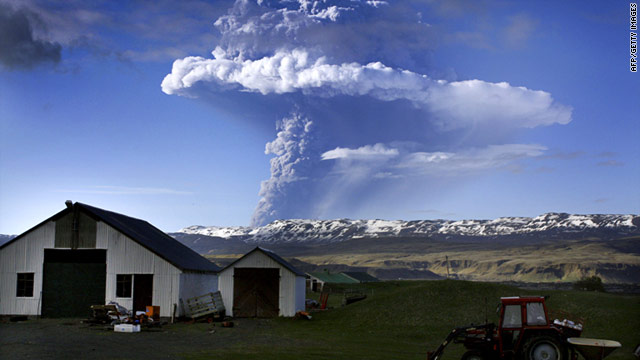
Volcano erupts beneath glacier in Iceland

A cloud of smoke and ash rises over the Grimsvotn volcano in Iceland on Saturday.(CNN) -- The Grimsvotn volcano under the Vatnajokull glacier in Iceland was erupting Saturday, according to the Icelandic Meteorological Office.

A dark cloud of smoke was rising from the glacier, and scientists were flying over the scene to evaluate the event, according to CNN affiliate TV2 Iceland.

The last eruption of the volcano was in 2004, TV2 Iceland reported.

Last year, another Icelandic eruption, of the volcano Eyjafjallajokull, attracted worldwide attention after its ash cloud disrupted air travel across Europe.

Sitrun Kapitola, manager of the Islandia Hotel Nupar, which is close to Saturday's eruption, said she could see a cloud of smoke over the mountains, and ash was falling around the hotel.

Police were telling her and others that there was no need to evacuate and there was nothing to fear, Kapitola said.

"We see it very well," she said.

"It's nothing compared to the other one," she added, referring to last year's dramatic Eyjafjallajokull eruption.

Tourists at the hotel were excited to see the eruption, watching the events unfold while eating dinner, she said.

"It happens every 10 years," she said. "It mostly produces water."

Grimsvotn is Iceland's most frequently active volcano. In 1783, a 16.7-mile fissure system from the volcano produced the world's largest known historical lava flow over a seven-month period, damaging crops and livestock, according to the Smithsonian National Museum of Natural History. A resulting famine led to the loss of one-fifth of Iceland's population, according to the Smithsonian website.

NUJ chief: Shut down Utusan Malaysia

(Malaysiakini) National Union of Journalists chief and sacked Utusan Malaysia reporter Hata Wahari has called for his former employer to be shut down and its editors left to suffer for publishing a religiously charged article earlier this month.

penang media forum 220511hata wahariHata (left), who was in Penang for a forum on press freedom organised by the Centre for Independent Journalism (CIJ), said this was the only way to make its editors and reporters take responsibility for the unsubtantiated front page article on May 7, and the following ruckus across the nation that ensued.
He added that there were existing laws like the Sedition Act and the Printing Presses and Publication Act, which could be wielded on Utusan.
This would show that the government was not practising 'double standards' when dealing with an errant newspaper, he added.
Hata said the editor-in-chief of the Umno-owned newspaper could have said 'no' to their political masters bidding to play up this potentially explosive religious issue., which alleged that the DAP was plotting with a group of pastors in Penang to install a Christian prime minister.
The duo were also accused of planning to call for the amendment of the Federal Constitution to install Christianity as the offical religion of the federation.
Based on postings from two pro-Umno bloggers, the controversial article which attracted more than 20 police reports across the country, has been refuted and condemned.
Feel the pain
"In order to make the paper responsible, something must be done to the editors and reporters...similar as what happened to The Star, Sinchew Daily and Watan during Ops Lallang in 1987," he said, in the forum titled 'Media and Ethnicity: Overcoming the Challenges'.
"When they feel the pain of how others felt (during the time of shutdown), they might think two or three times to publish what they did...we must at least shut them down for once," he added.
utusan malaysia kritsian agama rasmiHata said the Utusan had never before embarked on a religious controversy of this scale, but focussed more on 'Malay' issues since the 1960s.
He added that the paper was indeed 'racist and fanatic' over Malay issues but never Islam, and it was bent on highlighting them in all sectors, be it the social, economic or political.
"It was a surprise for me and I felt strange they had started to play on religious issues...I can bet you the previous editors-in-chief would not had allowed this to happen," he said.
He conceded that Utusan was a 'closed' organisation, in that it would never accept any external opinion or influence which is different from its stand, except those that came from its political masters, Umno.
"Whatever we say or whoever says it, the editors in there will not listen...so the best thing to do is shut it down!" he urged, in his brief presentation.
When asked how he survived 16 years in the newspaper, before being sacked for criticising his bosses, Hata explained in a roundabout way that he mostly practised self-censorship to survive.

Why Pakatan will not get the Indian votes

By Naragan,

What the Indian voters rejected in GE12 was basically the mandorist approach of Umno. And they rejected it with some vehemence.

The mandorist approach, to put it briefly, is about "powerless and deceitful representation".

MIC is the key mandore of Umno. And this is what the Indian voters rejected, Umno and their Mandores. Lock, stock and barrel.

Now compare - what is happening on Pakatan Rakyat's side.Many of the Indian PR reps got together in Penang last month for a retreat to brainstorm why the Indians were deserting PR, in spite of all the nonsense towards them from Umno.

Don't have to go far. The outcome of the meeting itself tells of the reason. The net outcome was three feeble recommendations - what a bloody shame!

Have a liaison officer for Indian issues, get more involved in the 'Interlok' issue and give more jobs in the state and local councils to Indians. What nonsense, this.

How can Pakatan get the Indian votes back with such a basic strategy worse than the one just rejected by the Indian electorate in GE 12.

The PR reps should have been given the authority to come up with the right formula to solve the core problems faced by the Indian poor and then implement their plan.

Instead they can only do what their Mandores counterparts on the other side do - come up with some ridiculous recommendations. But this group has no plenary powers. They are not empowered. They can do nothing.

They are powerless, no different than their counterparts on the other side of the political spectrum.

If PR wants to regain the Indian support, then enough of this kind of nonsense - deal with the problems squarely.

However it is my opinion that it is not in PR's DNA to be able to do this.

The net of this, is that in time all the Indian votes will desert PR. BN is not going to be the beneficiary of a PR desertion, though they may be hallucinating such.

The third alternative, the Human Rights Party (HRP) has no choice but to grow.

The Indian votes will line up behind the HRP it is only a matter of time.

You cannot stop history.

MIC joins PSD scholarship row

Wee said 363 deserving students had missed out on PDS scholarships this year. — file pic
KUALA LUMPUR, May 22 — The MIC is the latest to complain about unfair distribution of government scholarships, saying the Najib administration should investigate the grouses hurled against the Public Service Department’s (PSD) for the second year running.
 
Deputy Education Minister Datuk Dr Wee Ka Siong revealed last week that 363 straight A+ students failed to get the scholarships this year although Prime Minister Datuk Seri Najib Razak had agreed that all students scoring 8A+ and above will receive the PSD scholarships after a similar brouhaha last year.
“The Public Service Department (PSD) has failed to follow the Cabinet directives. The PSD must realise that high achievers are assets to the country,” MIC’s Datuk SK Devamany, deputy minister in the Prime Minister’s Department said in a statement.

“MIC wants an independent committee to investigate the scholarship distribution,” he added.
Devamany said the MIC wants an independent probe on the issue.
In the statement, he said students who obtained full A+ (super distinction) and above “were heartbroken to find out that their applications were rejected”.


“Many excellent students were given matriculation or diploma scholarships when they deserve scholarships for a degree programme of their choice.

“The selection criteria should be reviewed to end complaints about injustices of the awards so that it is in line with 1 Malaysia concept and Government’s Transformation Programme,” the deputy minister said.

The issue cropped up last year when the 1,500 scholarships from the PSD were said to have been unfairly distributed. The PSD scholarship programme consists of two schemes, namely the Overseas Undergraduate Scholarship Programme (PILN) and the Local Undergraduate Scholarship Programme (PIDN).

Najib took the decision this year for a problem-free distribution of scholarships by instructing the PSD to work with national oil firm Petronas and strategic development firm 1 Malaysia Development Berhad (1MDB) to provide safety nets to ensure no deserving Malaysian student was deprived of a scholarship.

But Wee, who is also the MCA Youth chief, reportedly said last Wednesday that government officers who disobeyed Cabinet directives were one of the main reasons why top deserving students failed to get scholarships.

Devamany revealed that 367 students had approached him for help to appeal for scholarships, with 200 of them complaining about unfair selection criteria by the PSD. The other 167 were rejected for matriculation programmes although they scored 6As and 7As, he said.

“Many of them were from poor families and a few underprivileged students from hardcore poor families,” he added.

Najib had set up Talent Corporation to lure back skilled Malaysians abroad for jobs offered by multinational firms keen to set up in Malaysia. Despite the move, which has received tepid response, allies within Najib’s ruling Barisan Nasional (BN) coalition have said scholarships should be given out to all deserving students without any racial quotas.

But BN parties say the PSD ignored the Cabinet directive by giving out scholarships to those who scored below those who passed with distinctions.

The scholarships offered are based on academic achievements, involvement in co-curriculum activities, socio-economic background of the families and the candidate’s performance during an interview session.
MIC secretary-general S. Murugesan also urged students who scored 9 A+ in the SPM but failed to win PSD scholarships to approach his party by Monday.

“Complaints which were forwarded through the MIC’s deputy ministers will be compiled and escalated to the relevant government agency for their urgent attention,” said Murugesan in a statement yesterday.
Murugesan echoed Wee’s remarks and said he felt “the officers at the administrative level are not being helpful”.

The MIC man also urged the government to provide equal opportunities to all races to study overseas.
Deputy Prime Minister Tan Sri Muhyiddin Yassin ordered the PSD last Friday to investigate complaints that some SPM top scorers were not offered scholarships.

Muhyiddin, who is also education minister, has stressed that his ministry was not to blame as its list of scholarship candidates had already been forwarded.

The DAP questioned how the government could make a “silly” mistake in not granting scholarships to top students despite spending billions on information technology.

Senarai mangsa tragedi tanah runtuh di Hulu Langat sehingga 5.30 pagi

Sehingga pukul 5.30 pagi ini, kesemua mangsa yang tertimbus telah dikeluarkan oleh pasukan mencari dan menyelamat dengan 16 daripadanya terkorban dan sembilan cedera.
KUALA LUMPUR: Berikut adalah senarai nama 25 mangsa yang terlibat dalam tragedi tanah runtuh di Rumah Anak-anak Yatim dan Anak-anak Hidayah Madrasah Al-Taqwa di Hulu Langat dekat sini.

Sehingga pukul 5.30 pagi ini, kesemua mangsa yang tertimbus telah dikeluarkan oleh pasukan mencari dan menyelamat dengan 16 daripadanya terkorban dan sembilan cedera.

Operasi yang bermula pukul 2.45 petang semalam berakhir kira-kira 5.30 pagi ini  dengan penemuan mangsa terakhir pada pukul 5.05 pagi.
Operasi mencari dan menyelamat dihentikan setakat ini dan  disambung pada 8 pagi ini bagi membuat gerakan terakhir untuk memastikan tidak ada lagi mangsa yang terperangkap.

Senarai nama berikut adalah menurut nama panggilan mangsa di rumah anak yatim berkenaan.
1) Azrel, 8,
2) Nael, 8,
3) Shahrul, 9,
4) Boboy, 10,
5) Farid, 34,
6) Zaim *
7) Angah *
8) Rahimi *
9) Zaid Ashwal, 18,
10) Riz, 9,
11) Lokman, 11,
12) Fahad, 9,
13) Aiman, 10,
14) Hazim, 9,
15) Mustakim *
16) Hasril, 11,
Sembilan yang terselamat iaitu:
1) Khairul, 9,
2) Hairis *
3) Harris *
4) Akmal *
5) Aizat *
6) Alaudin *
7) Irwan, 33,
8) Din, 30,
9) Syafiq, 23,
* umur tidak diketahui
-  Bernama

Tragedies from lessons unlearnt

(NST) - HIGHLAND Towers. Karak Highway. Taman Hillview. Bukit Antarabangsa. And now, Felcra Semungkis. These names alone are enough to evoke the most painful images -- of wrecked houses and cars, of families in grief and of rescue workers pulling out bodies from under piles of soil and rubble.

The continuing failure to prevent fatal landslides is nothing short of a national tragedy, one that highlights a stubborn refusal on the part of developers, local authorities and the public to learn from the harsh lessons of the past.

Few details have emerged so far, but it is, perhaps, no coincidence that this most recent disaster at the Hidayah Madrasah Al-Taqwa orphanage at km14 Jalan Hulu Langat, occurred during a long spell of daily torrential rain.

Landslides are an unfortunate but common feature of the nation's geology, part of the perils of living in a tropical country where heavy rainfall plays a large role in soil erosion and destabilisation.

In recent years, rapid urbanisation, overdevelopment and deforestation have contributed further to the destabilising of soil, with a greater number of heavy, concrete structures being built upon gradually weakened earth. According to a study, 26 landslides were reported in the media between 1993 and 2002.

These events have caused 150 deaths, 30 others injured and thousands more to be evacuated. This works out to more than five deaths in each incident.

Yet there are few signs that we have learned to live with the reality of landslides, the way the Japanese have learned to adapt to life with regular earthquakes.

Rampant deforestation continues with no blanket ban issued on hill slope development. At least one minister has defended the decision to continue development in hilly areas as a way of dealing with a rapidly growing population and increasing land scarcity.

Demand among house-buyers for hill-slope properties has not diminished either, despite warnings from the victims of previous landslides about the potential of heavy personal and economic losses one would incur when such a tragedy occurs.

Some may also point a finger at overzealous developers who fail to be fully transparent when presenting the safety details of their building projects to prospective buyers and local authorities.

The Public Works Department's slope engineering division, set up in 2004, has the expertise in slope maintenance, landslide risk assessment and methods to reduce them.

However, the lack of resources and manpower at local councils have left them ill-equipped to adequately evaluate development plans, to monitor risk areas or to undertake the quick action needed to prevent landslides.

And despite efforts to look into the causes of landslides, most of the studies have been conducted after the fact. Not enough attention has been given to coming up with workable methods and early warning systems that can warn us of landslides and therefore, minimise the loss of life,

One thing is certain, landslides are here to stay.

Lives can only be saved when one finds the right balance between the need for development and the need to protect the public. A balance that can only be attained with knowledge and political wil

Muhyiddin Yassin : Najib Watch Your Back!

By :MCKK64

Loyalty in UMNO is loyalty given when it serves the purpose of the giver. Like truth, loyalty has no place in UMNO and certainly not in Barisan Nasional.

For Pak Lah, this Muhyiddin Yassin was a friend. Someone he felt comfortable with, a friend to be depended upon. When Pak Lah expected Muhyiddin to stand beside him because he was not strong enough to stand on his own, Muhyiddin moved against him in haste and with malice. I say to Najib now….watch your back.

Muhyiddin has calculatingly entrenched himself with Mahathir and Perkasa to overtly advance Ketuanan Melayu as his cause celebre. He has done so in spite of knowing full well Najib’s commitment to make 1Malaysia the corner stone of his administration. A few days back Najib gave a lecture titled “Coalition of Moderates and Inter-Civilisational Understanding” at the Sheldonian Theatre at Oxford University. With hand on his heart Najib committed himself to a “ a society that is multi-racial, multi–religious and multi-cultural.

Muhyiddin in the same time frame, was in Kangar declaring that “UMNO’s struggle is to bring development to the Muslim community, which is the majority group in the country! We are certainly a Muslim nation. If PAS campaign about wanting a Muslim nation, we already have it. Ever since independence, our main focus was to champion the cause of Islam”

Najib and Muhyiddin are both in the same foxhole. Now who is braver? Who will blink first? It is not good sense to share a foxhole with somebody braver then you! What does UMNO want to look for in their leader? Najib to lead them towards multi-racial, multi–religious and multi-culturalism or Muhyiddin who champions Islam and Ketuanan Melayu?

Muhyiddin has made his choice. What he did to Pak Lah he will now do to Najib – demi kepentingan Bangsa, Ugama dan Negara!

Let us look at history. UMNO mobilize all its resources after the May 13 Riots to redefine nationalism within Malaysia as being “Malay First”, taking Malaysian away from the multicultural nationalism pursued by Tunku. UMNO successfully galvanized the Malay community in the 1970’s towards policies favouring this “Malay First” sensibilities.

Somewhat akin to the “Ketuanan Melayu” rhetoric’s now being touted by Perkasa and Muhyiddin.

In the 1990’s Mahathir attempted to define the national identity of Malaysia through his Bangsa Malaysia aimed at bringing greater national integration among the various ethnic group within Malaysia. But Mahathir used this Bangsa Malaysia as a means to achieving his own ends: Authoritarian rule at the costs of individual liberty and rights of the people. This saw the explosive birth of the Reformasi movement headed by DSAI, which seek liberal political reform for the nation.

The demand by the people for greater individual liberty and liberal political reforms as against the authoritarian control by UMNO is still the fundamental roots of the problems we have today in Malaysia.

Pakatan Rakyat seeks greater individual liberty and liberal political reform for the masses.
UMNO seeks to maintain its authoritarian control over Malaysia to maintain its hold over Malaysia. To do this UMNO must have two third majorities within parliament. This was lost in the 12th GE. A simple majority enabled UMNO to form government but its loss of five states and 51% of the people’s vote has meant that its “moral right” to rule has been lost. There is now a credible opposition within Parliament.

All that UMNO has done while in government are now subject to scrutiny: Past, present and certainly for the foreseeable future. The abuses and excesses in the past by UMNO are no longer something that the ISA or the OSA can keep hidden from the public domain. Increasingly corrupt practises; money politics and abuses by those holding high public office are being exposed. This deluge of exposure will surely turn into a torrent if not a tsunami should UMNO lose the 13th GE.

And so we come to today.

UMNO need to win the 13th general election. What Najib wants in multi-racial, multi–religious and multi-culturalism is at odds with what UMNO wants.

Munyiddin sees his political advancements towards the Presidency of UMNO and the Prime Ministership as being one with what UMNO wants: i.e. Ketuanan Melayu and having Islam as the official religion of Malaysia – not for its religious connotations but for what Islam could do in advancing UMNO’s cause amongst the Malays.

I remember Muhyiddin with his chest all puffed up standing in Najib’s place with the Australian Prime Minister visited Malaysia recently. I see Muhyiddin jumping to Utusan Malaysia’s defence every time that daily slams the Chinese. Racial gutter politics is Muhyiddin forte. Muhyiddin is a Malay first and Malaysian second! And 1Malaysia is not the way to go! Muhyiddin is the Malay champion.

I think the Ketuanan Melayu and Religious issues have now taken on a life of its own. Nazri’s recent free speech for all utterances is to Muhyiddin favour and will open the floodgates for Perkasa and its maniac racial and religious utterances.

KUALA LUMPUR, May 20 — Standing by his decision not to haul up Datuk Ibrahim Ali for threatening a “crusade” on Christians, Datuk Seri Mohamed Nazri Aziz has pledged the same treatment for all similar transgressions in the future.
“It is not just the opposition politicians but also those in the Barisan Nasional (BN). In fact, anybody at all… bloggers and so on,” he told The Malaysian Insider when contacted.

“The landscape has changed. Sensitive matters are now being discussed in the open.

And I am eagerly waiting for the first Chinese or non-Malay brave enough (read foolish here!) to test the waters.

Najib is committed to his multi-racial, multi–religious and multi-culturalism but to what end? Muhyiddin will play to the Malay gallery but Najib cannot. Muhyiddin will have Perkasa and Mahathir with him, Najib does not. Najib is UMNO’s President for now but that does not mean he will remain one in the run up to the 13th GE. Najibs high jinks in Mindef will dam him. Rosmah has upset enough wives of Ministers and UMNO’s first tier leaders to not be of any help to Najib. And Altantuya is a demonic sword poised millimeters from his pudgy neck – waiting to swing downward when it suits UMNO.

Najib’s political obituary will start thus:

“Even if it took many years before it became a reality, Altantuya was the nemesis of Najib’s poitical career…….”

AMEN.

Another Fairy Tale Wedding ... In Bhutan

Image(Asia Sentinel) King Jigme tells parliament he is to marry

There will be another royal wedding later this year to rival the colour and pageantry of Britain’s Prince William and Kate Middleton’s a marriage a few weeks ago. Bhutan’s 31 year-old King Jigme Khesar Namgyel Wangchuck Friday told his country’s parliament that he would be getting married "later this year".  
Like Kate, his wife-to be, Jetsun Prema, is a commoner, the daughter of an airline pilot but with distant royal connections, who was educated in India and the UK as well as Bhutan.
The wedding will take place in October when this tiny remote Himalayan kingdom of just 700,000 people, squeezed between India and China, will celebrate the marriage of a young man who combines the revered status of a monarch with informality, modesty and active concern for his country’s development.
King Jigme – known in Bhutan as K5, the fifth king – is steering his country into a developed democracy which also meets the goals of Gross National Happiness (GNH). The happiness aims – focussing on goals such as good governance and protecting the environment as well as economic growth, was set some 30 years ago by his father – King Jigme Singye Wangchuck – who told me about them in a 1987 interview
The wedding announcement came at the opening of the parliament’s seventh session – parliamentary democracy was only introduced in 2008 when Bhutan took the huge step of moving from an absolute to a constitutional monarchy.
The king, who was crowned in November 2008, arrived in a procession (chibdrel) to the tune of long trumpets or horns. He knelt and kissed the parliament’s floor three times, then ascended his large golden throne. To the accompaniment of deep-throated slow chanting, a welcome ceremony (Zhugdrel Phuensum Tshogpai) was conducted with the members of parliament being given food, drink and token envelopes of money.
The programme said that at 11am "His Majesty the Druk Gyalpo [Dragon King] addresses the Parliament", adding curiously in brackets: "If it pleases His Majesty to address the Parliament" – a remnant of an absolute monarchy, I imagine, where the King cannot be commanded!
Speaking without notes, the king dealt with issues such a tourism, industry, agriculture and hydro-power, adding that traditional values needed to be strengthened and combined with democracy to protect "our small society".
He then had a "small announcement" for the people – it was, he said, "time for me to marry". He had chosen Jetsun Prema (together left, in an official photo), who was in his eyes "beautiful, humble, kind and compassionate" as well as "warm and kind in heart and character".
Later he told me that he had felt quite nervous announcing his planned marriage – it was easier to talk about matters of state that such a personal event, he said.
Jetsun Pema was not in the ornate parliament building, but watched the ceremony on television from her home, waiting for her fiancé’s mobile phone call after the deed was done. Later, in the evening, she made her first appearance as her future husband’s fiancé, at a dinner to open Mountain Echoes, an annual India–Bhutan literary festival that starts tomorrow under the patronage of the Queen Mother, Ashi Dorji Wangmo Wangchuck.
The wedding, the king said, should not be a "grand celebration" but would be "simple in keeping with our age old traditions". He was urged however by Tshering Tobgay, the leader of the parliamentary opposition, to have a large ceremony that could be enjoyed by people from all over the country. William and Kate’s wedding was also billed as being modest and not grand, in keeping with Britain’s economic constraints, but that did not stop it being a spectacular event watched by hundreds of millions of people on television around the world.
King Jigme‘s wedding will not however capture the same television audience, but the setting of Bhutan and the elegance of its Buddhist buildings and national costumes and traditions, ensure that it will have grandeur and style, plus the king’s instinctive informality.
John Elliott blogs at Riding the Elephant. His blog appears on Asia Sentinel.