Share |

Wednesday, 23 February 2011

Najib’s bid to strike out RM200m suit by Hindraf leaders to be heard on March 24

(Bernama) - KUALA LUMPUR, Feb 22 — The High Court will hear on March 24, an application by Prime Minister Datuk Seri Najib Razak and five others to strike out a RM200 million suit filed by former Internal Security Act (ISA) detainees M. Manoharan and P. Uthayakumar.

The application will be heard before High Court Judicial Commissioner Harmindar Singh Dhaliwal.

Harmindar set the date in chambers, upon meeting Manoharan who was representing himself and Uthayakumar, and Senior Federal Counsel Diar Isda Yazmin Ismail appearing for the defendants.

Speaking to reporters, Manoharan said Harmindar would hear the matter as another judicial commissioner, Dr Prasad Sandosham Abraham, who was initially scheduled to hear the case, had recused himself from hearing the matter on the grounds that he was Najib’s classmate.

Manoharan also said that the court had ordered the parties to file written submissions before the striking out the hearing.

In the striking-out application, Najib and the five other defendants said the suit filed by Manoharan and Uthayakumar on Dec 9, last year was frivolous, vexatious and an abuse of the court process.

In the suit, Manoharan and Uthayakumar named Najib, former prime minister Tun Abdullah Ahmad Badawi, Home Minister Datuk Seri Hishammuddin Hussein, former inspector-general of police Tan Sri Musa Hassan, the Taiping detention centre superintendent and the Government as defendants.

They are seeking RM100 million each in damages, an annual interest of eight per cent be awarded on grounds that they had been wrongfully detained for 514 days from Dec 13, 2007 to May 9, 2009. — Bernama

Interlok: Chinese sell their daughters

by hartalmsm 
chinese

Page 160, scanned excerpt from ‘Interlok’.
If you thought ‘pariah’ was the worst insult there is in the novel ‘Interlok’, you’re mistaken.
It is filled with every conceivable racial stereotype of Indians and Chinese that you can think of, applied hodge-podge but in over-abundance to the main characters.
Below are scans from the book. We’re using the original, ISBN 983-62-5578-8. There is a new abridged version tagged ‘Edisi Murid’, edited for students however.


Pages 119-120: Kim Lock, the father of the Chinese main character Cing Huat, is depicted by the novelist Abdullah Hussain as someone quite prepared to sell a daughter.

Page 151: Kim Lock is tempted by the bad guy Paman Kok Leng to sell Cing Huat. Because Cing Huat is a boy, the father has qualms. However, he would consider the proposition if the child was a girl.
Pages 232-233:
‘Gua menyesal gua dapat dua [anak] lelaki saja. Kalau ada orang mau tukar anak lelakinya dengan Poh Eng dan Poh Kheng gua mau sekarang ini.’


Cing Huat, now a father himself, is portrayed by Abdullah as someone who is in turn prepared to trade his daughters (for boys) without second thought.
This novel is full of negative racial stereotypes and BTN-like slurs. Remember Nasir Safar (the prime minister’s aide) who resigned after the comment (below) attributed to him:
‘Indians came to Malaysia as beggars and Chinese especially the women came to sell their bodies’
‘Interlok’ is filled with the same characterizations of Chinese — prostitutes, womanisers, gamblers, cheats, scumbags, opium addicts, and more. Although the Chinese have no ‘pariah’ in their language, Abdullah Hussain portrays the ones who came here as debased creatures and from the dregs of society.
So you must be wondering why it is only the Indian NGOs and political parties that have raised complaints and nothing is heard from the Chinese even when they have been similarly subjected to the implied ‘pariah’ slurs?
CLICK, ‘Interlok: Chinese immigrants came here to carry shit buckets’

Sidang Media Berhubung Ekuiti Bumiputera

-Kenyataan Media-

KETELUSAN DALAM PENGAGIHAN SAHAM KHAS BUMIPUTRA

Parti Keadilan Rakyat ingin menarik perhatian rakyat kepada pengumuman terbaru yang dibuat oleh Menteri Industri dan Perdagangan Antarabangsa, Datuk Seri Mustapa Mohamad mengenai pengagihan saham khas bumiputra melalui tawaran awam permulaan (IPO).

Datuk Seri Mustapa menyatakan bahawa kerajaan Umno/BN telah berjaya meningkatkan ekuiti Bumiputra dalam sektor swasta ke aras 22%; sebahagian besarnya melalui pengagihan saham khas bumiputra yang dilaksanakan oleh kementerian beliau.

Rakyat sudah tentu merasa janggal apabila kerajaan Umno/BN mendabik dada apabila hanya berjaya meningkatkan ekuiti Bumiputra ke tahap 22% dalam tahun 2011, sedangkan ia gagal mencapai sasaran 30% yang ditetapkan untuk tahun 1990. Selepas 21 tahun dan penyelewengan saham berjumlah puluhan bilion ringgit atas nama Melayu dan Bumiputra, kini Umno/BN tidak lagi memikirkan persoalan maruahnya dan akan sanggup mendabik dada walau sekelumit mana pun peningkatan ekuiti Bumiputra.

Walau bagaimana pun, kebimbangan sebenar PKR adalah berhubung pengurusan agihan saham khas Bumiputra memandangkan skim agihan yang sama telah menyebabkan sejumlah RM52 bilion dari RM54 bilion saham yang diagihkan kepada Bumiputra lesap begitu sahaja, seperti yang diakui Perdana Menteri sendiri.

Dalam tahun 2010 sahaja, sebanyak 1.5 bilion saham dari 18 tawaran awam permulaan diagihkan kononnya kepada pelabur Bumiputra. Tahun 2010 juga menyaksikan apungan saham yang terbesar akhir-akhir ini, termasuklah yang melibatkan Petronas Chemical Group Berhad pada harga tawaran RM5.05 setiap saham dan Malaysian Marine and Heavy Engineering Holding Berhad pada harga tawaran RM3.61 setiap saham. Jika sebahagian besar dari 1.5 bilion saham yang diagihkan kepada pelabur Bumiputra itu datangnya dari saham-saham syarikat Petronas ini, maka saham yang bernilai berbilion ringgit telah pun diagihkan kepada pelabur-pelabur yang berselindung di belakang nama Bumiputra.

Mekanisme agihan inilah yang telah gagal sebelum ini hingga mewujudkan budaya politik naungan yang mencari jalan mudah mendapatkan saham dengan berselindung di sebalik alasan mencapai sasaran 30% ekuiti Bumiputra. Akhirnya, berpuluh-puluh bilion ringgit saham yang diagihkan kepada individu-individu berkepentingan dijual dengan segera untuk mendapatkan kekayaan mudah, lalu mewujudkan golongan elit kaya Melayu yang sebenarnya menjadi kaya dengan menindas orang Melayu terbanyak.

Oleh itu, mekanisme yang sama yang telah menyebabkan kerugian RM52 bilion saham Bumiputra ini perlu dirombak sama sekali.

Saya menyeru Datuk Mustapa sebagai Menteri yang bertanggungjawab untuk:

1. Mengumumkan sepenuhnya penerima 1.5 bilion saham khas Bumiputra yang diagihkan dalam tahun 2010

2. Mengumumkan rombakan mekanisme dan penambahbaikan kepada sistem agihan dan pemantauan saham khas Bumiputra untuk mengelakkan penyelewengan yang mengakibatkan kehilangan RM52 bilion saham Bumiputra tidak berulang

Saya akan membawa perkara ini dalam sidang Dewan Rakyat yang akan datang untuk memastikan ketelusan dan pertanggungjawaban pihak-pihak yang terbabit.

Parti Keadilan Rakyat percaya bahawa teras pengupayaan ekonomi Bumiputra perlu beralih dari kegilaan mencapai sasaran 30% ekuiti kepada fokus untuk meningkatkan pendapatan isi rumah keluarga Bumiputra. Mereka membentuk 75% daripada anggaran 11 juta rakyat termiskin di negara ini yang hanya mendapat pendapatan bulanan purata sebanyak RM1,500 sebulan sahaja.

Kegilaan dengan 30% sasaran ekuiti seperti yang dimainkan Umno/BN tidak akan berjaya menangani kemelut ekonomi rakyat terbanyak Bumiputra dan akan terus disalahgunakan oleh golongan elit pemerintah dan niagawan.

SAIFUDDIN NASUTION ISMAIL
SETIAUSAHA AGONG

Pakistan and the Bomb

Image
Whose finger is on the button? Pakistan parades its nuclear capable missile, while the West worries about its growing stockpile
A shaky state is building nuclear weapons at a frightening rate


Pakistan has the fastest growing nuclear arsenal in the world. The arsenal is well protected, concealed and dispersed. The Pakistani army makes every effort to deny information about the locations of its weapons out of fear of any falling into enemy hands, especially American hands.

The army is ready to use its nukes to defend their country, holding onto the national deterrent against any foreign threat. But the international community questions Pakistani control: Are the nukes safe from Pakistan's own home-grown opponents?

The assassination of Salman Taseer – the governor of Pakistan's largest province, Punjab – by his own bodyguard raises serious new questions about the process of vetting key employees in the Pakistani security infrastructure. And there's compelling reports that Pakistan is prepared to share its weapons with its closest ally, Saudi Arabia, if Riyadh feels threatened by Iran.

The Pakistani nuclear button is in the control of the country's military leaders. The democratically elected leadership has only nominal authority over them. If the country fell into the wrong hands, those of the militant Islamic jihadism and Al Qaeda, so would the arsenal. The United States and the rest of the world would face the worst security threat since the Cold War.

Pakistan is a unique nuclear weapons state. It's been the recipient of proliferation technology transfers, by theft (from the Netherlands) and from others (China), and it's been a supplier as well (North Korea, Iran, Libya). Pakistan has been a state sponsor of proliferation and tolerated private-sector proliferation as well. As a weapons state it has engaged in highly provocative behavior against its neighbor India, even initiating a limited war in 1999, and its intelligence service, the ISI, has sponsored terrorist groups that have engaged in mass-casualty terrorism inside India's cities, most famously in Mumbai, November 2008.

Pakistan's fourth military dictator, Pervez Musharraf, created a Strategic Plans Division (SPD) in the army to provide security for the arsenal. Its director, Lieutenant General Khalid Kidwai, has lectured across the world on the extensive security layers developed by the SPD, for facilities and personnel to prevent unauthorized activity by those overseeing protection of the weapons. The US has provided expertise to the SPD to help ensure security, but is kept at arms length from facilities and personnel. Pakistanis don't trust Washington's intentions.

Former deputy of the SPD, Brigadier General Feroz Khan, noted that Pakistan had up to 120 nuclear warheads, as reported by the Washington Post in December 2007. Since then Pakistan has brought new reactors on line and undoubtedly produced more. Pakistan can deliver its weapons by both intermediate-range missiles and jet aircraft, including American-supplied F16s. The bombs and the delivery systems are dispersed around a country twice the size of California, often buried deep underground.

The SPD personnel vetting process has been largely an enigma to outsiders. The ISI, which monitors military loyalty, does the bulk of the vetting. And so the assassination of Taseer by his own Elite Force bodyguard, who was angered at Taseer's support for efforts to amend Pakistan's blasphemy laws that impose death for any anti-Islamic statements, raises questions about the vetting process. According to the Pakistani press, the assassin had a track record of sympathy for extremist Islam, yet also guarded the president or prime minister 18 times during the last three years and was assigned to guard two foreign dignitaries, unnamed, before he shot the governor, according to the Associated Press.

If bodyguards for the leadership are not properly vetted, how well protected are the arsenals? We simply don't know.

Of course, if Pakistan becomes a jihadist state, then the extremists inherit the arsenal. A jihadist takeover is neither imminent nor inevitable, but it's a real possibility. After all, one of Pakistan's four previous military dictators, Zia ul Haq, was a jihadist and turned the country radically toward extremist Islam.

In this scenario, the international community could issue calls to "secure" Pakistan's nuclear weapons, but since no outsider knows where most are located, such calls would be a hollow threat. Even if force was used to capture some of the weapons, Pakistan would retain most and the expertise to build more. Finally Pakistan would use its weapons to defend itself.

Pakistan may also continue to contribute to nuclear proliferation. There are persistent, but unverified, reports of an understanding between Pakistan and Saudi Arabia for Islamabad to provide nuclear weapons to Riyadh if the Saudis feel threatened by a third party with nuclear weapons. Then Saudi defense minister and now also Crown Prince Sultan Ibn Abdul Aziz Al Saud visited Pakistan's laboratories amid great publicity in the late 1990s. Some sensationalist reports claim the Saudis keep aircraft permanently deployed in Pakistan to rush a bomb or two to Riyadh if needed. Both Pakistan and Saudi Arabia deny any secret deal, but rumors continue to surface as Iran moves closer to developing its own bomb.

US policy toward Pakistan in general and the Pakistani bombs in particular has oscillated wildly over the last 30 years between blind enchantment and unsuccessful isolation. President Ronald Reagan turned a blind eye to the program in the 1980s because he needed Zia and the ISI to fight the Soviets in Afghanistan. President George H.W. Bush sanctioned Pakistan for building the bomb in 1990; President Bill Clinton added more sanctions after the 1998 tests. Both had no choice as Congress had passed legislation tying their hands.

George W. Bush lifted the sanctions after the 9/11 attacks and poured billions of dollars into the Pakistani army, much of it unaccounted for, in return for Pakistan's help again in Afghanistan. Bush's civilian nuclear deal with India in 2005 left many Pakistanis angry at what they view as a double standard that gives India access to technology denied to Pakistan.

President Barack Obama has inherited a full agenda with Pakistan, burdened by the war in Afghanistan, the hunt for Al Qaeda and internal crisis inside Pakistan. But the nuclear issue will not go away. Obama's call for a world without nuclear weapons and his pursuit of Senate ratification of the Comprehensive Test Ban Treaty will inevitably mean arms control will return to the US-Pakistan agenda. Islamabad already presses for a civil nuclear deal like India's, but there is virtually no chance of such a deal. The international community and the Congress would oppose it given Pakistan's history of proliferation.

In the meantime Americans should stay away from idle talk in newspaper op-eds and elsewhere about "securing" Pakistan's weapons by force. Such chatter is not only unrealistic, but counterproductive and poisons the atmosphere for serious work with Pakistan on nuclear security. General Khan rightly called it "very dangerous." It gives the jihadists further ammunition for their charge that the United States, in cahoots with India and Israel, secretly plans to disarm the only Muslim state with a bomb.

Now the entire relationship is threatened by the case of Raymond Davis, a US diplomat accused of murdering two Pakistanis in Lahore. Washington wants him freed citing diplomatic immunity, many Pakistanis demand his trial in Pakistan. Some in Congress want to cut aid, which will only antagonize Pakistanis more.

The US needs a policy toward Pakistan and its weapons that emphasizes constancy, consistency and an end to double standards. Increasingly, people in Pakistan recognize that the existential threat to their freedoms comes from within, from jihadists like the Taliban and Al Qaeda, not from India or America. Now is the time to help them and ensure a rational hand is on the nuclear arsenal.

Bruce Riedel is a senior fellow at the Saban Center for Middle East Policy in the Brookings Institution. A former CIA officer, he chaired President Barack Obama's strategic review of policy toward Afghanistan and Pakistan in 2009. Reprinted with permission from the Yale Center on Globalization

Teoh’s mobile SMSes read after his death, commission told

The Star
by WANI MUTHIAH

KUALA LUMPUR: A lawyer has inferred to the Commission of Inquiry into the death of Teoh Beng Hock that the victim’s cellphone may have been tampered with after his death.

Counsel representing the Bar Council Christopher Leong pointed out that two of several messages received on July 17, 2009 had been accessed and read.

“But Teoh had died by then. Does this mean that someone had switched his phone on and read his messages?” Leong asked computer crime expert Insp Zaidi Abu Hassan at the inquiry yesterday.

Zaidi, who had been given Teoh’s cellphone, SIM card and memory card for analysis, said Leong’s theory was possible. However, he stressed that he was not the one who had done so.

Teoh, 30, was Seri Kembangan assemblyman Ean Yong Hian Wah’s political secretary. His body was found on the fifth floor of Plaza Masalam in Shah Alam on July 16, 2009.

Commission chairman Federal Court judge Tan Sri James Foong Cheng Yuen, when reading some of the Chinese messages Teoh received, asked DPP and inquiry conductor Kwan Li Sa if the messages had been translated and brought up at the earlier inquest.

When Kwan said “no,” Justice Foong asked for the messages to be translated.

Justice Foong also suggested that Teoh’s phone be given to a private investigator so he could extract data such as deleted messages. The software Zaidi used was not able to do so.

Earlier, Leong had pointed out to the commission that investigation officer ASP Ahmad Nazri Zainal, who was also a witness, was in the courtroom during the proceedings.

He was there to present exhibits during the questioning of witnesses.

Justice Foong said Ahmad Nazri should not be in the room during proceedings and asked the conducting officers to get someone else to handle the exhibits.

The police officer then left.

Ironically, Ahmad Nazri had been present in the courtroom almost throughout the earlier 18-month inquest into Teoh’s death. That inquest ended with the coroner returning an open verdict last month.

Decision on non-Muslims as Syarie lawyers set for March 4

The Star
KUALA LUMPUR: The High Court has set March 4 to decide on a test case whether a non-Muslim counsel can practise as a Syarie lawyer.

Justice Rohana Yusuf will also make a ruling on an application by the Federal Territory Islamic Religious Council to strike out the judicial review case by non-Muslim counsel Victoria Jayaseelee Martin on grounds that the civil court had no jurisdiction to hear the matter.

Speaking to reporters yesterday, the council’s lawyer Zulkifli Che Yong said the judge wants the parties to submit over the matter as Section 59 (2)(a) of Administration of Islamic Law (Federal Territories) Act has stated that the council has the right to make rules for the admission of Syarie lawyers.

Victoria’s lawyer Ranjit Singh said “the judge wants to know whether the word ‘qualification’ is wide enough to cover the issue of whether a Syarie lawyer must be a Muslim or not.”

Senior Federal Counsel Arik Sanusi Yeop Johari, who represented the Attorney-General’s Chambers, said the judge wanted to determine whether the council has the power under Section 59 to make Rule 10 of the Peguam Syarie Rules that says only Muslims can be Syariah counsels.

In her judicial review application filed on May 19, Victoria is seeking a declaration that Rule 10 is beyond the powers of the Administration of Islamic Law (Federal Territories) Act 1993.

In her affidavit, Victoria, 49, said she applied to be admitted as a Syarie lawyer in Kuala Lumpur in February, 2006.

In a statement filed to support her application, Victoria said she has a Diploma in Syariah Law and Practice from the International Islamic University Malaysia, in addition to a University of London law degree.

Najib Visits Leading Turkish Armoured Vehicle Manufacturer

By Khairdzir Md Yunus

ANKARA, Feb 22 (Bernama) -- Prime Minister Datuk Seri Najib Tun Razak visited here today the office of FNSS Savunma Sistemleri A.S., a leading Turkish manufacturer of armoured combat vehicles.

The Prime Minister, who arrived here Monday for a three-day visit to Turkey, was given a briefed on the company by its Chief Executive Officer and General Manager, K. Nail Kurt.

Also present were Malaysian Defence Minister Datuk Seri Dr Ahmad Zahid Hamidi, several Members of Parliament and senior officials.

FNNSS has been an industrial partner of Malaysia for the past 10 years through DRB-HICOM Defence Technologies Sdn Bhd or DEFTECH.

Najib later witnessed the signing of an agreement between DRB-HICOM Defence Technologies Sdn Bhd and FNSS Savunma Sistemleri A.S. on technical assistance, training and transfer of technology.

FNSS was represented by Kurt, and Deftech by its Managing Director, Datuk Seri Mohd Khamil Jamil.

Najib later watched a demonstration of the capability of armoured combat vehicles manufactured by FNSS.

Najib will be guest of honour at a dinner hosted by the Turkish Prime Minister Tuesday night.

Meet the Radio Free Sarawak folks

Unveiled: Clare Rewcastle Brown, sister-in-law of Gordon Brown, and Peter John Jaban aka ‘Papa Orang Utan’, the grandson of a Dayak headhunter, are the key people behind the mysterious Radio Free Sarawak.
Clare and Papa - Photo credit: London Evening Standard
Clare, a former BBC investigative journalist, is also the author of the Sarawak Report website.
Full story in the London Evening Standard.
Radio Free Sarawak
Sarawak Report

Congrats to Lawyers for Liberty & Pro-Mahasiswa groups

Almost forgot, wanted to write about the launch of Lawyers for Liberty, which happened more than a week ago now.
I really like these guys, not least because they take up the cases that I probably care most about, personally.
I only have brief words for here and now, but the courage, dedication and sheer stamina of these brave individuals who defend the most defenceless are a constant source of inspiration.
I feel bad naming some but not all (I confess, I’m sometimes bad with remembering names), but stalwarts like Latheefa, Surendran, Fadiah and Eric have long been at the forefront of cases like death/abuse/torture in custody, and have remained among the most outspoken critics of these brutalities.
I will leave it at those short and woefully insufficient words for now, and add only that I count it a great honour and blessing to count (if I’m not being too presumptuous) the Lawyers as Liberty as comrades and friends :)
*
At that launch that pretty Saturday afternoon (where they served delicious food) I had the opportunity to chat briefly with some student (and recently student) activists, including the UKM 4 and friends.
It was a pleasure to see the multiracial gang (no mean feat, if you’re familiar with the situation at most local unis), and enjoy their good humour :)
I figured I would also take this opportunity to congratulate the Pro-Mahasiswa groups that seem to have swept a fair number of campus elections lately :)
At the very least, I think we have more and more proof that our best and brightest will not pander blindly to authority and the establishment. The ability to think for themselves is perhaps the best gift the young can be given.
So, well done guys – looking forward to continuing to see a strong student/youth component in activism :)

Sunday, 20 February 2011

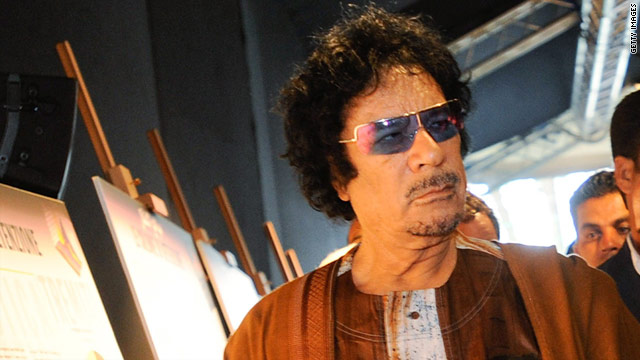
After 42 years, Libya's controversial ruler faces new threats

Experts and critics say freedom and basic rights in Libya remain widely restricted under Gadhafi's rule.

(CNN) -- Moammar Gadhafi's first grab at power occurred 42 years ago in the eastern Libyan city of Benghazi, when he led a crew of fellow military officers in taking over key government institutions on his way to usurping the nation's monarchy.

Ever since, he's referred to himself as the Leader of the Revolution -- though politically, at least, Libya has appeared to be largely stable, with few threats to Gadhafi's power.

But that all changed this past week, with reports that tens of thousands took to the streets calling for an end to Gadhafi's rule. And, once again, that change began in Benghazi.

CNN has been unable to independently confirm information on the escalating unrest in Libya, the most isolated nation in the region. The government has not responded to repeated requests from CNN for access to the country and maintains tight control over communications.

Still, phone interviews with witnesses and others on the ground suggest that some of Gadhafi's strongest opposition has been in Benghazi, where protests began and have escalated. Since then, there have been indications that the opposition movement has spread westward toward the capital Tripoli.

Why Gadhafi suddenly came under fire after decades of a strong-handed, seemingly stable rule remains a question.

One obvious factor is that Libya borders Tunisia, where popular unrest last month helped unseat authoritarian President Zine El Abidine Ben Ali after more than two decades in power. Weeks later, a similar movement contributed to the end of Egyptian President Hosni Mubarak's 30-year rule.

Gadhafi is far from alone now. Anti-government protests have popped up all around the Arab world, with pressure growing on powerful leaders in places like Bahrain, Yemen and Algeria.

But what makes Libya unique, in large part, is its colorful, controversial and powerful leader.

Gadhafi was a captain in Libya's army when, on September 1, 1969 -- which is referred to as Revolution Day in Libya -- he and others launched the coup by assuming control of key institutions in Benghazi. The overthrow was completed in two hours, according to GlobalSecurity.org, an independent provider of security information.

At the time, the United States had military aircraft at Wheelus Air Base in Libya. And Washington did not initially oppose the coup, a 2008 Congressional Research Service report noted.

Gadhafi soon established himself as one of America's most vocal, and flamboyant, enemies.

By 1972, Gadhafi urged Muslims to fight the United States and Great Britain and vowed support for black revolutionaries in America. The next year, he launched a program "to destroy imported ideologies, whether they are Eastern or Western," a U.S. State Department timeline noted. In 1979, the U.S. designated Libya as a state sponsor of terrorism.

The relationship only worsened in the 1980s, when U.S. military aircraft shot down two Libyan fighter jets. Libya's alleged attacks in Sudan, support for Nicaragua's Sandanista government and role in the bombing of a West Berlin nightclub only further stoked the ire of the administration of U.S. President Ronald Reagan, who called Gadhafi a "mad dog."

Libya's standing took a turn with the 1988 bombing of Pan Am Flight 103 over Lockerbie, Scotland, killing 270 people. World pressure intensified on Tripoli after Libyan intelligence agents were implicated.

By 1993, Gadhafi told the International Herald Tribune that he was taking a more conciliatory approach to world affairs. He called U.S. President Bill Clinton "the savior of the new world," and decried Islamic militants as "mad dogs" and "terrorists."

Clinton continued to keep pressure on Libya, signing a law imposing sanctions on companies that invested more than $40 million in that nation's petroleum industry. By 1999, Libya finally agreed to transfer the Pan Am 103 suspects for a trial in the Netherlands, leading to their conviction two years later.

While still known for sometimes unconventional comments, Gadhafi appeared to evolve into more of a statesman -- at least internationally. In 2009, he was elected by member states as head of the African Union.

That year, he also addressed the United Nations' General Assembly for the first time. Still, he proved to be more a firebrand than an even-keeled diplomat, delivering a blistering, wide-ranging 96-minute rant.

His topics ranged from the U.N. Security Council to the assassination of U.S. President John F. Kennedy to a one-state solution for Israelis and Palestinians: Isratine. Gadhafi blamed the U.N. for failing to prevent 65 wars since its founding in 1945. But he also had kind words for U.S. President Barack Obama: "We are content and happy if Obama can stay forever as the president of America," Gadhafi said.

While Gadhafi seemed to take on a new role internationally, the world had few insights into what was happening inside Libya itself.

Even as the U.N., the United States and other nations gradually began to soften their stance on Libya, reports suggested that freedom and basic rights remained widely restricted under Gadhafi.

"He hasn't changed," said Fouad Ajami, a professor at Johns Hopkins School of Advanced International Studies. "This is a monster. And the Libyan people are suffering from this."

The government maintained a tight control over its communications, clamping down on news accounts critical of Gadhafi and his colleagues. It also restricted outside media access, including denying repeated requests from CNN to enter the country this month.

On Friday night, Libyan authorities shut down the nation's access to the internet, the U.S.-based tech firm Arbor Networks reported. While there have been indications of spotty Web coverage since, Libya sent out a text message warning about the "inappropriate use of telecommunications services."

Internal political dissent was largely and often violently squashed. Moftah, an anti-government protester who did not give his full name for security reasons, said Gadhafi "always plays on fear" -- relying on a broad network of intelligence agents, secret police and others.

"He makes you afraid of your family, of your friends," Moftah told CNN. "He will tell you that his secret police are everywhere."

And yet, despite the odds, people have still risen up this month against Gadhafi.

For years, Libya profited greatly from its vast oil reserves. One of Gadhafi's first orders of business after taking over was to assume control of properties and other interests of international petroleum companies.

Still, even the great wealth of oil couldn't change the fact that Libya has suffered in the recent global economic downturn. As in much of the Arab world, youth unemployment is high in Libya -- and most of the population has never known a leader other than Gadhafi.

And the fact it began in Benghazi, despite the Libyan leader's early history, is not a surprise, said Dirk Vandewalle, an associate professor at Dartmouth and author of "A History of Modern Libya." He noted that the coastal city has traditionally been seen as somewhat disloyal to Gadhafi's regime.

Whether the Libyan demonstrators can follow the leads of their Arab colleagues in Tunisia and Egypt remains to be seen. If they do, they will have to overcome a cult of personality -- much like prevailed in those countries -- without having any fallback as far as political institutions or legislation to build off should they succeed.

Unlike Egypt, Libya has no constitution, established institutions or any kind of mechanisms in place to support a new nation. The nation and its leader are one.

"In Libya," Vandewalle said, "there is nothing beyond Gadhafi and his close circle."

Crackdown on Hindraf continues

Police crack their whips again, coming down hard on Hindraf leaders and activists at an anti-Interlok forum.
UPDATED
LUNAS: The police’s clampdown on Hindraf Makkal Sakti’s anti-Interlok campaign continues with the arrest of eight leaders and activists at an anti-Interlok forum here in Kedah this morning.
However, all eight have been released at 5.30pm, some six hours later.
The eight were Human Rights Party (HRP) Malaysia president W Sambulingam, 48, Kedah Hindraf chief R Ramu, 43, deputy chief P Muniandy, 37, CF Mani, 35, S Kuberadasan, 25, S Maniam, 57, T Raja, 52, and Perak Hindraf chief P Ramesh, 45.
They were detained when police stormed and disrupted the forum at the Kattu Raja hall in Paya Besar at 11.30am here.
All have been released on police bail. They will have to report at the Kulim police headquarters on March 19.
HRP secretary-general P Uthayakumar said that police have denied Hindraf permits to hold the anti-Interlok forum at Paya Besar and Air Itam and Simpang Ampat, Penang.
He said that police also prevented Hindraf activists and other Hindus from entering a temple in Kampar, Perak, to attend a similar forum last night.
He said the police clearly showed they would violate all human rights, including freedom of religion and assembly, enshrined under the Federal Constitution.
“They would violate all principles of human rights to halt our anti-Interlok peaceful march planned for Feb 27 in Kuala Lumpur City Centre (KLCC).
“The police clampdown is a replay of the historic Nov 25 mammoth gathering at KLCC three years ago.
‘Handcuffed, chained, locked up’
“Its déjà vu 2007,” said Uthayakumar.
Meanwhile, Hindraf adviser N Ganesan claimed that his detained colleagues were “handcuffed, chained and locked up” at the Kulim district police headquarters.
He said Sambulingam was addressing some 100 people at the Kattu Raja hall at 11.30am when a group of police officers entered and told the Hindraf leader to stop speaking.
Police gave Sambulingam and the others about 10 minutes to disperse. The activists were arrested when they defied the order.
HRP secretary-general P Uthayakumar told FMT that police have threatened to detain the Hindraf activists for seven days and asked them to hand over their saffron-coloured shirts.
“However, they did not give their shirts. They told the police that our saffron shirt is sacred,” he said.
Meanwhile, at another forum at a community hall at Bandar Baru Air Itam on the island, the police did not barge into the community hall or arrest any Hindraf leaders and activists.
But they managed to stop the forum within minutes of its commencement.
Massive barricade
Earlier, Ganesan got the ball rolling by addressing a few people who defied the police order to attend the forum.
While he was speaking, a group of policemen led by a commander known only as ASP Jamaluddin entered the hall and stopped Ganesan from speaking.
They gave Ganesan and others 10 minutes to disperse to avoid arrest. Ganesan and the rest obeyed and ended the forum.
They then left, but not without loud chants of “Hindraf, Hindraf, Hindraf”.
Using a loud hailer, Jamaluddin also ordered all journalists and cameramen to leave the area immediately.
Earlier, the police formed a massive barricade to prevent anyone from entering the hall. They have also put up blockades and booths along roads leading to the hall. A police notice was pasted outside the hall warning the people not to attend the forum.
The notice stated that the forum was illegal since it was being held without a valid police permit. Police warned they would detain anyone who showed up.
About two hours before the forum started, some police officers have also allegedly intimidated HRP/Hindraf activists to get them to cancel their plans.
When the activists showed their defiance, police began to build up their presence. Residents claimed at least 100 police personnel gathered in the area within an hour.
Another forum is scheduled at 6pm at the Meenakshi Aman Kovil in Simpang Ampat, Seberang Perai.
Political rally
Ganesan said that a police permit was not needed for an indoor forum for the people.
“We are not having a political rally. We duly paid the hall rental and the building management allowed us to organise the forum without any qualms.
“But we have been told not hold the forum and leave the area,” he said.
“Under Article 10 of the Federal Constitution, Malaysian citizens have every right to assemble,” he added.
Ganesan was puzzled why the authorities strongly opposed the anti-Interlok campaign.
“We are actually helping the Umno government to eliminate racism in the country.
“I don’t understand why the government and police are not assisting us,” he told FMT.
Earlier, in his address, Ganesan told the attendees that Interlok had projected the Indians in an undignified and distorted manner.
He said that the novel was reinforcing the stereotyped portrayal of Indians in the country as “dark, oily and scraggy community of low life”.
“Interlok must not be seen as an isolated case. It’s part of Umno government’s racist agenda to demean and degrade the Indian poor.
“The racist perpetrators want to ensure that the Indian poor will forever remain oppressed, suppressed and subservient to the Umno regime,” said Ganesan.
He also attributed the low turnout to the heavy police presence since morning.
“It’s a serious violation of human rights. Why must the police stop us from speaking to a small crowd in a peaceful manner?
“It’s a high-handed tactics of Umno regime to instil fear into us and the Indian poor.”

Coming: Interlok's ideal antidote

Come August, barring the unexpected, Malaysian readers will be able to access the ideal antidote to the controversial literary text, Interlok, which is said to be disparaging of Indian Malaysians.

A book, 'A History of Indians in Malaysia: From the Melaka Sultanate to Hindraf,' is set to be published in that month. It will tell the story of Indian Malaysians' contribution to the development of the country.

The author, Carl Vadivella Belle, is what academics would call an 'Indologist,' in the same vein scholars of Chinese studies are termed 'Sinologists.' He is in the final stages of completing the manuscript for publication.

Vadivella Belle, aged 62, became enamored of things Malaysian when he was the Attache (Development Assistance) at the Australian High Commission here in 1976-79.

Fascination with the annual Thaipusam festival led this former Lutheran to become a Hindu in 1981.

A doctoral dissertation, 'Thaipusam in Malaysia: A Hindu Festival Misunderstood,' obtained for him a Phd from Deakin University, Melbourne, 2004.

This was followed by a paper, 'The Development of Indian Political Consciousness in Malaya: Colonialism, Nationalism and Subhas Chandra Bose' that he submitted in 2009 to the Centre for Indian Diaspora Studies at the University of Hyderabad.

After that it was a logical progression for Vadivella to attempt the book he hopes would place the contributions of Indian Malaysians to national development in proper perspective.

“I think this contribution has not been accorded the recognition that is properly its due,” he told Malaysiakini in an interview at the tail end of his month-long stay in country that took in the Thaipusam celebration in Batu Caves last month and ended with the Masi Magham festival in Malacca earlier this week.

He said two earlier forays on the subject, one by Kernial Singh Sandu in 1969 ('Indian Migrations to Malaya') and the other by Sinappah Arasaratnam ('Indians in Malaysia'), were seminal works at the time of their publication, but both left out what Vadivella claimed were factors critical to the whole story: Imperial Britain's theories on race and religion that impacted adversely on Indian migrant labor in Malaya.

Vadivella said his book would examine those theories and how they affected the plight of the Indians who were brought to Malay to work in plantation agriculture, road and railway construction, and the development of ports.

“The laying of the transport infrastructure in the peninsula was in large part the work of Indians,” he asserted.

“The perception that the life of the Tamil indentured laborer in Malaya was better than what he experienced in his place of origin has to be put against such facts as the 18 per cent mortality rate from malaria, snakebite and malnutrition suffered by them in many parts of the peninsula,” he elaborated.

Vadivella said between the setting up of the Straits Settlements in 1826 and Merdeka in 1957, 4.2 million Indians had come to Malaya.
Of this number, he said 2.8 million returned to their ancestral land by the time of Independence. He said by 1957, 700,000 Indians in Malaya were local-born.

Vadivella obtained research grants for the book from the Institute of Southeast Asian Studies (ISEAS) in Singapore, which is headed by by Klang-born M. Kesavapany, a former High Commissioner of Singapore to Malaysia.

The book is scheduled to be launched in August in Singapore. This will be followed by a launch in Kuala Lumpur.

Vadivella has done research for the book among archives in Malaysia, Singapore, India and England.

The writing is done at his 20-acre farm on which he and wife Wendy live in the rural small town of Millicent, which is about 400 kilometers from Melbourne.

“The mornings I devote to my writing and the afternoons to manual labor on the farm,” said Vadivella, of a pattern that is an apparent reversal of that of the people who are the subject of his book, who rose early for their daily labor and retired in the late afternoon.

Of course, the disjunction is of no import to a man who third child, a son, Carl Jr, was born in Kuala Lumpur and spoke Tamil to the housemaid, Jayaletchumy, before learning to speak in English to his parents.

“Malaysia is a fascinating in its complexity,” said Vadivella, with evident affection for the three years he spent here.

“It's sad to see so much that's fascinating about it marred by the racial prisms through which it is viewed,” he opined.

UBF wades into ‘Interlok’ row

Literature deemed to have seditious tendencies should be banned, United Borneo Front chief Jeffrey Kitingan says.
KOTA KINABALU: A Sabah NGO has called on the government to ban any form of literature that could be deemed seditious from the school curriculum.

United Borneo Front (UBF) chief Jeffrey Kitingan said that literature which could be deemed to have seditious tendencies should be banned from schools and not form part of the humanities courses as it could potentially be in breach of Sections 3 (1) (d) or 3 (1) (e) of the Sedition Act 1948.

Jeffrey, who is a former PKR vice-president, waded into the row over the Malay language novel, Interlok, which has raised the ire of the Indians over certain portions considered derogatory to them.

He said that it was for the public prosecutor to raise the matter in court and not for the Education Department to deliberate.

“Affected communities should raise the matter with the proper authorities,” he said in a press statement.
“We have to ask ourselves what literary or historical value is achieved by the study of a work of literature and whether such study could benefit all races in this country, and not only some sections of the communities.

“A comprehensive education should be relevant to all, but if the education ministry promotes works which single out studies of certain sections of our racial communities, whether based on fact or fiction, the first thing it should ask itself is whether it would have seditious tendencies which would promote feelings of ill-will or hostility among the races in this country, ” Jefffrey said.

Sedition Act
Jeffrey added that if it was “purely a question of literary artistic merit”, then the government may as well include Dr Mahathir Mohamad’s “The Malay Dilemma” as reading material in schools.
“Authors should have the freedom to write what they want, but we can’t hide from the reality that we have in place the Sedition Act 1948 to control what we say and how we say it.”

Jeffrey said that UBF continued to advocate for total compliance with the principles behind the Commonwealth of Nations and the United Nations to which Malaysia belongs.

“The Commonwealth of Nations has a very clear statement on educational standards which says: ‘We advocate for enhancement of the quality of education and equality of opportunities, for both boys and girls, through improved teaching and management processes.

“‘We engage in brokering for the promotion of respect and understanding and social cohesion in the Commonwealth through education’.

“If the novel does nothing to promote respect, understanding and social cohesion, it is not up to Commonwealth standards for use in our schools,” he said

HRP leaders arrested at anti-Interlok forum

Seven leaders and activists of the Human Rights Party (HRP) were arrested earlier today during a forum held by the Indian-based group's on the controversial 'Interlok' novel in Kulim, Kedah.

police arrest human rights party activist in interlok forum 200211 2According to HRP pro-tem secretary-general P Uthayakumar, the seven include HRP president W Sambulingam, Kedah HRP deputy-chief P Muniandy.

Among the others were Kedah HRP coordinator R Ramu, Selangor HRP deputy chief MS Maniam, and activists S Dass, D Raja and CF Mani.

Uthayakumar said the party also expects arrests to be made at a similar forum to be held this afternoon in Farlim, Penang.

The police, Uthayakumar added, have put up notices of arrest against those attending the forum.
According to HRP information chief S Jayathas, all seven activists who were arrested in Kulim were taken to the Kulim district police station.
The police, said Jayathas in a posting on the group's website, had said the forum was illegally held after its application for a permit was rejected.
The forum is part of HRP's nationwide campaign that will culminate on Feb 27 in a march against racism and the Interlok novel.
hindraf feb 27 march against interlok 030211 posterInterlok, written by national laureate Abdullah Hussain, has been accused of perpetuating racial stereotypes.
T-shirts confiscated, again
When contacted, Uthayakumar said the police at the Kulim police station were attempting to repeat the efforts made last week to confiscate the orange-coloured T-shirts worn by the HRP activists as a condition for their release.
"They say that if the HRP activists do not surrender their shirts, they will be locked up for seven days," said Uthayakumar.
"But to us, we will not surrender the shirts. They have become (like) sacred to us," he added.
Uthayakumar, who is also legal advisor to Hindraf, noted that thousands of PAS Youth members gathered in Kota Sarang Semut in Kedah without being disturbed by the police.
These activists nor the members of other NGOs and parties ordered to surrender their 'kopiah' or shirts, he added.
Meanwhile, the group has also reported at 2.45pm that their gathering at Farlin, Penang was also scuttled.
The Penang CPO reportedly dispersed the forum "forcibly" leaving the scene "like a war zone with the Indian poor scattered all around on the one hand, and the over 100 police having cordoned off the Farlin Hall".
They also expect police raids and arrests at their 6.30pm forum at Simpang Ampat Sri Meenachiamman Temple, Prai.
[More to follow]

Libya forces 'open fire' at funeral


Libyan security forces have reportedly opened fire at a funeral in the eastern city of Benghazi, killing at least 15 people and injuring scores more as protests against Muammar Gaddafi, the country's long-time ruler, continued.
The victims on Saturday were mourning the loss of protesters who had been killed during anti-government demonstrations in the city during the past week, witnesses said, bringing the death toll to more than 100 in six days of unrest, according to opposition groups.
A doctor from Benghazi told Al Jazeera that the Al Jalah hospital where he works had received 15 bodies and was treating numerous people following the shootings at the funeral.
He said the hospital had counted 44 deaths in total in three days, adding that it was struggling to treat the wounded.
"This is not a well-equipped hospital and these injuries come in waves. All are very serious injuries, involving the head, the chest and the abdomen. They are bullet injuries from high-velocity rifles.
"All are civilians aged from 13 to 35, no police or military injuries," he said, adding that there was no way the wounds could have come from anyone other than security forces.
"Absolutely a shoot-to-kill policy," he said.
Hospitals 'overwhelmed'
The deaths came amid claims that a military brigade in Benghazi had fallen to the people. The doctor in Benghazi told Al Jazeera that protesters stormed the building on Saturday.
Live Blog
The violence came after Human Rights Watch said earlier on Saturday that 84 people had died over the past three days.
Ahmed, a businessman and resident of Benghazi who declined to give his real name for his own safety, told Al Jazeera that hospitals in the city were overwhelmed with the number of dead and injured and were running out of blood.
"It's a big, big massacre. We've never heard of anything like this before. It's horrible," he said.
"The shooting is still taking place right now. We're about 3km away from it, and we saw this morning army troops coming into the city. You can hear the shooting now. They don't care about us."
Unrest 'spreading'
The unrest in Libya has largely been centred in the eastern cities of Benghazi, Bayda and Tobruk. But Al Jazeera has received reports that the protests have begun to spread to the country's west.
Witnesses said thousands of people took part in peaceful protests in the western city of Misurata. They were demonstrating against state brutality, rather than calling for a change in government.

Benghazi resident says hospitals in the city are overwhelmed [Al Jazeera]
Mohamed Abdulmalek, the chairman of Libya Watch - a human rights group that monitors abuses within the country - said the delay of protests in the west was due to the heavy presence of security forces there.
"The delay in the uprising in the west was not because the people did not want to go out," he told Al Jazeera from the UK.
"But the security presence in Tripoli, for example, was so intense that people gathered individually in the beginning. The Libyan regime anticipated this so the squares in Tripoli were occupied by security forces and therefore people were not allowed to gather.
"But eventually, the pressure on the capital started from outside Tripoli and now you see the people revolting. We have no doubt that the east and the west will unite."
Verifying news from Libya has been difficult since the protests began, thanks to restrictions on journalists entering the country, as well as internet and mobile phone black outs imposed by the government.
The Libyan government has blocked Al Jazeera's TV signal in the country and people have also reported that the network's website is inaccessible from there. 
'Ready to die'
Protests in the country began on February 14, and three days later tens of thousands of anti-government demonstrators seeking to oust Gaddafi took to the streets in what organisers called a "day of rage" modelled after similar protests in Tunisia and Egypt that ousted longtime leaders there.
Gaddafi has ruled Libya since 1969.

Twitter Reaction

Libya Protests

bulutuzun profile
bulutuzun RT @Libyayalibya: please save us from #Gaddafi. He is murdering our people. please spread the word. Help #libya. We need freedom #libya #benghazi#feb1723 seconds ago · reply
skotmaudlin profile
skotmaudlin RT @Shhh527: /@IbnOmar2005: contact in libya:#GADDAFI SHOOTING PEOPLE IN#TRIPOLI FROM HELICOPTER#LIBYA #fashloom5 minutes ago · reply
4 new tweets
detronizator profile
detronizator RT @iyad_elbaghdadi: Reports of fire and thick smoke in Bab Alaziziya, close to #Gaddafiresidence in #Tripoli #Feb17#Libya28 seconds ago · reply
Jnoubiyeh profile
Jnoubiyeh Al Jazeera Confirmed: Women and children are amongst the dead in the horrific #Benghazimassacre ordered by #Gaddafi.#Libya #Feb17 #Libyans4 hours ago · reply60+ recent retweets
Libyan state television, however, has made little mention of the anti-government protests. Instead, it showed supporters of Gaddafi filling the streets of the capital, singing as they surrounded his limousine as it crept along a road packed with people carrying his portrait.
The worst clashes during the unrest appear to have taken place in the eastern Cyrenaica region, centred on Benghazi, where support for Gaddafi has historically been weaker than in other parts of the country.
Libya's Quryna newspaper reported on Thursday that the regional security chief had been removed from his post over the deaths of protesters in the city of Bayda.
Libyan opposition groups in exile claimed that Bayda citizens had joined with local police forces to take over Bayda and fight against government-backed militias, whose ranks are allegedly filled by recruits from other African nations.

While Libya has the largest oil reserves in Africa, two-thirds of the 6.5 million strong population live on less than $2 a day.
Recent leaked memos from US diplomats have even said that Gaddafi's government seems to neglect the east intentionally to weaken the opposition.
Political analysts say Libyan oil wealth may give the government the capacity to smooth over social problems and
reduce the risk of an Egypt-style revolt.

But Gaddafi's opponents say they want political freedoms, respect for human rights and an end to corruption.
The government has proposed the doubling of government employees' salaries and released 110 suspected anti-government figures who oppose him - tactics similar to those adopted by other Arab governments facing recent mass protests.
Gaddafi also has been meeting with tribal leaders to solicit their support.
Source:
Al Jazeera and agencies

Malaysia economy lags behind neighbours, says Anwar

Anwar said the country was losing its competitiveness. — File pic


PETALING JAYA, Feb 19 — Malaysia’s 7.2 per cent economic growth last year was outperformed by its neighbours, Datuk Seri Anwar Ibrahim pointed out today while stressing that the country was losing its competitiveness and public debt was ballooning.

Although the 2010 economic growth had topped government expectations of a 6 per cent gross domestic product (GDP) growth, the opposition leader said the increase should “not be viewed in a vacuum” and noted that Singapore and Indonesia had registered growth of 14.5 per cent and 6.1 per cent respectively.

“Both outperformed Malaysia’s growth by miles especially considering that Indonesia’s 6.1 per cent growth was calculated on a higher base as Indonesia did not face economic contraction in 2009 unlike Malaysia or Singapore,” Anwar said in a statement released today.

“This is yet another proof that our economy is sliding downwards relative to our neighbours. We are losing our competitiveness and our fiscal position is in a lot worse shape compared to the neighbours,” he said, referring to the public debt of RM407 billion, or 53 per cent of GDP.

The Malaysian economy is now roughly the same size as Singapore’s at US$239.96 billion (RM728.62 billion) compared to US$239.33 billion.

The resource-rich nation was largely saved the blushes of being surpassed by the tiny city state in 2010 by the strength of the ringgit versus the US dollar when it appreciated by about 12 per cent over the last 12 months, the most of any Asian currency except for the Japanese yen.

Singapore’s growth has seen it catch up and now threaten to displace Malaysia from its long-held position as the third-most valuable economy in the region behind Indonesia and Thailand.

Anwar said Singapore achieved its double-digit growth on the back of a strong rebound in manufacturing sector which recorded growth of 29.7 per cent while Malaysia only saw an 11.4 per cent increase in manufacturing.

“The reality is our manufacturing products are steadily losing their competitiveness in the global market as we are relegated to the lower rung of the value chain while competitors like Singapore upgrade higher and higher on the value chain,” the former deputy prime minister said.

He also said that Indonesia’s “sterling performance” came after it avoided recession in 2009 whereas Malaysia had experienced a 1.7 per cent dip.

The Permatang Pauh MP added that Indonesia had achieved this despite moderate government spending, with a fiscal deficit of 1.1 per cent in 2010 and public debt standing at 28.3 per cent of GDP.

Malaysia, on the other hand, has seen the federal debt rise to 53.1 per cent of GDP after the budget deficit hit 7 per cent in 2009 and 5.6 per cent last year.

“The stagnation in private investments had caused the government to rely on pump priming to fuel economic growth so much so that fiscal deficit remains one of the biggest economic problems the country is facing,” said the former finance minister, referring to Malaysia’s US$7 billion worth of foreign direct investment in 2010 compared to Singapore’s US$37.4 billion.

Anwar further cited the contractions in the crucial sectors of mining and agricultural of 1.3 and 4.3 per cent in the fourth quarter of 2010, which resulted in an annual growth of just 0.2 and 1.7 per cent respectively as a “symptom of stagnation plaguing the economy.”

He called on Prime Minister Datuk Seri Najib Razak to recognise that “no amount of glossing and public relations campaigns can confuse the public of the urgent need to institute vital economic reforms to reverse the slide.”

He said “economic reforms can only be effective if complimented by an equally strong set of political reforms.”

‘Dr Mahathir is hilarious’

PETALING JAYA: An amused PAS information chief, Idris Ahmad, thinks former prime minister Mahathir Mohamad’s allegations that PAS spiritual adviser, Nik Aziz Nik Mat, was “working with the devil” “hilarious”.

“Mahathir’s statement is hilarious. Which political party campaigns to lose elections?” he said, referring to Mahathir’s accusation that Nik Aziz’s ultimate goal was not Islam but to rule Malaysia.

Mahathir had a few days ago reportedly said: “Whatever that rolls out of Nik Aziz’s mouth is to win elections and to become the joint ruler of this country with DAP and PKR.”

Rebutting his accusation, Nik Aziz told Mahathir that DAP was much more open to Islam now as a result of PAS collaboration via Pakatan Rakyat.

Said Idris: “When Mahathir led Umno, they broke all the laws and molested democracy for the sake of winning elections.”

PAS, on the other hand, he said, wins elections so that Islam is appreciated by all.

“Umno uses Islam as the means, not the goal,” he added.

Idris also took Mahathir to task over MCA’s campaign in Tenang where MCA campaigned on PAS candidate Normala Sudirman’s refusal to shake hands with men.

“MCA is allied to Umno for 53 years yet it has failed to understand the handshake rules between a man and a woman.”

“This is because leaders such as Mahathir failed to portray the character of a true Muslim.”

Race Relations Worsen Under Najib

Najib’s 1Malaysia, which he promulgated as the signature theme of his premiership, is facing a critical test when more and more warnings are made inside and outside the country that racial and religious relations in Malaysia are at their worst since he became Prime Minister just short of two years ago.
Suara Keadilan
Yesterday, political scientist  Farish Noor  told the forum on public governance by the Perdana Leadership Foundation and the National Professors’  Council that Malaysia is dangerously close to absolutely breaking down if racial politics is not kept in check.

Farish, who said that Malaysia's patterns of politics seem to reflect that of other countries which have suffered severe racial and religious discord, told the forum:

"I've spent more than 10 years studying dysfunctional countries and I believe we are going down the path of countries like Pakistan, Indonesia and Bangladesh.

"I have seen enough race and religious riots to see that Malaysia is close to going down that path."

A week ago, former US ambassador to Malaysia John Malott warned that racial and religious tensions are higher today than when Datuk Seri Najib Razak took office in 2009 and even worse than at any time since 1969.

Najib’s 1Malaysia, which he promulgated as the signature theme of his premiership, is facing a critical test when more and more warnings are made inside and outside the country that racial and religious relations in Malaysia are at their worst since he became Prime Minister just short of two years ago.

Any independent, objective and dispassionate observer would agree with the analysis that despite all the massive publicity and propaganda about Najib’s 1Malaysia policy to create a more united, vibrant, productive and competitive Malaysia, race and religious relations have never been more jeopardised in the past two years  because of the unrelenting  stoking of communal poison and religious intolerance by quarters which seem to enjoy immunity and impunity  for such criminal incitements.

What is worse, those most guilty of sowing and escalating racial distrust and religious disharmony emanate from the ruling circles, particularly from Umno ranks and Umno’s official media, particularly Utusan Malaysia.

Why is Najib indulging in the irresponsible and dangerous game of advocating an inclusive 1Malaysia on the one hand while allowing Umno leaders and mouthpieces to poison the wellsprings of 1Malaysia nation-building with incessant extremist, exclusivist, intolerant and incendiary race and religious baiting?

Is Najib the mastermind of such devious, hypocritical and hydra-headed 1Malaysia campaign or is he captive and helpless to check such  irresponsible politics of race and religion from Umno ranks?

Furthermore, why are the other leaders of the other Barisan Nasional component parties silent, indifferent or utterly impotent in the face of such relentless  escalation of hate politics of race and religion from Umno ranks and media, which make a total mockery of Najib’s 1Malaysia slogan and policy?

Kedah BN Can Sweep More Than Two Thirds Majority - Ahmad Bashah

ALOR SETAR, Feb 19 (Bernama) -- Kedah Barisan Nasional (BN) can not only wrest the state back from Pas in the next election but win by more than two thirds majority, said its chairman Datuk Ahmad Bashah Md Hanipah.

He said this was not impossible in view of the fact that the people had full confidence in the leadership of Prime Minister Datuk Seri Najib Tun Razak.

"We are confident of winning 31 of the 36 seats in the state assembly," he told reporters after opening a leadership course for Kedah Wanita Umno members here Saturday.

Some 500 Kedah Wanita Umno leaders from the branch level attended the one-day course.

Now, PAS controls 16 seats in the Kedah state assembly followed by the BN (14 seats), PKR (three), DAP (one) and two independents, who were previously from PKR.

Ahmad Bashah, who is also Kedah Umno chief, added that the BN election machinery in the state was in a high state of readiness to face a general election, which needs to be called at the latest by 2013.