Share |

Monday, 12 March 2012

Coming Islamic regimen will stop Ram Janmabhoomi Temple and start forceful cow slaughter in Uttar Pradesh. Hindus will be put in a peril.


The Win of Mullah Mulayam Singh Yadav and the Fate of UP Hindus.

 
As the majority Hindus in India have no Political Party to whip, rather no political strategy or intention to live in India as Hindu in a Hindu majority state with a political gain, the jugglers in the BJP (Bhartiya Janata Party) presented a very poor show in Uttar Pradesh Assembly Election in 2012 without any urge to go ahead.

Once captured the heart land of India called as Cow-belt with strong Hindu sentiments tagged with Sri Ram Janmabhoomi Movement, from a period of 1991-96, the pseudo Hindu leaders in BJP could not protect their boats this time anywhere in the streams of Ganga, Jamuna or Sarayu. As a matter of fact the deities of Ram Lala in Ram Janmabhoomi Temple in Ayodhya,  Lord Viswanath of Varanashi and Lord Krshna in the Mathura Krshna Janmabhoomi Temple cursed this party for their sin to betray with the Hindus time and again. Both the BJP and its mentor RSS (Rashtriya Swamsevak Sangha) have no intention to make a ‘Hindu Vote Bank’ for the survival of Hindus in India. These organizations are only to run their organization of their organizational sake, not for the fortified future of the Hindus.

BJP has been ousted in Uttar Pradesh, the Hindu 
heart-land of India.
As a result, the Uttar Pradesh is now ensured as a place of certain Muslim gain with no Ram Janmabhoomi Temple at all. Around 20% Muslim voters (17% as per Govt. stat.) have successfully set a fire brand of 69 Muslim MLAs (largest MLA strength in any Indian State and highest ever in UP) to slap in the faces of 47 BJP MLAs, as and when required in the floor of UP Assembly and to oppose Ram Janmabhoomi Temple in Ayodhya.  But the VHP (Vishwa Hindu Parishad), BJP, RSS and the Bajrangdal will beat their drums in the deaf ears of reluctant Hindus for their organizational interest and monetary gain. Simply, the Hindus will be put in a peril.

The majority Hindus even do not know that the upsurge of two Muslim political parties namely Peace Party (4 MLAs) and Qaumi Ekta Dal (2 MLAs) in the UP assembly is unprecedented one as there was no reality of any Muslim party in political scenario in Uttar Pradesh so far with an thin existence of Dr Faridi’s ‘Muslim Majlis’ in the late sixties.

In reality, the election equations of  Azam Khan and Mullah Mulayam Yadav or Peace Party or Qaumi Ekta Dal and Samajwadi Party (SP) were frantically squared up by both the Aligarh and Deoband contingents to quash out the Court verdict in favour of Ram Janmabhoomii Temple at Ayodhya.

SIMI-SIO have the largest base in Uttar Pradesh to dictate the Muslim Voters and to influence the political parties.
Congratulating Mulayam Singh Yadav and Muslim Candidates, Maulana Mufti Abul Qasim Nomani of Darul Uloom Deoband said that now when the people of Uttar Pradesh have given a clear mandate to Mulayam and his team he should learn from his previous mistakes and fulfill his promises made in the manifestoe. Maulana said that Muslims have played a very important role in the victory of Mulayam so he should give proper attention to their demands.

Rahat Abrar PRO of Aligarh Muslim University said that this was for the first time when the majority of Muslims gave their support to Mulayam. Now it is the duty of Mulayam Singh to do what he promised for the Muslims before the election.

From reliable source, it has been ascertained that the so called  non-political Muslim organisations and their student wings had played a vital role in this election in UP to promote a Muslim force in the state to ensure the Islamic supremacy in the region to enact a law of Allah. The banned student organization SIMI (Student Islamic Movement in India) and SIO (Student    Islamic Organization) – the Student wing of Jamat-e-Islami-Hind had deployed 2000 ansars (dedicated cadres) in the fray to help the SP and Islamic tie up. From 1977 the SIMI and SIO have been trying hard to change the entity of Hindu Uttar Pradesh to an Islamic hold in various names like Rohilstan, Mughalstan, New Pak Land or anything they like to think better.

The entire anti Hindu force now fully relish the UP verdict in favour Mulayam Yadav’s Samajwadi Party, who will never allow a Ramjanmabhoomi Temple in Ayodhya.  This Mulayam Singh Yadav ordered firing against the Karsevaks in Karsevapuram and in the streets of Ayodhya and the banks of Sarayu in the year 1990 when more than 100 Karsevaks killed, heavily injured and unfound permanently.
DECLINE OF BJP BASE IN THE LAND OF AYODHYA RAM TEMPLE. THE RISE OF ISLAMIC INSURGENCY IN UTTAR PRADESH. REALITY OF MUGHALSTAN?

It is not a matter whether Mulayam or his son Akhilesh will be sworn in the UP Assembly House as next Chief Minister, but they have assured the Muslim regimen in UP without any hurdle any more.

In a letter to Shahi Imam of Delhi’s Jama Masjid Delhi, Syed Ahmed Bukhari, just after setting  his election strategy and campaign, Mullah Mulaym Yadav promised setting up a commission to “survey the backwardness of Muslims” in Uttar Pradesh and give “exemplary reservation” to the community if his party formed the next government in the state.

Yadav was replying to a letter sent by Bukhari in Dec 2011, written to the former chief minister (1989 to 1991, 1993 to 1995, and 2003 to 2007) utmost urging to include a list of proposals for uplifting the Muslims in the Samajwadi Party manifesto.

Bukhari, in his letter, said that there was discontentment amongst Muslims against SP in the last Lok Sabha elections, and that the party will have to take some strong steps in order to win back the support of Muslims.

The main suggestions in Bukhari’s letter were implementation of the recommendations of the Rangnath Mishra Commission and Sachar Committee, declaration of all Muslims as backward, a survey across the state to assess the backwardness of Muslims, and extending all the benefits to Muslims that other backward classes enjoy.

Bukhari also demanded the immediate release and compensation for Muslims who have been “jailed under the pretext of action against terrorism.” He also urged Yadav to make special provisions for employment of Muslims in security forces of the state, setting up of educational institutes in Muslim areas, budgetary provision for imparting technical education in madarsas as well as establishing government-run Urdu medium primary, middle and high schools on the lines of Maharashtra.

Agreeing that the political, social, educational as well as economic condition of Muslims is “pitiable” in the country, Yadav reiterated that he is in favour of full implementation of the Rangnath Mishra Commission and Sachar Committee’s recommendations.

Accusing the UPA government of cheating Muslims by promising 4.5 per cent reservation for minorities, and not for Muslims alone, Yadav said that he is in favour of reservation for Muslims in education and employment.

Bosom Friends: Mulayam & Bukhari.
He said that soon after forming the government in Uttar Pradesh, his party members will discuss the issue with Muslims, intellectuals as well as legal experts and will give reservation on the lines of reservation given to Muslims in Kerala and Andhra Pradesh.

Meanwhile, in Sitapur, senior SP Azam Khan trained the guns on Congress, asking it to clarify its stand on the Batla House encounter probe. Recounting Congress general secretary Digvijaya Singh’s remark that the encounter was fake, he asked the UPA government to decide who was correct — Singh or Union Home Minister P Chidambaram, who had claimed that the encounter was genuine.

With all these no Ram Mandir in Janmabhoomi-Babri site was a promise and pulsation to woo the Muslim vote bank to crush down all the political opponents to Swamajwadi Supremo Mullah Mulayam Singh Yadav.

Total Islamization of Uttar Pardesh
Actually, 70% of the state’s Muslim electorate, according expert analysis, had voted for Mr Yadav. For this, the two national parties, BJP and Congress, must accept blame. Mayawati said the Congress created the problem with its hard-selling of a special quota for Muslims in jobs and Muslim universities. Hindu voters panicked and moved towards the BJP, which played into their fears that the Congress would promote Muslims at their expense. Meanwhile, Muslims found that the Congress was not a strong enough party to back. So UP Muslims opted for Mr Yadav as the new Maulana Chief Minister in Uttar Pradesh.

The decline of BJP base in Uttar Pradesh and immature Hindu sentiment for building a Hindu Vote Bank in UP or elsewhere in India, will compel us to watch no Ramjanmabhoomi Temple in Ayodhya, forceful cow slaughter in Hindu areas, political supremacy of Muslims in Uttar Pradesh, heavy reservation in services, jobs, business and all other sectors in Uttar Pradesh as a role model of Islamization of future India. Perhaps, this Islamic lead in Uttar Pradesh has been designed for the destiny of rest of India also.  (Though, RSS will still murmur in a dream to capture Pakistan and Bangladesh in the name of an Akhand Bharat. God will never save us for such a lie).

I heard another mockery in the pre-pole days. The Swami Ramdev  Team and Team Anna were also in election operations in disguise  to protect the Uttar Pardesh people from corruption and collaborators vested in the anti-national powers. Would they not be able to do worst than this?

Defensive Hindus will be wiped out by the offensive Muslims in India ­– this is the sermon of this unpleasant parable.

Taliban threaten Pak woman activist

ShadJust days after she was conferred an international award for courage, well-known Pakistani women's rights activist Shad Begum has been threatened by the Taliban for speaking out against the militants in their former stronghold of Swat.

Apart from Begum, who was among 10 women presented the International Women of Courage Award by US Secretary of State Hillary Clinton in Washington earlier this week, the Tehrik-e-Taliban Pakistan threatened 14-year-old Malala Yousufzai, the first recipient of Pakistan's new National Peace Prize.

Taliban spokesman Ehsanullah Ehsan said both of them were on the militants' "hit list".

Begum is a social worker from Lower Dir district, located a short distance from Islamabad. The area was overrun by the Taliban in 2009 before the army launched an offensive to flush out the militants.

Yousufzai is a resident of the Swat Valley and came to prominence with her blog that detailed the atrocities of the Taliban.

Ehsan said Begum and Yousufzai had backed the "imposition of secular" governance in Swat.

"These women have been working for the vested interest of the West and have supported the imposition of secular rule in Swat Valley," he told the media in Pakistan's northwest.

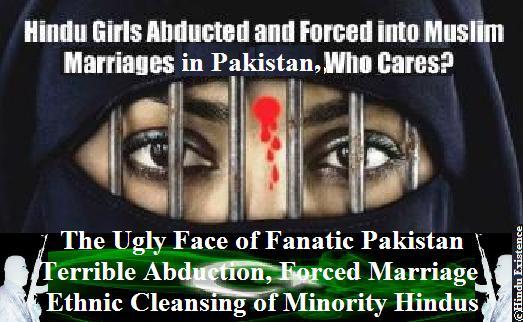
Forcible conversion of Hindu girls on rise in Sindh: HRCP

http://hinduexistence.files.wordpress.com/2012/03/pakistani-hindu-girls-ill-fate.jpgOn an average around 20 to 25 Hindu girls are being forcibly converted to Islam every month in the southern Sindh province, Human Rights Commission of Pakistan (HRCP) has said.

Urging the authorities to take note of these forced conversions, HRCP officials told reporters on Saturday that culprits were taking advantage of loopholes in the law.

Amarnath Motumel of the HRCP said that within a month 20 forced conversions had taken place.

“Apart from minor school girls, married women with children are not spared either,” he said.

The issue of Hindu girls being forcibly converted has come to the fore after the case of 18-year-old Rinkle Kumari from Sukkur who has converted and taken the Muslim name of Faryal after marrying a Muslim boy.

The family of the girl claim she was kidnapped and forcibly converted even after she appeared in court in Sukkur and claimed she converted out of her own free will.

But Motumel pointed out that not only were affected families warned of dire consequences but whenever a Hindu girl or her family appeared in court hundreds of religious zealots gather to pressurise them or they take to the streets as pressure tactics and to create an atmosphere of fear.

The families of Rinkle Kumari were also present at the conference in which her brother Inder said that had she been allowed to meet with her family members privately and even once she would never have converted.

“Despite the President’s orders for the girl’s rescue we are still waiting for something to be done.”

HRCP official Professor Badar Soomro said there was a need to enact new laws to restore a sense of security among the Hindu community.

He also said if a girl is kidnapped and her family registers a case she should be kept in a Darul Aman at least for a month before she is produced in court to record her statement.

Shahrizat sacrificed herself, says Najib

Shahrizat (centre) walks to meet the press at Desa Water Park March 11 2012. — Picture by Jack Ooi

KUALA LUMPUR, March 11 — Datuk Seri Najib Razak commended Datuk Seri Shahrizat Abdul Jalil today for her decision to sacrifice herself and quit the Cabinet for the sake of the government and Umno.
The prime minister told reporters in Pekan this evening Shahrizat’s move to relinquish her women, family and community development portfolio when her senatorship ends on April 8 was the appropriate and right thing to do.

He said he appreciated the sacrifice made by Shahrizat and was thankful for her decision.

“Although there is no proof so far that she had committed any offence, because the NFC issue has drawn controversy and dispute, she was willing to withdraw from the government,” he told reporters, referring to the National Feedlot Centre.

Shahrizat had said earlier today she will resign as women, family and community minister next month but stay on as Wanita Umno chief after being dogged for over four-and-a-half months by the NFC scandal.

The former Lembah Pantai MP and her family were accused by the opposition of using a RM250 million federal loan meant for the project to pay for land, property and expenses unrelated to cattle farming.

The cattle-rearing company is headed by her husband, Datuk Seri Mohamad Salleh Ismail, and their three children.

It was tapped to run the National Feedlot Centre (NFC) in Gemas, Negeri Sembilan in 2006, when Shahrizat was in Cabinet.

The former Lembah Pantai MP previously resisted calls from within her own party, including by influential former Prime Minister Tun Dr Mahathir Mohamad, to quit, stressing that she was “only the wife” of Salleh and had nothing to do with the embattled entity.

NFCorp hit the national headlines after it made it into the Auditor-General’s Report last year for missing production targets.

Police recommended last month that the Attorney-General (A-G) charge NFCorp’s directors for criminal breach of trust, but the A-G has asked the police to conduct further investigations.

Shahrizat was appointed as women, community and family minister in 2001 and held the post until 2008, when she lost in the general election.

She was then appointed special advisor to the prime minister on women affairs and social development, before being reassuming her Cabinet portfolio a year later.

Indian votes ‘pivotal’ at election time

Human Rights Party of Malaysia's (HRPM) allegiance, if it decides to contest in the 13th general election, may determine which way the Indians swing, claims an analyst.

By Alan Ting

KUALA LUMPUR: Support from Indian voters will again be key in the country’s next general election (GE) as it was in the 2008 polls, say political analysts.

Malaysians of Indian origin now account for 1.9 million out of the country’s 28 million population or 7.3 percent. But they feature significantly in 63 out of 67 parliamentary seats in Peninsula Malaysia.

A noticeable trend swept through the 2008 polls when almost 85 per cent of the Indian votes went to Pakatan Rakyat (Pakatan), the opposition pact comprising PKR-DAP-PAS.

Pakatan largely benefited from the shift in support from 72.4 per cent for Barisan Nasional (BN) in 2004 to just 8.3 per cent in 2008 as a result of issues played up by the Hindu Rights Action Force (Hindraf).

But a discernable trend has emerged this time around: support from Indians for BN has improved, thanks to a number of pro-active actions spearheaded by Prime Minister Najib Tun Razak on fundamental issues like Tamil schools, Hindu temples and education.

This also explains why Najib’s approval rating along ethnic lines is the highest at 80 per cent among Indians, according to a recent survey by the Merdeka Centre.

Dr Sivamurugan Pandian, a political analyst at Universiti Sains Malaysia, says that results of various by-elections in Bukit Selambau, Bukit Gantang, Bagan Pinang and Hulu Selangor since 2008 clearly showed that Indian support for BN had improved.

He attributes this to Najib’s readiness to engage on key concerns affecting the Indian community and that this support pattern would last through the next GE, especially with Indian-based NGOs playing an important role in monitoring the achievements of Pakatan-controlled states.

Indian swing may depend on HRPM

The academic claims that Pakatan had failed to meet the expectations of Indian NGOs or to work closely with Hindraf, an unregistered but vocal NGO, which had been dominant in the vote swing towards the opposition in 2008.

After 2008, Hindraf split into five groups. One is with DAP, two others are the newly-formed Makkal Sakti Party and the unregistered Human Rights Party of Malaysia (HRPM) and the rest NGOs.

Of the five, the most influential is HRPM, and if it decides to take part in the upcoming GE, it may be able to split support between BN and Pakatan.

Dr Sivamurugan says BN needs to capitalise on Najib’s strong standing among Indians in that “one vote for BN also means a vote for Najib”.

To do that, BN will have to look for suitable candidates who can convince voters on that equation, he adds.

MIC Youth chief T. Mohan, who also notes the positive winds of change, estimates that the MIC now has 60 to 65 percent support among Indians.

This has been largely due to various factors like changes in the party leadership, more funding for Tamil schools, and more places for Indian matriculation students, he says, adding that Najib’s 1Malaysia outreach programme had clipped much of their resentment of the past.

Although some issues remained unresolved, Mohan believes that MIC could get close to what it got in 2004, with support expected to reach 70 to 75 per cent with suitable candidates and provided that “no one makes unnecessary remarks that could hurt the feelings of the community.”

Key Indian issues unresolved

DAP vice-chairman and MP for Ipoh Barat, M. Kulasegaran, however, dismissed BN’s claim of growing support among Indians, saying that it was unsubstantiated.

“PR (Pakatan) has invited MIC for a debate on Indian issues like the one between (DAP
secretary-general) Lim Guan Eng and (MCA president) Dr Chua Soi Lek.

“Their (MIC) reluctance shows that they don’t have support. They will be lucky if they win or retain the three parliamentary seats they have now,” he said.

Kulasegaran asserted that many basic issues like high unemployment, deplorable conditions in Tamil schools, lack of study loans or scholarships and low Indian participation in the equity market had not been fully addressed.

“I believe the Indians still prefer PR for its openness and willingness to speak up for them and attend to their needs. PR (Pakatan) was able to appoint an Indian as the first DCM (deputy chief minister) in Penang and a Speaker to the Perak state legislative assembly,” he said.

But now, political analysts feel that there is perception among some Indian NGOs like Hindraf that Pakatn is “focusing primarily” on Malay and Chinese voters” or handling Indian issues on a piecemeal basis and hence the fear that their “representation” through PR could be lost.

This explains why some are saying that support among the Indians is split down the middle, with both BN and PR saying that they have their support.

Pakatan could be the biggest loser this time around if it fails to garner Indian support as it got the lion’s share then.

If 30% of registered Indian voters decide not to vote, it also means that both sides have to compete for the remaining 70 per cent, which is largely split into three unique “segments” — the lower, middle and upper classes.

No mass appeal for Hindraf

Hindraf still has some influence left. If it stays away from the GE, it could cause Pakatan to lose its grip on Selangor and Kedah.

Getting Hindraf on board could mean that Pakatan has to accept demands from HRPM, Hindraf’s unregistered political wing, of five to seven parliamentary seats.

Dr Denison Jayasooria, a principal research fellow at the Institute of Ethnic Studies, Universiti Kebangsaan Malaysia, believes that Hindraf does not have mass appeal anymore because of in-fighting.

He also thinks that the lower classes seem to be largely with BN while the middle and upper classes are with the opposition.

Saying that MIC’s chances would be better than 2008 but not 2004, this can only happen if it fields open-minded candidates who appeal to other communities as well since the resolution of the Maika share issue and MIC leadership change had made it difficult for Pakatan to exploit.

Undi kaum India beri kesan besar PRU akan datang

Walaupun pengundi India hanya mewakili 1.9 juta atau 7.3 peratus daripada 28 juta penduduk Malaysia, tetapi kehadiran mereka begitu bermakna bagi 63 daripada 67 kerusi parlimen di Semenanjung Malaysia.

Oleh Alan Ting

KUALA LUMPUR: Para penganalisis politik berpendapat sokongan pengundi India akan memberi kesan besar pada pilihan raya umum (PRU) akan datang, sama seperti pada PRU 2008.

Walaupun pengundi India hanya mewakili 1.9 juta atau 7.3 peratus daripada 28 juta penduduk Malaysia, tetapi kehadiran mereka begitu bermakna bagi 63 daripada 67 kerusi parlimen di Semenanjung Malaysia.

PRU 2008 menyaksikan perubahan arus yang amat ketara apabila hampir 85 peratus pengundi India menyokong Pakatan Rakyat (PR), pakatan pembangkang yang dianggotai PKR-DAP-PAS.

PR mendapat manfaat besar daripada peralihan sokongan pengundi India apabila hanya 8.3 peratus daripada 72.4 peratus pengundi kaum itu yang menyokong Barisan Nasional (BN) pada PRU 2004, menyebelahi PR pada PRU 2008 kerana terpengaruh dengan isu yang dimainkan Barisan Bertindak Hak Asasi Hindu (Hindraf).

Bagaimanapun, satu arah aliran baru dikesan muncul ketika ini iaitu sokongan kaum India terhadap BN semakin meningkat, hasil daripada beberapa tindakan proaktif yang diterajui Perdana Menteri Datuk Seri Najib Tun Razak berhubung perkara penting yang membabitkan kaum India seperti sekolah Tamil, kuil Hindu dan pendidikan.

Merdeka Centre

Berdasarkan kaji selidik Merdeka Centre, tindakan proaktif Najib itu menyebabkan kadar sokongan terhadap beliau mengikut etnik mencatat peningkatan, dengan sokongan kaum India mencatat lonjakan paling tinggi iaitu kepada 80 peratus.

Dr Sivamurugan Pandian, penganalisis politik dari Universiti Sains Malaysia, berkata keputusan beberapa pilihan raya kecil sejak 2008 yang melibatkan kawasan Bukit Selambau, Bukit Gantang, Bagan Pinang dan Hulu Selangor dengan jelas menunjukkan peningkatan sokongan kaum India terhadap BN.

Beliau mengaitkan perkembangan itu dengan kesediaan Najib menangani isu penting yang membabitkan masyarakat India dan pola sokongan ini akan berterusan hingga PRU akan datang, terutama hasil peranan penting yang dimainkan badan bukan kerajaan (NGO) berasaskan kaum India dalam memantau pencapaian negeri yang ditadbir PR.

Ahli akademik itu berkata PR gagal memenuhi harapan NGO berasaskan kaum India, yang begitu berpengaruh dalam mengalih undi kepada Pembangkang pada 2008.

Hindraf berpecah

Selepas 2008, Hindraf berpecah kepada lima kumpulan. Satu kumpulan menyebelahi DAP, dua lagi membentuk Parti Makkal Sakti dan Parti Hak Asasi Manusia (HRPM) yang tidak didaftarkan, manakala selebihnya bergiat sebagai NGO.

Daripada lima kumpulan itu, HRPM merupakan kumpulan paling berpengaruh dan sekiranya parti ini menyertai PRU akan datang, ia mampu memecahkan sokongan terhadap BN dan PR.

Dr Sivamurugan berkata BN perlu memanfaatkan kedudukan kukuh Najib dalam kalangan masyarakat India ketika ini dengan meyakinkan kaum itu bahawa setiap undi mereka untuk BN bererti merupakan undi untuk Najib juga.

Bagaimanapun, kata beliau, untuk mewujudkan tanggapan kukuh tentang perkara itu, BN perlu mencari calon yang mampu meyakinkan pengundi bahawa itulah hakikatnya.

Ketua Pemuda MIC T. Mohan, yang juga mengesan kewujudan angin perubahan positif terhadap BN sejak kebelakangan ini, menganggarkan MIC kini mendapat sokongan daripada 60 hingga 65 peratus masyarakat India.

Sekolah Tamil

Perkembangan positif ini berlaku kerana pelbagai faktor, termasuk perubahan dalam kepimpinan parti, pertambahan jumlah pembiayaan untuk sekolah Tamil, pemberian lebih banyak tempat kepada pelajar India untuk mengikuti pengajian di peringkat matrikulasi dan paling penting, kata beliau ialah kejayaan Najib menghapuskan sebahagian besar rasa tidak puas hati kaum itu melalui program 1Malaysia yang beliau laksanakan.

Mohan berkata walaupun beberapa isu masih belum selesai, tetapi beliau yakin MIC akan mencatat kejayaan hampir dengan apa yang dicapainya pada 2004 dan menjangka 70 peratus hingga 75 peratus kaum India akan menyokong BN sekiranya parti gabungan itu meletakkan calon yang sesuai, dengan syarat “tida pihak membuat kenyataan yang boleh melukakan hati masyarakat itu”.

Bagaimanapun, naib pengerusi DAP dan Anggota Parlimen Ipoh Barat M. Kulasegaran menolak tanggapan BN bahawa parti gabungan itu semakin mendapat sokongan masyarakat India dengan berkata dakwaan itu tidak berasas.

“PR telah mengajak MIC berbahas tentang isu berkaitan kaum India seperti perbahasan antara Lim Guan Eng (setiausaha agung DAP) dan Datuk Seri Dr Chua Soi Lek (presiden MCA). Keengganan mereka (MIC) menunjukkan mereka tidak mendapat sokongan. Mereka memang bernasib baik sekiranya menang atau dapat mengekalkan tiga kerusi parlimen yang mereka sandang sekarang,” katanya.

Kulasegaran berkata banyak isu asas seperti kadar pengangguran yang tinggi, keadaan sekolah Tamil yang begitu menyedihkan, ketiadaan pinjaman pelajaran atau biasiswa dan penyertaan rendah kaum India dalam pasaran ekuiti, masih belum ditangani sepenuhnya.

Suka PR

“Saya percaya masyarakat India lebih suka kepada PR kerana sikap terbuka serta kesediaannya bersuara untuk mereka dan dalam menangani keperluan mereka. PR sanggup melantik seorang India sebagai Timbalan Ketua Menteri Pertama di Pulau Pinang dan seorang Speaker dalam Dewan Undangan Negeri Perak,” katanya.

Bagaimanapun, beberapa penganalisis politik berpendapat sesetengah NGO berasaskan kaum India, seperti Hindraf, kini mendapati PR hanya “memberi fokus utama” terhadap pengundi Melayu dan Cina atau hanya menangani isu melibatkan masyarakat India secara satu persatu hingga menimbulkan kebimbangan masyarakat itu bahawa “perwakilan” mereka melalui PR akan lenyap.

Inilah sebabnya sesetengah pihak berpendapat sokongan masyarakat India berpecah dua dan mendorong BN serta PR, masing-masing yakin bahawa mereka mendapat sokongan kaum itu.

PR akan mengalami kekalahan teruk kali ini sekiranya ia gagal meraih sokongan besar kaum India seperti yang diperolehnya sebelum ini.

Sekiranya 30 peratus pengundi India membuat keputusan untuk tidak mengundi, ertinya BN dan PR perlu bersaing untuk mendapatkan sokongan baki 70 peratus pengundi lagi, yang dalam pada itu pula perpecah kepada tiga “segmen” unik — kelas bawahan, pertengahan dan atasan.

Hilang keterampilan

Sementara itu, Hindraf masih memiliki sedikit sebanyak pengaruh. Sekiranya ia menjauhkan diri daripada PRU, PR mungkin kehilangan cengkamannya di Selangor dan Kedah.

Sebaliknya, jika PR memberi tempat kepada Hindraf, pakatan itu perlu memenuhi tuntutan HRPM, sayap politik Hindraf yang tidak didaftarkan, agar ia diberi lima hingga tujuh kerusi parlimen untuk ditandingi.

Datuk Dr Denison Jayasooria, Ketua Felo Penyelidik, Institut Kajian Etnik, Universiti Kebangsaan Malaysia, berkata beliau percaya kini, Hindraf sudah hilang keterampilannya akibat perbalahan dalaman yang dialaminya.

Beliau juga berpendapat sebahagian besar masyarakat kelas bawahan menyokong BN, manakala masyarakat kelas pertengahan dan atasan pula menyokong pembangkang.

Sambil menyatakan bahawa walaupun MIC mempunyai peluang lebih cerah pada PRU akan datang berbanding pada 2008, walaupun tidaklah sebaik pada 2004, tetapi perkara itu akan hanya menjadi kenyataan sekiranya parti berkenaan meletakkan calon yang berfikiran terbuka serta disenangi masyarakat lain, setelah resolusi yang dibuat berhubung isu saham MAIKA dan perubahan kepimpinan MIC, menyukarkan PR untuk mengambil sebarang kesempatan daripadanya.

Bernama

‘M’sia should support resolution on Sri Lanka’

Failure to do would be an embarrassment to the nation and the Tamil community in particular, say 51 Indian-based NGOs

KUALA LUMPUR: It will be an embarrassment for Malaysia and particularly the Tamil community if Malaysia does not support a resolution on war crimes committed by Sri Lankan security forces in 2009.

K Arumugam, co-ordinator of the Group of Concerned Citizens (GCC), representing 51 Indian-based NGOs, said sources in the Malaysian delegation to the at 19th Human Rights Council (UNHCR) in Geneva, had indicated that the government might vote against the resolution.

Initiated by United States and several other Western countries, copies of the resolution was handed to the delegates yesterday evening and they are scheduled to vote on it next week.

Arumugam said the GCC submitted a memorandum to Prime Minister Najib Tun Razak on March 2 urging Malaysia not to make same shocking decision where it supported a resolution initiated by Sri Lanka on its “military solution” to the ethnic conflict in 2009.

He said this resulted in Sri Lanka being protected from facing an international inquiry into war crimes its security forces committed which resulted in the massacre of thousands of Tamils towards end of the 26-year conflict.

Arumugam said a copy of the memorandum was also sent to Minister in the Prime Minister’s department G Palanivel to urging him persuade Najib to support the resolution initiated.

Why the double standard?

He contended that Malaysian government has been very consistent when it came issues related to human right violation in Bosnia, Palestine, Southern Thailand and Philippines.

“But why the double standard in our foreign policy when it came to Sri Lankan Tamils?” asked Arumugam.

He added that Palanivel should raise the matter at the cabinet meeting and also spell out MIC’s position on the issue.

“If Malaysia votes against the resolution, it’ll be tantamount to supporting the brutal killings and the sexual abuse and rapes committed by Sri Lankan security forces,” said Arumugam.

He said Wisma Putra should look into the reports of a three-member panel which was set up immediately after a visit by UN secretary-general Ban Ki Moon.

The panel confirmed that the massive and widespread shelling by Sri Lankan forces caused the deaths of thousands of civilians.

Arumugam urged the Malaysian delegation to view ‘Sri Lanka’s Killing Fields’, a documentary produced by Channel 4 to get a grip on the atrocities committed by Sri Lanka’s armed forces.

The TV channel had provided corroborative visual evidence in the form of eyewitness accounts, amateur film footage, photographs and mobile phone videos.

Syabas Moorthy

By Haris Ibrahim,


I first met Waythamoorthy, or just Moorthy as he has asked me to call him, during the High Court proceedings in the Moorthy Everest climber’s case in December, 2005.

Quiet and unassuming, little did I realise that this man would play a pivotal role in the Hindraf rally on 25th November, 2007 and then, in asylum overseas, continue his efforts to bring justice and equality to the marginalised section of the Indian community here.

Whilst in the UK in November, 2010, I met Moorthy on 2 occasions during which we had heart to heart talks on how Hindraf could work with other efforts in civil society to restore this nation, her institutions and her wealth, back to the 40% who are impoverished and who have been marginalised for so long.

You may not always agree with his point of view, or even his methods, but you must respect his untiring, relentless efforts in the cause that he now pursues.

Much credit is due to Moorthy who has shown great wisdom in steering Hindraf into the ongoing ABU initative.

The Global Human Rights Defender of Indian Diaspora award bestowed upon Moorthy, in my humble view, is much deserved. You can read bout this HERE.
Proud to know you, bro.

Single Mothers Should Act As Agent Of Change - Rosmah

PEKAN, March 11 (Bernama) -- Single mothers should not merely be recipients of benefits from development, but instead they should be more active as an agent of change in the country's development along with other women.

The Prime Minister's wife, Datin Seri Rosmah Mansor said thus the fate of single mothers should be given full attention by the community.

"Single Mothers should be given suitable facilities according to their status for them to find a living and should not be marginalised," she said when opening the Single Mothers and Women's Organisation general meeting here Sunday.

Easy way out for Shahrizat

Friday, 9 March 2012

KgMedan Riot Inquiry Hindraf

Lawyers urge review of jail term for shoe-throwing imam

Hoslan praying at the court building in Putrajaya before being sentenced to jail for contempt March 8 2012. — Picture by Choo Choy May
KUALA LUMPUR, March — Lawyers stunned by the Federal Court’s one-year jail sentence for contempt of court against an imam who threw his shoes at three senior judges have called for a review of the “excessive” punishment.
The court decided this morning that Hoslan Hussin’s “act of contempt was very serious” and “if no action is taken, can threaten the powers of the court” before meting out the jail tern that several lawyers told The Malaysian Insider was unprecedented for a case of contempt.
“No, I have never seen such a heavy punishment. Even considering the need for a deterrent, I had expected a custodial sentence but no more than six weeks. Does the punishment really serve justice?” said senior lawyer Karpal Singh, who had pleaded in mitigation for Hoslan.
Human rights lawyer N. Surendran also said “the sentence is excessive and inappropriate”.
“The circumstances of this case required that justice should be tempered with mercy. This the Federal Court failed to do,” the PKR vice president said.
The Bar would urge the Federal Court to review this sentence and show the same compassion which it did on the first occasion when the act of contempt happened by leaving the matter be — Bar Council President Lim Chee Wee
Several observers have also pointed out that the 12-month jail term was the same meted out on former Selangor Mentri Besar Dr Mohamed Khir Toyo for abuse of power.
Hoslan (left) speaks to his lawyer Karpal in Putrajaya, March 8 2012. — Picture by Choo Choy May
Hoslan had flung his shoes at the Federal Court Bench on February 22 after it struck out his bid to challenge an eviction order from a city mosque here in 1999 on a technicality. He stunned the judges, lawyers and members of the public that packed a courtroom at the Federal Court when he stood up, took off both his shoes and lobbed the pair right at the Bench.
The same three-man Bench, led by Chief Judge of Malaya Tan Sri Zulkefli Ahmad Makinudin, decided today after “analysing your explanation” it was inadequate and found Hoslan in contempt.
“The court must bring a sentence that is appropriate and a deterrent,” Zulkefli said during sentencing.
Bar Council representative Arthur Wang, who held a watching brief during this morning’s hearing, had also called for a stiff punishment as a deterrent was needed.
But its president Lim Chee Wee told The Malaysian Insider this evening that the one-year prison sentence “is harsh even where a deterrent is justified.”
He said it is convention for courts to allow unrepresented laymen “more leeway in procedural requirements” so “it would appear that the contempnor may have been denied his day in court.”
“The Bar would urge the Federal Court to review this sentence and show the same compassion which it did on the first occasion when the act of contempt happened by leaving the matter be,” Lim said.
Karpal had also said in mitigation that the court must consider the “emotional element” as the 13 years since Hoslan was evicted caused “attrition in the mind” of the father of seven.
The Bukit Gelugor MP said Hoslan only works as an environmental officer with the Environmental Department and has to care for the children aged between six and 16.
But the Attorney-General’s Chambers argued that a jail sentence was needed as a deterrent.
“It has brought ridicule to this honourable court. A custodial sentence is warranted as a deterrent... for the proper administration of justice,” senior federal counsel Suzana Atan said.
But Surendran noted that the judiciary should guard its own dignity “by the strength of their moral authority, and not by imprisoning people.”
“Public perception is that the judiciary is not independent and that they have failed to safeguard the basic rights of Malaysians. This lack of confidence and respect can lead to a recurrence of incidents like the shoe-throwing case,” he said.

Probe Kg Medan riot, Suhakam told

Hindraf submits another memorandum calling on the human rights commission to hold an open inquiry into the 2001 racial clash.

KUALA LUMPUR: Hindraf has submitted a memorandum to Suhakam, urging the human rights commission to hold a public inquiry into the 2001 racial clash in Kampung Medan.

Hindraf leader P Uthayakumar said 11 years has passed but the authorities continue to ignore the matter.

“Moreover, the Federal Court dismissed the Kampung Medan suit on March 5, 2012. Five Indians were murdered and more than 100 suffered grevious bodily injuries.

“We want justice for the Kampung Medan victims. So Suhakam must call for a public inquiry,” he added after submitting the memorandum.

Uthayakumar said that since 2001, he has submitted five memorandums and nine letters to Suhakam to hold a public inquiry but the commission continued to churn out “lame excuses”.

He added that on June 6, 2002, Hindraf lawyers filed a civil suit, including a Mandamus Order to compel Suhakam to hold an inquiry but the High Court struck out the suit without Suhakam having to even file defence.

The decision was upheld by both the Court of Appeal and Federal Court.

Apology fund


The Federal Court also dismissed a suit filed by seven Kampung Medan victims who, among others, sought monetary compensation.

“We want justice for the victims and their families who have been suffering all these years,” said Uthayakumar. “Thus, it is time for Suhakam to call for a public inquiry to be able to establish the truth behind the riot.”

The Hindraf leader also urged the federal government to provide compensation of RM500 million, with families who lost a loved one due to the incident be given at least RM1 million.

The RM500 million, he said, should come under the “Kg Medan apology fund” and the money could be used for education, welfare and business opportunities for those affected and other poor Indians.

Skim 1Care abai rakyat miskin

Senator Ramakrishnan berkata kerajaan seolah-olah lebih prihatin untuk menjaga atau melindungi kontrak lumayan kroni dan pemimpin Umno.

PETALING JAYA: Cadangan skim penjagaan kesihatan (1Care for 1Malaysia) adalah satu lagi rancangan besar untuk merompak rakyat yang sakit dan susah untuk memperkaya kroni-kroni Umno.

“Semasa menyediakan cadangan skim ini kerajaan tidak berunding dan berdialog dengan pihak berkepentingan. Ini mengesahkan fakta bahawa kerajaan tidak mengambil kira masalah rakyat biasa,” kata Senator Ramakrishnan.

Beliau berkata kerajaan seolah-olah lebih prihatin untuk menjaga atau melindungi kontrak lumayan kroni dan pemimpin Umno.

Dalam satu kenyataan kepada FMT, beliau menegaskan, “setiap hari rakyat Malaysia melihat satu skandal demi satu skandal yang lain.

“Skandal RM250 juta Perbadanan Fidlot Nasional (NFC), Lebuhraya Pantai Barat dengan 60 tahun konsesi yang membebankan pengguna dan pembalakan haram bernilai RM900 juta setahun adalah senarai terbaru skandal yang seolah-olah tidak merisaukan kerajaan.

“Sekarang kerajaan mahu merompak rakyat yang sakit dan miskin dengan skim 1Care for 1Malaysia,” katanya.

Dalam Bajet 2012, Menteri Kewangan memperuntukkan RM17 bilion daripada RM233 bilion kepada Kementerian Kesihatan untuk menyediakan penjagaan kesihatan.

“Peruntukan ini termasuk RM8 bilion untuk pembayaran emolumen dan RM6.61 billion bagi pembelian bekalan dan perkhidmatan seperti ubat-ubatan, barang-barang kegunaan, penyelenggaraan dan utiliti serta bakinya untuk pembangunan penjagaan kesihatan seperti membina hospital-hospital baru,” ulas Ramakrishnan.

Ramakrishnan yang juga merupakan Ahli Jawatankuasa DAP Selangor menjelaskan, projek-projek hospital seperti pembinaan hospital di Shah Alam bernilai RM482 juta yang terbengkalai masih terus diberikan kepada kroni Umno melalui rundingan terus.

Kerajaan tidak ada dana

“Namun begitu, kerajaan tidak mempunyai dana untuk menyediakan penjagaan kesihatan yang sempurna kepada rakyat Malaysia,” terang beliau.

Menurut beliau, pada tahun lepas Ketua Audit Negara mendedahkan bahawa sebanyak RM5.51 bilion dibelanjakan ke atas pembayaran yang tiada dalam senarai (unbudgeted) disebabkan pembelian barangan dan perkhidmatan yang berkualiti rendah dan pembelian balik, penalti yang dibayar kerana kecuaian dan cukai kerajaan yang tidak dikutip pada tahun 2010.

Di Malaysia katanya, setiap kali sesuatu projek diswastakan ia bukan membawa kehidupan yang lebih baik kepada rakyat Malaysia.

“Sebaliknya kita yang perlu membayar lebih seperti bil elektrik, setem pos, bil telefon, jalan bertol dan bil penyelenggaraan air kumbahan

Indah Water adalah merupakan beberapa contoh yang amat nyata membebankan rakyat.

Menurutnya, Malaysia berada pada kedudukan 151 daripada 193 negara dalam perbelanjaan penjagaan kesihatan mengikut peratusan daripada KDNK di antara tahun 2000-2005.

“Perbelanjaan penjagaan kesihatan kita adalah sekitar 4-5% daripada KDNK setiap tahun. Ini menunjukkan Malaysia adalah salah satu daripada negara-negara yang kurang melabur (under invest) untuk kesihatan rakyat. Malaysia berada di kedudukan ke-90 dalam jangka hayat yang sihat,” tambahnya.

Secara amnya, Malaysia kurang berprestasi (underperformed) dalam menyediakan perkhidmatan penjagaan kesihatan kepada rakyat.

“Pencapaian sistem kesihatan dan prestasi Malaysia adalah pada kedudukan 89 daripada 191 negara. Oleh itu, kita mesti melabur dan meningkatkan produktiviti dan kecekapan dalam sistem perkhidmatan kesihatan,” katanya.

Kerajaan lepas tanggungjawab

Dengan meningkatkan perbelanjaan penjagaan kesihatan, kerajaan melepaskan tanggungjawab membayarnya kepada rakyat yang sudah dibebani dengan kenaikan kos sara hidup dan gaji yang tidak dinaikkan.

Malaysia sebagai sebuah negara yang kaya dengan sumber asli dan sumber manusia mampu menyediakan perkhidmatan penjagaan kesihatan yang lebih baik tanpa terus membebankan rakyat.

“Sekiranya kerajaan melaksanakan skim 1Care, apa yang akan berlaku kepada orang-orang yang menganggur, miskin dan orang-orang tua? Di mana mereka akan pergi untuk mendapatkan penjagaan kesihatan?

“Di bawah skim 1Care, kerajaan mahu menetapkan pesakit hanya berjumpa seorang doktor dan pesakit tidak akan dapat berjumpa dengan doktor yang lain.

“Selain itu, pesakit hanya akan dapat berjumpa doktor enam kali setahun dan kerajaan mahu kita membayar 10 peratus daripada pendapatan kita setiap bulan untuk insurans ini,” tambahnya.

Beliau menegaskan, “sudahlah pendapatan pekerja-pekerja miskin telah ditekan oleh kehadiran berjuta-juta pekerja asing. Malah 40% tenaga kerja Malaysia adalah pekerja asing dan 34% pekerja Malaysia hidup dalam kemiskinan tegar.

“Bagaimana mereka akan membayar untuk penjagaan kesihatan?,” soal beliau.

Menurut Ramakrishnan, Malaysia mempunyai salah satu sistem penjagaan kesihatan yang terbaik di dunia sebelum tahun 1980-an.

“Tetapi apabila ghairah dengan dasar penswastaan yang bermula semasa di bawah pemerintahan bekas Perdana Menteri Tun Dr Mahathir

Mohamad maka semuanya gagal dan merugikan. Kemudian tumpuan beralih kepada memperkayakan kroni Umno yang tamak.

“Kerajaan telah mengabaikan tanggungjawab sosialnya demi untuk melahirkan jutawan-jutawan Bumiputra. Tetapi pada hakikatnya orang

Melayu yang miskin terus dibebani untuk mengkayakan beberapa jutawan Umnoputra. Semua program transformasi Perdana Menteri hanyalah cakap besar tanpa ada hasil.

“Defisit bajet yang kita alami selama 15 tahun berturut-turut menunjukkan bahawa kerajaan menyalahgunakan hasil tanpa apa-apa manfaat kepada rakyat.

“Sebaliknya, Perdana Menteri Datuk Najib Tun Abdul Razak sibuk membelanjakan RM500 untuk setiap orang miskin tetapi ramai kaum India yang miskin masih dipinggirkan.

“Umno dan sekutu-sekutunya tiada kesungguhan politik (political will) untuk mengubah penjagaan kesihatan. Mereka hanya memikirkan untuk memperkaya diri mereka sendiri,” jelas Ramakrishnan.

Practising the state of being impartial


Impartiality is a simple word and many of our problems can be solved by just appreciating and practising this term.
That is a spurious argument. The wrongdoers are those who disrupt the freedom of expression, not those who are simply practising their right. Any trouble will only be made worse if the police are not seen as impartial in their dealing with the situation.
Azmi Sharom, The Star
IMPARTIALITY is defined as being not biased for or against any party; free from favouritism or self interest.
It is a fairly simple concept, one which I think most people would be able to understand.
Of course, there are times when one is incapable of being impartial.
If you support a particular team, you will consider your team as the greatest, despite all evidence to the contrary.
Once I saw a banner at some dinky little football game with the words “Brighton Hove Albion: The Best Football Team in the World”. Really? Better than Barcelona? And where is Brighton Hove Albion anyway?
It sounds like a brand of bread. “A loaf of Brighton Hove Albion please”.
Having said that, I understand the impartiality of BHA fans, in fact I am equally guilty of being totally biased and prejudiced when it comes to supporting my football team.
But at the end of the day, this sort of blinkered attitude does no harm apart from the derisive laughter and taunting we get from far more successful clubs.
The same can’t be said about other situations however.
Impartiality, and perhaps even more important, the perception of impartiality is vital in some circumstances. Sometimes it just makes for a better end product.
A political debate for example must have an impartial moderator and preferable questions to the debaters ought to come from that moderator. Even questions from the floor should be directed through the moderator who can then choose the best ones.
That is why he is called the moderator. He moderates.
In academia, we are expected to be impartial. This is in order for a better quality of research to be produced and following from this better teaching.
Often I have been asked why I am critical of the Government especially since I work in a so-called government university.
Well, I think I work in a public university paid for by tax payers’ money and one of my responsibilities is to be critical of laws which I think are unjust; with academic reasoning, naturally.
If I don’t do that, then I will be perpetuating a wrong and I won’t be doing my job properly.
Those who work in the civil service however, have different responsibilities because they are directly answerable to the elected government and their job is to implement the policies.
In that sense, they have less freedom in their jobs compared to academics.
However, they still have to be impartial because their duties are to basically carry out the decisions of those who are currently their bosses. They are expected to be impartial regardless of their own political leanings.
If they think the policies are poor, they should have the right to voice their concerns but ultimately they have to do what is required of them. Besides, if their bosses are rubbish, they can be voted out, civil servants can’t.
In my last example, impartiality is absolutely imperative for without it, there can be no law and order. I am speaking of course of the police.
In the past few weeks there have been uncomfortable stories of thugs attacking people because they are saying things which they disagree with.
For some this is grist for the mill in their argument that public displays of political expressions must be controlled.
That is a spurious argument. The wrongdoers are those who disrupt the freedom of expression, not those who are simply practising their right. Any trouble will only be made worse if the police are not seen as impartial in their dealing with the situation.
Their job is to enforce the law equally, and not only for those who are deemed a threat to the current political masters.
This applies whoever the political masters may be. It is only where bias or prejudice is perceived, does real trouble erupt.
Impartiality is a simple concept. Perhaps our problems in this nation are not so intractable. Many can be solved by just appreciating and practising this simple little term.
It is only when we have lost faith that such a basic idea can be ignored, then we know that things are truly bad.

Thursday, 8 March 2012

Hard-won Afghan women's rights may be lost in Taliban peace deal

AFGHANISTAN-UN-WOMEN-LOW
Afghan women look set to be deemed second-class citizens in light of clerics' recommendations. Picture: AFP

THE Afghanistan government appears to be scaling back its support for women's rights to advance peace talks with the Taliban ahead of the withdrawal of foreign troops, Afghan lawmakers and human-rights activists have warned.

A government-appointed council of 150 leading Muslim clerics last week urged the strict application of a conservative and literalist interpretation of Islamic law regarding women.

The council said Afghan law should require women to wear the veil and forbid them from mixing with men in the work place or traveling without a male chaperone.

"Men are fundamental and women are secondary," the Ulama Council said in a statement on Friday, according to a translation by the Afghanistan Analysts Network.

President Hamid Karzai published the statement on his website, fueling speculation that he backed the conservative clerics' position.

The Ulama Council's recommendations also included a number of other declarations that seemed to support Karzai's political positions, including backing peace talks with the Taliban and urging the handover of US-controlled prisons to Afghan government supervision.

"This is a political statement; this is not an Islamic statement," said Shukria Barakzai, a female lawmaker from the capital, Kabul.

The council's positions are relatively standard orthodox interpretations of Islamic law, similar to those that would be issued by mainstream Muslim clerics throughout the Islamic world.

But such positions would mark a significant step backwards for women in Afghanistan were they to be enshrined in Afghan law.

They also come at a particularly jittery moment in Afghanistan.

The US and its allies are set to pull most of their troops from the country by 2014.

The US and Mr Karzai both say they are intent on pushing forward with peace talks with the Taliban - a movement that has a long history of oppressing women - although US Secretary of State Hillary Clinton has pledged that the peace outreach won't mean backsliding on advances in women's rights.

Women's rights advocates fear that any compromise with the Taliban as part of a peace deal could undercut gains they have made in the past decade, including the right to vote, hold public office and get an education.

"The future of women's rights in Afghanistan is more unpredictable that at any stage over the last 10 years," the Afghanistan Human Rights and Democracy Organization concluded in a report published on Tuesday.

"Most of women's important achievements over the last decade are likely to be reversed."

Mr Karzai told a news conference that he supported the Ulama Council's statements, but said such recommendations would actually strengthen the status of women's rights in Afghanistan.

"They declared the values of Islam and the principles for how to strengthen the position of women in accordance with Sharia," he said.

Pakistani Hindus seek safety in India

Every month about eight to 10 Hindu families migrate from Pakistan. Most of them are well-off, a New Delhi official says
FEATURE

By Hasan Mansoor

KARACHI: Preetam Das is a good doctor with a hospital job and a thriving private clinic, yet all he thinks about is leaving Pakistan, terrified about a rise in killings and kidnappings targeting Hindus.

A successful professional, he lives in megacity Karachi with his wife and two children, but comes from Kashmore, a district in the north of Pakistan’s southern province of Sindh.

His family has lived there for centuries and in 1947 when the sub-continent split between India, a majority Hindu state, and Pakistan, a homeland for Muslims, Das’ grandparents chose to stay with the Muslims.

They fervently believed the promise of Pakistan’s founder Muhammad Ali Jinnah that religious minorities would be protected. Sixty years later, their grandson says life in Kashmore has become unbearable.

“The situation is getting worse every day,” he says.

Two of his uncles have been kidnapped and affluent Hindus are at particular risk from abduction gangs looking for ransom, he says.

Rights activists say the climate is indicative of progressive Islamisation over the last 30 years that has fuelled an increasing lack of tolerance to religious minorities, too often considered second class citizens.

Das says the only thing keeping him in Pakistan is his mother.

“She has flatly refused to migrate, which hinders my plans. I can’t go without her,” he said.

Hindus make up 2.5 percent of the 174 million people living in the nuclear-armed Muslim nation. Over 90 percent live in Sindh, where they are generally wealthy and enterprising, making them easy prey for criminal gangs.

More people are leaving

An official at the ministry of external affairs in New Delhi who declined to be named said: “Every month about eight to 10 Hindu families migrate from Pakistan. Most of them are well-off.”

He had no comment on whether the number was on the rise, but Hindu community groups in Pakistan say more people are leaving because of kidnappings, killings and even forced conversions of girls to Islam.

“Two of my brothers have migrated to India and an uncle to the UAE,” said Jay Ram, a farmer in Sindh’s northern district of Ghotki.

“It’s becoming too difficult to live here. Sindhis are the most tolerant community in the country vis-a-vis religious harmony, but deteriorating law and order is forcing them to move unwillingly,” he added.

Ramesh Kumar Vankwani, chief of the Pakistan Hindu Council and a former lawmaker for Sindh province, said Hindus are picked on by kidnappers and that their daughters are subject to forced conversions to Islam.

“Every now and then we get reports of families migrating. It’s getting worse now. People are extremely harassed and are forced to leave their homeland but our rulers are shamelessly idle,” he told AFP.

Rights activists also say Hindus in Sindh are discriminated against.

“Recently 37 members of five Hindu families migrated to India from Thul town owing to discrimination while three Hindus, including a doctor, were murdered in Shikarpur district,” said Rubab Jafri, who heads Sindh’s Human Rights Forum.

“Lots of violent incidents are happening daily. Most go unreported, which shows vested interests are trying to force Hindus to leave Pakistan.”

‘No massive migrations’

According to the Pakistan Hindu Seva, a community welfare organisation, at least 10 families have migrated from Sindh every month since 2008, mostly to India, but in the last 10 months, 400 families have left.

Another survey last year by the local Scheduled Caste Rights Movement said more than 80 percent of Hindu families complained that Muslims discriminated against them by using different utensils when serving them at food stalls.

“Hindu migration is a brain-drain for Pakistan as most of them are doctors, engineers, agriculturists, businessmen and intellectuals,” Jafri said.

But the provincial authorities are reluctant to recognise a problem.

“I do admit that law and order in some districts of Sindh is quite bad, but it is bad for everyone and not just my community, the Hindus,” Mukesh Kumar Chawla, provincial minister for excise and taxation, told AFP.

“Hindus do not migrate in flocks as has been claimed and those who migrate are going abroad for a better fortune,” he said.

AFP

[main pix from http://pakistanhindupost.blogspot.com, showing Hindus praying in Pakistan]

‘What are you sorry for, Najib?’

Kita president and former law minister Zaid Ibrahim says Najib must be specific about what he was apologising for.

PETALING JAYA: Prime Minister Najib Tun Razak must explain the faults of Barisan Nasional for which he has apologised for, said Kita president Zaid Ibrahim.

While he appreciated the premier’s gesture, the former law minister said the people have the right to know the specifics of the apology.

“It’s a good thing as no other premier has apologised before but he must also rectify the mistakes,” he told a press conference at his residence here.

On Sunday, Najib extended an apology on behalf of BN for mistakes which led the people to deal a heavy electoral blow to the ruling coalition in the previous polls.

“I believe we should not be arrogant. In a parliamentary democracy, we have to subject ourselves to the power of the people. We must have made mistakes for the people to reject us,” he had said.

The next day, Deputy Prime Minister Muhyiddin Yassin said there was no need to list BN’s mistakes as it was a matter of the past.

‘Reprimand arrogant Muhyiddin’

Zaid said if Najib was apologising for BN’s arrogance, the premier should advise his ministers to be humble in their conduct.

“But the very next day of his apology, Muhyiddin arrogantly said that there was no need to list the mistakes. Najib should reprimand him. Remember that the people are watching,” he added.

On another development, Zaid agreed with former finance minister Daim Zainuddin’s statement that the prime minister should not hold the finance portfolio.

“It’s a good idea. In fact, the prime minister should not hold any other portfolio as his department is a powerful ministry by itself,” he said.

On Sunday, Daim told an interview with the China Press that the prime minister should not hold the finance portfolio as in during the Asian financial crisis since the meltdown was over.

Daim added that by holding the finance portfolio, the PM would have too much on his plate as he also served as the BN chief.

“The second finance minister post was added to handle the (1997) economic crisis. Now the crisis period has gone; we have both finance and second finance minister at the same time. Who is the real decision-maker?” he had said.

Zaid said that many prime ministers of a democratic nation do not hold other portfolios as it would undermine the need to separate executive powers.

“Even in New Zealand, where there are more sheep than humans, the prime minister does not hold a separate portfolio,” he said.

Perkasa: Anti-govt blogs funded by US

The US is secretly behind blogs critical of the Malaysian government, Perkasa said.

KUALA LUMPUR: Blogs critical of the government are funded by either the United States or other foreign powers, a Malay extremist group alleged.

However, Selangor Perkasa chairman Abdullah Mansor said that the group had no proof over these allegations.

“We cannot pinpoint the blogs (involved), but whatever blogs (there are) against the government, they have an agenda. Almost all the blogs. They have a (common) networking, we know that.”

“When they say one issue, everybody will say the same, and we know who they are.”

“Whether they are funded by the US or agent, whatever it is, (they are) funded by foreign [powers]. But I cannot say who, because I cannot give proof on who they are,” he told reporters.

Abdullah said this after Perkasa members had lodged a report at the Dang Wangi police district headquarters today.

They based their report on an Utusan Malaysia news story where former PKR members claimed that foreign powers supposedly gave Opposition Leader Anwar Ibrahim aid in the form of funds and “training”.

According to a Perkasa press statement, the aid came from US-based groups such as the National Democratic Institute (NDI) and the International Republican Institute (IRI).

German NGOs, the statement added, also helped Anwar.

Asia Must Talk Sense on Israel and Iran


Image
Not what we need in the Middle East right now
India, China, need to slow those who want to go to war in the Middle East
If major Asian countries headed by Chin and India want a common cause, they could usefully make plain their concern at the way US policy is being pushed towards war by the Christian and Jewish extremists who set the agenda for public discussion of policy towards Iran and Syria.

Not content with having started two useless wars against predominantly Muslim countries, now the US is being urged, by no less than former Presidential candidate John McCain to bomb Syria, and by most of the current Republican contenders for the top office (Ron Paul is the only exception) to help Israel bomb Iran back to the pre-nuclear age.

All this is doubtless encouraging to Israel’s extreme right-wing prime minister Benjamin Netanyahu, who could well take the opportunity to start a war prior to the US election and force a reluctant US President Barack Obama to offer support. The Israeli lobby, backed by Christian fundamentalists, has long been the tail that wags the dog of US Mideast foreign policy.

Is it not in the Bible that the Jews were chosen by God as his instrument on earth? Is it the Bible that makes the US contemplate war to stop an ancient and major nation acquiring nuclear capability when it never did so with North Korea or Pakistan and earlier encouraged the imposed state of Israel to develop the only nuclear bomb in the region?

There are several issues of great importance here to Asia which need to be spelled out before worse befalls the world. Most immediately is the issue of the shock to oil supplies and prices that an attack on Iran would bring. India and China as huge oil importers have a legitimate interest in energy security. Both have already indicated that they have no intention of joining the boycott of Iran’s oil exports but they need to go a lot further to make it plain just how dangerous US unconditional support for Israel has become to the world.

Secondly they should make it plain to the US that they view negatively its pronouncements on human rights and its denunciations of Muslim and other religious extremism when the US itself is beholden to Christian religious radicalism. At this moment challengers for the presidency compete not just to show off their beliefs but to try to outbid each other on the importance of Christianity to American life and policy. So much for the doctrine of the secular state and the rights of the non-Christians, who probably total 100 million in the US alone.

American anti-Muslim sentiment has exacerbated the global problems initiated by extremists in Saudi Arabia, Iran etc. It also keeps America’s Muslims quiet. Jews flaunt their voting power and money in the interests of US protection for Israel and its illegal settlements while Muslims, who probably now outnumber Jews in the US, are required to keep a low profile for fear of social isolation and worse. The US should start by practicing what it preaches before speaking up in support for non-Muslims in countries such as Malaysia and Indonesia.

Thirdly, Asia should make it plain that nothing helps the mullahs in Iran sustain their brutal rule more than the hostility towards Tehran drummed up by the west. This was the same arrogant and ignorant West which encouraged Saddam Hussein’s 1980 invasion of Iran in the hope of toppling the mullahs.

In fact it did quite the opposite, making them into nationalist heroes in a war which cost half a million Iranian lives. Almost all Iranians, whatever their political position, believe that their nation has as much right as China or India, let alone Pakistan, North Korea, India and Israel, to nuclear capability and with or without Israeli or US bombs will get to that point quite soon.

Turnout at the recent admittedly rigged parliamentary election in Iran showed that the mullahs can still use foreign hostility to rally the country despite the regime’s abysmal record of social oppression and economic failure.

Finally Asia could make it plain that Europe’s last colony in Asia, created by British imperialism and sustained by US money, domestic politics and strategic interests, can only survive if it conforms to the norms that are expected of other nations.

Israel’s settlements in Palestinian lands and refusal to make any meaningful progress in achieving a two-state solution is surely bringing forward the day when Jews will be a minority in this land and it will be ever more difficult for them to pursue the racist, apartheid-type policies which now prevail. It will be forced to become a plural state, not one based on religious fervor and racial and historical mythology in which non-Jews are second class citizens

Unfortunately for Israel the enthusiasm of ignorant and religion-driven US politicians has given its own nastier politicians an almost blank check – money, advanced weapons, Security Council vetoes etc etc.

With US power now beginning to wane, and its focus beginning to shift towards the Pacific, now is a good time for major Asian nations to speak up in their own interests, in the interests of Muslim and plural Asia – and ultimately for the interests of Israel’s own survival.

Shamsubahrin hands over SMS transcript to MACC

Please, PAS & PKR, can we ABUkan Labuan?

Since I got banned from entering Sabah last December, I’ve taken to Labuan to carry on my work.
A report in the Daily Express might give you some insight into the kind of work going on there.
And in the course of that work, I have had the pleasure and privilege of meeting and working with some of the leaders and members from PKR, DAP and SAPP in Labuan.
The parliamentary seat of Labuan is currently held by UMNO / BN.
In the 2004 12th GE, UMNO’s Suhaili Abdul Rahman, the incumbent, garnered 11,087 votes against 3,186 votes that went the way of PAS candidate Matusin Abdul Rahman to retain the seat for UMNO /BN.
Voter turnout that year was 14,761 or 68.59%, with 488 spoilt votes.
The breakdown of voters according to ethnicity in 2004 was :
Chinese: 25.20% Indians: 2.20  Bumiputra Muslims: 37%  Others: 35.60%
In the 12th GE, Suhaili Abdul Rahman was dropped and replaced by Yusoff Mahal, who was involved in a 3-corner contest involving PAS candidate Matusin Abdul Rahman and independent candidate Lau Seng Kiat.
Yusoff Mahal won, polling 10,471 votes, Lau came in second with 2,014 votes, whilst Matusin managed only 1,106 votes, losing his deposit.
Voter turnout was 14,149 or 68.1%, with 311 spoilt votes.
Why did the PAS candidate fare the worst of the 3 candidates?
I’m told by the locals, including some of the Muslims, that the lifestyle of the majority in Labuan simply does not favour a PAS candidate.
Notice how in Wilayah Persekutuan Kuala Lumpur in the 12th GE, of the 11 parliamentary seats there, PAS only contested and won in only 1 seat, that is, Titiwangsa?
Might this have anything to do, however slight, with the lifestyle of a large number of KLites, including those who profess Islam as their faith who, then, at least, might have been more ready to dump BN if the alternative was a non-PAS candidate?
The locals I spoke to in Labuan feel that given local sentiment, a non-PAS Malay candidate has a better chance of displacing UMNO / BN come the next elections.
Specifically, they have stated a preference for a Malay candidate from PKR.
The DAP, PKR and SAPP members and leaders I spoke to share this view, with one proviso.
PKR in Labuan, they tell me, is split into 2 factions.
Unless the PKR top leadership can get the 2 factions to settle their differences, picking a PKR candidate from either faction, assuming PAS makes way, risks internal sabotage from the other faction.
I am told that Sabah PKR chief, Tamrin Jailani, who I met in Labuan on 22nd February, has been asked by the local Labuan Pakatan leaders to intervene and resolve the dispute between the 2 factions in PKR Labuan.
DAP, PKR and SAPP members and leaders in Labuan that I have met have told me that they are confident that if PAS will  make way and PKR resolve their internal differences and offer a solid candidate, Labuan can be ABUed.
PAS?
PKR?
Can we work together to ABUkan Labuan?

Zaid akan bertanding di Kota Bharu atas tiket KITA

Umno menjadi lemah kerana dedalu-dedalu didalamnya

Oleh Aspan Alias | March 06, 2012
The Malaysian Insider


6 MAC — Ditempat-tempat dimana orang ramai duduk berborak, isu politik memang menjadi perkara yang wajib disebut, lebih-lebih lagi waktu kita menunggu pilihanraya yang hampir tiba ini. Bila pilihanraya, siapa yang akan menang dan kalah dan apakah isu yang mungkin menjadi bahan kempen oleh kedua-dua belah pihak yang menawarkan diri dan parti mereka nanti.
Tetapi isu orang Melayulah yang menjadi isu terbesar yang orang ramai selalu menyebutnya akhir-akhir ini. Isu memohon maaf Najib kepada orang ramai itu telah membawa isu baru pula. Ramai yang berpendapat apa yang dilakukan oleh Najib itu merupakan perkara yang merugikan Umno dari sudut politiknya. Adalah sukar untuk membuat tafsiran permohonan maaf secara terbuka Najib itu.
Walau bagaimanapun yang jelas sudah ramai pula yang beranggapan bahawa Najib tidak lagi “viable” sebagai pemimpin nombor satu negara dan sudah ada dikalangan orang-orang Umno sendiri berpendapat yang Najib sudah sampai ke penghujungnya, termasuklah dua orang pimpinan bahagian Umno yang bertemu dengan saya itu. “I think Najib should throw his towel now,” kata salah seorang dari pimpinan Umno itu.

Tetapi jika Najib hendak berhenti siapa yang akan mengambil alih? Adakah Muhyiddin menjadi pilihan untuk mengganti Najib? Salah seorang yang berjumpa saya itu bingkas menjawab, “Kalau Muhyiddin, tak payahlah. That will a bigger disaster,” kata seorang lagi.
Saya bertanya samada mereka berdua ini akan berusaha untuk menjadi calon seperti yang ramai-ramai itu. Mereka kata mereka tidak lagi berminat kerana sudah hilang semangat menghadapi keadaan serius dalam BN sekarang ini. Malahan mereka berkata yang niat mereka untuk berjumpa saya itu ialah untuk memulakan perbincangan untuk menyertai DAP kerana parti itu telah berjaya menunjukkan kemampuan untuk mentadbir secara baik seperti yang berlaku di Pulau Pinang.
Pulau Pinang seperti juga kerajaan negeri Selangor, telah terbukti ada perbezaan dengan pengalaman dibawah pemerintahan BN dahulu. Lagi pula kata mereka, selagi mereka berada didalam Umno selagi itulah mereka mendengar dan melihat isu buruk yang keterlaluan buruknya moralnya. “Saya tidak tahan melihat kita semua sentiasa dibayar untuk menyokong mereka. Saya yakin Umno sudah sampai garis penamat hayatnya. Buktinya jelas. Apabila pemimpin-pemimpinnya ke hulu ke hilir membayar dan membeli undi disana sini itulah petanda parti itu akan habis riwayatnya!,” kata salah seorang lagi.
Pandangan pemimpin Umno itu benar. Dimana-mana tamaddun besar dalam sejarah dunia ini pemerintahnya akan berakhir apabila budaya membeli, mengungut dan membohongi orang dibawah perintahnya. Dizaman Roman Empire yang begitu kuat dan stabil, Empire itu tersungkur selepas parkara-perkara yang disebut tadi berlaku kerana mempertahankan kuasa.
Bagi sesiapa yang berfikir dengan teliti dan tekun, ciri-ciri ini sudah berlaku dan berlarutan. Ianya bermula sejak pentadbiran post Hussein Onn dan sekarang sudah menjadi budaya yang sudah tidak dapat dileraikan lagi. Kalau ini berlarutan lagi maka yang kita tunggu hanyalah satu, iaitu kehancuran budaya dan akhlak kehidupan generasi kita yang akan datang.
Persoalannya sekarang bolehkah ianya dileraikan. Tahukah pentadbiran sekarang cara dan mampu untuk meleraikan budaya ini sedangkan mereka adalah pengamal tegar kepada budaya ini. Bolehkah BN membetulkan keadaan dengan memohon maaf dan berjanji untuk memberhentikan budaya ini. Tidak ada siapa yang mempunyai daya pemikiran boleh mempercayai janji-janji manis ini kerana rasuah itu sudah menjadi “addiction” kepada pemimpin-pemimpin BN khususnya Umno.
Kita tahu cara dan kaedah yang paling betul untuk penyelesaian terhadap budaya korup, salah gunakuasa, kemurungan sistem kehakiman dan “judiciary” negara dan berbagai-bagai lagi kemungkaran yang tidak dapat dikawal lagi ini. Caranya ialah untuk Najib dan seluruh kepimpinan dalam Umno itu meletakkan jawatan dan menjauhi kuasa yang mereka pernah menyalahlakukan itu.
Tetapi mahukah mereka berbuat demikian? Tentu mereka tahu kuasa itu adalah “ultimate” peribadi mereka dan bukannya untuk parti. Umno yang dikatakan parti yang baik itu telah dicemari dengan barisan pimpinan yang rasuah dan tidak berintregriti.
Umno itu ibarat pohon yang kuat tetapi oleh kerana terlalu banyak dedalu yang tumbuh dipohon itu, maka akhirnya pohon yang kuat juga akan akhirnya mati jika dedalu yang tumbuh mekar dipohon itu tidak dibuang.
Bagi diri saya sendiri, saya telah duduk kekal didalam Umno sebegitu lama kerana mengharapkan dedalu ini dicantas dan dibuang agar pohon itu (Umno) dapat kembali hidup subur. Tetapi hari demi hari, tahun demi tahun saya nampak dedalu itu bertambah membesar, maka saya mengambil keputusan untuk menyertai parti yang tidak ada dedalu ini tumbuh. Kata-kata saya kepada Umno ditempat dan negeri saya bertahun-tahun dahulu, ternyata menjadi kenyataan. Umno sudah tidak dapat diselamatkan lagi.
Dedalu-dedalu ini tumbuh dengan pesatnya sehinggakan pohon itu hampir mati dan tidak berbuah lagi. Bagi saya pohon yang disalut oleh tumbuhan dedalu tadi akan pasti mati, dan ianya tidak payah ditebang untuk membunuh pohon yang suatu ketika dahulu pohon yang kuat dan kukuh.
Dedalu-dedalu yang tumbuh dipohon rendang ini masih kekal, malahan bertambah membesar lagi. Saya hendak juga melihat bukti kalau ada pohon yang dihinggapi tumbuhan dedalu ini boleh hidup sampai bila-bila.
Bagi saya mana-mana pokok yang dihinggapi dedalu ini akan mati secara “natural” akhirnya. Kepada penyokong-penyokong Umno sama-samalah kita lihat apa yang akan terjadi kepada pohon (Umno) yang kian hari kian kurus kerana segala baja-baja pokok itu sudah disedut oleh dedalu yang hidup dan melekat kepada pokok yang suatu ketika dahulu merupakan pohon rendang tempat rakyat semua kaum khususnya orang Melayu berteduh.
Orang Melayu yang tekun berfikir merasa amat sedih kerana tempat mereka berteduh telah di ambilalih oleh dedalu yang hidup dipohon (Umno) sejak dua tiga dekad dahulu. Sekarang kita lihat Umno sedang berhempas pulas untuk mengambilalih kerajaan negeri Selangor selepas pilihanraya nanti. Rakyat Selangor mesti berfikir dengan tenang dan tekun, yang cuba hendak mengambilalih ini adalah dedalu yang hendak hidup dipohon rendang bernama Selangor itu.
Apa yang saya perkatakan ini tentunya akan mendapat tentangan dari penyokong pohon yang disaluti dedalu ini. Saya tidak kisah itu semua. Katalah apa-apa pun terhadap diri saya sekehendak hati. Yang penting bagi saya akhirnya nanti saya akan membuktikan kebenaran apa yang saya katakan ini. Semasa itu nanti menangis air mata darah pun tidak akan dapat menyelamatkan bangsa dan negara lagi.
Jika saya sudah tiada didunia ini dan apa yang saya katakan ini akan menjadi kenyataan, hadiahkan saya bacaan surah al-fatihah sekali seorang. Itu pun kalau ikhlas.
NB: Dedalu itu adalah sejenis tumbuhan yang tidak tumbuh ditanah. Dedalu ini tumbuh dipangkal dahan pokok-pokok yang rendang dan sentiasa duduk diatas sambil menumpang hidup dipohon yang rendang itu. Pohon rendang itu selalunya akan mati kerana dedalu yang menumpang hidup itu. Dalam bahasa saintifiknya dedalu ini adalah “parasite”. — aspanaliasnet.blogspot.com

Zaid Ibrahim To Stand In Kota Baharu

PETALING JAYA, March 7 (Bernama) -- Parti Kesejahteraan Insan Tanah Air (Kita) president Datuk Zaid Ibrahim said Wednesday he would contest in the parliamentary constituency of Kota Baharu under the party's banner in the next general election.

Stating that Kita is also eyeing several other seats, he said details on the candidates and the list of seats would be announced at the end of the month.

Zaid, who spoke to reporters at his residence here, was Barisan Nasional's Kota Baharu member of parliament from 2004 to 2008 but was dropped as a candidate in the 2008 general election.

He then joined Parti Keadilan Rakyat (PKR) but left the party in 2010 before forming Kita.

Why did AK sell his power assets to 1MDB?

Ananda Krishnan’s sale of his power generation assets at this time raises a number of questions and concerns – more so as the assets are being sold to 1MDB, whose debt is guaranteed by the federal government. 
 
1MDB is a “strategic development company” owned by the Malaysian government. The firm started life as the Terengganu Investment Authority (TIA), which was set up to manage Terengganu’s RM1bn annual revenue from oil royalties under what would be the country’s second sovereign wealth fund. It has issued bonds (on the strength of its oil royalty income i.e. our oil money) and these have been guaranteed by the federal government (i.e. the public bears the burden of the guarantee).

The RM8.5bn deal between Ananda Krishnan’s Tanjung Energy Holdings Sdn Bhd and 1MDB should be viewed against the following backdrop:
Tenaga has been incurring huge losses in recent quarters. Apart from the shortage of natural gas, TNB is groaning from the heavy burden of capacity payments to IPPs. In FY2010, the capacity payments amounted to RM15.9bn; in FY2011, the these payments soared to RM19.2bn. IPPs, especially the first generation, have profited from such favourable terms – at TNB’s expense (and by extension, the Malaysian public’s expense – as TNB is a government-linked firm).

The Energy Commission has reportedly announced that these first generation IPPs would be required to take a cut in capacity payments (based on installed capacity) before their contracts can be extended. The Edge (5 March 2012) reported that when the first round of power purchase agreements (PPAs) start expiring in 2016, IPPs may have to mothball their plants if the PPA renegotiations remain deadlocked (which means they will not be allowed to sell their power to TNB).

Because of the shortage of natural gas (for whatever reason), Petronas is moving towards importing more natural gas. At present, gas subsidies are gradually being removed. Soon, the cost of gas that Tenaga buys will move up closer to market price, and the IPPs may be asked to absorb a share of the higher cost of fuel.

Also, Pakatan has indicated that if it comes to power in Putrajaya, it will renegotiate the lop-sided PPAs, which were entered into under the Mahathir administration – for which Tenaga has suffered immensely. The IPPs are bound to be concerned about what could happen if Pakatan comes to power. The gravy train could come to a screeching halt.

This article in the Malaysian Insider raises concerns about the deal itself.