Share |

Thursday, 29 September 2011

Bersih can challenge order, rules court

The Star
by M. MAGESWARI


KUALA LUMPUR: The High Court has allowed the Bersih 2.0 Steering Committee to challenge the Home Minister’s order declaring the movement as an unlawful society.

High Court (Appellate and Special Powers) judge Justice Rohana Yusuf granted the committee leave to initiate a judicial review application.

Justice Rohana, however, dismissed the committee’s application for leave to get an order prohibiting the Home Minister, Inspector-General of Police (IGP) and their officers from entering and searching any of their premises as well as seizing any property belonging to them.

The judge also rejected the committee’s application for leave to get an order directing the minister and/or IGP to release to the applicants all T-shirts, placards, newspapers, books, circulars, pictorial representations, periodicals, pamphlets, posters, proclamations, accounts, banners, list of members, seals, and related documents bearing the logo and words of Bersih 2.0 seized from them.

Justice Rohana refused a preliminary objection raised by the Attorney-General’s Chambers that the applicants have no legal rights to institute the action against the Government and two others.

The judge made the order after meeting the parties in chambers yesterday.

Committee chairman Datuk Ambiga Sreenevasan said the court also granted leave to them to alternatively seek a declaration that the minister’s order was invalid.

Justice Rohana has set Nov 22 to hear merits of the judicial review application.

Senior federal counsel Datuk Kamaluddin Said said he would seek further instructions from the Attorney-General on whether to appeal the court ruling.

Ambiga and 13 others filed the application for leave to quash the July 1 order, made under Section 5 of the Societies Act declaring the movement as an unlawful society.

The Home Minister, IGP and the Government have been named as respondents in the application filed on July 8.

In a statement, Ambiga welcomed the High Court decision to allow the movement to challenge the Home Minister’s order.

She said it was “absolutely vital” in a democratic society that citizens, affected by executive powers, to be given the opportunity to challenge them fairly in court.

Rosmah, melumur garam di atas luka


Rosmah, melumur garam di atas lukaWanita Pertama Negara Rosmah Mansor kembali lagi. Kali ini, imej mewah yang ditonjolkan membuat rakyat golongan bawah merasa terhina. Bak kata pepatah, orang berkeringat, dia berhibur. Orang membanting, dia bersantai. Bila membayar, orang lain yang kena!
“Ia bagaikan melumur garam di atas luka,” kata Solidariti Anak Muda Malaysia – SAMM pada Mesyuarat Agung Kebangsaan mereka baru-baru ini yang mana kehadiran ramai penggiat NGO Anak Muda itu dari seluruh negara.

Sesungguhnya, isteri Perdana Menteri Najib Razak, 60, perlu meyakinkan rakyat segenap lapisan takala dilihat bermewah-mewahan tanpa rasa bersalah. Samada suaminya masih memegang tampuk kuasa negara atau tidak selepas PRU-13, pentadbirannya akan dikenang sebagai yang paling banyak berbelanja, pembaziran yang mengundang masalah kepada diri sendiri.

“Tidak ada sesiapa pun yang menginginkan Rosmah gering, tetapi tidak Nampak yang beliau merubah sikap rakusnya dalam berbelanja. Bagi saya, beliau tidak mungkin akan dikenang kerana sewaktu menjadi isteri PM, beliau sebenarnya boleh melakukan banyak perkara-perkara yang baik,” ujar Ketua Wanita PKR Zuraida Kamaruddin kepada Malaysia Chronicle.

“Sekarang ini, bila kita bercakap pasal Rosmah, orang akan tergelak dan menjawab, ‘Oh, cincin bertatah berlian RM24 million atau tas tangan bernilai RM1 juta. Bagi saya itu bukanlah satu legasi yang boleh dikenang dan dihormati kerana sekarang ini pun kita masih menunggu jawapan dari pejabat PM soal kos perjalanan mereka ke KAzahkstan, Timur Tengah dan Eropah.”
Pemimpin PKR itu merujuk kepada cincin bertatah berlian bernilai RM24 juta yang ditempah daripada New York JEweller Jacob & Co. Rosmah juga menjadi terkenal kerana koleksi tas tangan pelbagai warna yang harga terkumpul mencecah lebih dari RM 1 juta.

Najib terpalit sama
Turut tertekan ialah Najib sendiri yang juga berbelanja sakan seperti isterinya.

Setakat apa yang rakyat ketahui, beliau terlalu percaya kepada para penasihatnya. Beberapa minggu yang lalu, sekumpulan pakar strategi politik yang pernah bekerja untuk pentadbiran Tony Blair “New Labour” memulakan kerja membaikpulih imej 1Malaysia Najib. Tetapi, kepincangan 1Malaysia bukanlah kerana salah promosi dan publisiti, tetapi kerana tidak ada pengemaskinian selepas ianya dilancarkan.
Selain mendapatkan khdimat Mr. Alastair yang mengepalai projek ini, Najib juga mendapatkan nasihat pakar dari Paul Stadlen, mantan pengarah APCO Malaysia, yang mana kontraknya diperbaharui walaupun mendapat tentangan dari majikan yang berpangkalan di New York yang mana mereka ini adalah bekas pegawai tertinggi perisikan Israel.

Namun, dibelakang kelompok penashit dari UK dan US/Israel ini ialah Omar Mustapha, Pengarah firma minyak negara Petronas. Dicemuh oleh Mahathir, kemasukan Omar ke dalam Petronas memberikan tamparan hebat kepada Najib yang mana rata-rata pegawai senior firma itu menolak keras perlantikan Omar ke dalam Petronas.

Namun, Najib tidak mengendahkannya dan Omar, berusia sekitar 30-an, lulusan Oxford University, yang juga selain mengelola firma perundingan kewangan Ethos telah membantu mempromosikan imej Najib sejak 2009, bilamana Najib mengambilalih kerajaan dari Abdullah Badawi.

Strategi Najib sangat licik. Dengan menggunakan akhbar Utusan Melayu yang mengeluarkan pelbagai kenyataan berbau perkauman yang pertama kali berlaku dalam sejarah 5 dekad negara ini.

Menurut pemerhati politik, ini adalah cara untuk memastikan kuasa orang Melayu terus terjaga dan orang bukan-Melayu melihat Najib sebagai seorang yang jujur. Samada strategi ini datang dari Najib sendiri, Omar atau APCO dan sekarang ini dari penashit British, ia sangat sukar diketahui. Kesemua mereka ini akhirnya nanti akan kecundang juga.

Majlis Tertinggi: Perjelas Hudud!

Walaupun sudah banyak menggunakan dana rakyat yang nilainya ratusan juta, popularity Najib menurun 6 peratus bulan Ogos lalu. Angka ini jatuh teruk sejak bulan Mei iaitu 65 peratus.

Walaubagaimanapun, Najib dan para penashitnya tidak sesekali tunduk mengalah, sebaliknya terus melancarkan pelbagai isu-isu yang boleh dibangkitkan untuk mengalihkan pandangan umum. Mungkin juga, isu hukum hudud yang mengguris hati orang Melayu/Islam akan mengakhiri zaman pemerintahan Najib.

Orang dalaman UMNO ada berbunyi menyatakan Najib akan diminta menjelaskan oleh Majlis Tertinggi tentang kenyataannya yang hudud tidak akan dilaksanakan di Malaysia. Kepincangan Najib berpolitik akan dibandingkan dengan kenyataan Timbalannya Muhyiddin Yassin yang berkata, masa untuk pelaksanaan hudud belum lagi sesuai.

“Pemimpin UMNO di Kelantan amat marah dengan Najib yang berkata ‘Tidak’ kepada hudud. Kerana kenyataan itu, UMNO boleh tutup kedai di negeri itu,’ ujar pakar undang-undang UIA, Prof Aziz Bari.

Kegagalan yang ditanggung semua rakyat

Kadangkala, kita perlu menggunakan firasat, berbanding mengharapkan sesuatu terjadi secara politikal, tidak kira berapa bayarannya. Tanpa ragu-ragu, Najib tidak langsung mengendahkan ini semua. Baginya, rakyat yang harus menyelamatkan diri mereka sendiri takala berada didalam situasi harga barang dan inflasi meningkat mendadak.

Begitu juga barang yang mahal tidak semestinya baik. Seperti cerita tas tangan Rosmah dan cincin bertatah berliannya – kemewahan akhirnya mengundang bencana pada diri sendiri.

- petikan dari Malaysia Chronicle

Barrage of questions over Spice at press conference

State government and senior MPPP officials faced a barrage of questions over the Spice convention centre during a press conference on Tuesday.

I was among the journalists who raised these questions, and I jotted down some notes. I hope I got it down accurately, as the answers sounded vague and unclear in some places. Bear in mind, these are not actually quotes but just my notes.
The replies were provided by state exco member Chow Kon Yeow, the MPPP president Patahiyah Ismail and other senior MPPP officers.
Was this RM250m project approved in a full council meeting of the MPPP before the agreement was signed? If not, why not?
It was approved by the Lembaga Perolehan, chaired by YDP, along with the State Financial Officer and a few others.
It was tabled before a full council meeting. (This sounded vague, According to some MPPP councillors, there was no submission or discussion at a full council meeting for the details of the agreement of the project.)

If that’s the case, why were councillors not aware of the details of the agreement or not even a copy of the agreement? Why did they have to request for a special meeting for more information?
Even the State Exco were not given a copy . The agreement itself need not go to full council; otherwise with so many agreements around, only a handful of agreement can be completed.
But we are talking about major outlay of Council money. Was the RM50m to be incurred by the MPPP and the other terms for Spice deliberated and approved by a full council meeting before the agreement was signed?
(No real answer given)
At present, the agreement is only available for viewing at the MPPP office by appointment for two hours at a time. Will it be made public?
We have already created a first in the country by making the agreement open for public viewing. The public can also come back again for another viewing if two hours is not enough.
The agreement was only exhibited after it was a done deal. Why was the agreement not exhibited before it was signed?
(No real answer given.)
If there is nothing to hide, why not put the agreement on the MPPP website?
(No real answer given.)
Who were the other bidders for this project? How can it be an open tender if it is restricted to only those with existing projects in Penang? Were all the bidders offered the 1500 units in extra density?
There was a call for open tender but there no were takers. So the open tender process was then ended.
We then invited requests for proposals. We received three.
Can you give us the names of the other two?
A company called PICO and the other was Taman Kasturi.
Who was involved in the negotiations on the state government/MPPP side?
(Answer wasn’t very clear.)
The developer will benefit from income derived from rentals of the retail outlets, convention centre, indoor stadium and car park. Will the MPPP be entitled to profit-sharing during the 30-year concession period?
(Didn’t have time to ask this question, but heard MPPP not entitled to any profit-sharing.)
The assessment payment to MPPP is being waived for sPICE convention centre, indoor stadium, Aquatic Centre and car park? How much per year is the MPPP losing?
The property belongs to the MPPP; so that’s why assessment is being waived.(But if MPPP owns the land, why is it not entitled to any rentals? It is a Build-Operate-Transfer project for an initial 30 years and the MPPP won’t get any income for their outlay.)
Why is this project exempted from a Social Impact Assessment (SIA) study?
The SIA is a new thing and most of our projects don’t have this. We will have a traffic impact assessment.
Is the Traffic Impact Assessment (TIA) report binding or merely for “academic purposes”?
(They didn’t seem too sure about this. I don’t think it will be binding as it will probably be done by their own consultants).
You have a 6000-capacity convention centre with only 2000 parking lots and a limited number of parking bays for tourist buses. How are you going to cope with the extra traffic?
Road widening around the area will be required. The project will also be integrated into the Penang Transport Masterplan (They also mentioned something about transport interchange nodes. But I don’t think there has been any serious thought about all this.)
We will look again into the parking lots situation when the actual plans come up for approval.
Who is the consultant and will the consultant be independent of the developer?
As this is an MPPP property/project, the MPPP will also be looking into the traffic aspect.
Is this a flood-prone area? Have any studies been undertaken about the water-table in the area?
(Didn’t have time to ask this question).
Why the need to give 1500 units in extra density to the developer?
We are getting a RM250m convention centre paying only RM50m (less repairs and renovation saved etc). The extra density is to allow the developer to raise funds for the project.
There is a perception that the terms are generous. How did you agree to the figure of 1500? Can we see your calculations?
You can assume any figure for the selling price of the extra apartments. We could also assume that it may cost RM300000, in which case they might raise RM200m (which covers the cost of the convention centre).
They can easily raise that amount, no problem, perhaps  more. Surely you would have done your own calculations. Can we see your calculations?
There are also intangible and subjective benefits to the state while the project carries certain risks. The MPPP will be a big winner; so will the state and Penangites. The concessionaire is responsible for the risks.
If the project is financial viable, why give ‘compensation’ of 1500 units in extra density? Is there a business plan to show that this project is viable?
(No real answer.)
The MPPP development charge is being waived for the 1500 extra units. There is a reason why development charges are imposed. Why is it being waived in this case? And how much are the amounts waived? Please provide us with figures.
It depends on the actual projects and where the 1500 units will be built. They can only use these extra units for larger projects where there are 8000-10000 units. (Not very clear.)
On what basis are the higher plot densities being allowed? 120 units per acre? Aren’t these well above existing plot ratios? What is the maximum permissible under the Local Plan?
The State Planning Committee has the power to decide the densities.
But the Local Plan was approved by the MPPP in 2008?
The Local Plan is not yet in force so it is a guideline. Under existing guidelines, low-and-medium cost housing is allowed 120 units/acre and the Local Plan also allows. (But is this restricted only to LMC?)
Why is MPPP providing land free-of-charge for SP Setia for the low-cost housing? What is the estimate cost of the land?
The land needed is not that big as what has been speculated. Based on current density guidelines, only about 3.75 acres is needed and not 16ha as speculated. We want to ensure that affordable housing is built.
Why is this precedent being set for providing land?
(No time to ask this question)
The hotel – this is the jewel in the crown of the project. How was the price of RM100psf arrived at for the sale of the land? Who did the valuation?
It is based on transactions in neighbouring sites. The valuation decided by MPPP’s own valuation department.
Why is the hotel and land not being returned to MPPP after 30 years? Why is it 99 years?
The land is being leased for that period.
Can you give us a total estimated cost for all the additional related costs (development charge and assessments waived, free land provided) on top of the RM50m to be incurred by the MPPP? What are the total costs (direct and indirect) to the MPPP?
(Vague answer. They are sticking to the line that “we pay RM50m and we get a convention centre, ‘people’s park’ etc worth RM250m which will serve the needs of Penang”.)
Final note
The press conference, which began at 1.00pm, ran until 2.35pm, forcing the cancellation of a scheduled OSC committee meeting. Credit to the MPPP and state exco for facing the press.
But while appreciative of the opportunity to raise questions, I didn’t really get much new information except for the identities on the other parties who were supposed to have made proposals.
While it is arguable whether Penang needs a convention centre, what I am more concerned about how this deal is being pushed through the MPPP, the swap mechanism and financial implications for the MPPP, and the worrying precedent this will set for other possibly bigger swap deals.

Libyans claim Gadhafi is hiding in western border area

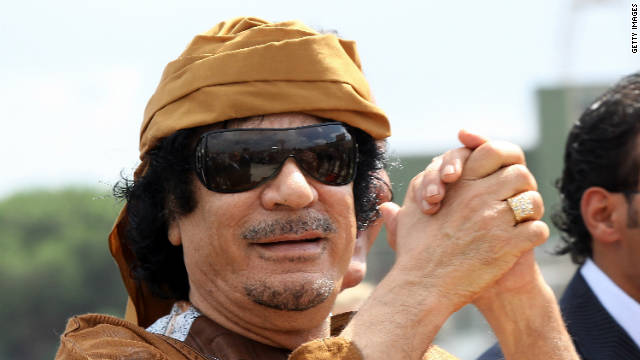
Moammar Gadhafi often turned to the nomadic Tuareg to bolster his forces.
Moammar Gadhafi often turned to the nomadic Tuareg to bolster his forces
 
Tripoli, Libya (CNN) -- Ousted Libyan leader Moammar Gadhafi is believed to be hiding out near the western town of Ghadamis under the protection of Tuareg fighters, an interim government military spokesman told CNN Tuesday.

"We have reliable information that Gadhafi is protected by the Tuareg tribe located between Niger, Algeria, and Ghadamis town in Libya," said Col. Abdul Basit.

He said Gadhafi's son Saif al-Islam is in Bani Walid and another son, Mutassim, is in Sirte. Both cities are among areas in Libya that remain contested, with loyalist Gadhafi forces fighting to the bitter end to retain control.

Basit did not provide insight as to how the interim government discovered Gadhafi's whereabouts and the claims could not be verified. The National Transitional Council has in the past made claims that turned out to be false.

Ghadamis lies in western Libya, on the border with Algeria. Tuareg tribesmen, known as capable mercenaries, have helped Gadhafi loyalists escape Libya across the expanses of the Sahel.

During his rule, Gadhafi often turned to the nomadic Tuareg to bolster his forces and his attempts to manipulate and destabilize the poor countries to the south of Libya: Niger, Chad and Mali.

The International Criminal Court in The Hague, Netherlands, has arrest warrants out for Moammar and Saif al-Islam Gadhafi. They are wanted for alleged crimes against humanity committed after the start of the Libyan uprising in February.

After the fall of Tripoli to revolutionary forces, purported messages from Moammar Gadhafi were aired on Syrian-based television Al-Rai. The longtime dictator has not been seen in public for months.

Libya's new leadership has been meeting in Benghazi to discuss the formation of an interim government. Meanwhile, battles are still raging in Sirte and Bani Walid -- NATO estimates that 200,000 of Libya's 6 million people are still under threat from Gadhafi's supporters.

Insurgents kill 4 soldiers guarding Thai school

PATTANI, Thailand (AP) — Muslim insurgents disguised as paramilitary rangers attacked troops guarding a school in southern Thailand on Wednesday, killing four soldiers and wounding two others, police said. A 6-year-old boy was shot in the stomach during the assault.

Police Lt. Gen. Satanfah Wamasing said 15 assailants walked up to the school and began talking with soldiers assigned to guard teachers there. They opened fire at close range and fled with four of the soldiers' M-16 automatic rifles.

The bloodshed in Narathiwat province's Rue So district is the latest in a wave of violence in Thailand's Muslim-dominated southernmost provinces since an Islamist insurgency flared in 2004.

Government soldiers are often designated to guard teachers and monks in the region.

Sunai Phasuk, a senior researcher for Human Rights Watch, said in a tweet that the New York-based group has warned Thai authorities "that the simultaneous use of school for military and education purposes will put civilians at risk."

But Sunai condemned the attack, saying: "Insurgents knew they could also harm students and teachers. Such brutality is sickening."

In a separate incident Wednesday in neighboring Pattani province, two gunmen on a motorcycle fatally shot a 48-year-old person in a market in Nong Chik district, police Lt. Gen. Chonnavi Chamaroek said.

On Wednesday, Amnesty International condemned the insurgents for targeting civilians in the conflict, saying such attacks constitute war crimes.

It said noncombatants have accounted for two-thirds of the nearly 5,000 deaths reported during the insurgency in the past eight years, while close to 8,000 people have been wounded.

Most of the violence has been confined to three southern provinces dominated by ethnic Malay Muslims who are a minority in mostly Buddhist Thailand. The area used to be an Islamic sultanate until it was annexed by Thailand in the early 20th century.

Pakatan fails to reach consensus on hudud

Don’t wait two years to build school building

The deputy prime minister had promised RM6 million for the building but they will have to wait two years.

BATU KAWAN: Deputy Prime Minister Muhyiddin Yassin had promised a RM6.3 allocation for a new building for the Batu Kawan Tamil school but the school will have to wait for two years.

Two weeks ago, Muhyiddin promised that the government would build the school within two years time.

Hindraf Makal Sakthi advisor N Ganeson hopes that it is not an election promise and he says that the building should be built right now.

“Why wait for two years … why not now?” asked Ganesan (photo, below), saying Prime Minister Najib Tun Razak on Sunday had assured the federal government would be fair to all communities in education.
He noted that Tamil education has contributed immensely to the country’s talent pool in the past.

“It’s the government’s duty to develop and re-develop Tamil schools,” he told FMT here today.

Currently SRJK (T) Ladang Batu Kawan is housed in a few containers along with the estate clerk’s house, after its earlier colonial barn like building was burnt down some 10 years ago.

The new school building will be constructed on a two acre site that was allotted by the previous state BN government.

Under the federal project, the primary school will have eight classrooms, a teachers’ common room, a office and a canteen.

The Public Works Department (PWD) is now finalising the school building project plan to be submitted soon to the Seberang Perai Municipal Council for approval.

Batu Kawan BN coordinator A Mohan said he would formally submit a request to the Pakatan Rakyat state government to set aside another two acres for a school field.

“I hope the state government would not hesitate to assist a Tamil school,” he said.

During the 2004 and 2008 pre-general election periods, he recalled that many BN politicians promised a new school building for Batu Kawan Indians merely to fish for votes.

“Now the federal government wants another two years with the country’s 13th general election just around the corner.

The country has 523 Tamil schools with 102,000 student population in 2011, comprising about half of all primary school-going ethnic Indian children.

Namewee calls Utusan ‘trash’

Rapper and Nasi Lemak 2.0 director comes out with a scathing YouTube video in response to attacks by Umno-owned Utusan Malaysia
VIDEO INSIDE
PETALING JAYA: In his usual acerbic style, rapper Wee Meng Chee (better known as Namewee) has come out guns a-blazing against Utusan Malaysia for their attacks on him.

Through a YouTube video entitled “Namewee F–k Utusan!!!”, the Nasi Lemak 2.0 director slammed the Umno-owned newspaper for claiming that he had offended the Malays.

“(The role of the) newspaper is to report, report! You are judging people. You don’t write to shiok sendiri (please yourself).”

“That kind of newspaper runs down Malaysians, runs down the people… You have a pen, you have a keyboard and you’re considered a reporter,” he belted out sarcastically in Malay, along with a series of expletives.

“Trash newspaper! Scum of society! Trash writer!” he added.

Wee was responding to an article entitled “Bukan Nasi Lemak 2.0, soalnya Namewee” (It’s not Nasi Lemak 2.0, the question is Namewee) by Utusan feature writer Fauziah Arof.

Fauziah stressed that she would not watch Wee’s Sept 8-released movie even if she was given free tickets.

In several volleys against the rapper, she claimed that he had offended Malaysians, especially the country’s “Malays and Muslims”.

The newspaper said it was strange for Minister in the Prime Minister’s Department Nazri Abdul Aziz to receive Wee without taking action against him.

Fauziah also claimed that the rapper was given “too much face” and rubbished Wee’s support of the 1Malaysia concept.

“Who is this Namewee, and what is so special about him?” she asked, adding that she had no problems with local films, and was willing to spend money to watch “Malay films”.

In his nearly three-minute-long video, Wee did not appear to be amused with Fauziah’s words.

Do you understand my lyrics?


He said the least the Utusan writer could have done was to watch his movie before making her comments.

“You think all the other newspapers are stupid? If it wasn’t good, they (would) write that it wasn’t… they can write (that) because they have gone to watch the movie!”

“What about you? Have you done your research?” he asked, and offered to buy the Utusan writer two tickets to watch his movie.

Wee also asked if the newspaper understood what his songs meant, and attacked it for claiming that he was a racist.

“Do you understand what my songs are about? Do you understand (what) my lyrics (mean)? … I told people not to be racist … to work properly,” he said.

“Where is your certificate? Is it from the drain? If you don’t know what it means to be a reporter, go back to school. Tell your boss, you and all your friends to go back to school!”

Utusan Malaysia’s salvo against Wee was one of many attacks levelled against the rapper in recent weeks.

A few weeks ago, protesters in Ipoh demanded a boycott of Nasi Lemak 2.0, linking it to the recent Bersih 2.0 (Coalition for Free and Fair Elections) demonstrations.

Umno-friendly bloggers have also been critical of the rapper, with some threatening physical violence against him should he allowed to meet Prime Minister Najib Tun Razak.

Hudud held back by lack of consensus

Islamic law cannot take place without DAP's agreement, agreed Pakatan leaders tonight.

KUALA LUMPUR: PAS’ hudud dreams in Kelantan remained just that today after Pakatan Rakyat agreed that it has to have a consensus among all three partners – PAS, PKR and DAP – for the Islamic law to be implemented.

At the same time, the pact also agreed not to stop PAS from raising the hudud issue again.

More importantly, Pakatan noted that any implementation of the Islamic law in Kelantan, or even nationwide when Pakatan comes to power, would need a constitutional amendement first in the parliament.

“Pakatan respects the PAS initiatives and aspirations (to implement the hudud in Kelantan), but we have to reach a consensus… DAP is opposed to that and PKR and PAS respect that decision,” said Opposition Leader Anwar Ibrahim after a lengthy Pakatan meeting tonight.

He said that Pakatan respected PAS’ and PKR’s support for the implementation of hudud in Kelantan just as it respected DAP’s opposition to it.

“However (a change to Islamic law) requires a Pakatan Rakyat consensus and an amendment to the (Federal) Constitution, and DAP’s position is that they are not supportive of that particular proposal,” he told reporters at the PAS party headquarters in Jalan Raja Laut.

The meeting, attended by all Pakatan top leaders, started at about 9pm and ended almost after midnight. Anwar was the only leader who spoke at the press conference.

The PKR supremo said that Pakatan’s leaders acknowledged the existence of the Second Syariah Kelantan Criminal Enactments 1993 and the Terengganu Syariah Criminal Enactments 2003.

“Both enactments are already there, but there is a need to refer to Pakatan Rakyat because it involves federal constitution amendments… As it stands, the matter is a non-issue,” he said.

Anwar said the need for a Pakatan consensus on the matter does not mean PAS will be stopped from  talking about implementing hudud laws.

“This is not an Umno-controlled Pakatan Rakyat. We respect the right of people to present their case, ask questions and raise the matter… To deny PAS to articulate their position is not fair,” he said.

Victory for DAP

Pakatan Rakyat’s hudud uproar erupted last week following a dare by former premier Dr Mahathir Mohamad to the PAS-ruled Kelantan to impose hudud.

Kelantan menteri besar and PAS spiritual leader Nik Aziz Nik Mat immediately said that the state was ready for hudud laws, a move which was supported by Anwar in his personal capacity.

However DAP was opposed to the idea as it claimed that implementation of Islamic laws was not part of Pakatan’s common policy framework.

A tense stand-off ensued between PAS and DAP with leaders from both sides fighting for their case.

PAS Youth leader, Nasarudin Hassan Tantawi was among those who strongly defended PAS’ right to implement hudud.

In a bid to stop the turmoil from escalating, Pakatan imposed a gag order on its leaders from openly disputing the hudud issue. The Pakatan meeting today was held to solve the hudud impasse.

However the outcome of the meeting is seen as a victory for DAP as it has managed to stop PAS from moving forward with its hudud plans, although any such immediate plan could have been thwarted at the parliamentary level as the Barisan Nasional government has always rejected PAS’ hudud plans.

When approached by reporters after the meeting and asked if he was happy with the outcome, Nasarudin merely said, “its a common consensus and our (Pakatan) stand is clear”.

PAS’ influential secretary-general Mustafa Ali was asked how he would react to claims that PAS had sacrificed its Islamic state ideals to reach a common consensus with Pakatan, to which he said:

“Let people say first then we would react to that later,” he said.

When asked to elaborate on the common consensus as it seemed quite vague, Mustafa merely said, “this is a strong consensus”.

Apart from Anwar, the Pakatan meeting was attended by PAS president Abdul Hadi Awang , PKR president Dr Wan Azizah Wan Ismail, DAP advisor Lim Kit Siang, DAP chairman Karpal Singh and other senior leaders from the three parties. Nik Aziz was absent and was represented by Kelantan exco member, Takiyuddin Hassan.

Mecca for the rich: Islam's holiest site 'turning into Vegas'


Historic and culturally important landmarks are being destroyed to make way for luxury hotels and malls, reports Jerome Taylor
In the eyes of Wahabis, historical sites and shrines encourage "shirq" – the sin of idolatry or polytheism – and should be destroyed. When the al-Saud tribes swept through Mecca in the 1920s, the first thing they did was lay waste to cemeteries holding many of Islam's important figures. They have been destroying the country's heritage ever since. Of the three sites the Saudis have allowed the UN to designate World Heritage Sites, none are related to Islam.
Independent UK
Click HERE to download graphic: Mecca For The Rich (430.39kB)
Behind closed doors – in places where the religious police cannot listen in – residents of Mecca are beginning to refer to their city as Las Vegas, and the moniker is not a compliment.
Over the past 10 years the holiest site in Islam has undergone a huge transformation, one that has divided opinion among Muslims all over the world.
Once a dusty desert town struggling to cope with the ever-increasing number of pilgrims arriving for the annual Hajj, the city now soars above its surroundings with a glittering array of skyscrapers, shopping malls and luxury hotels.
To the al-Saud monarchy, Mecca is their vision of the future – a steel and concrete metropolis built on the proceeds of enormous oil wealth that showcases their national pride.
Yet growing numbers of citizens, particularly those living in the two holy cities of Mecca and Medina, have looked on aghast as the nation's archaeological heritage is trampled under a construction mania backed by hardline clerics who preach against the preservation of their own heritage. Mecca, once a place where the Prophet Mohamed insisted all Muslims would be equal, has become a playground for the rich, critics say, where naked capitalism has usurped spirituality as the city's raison d'être.
Few are willing to discuss their fears openly because of the risks associated with criticising official policy in the authoritarian kingdom. And, with the exceptions of Turkey and Iran, fellow Muslim nations have largely held their tongues for fear of of a diplomatic fallout and restrictions on their citizens' pilgrimage visas. Western archaeologists are silent out of fear that the few sites they are allowed access to will be closed to them.
But a number of prominent Saudi archaeologists and historians are speaking up in the belief that the opportunity to save Saudi Arabia's remaining historical sites is closing fast.
"No one has the balls to stand up and condemn this cultural vandalism," says Dr Irfan al-Alawi who, as executive director of the Islamic Heritage Research Foundation, has fought in vain to protect his country's historical sites. "We have already lost 400-500 sites. I just hope it's not too late to turn things around."
Sami Angawi, a renowned Saudi expert on the region's Islamic architecture, is equally concerned. "This is an absolute contradiction to the nature of Mecca and the sacredness of the house of God," he told the Reuters news agency earlier this year. "Both [Mecca and Medina] are historically almost finished. You do not find anything except skyscrapers."
Dr Alawi's most pressing concern is the planned £690m expansion of the Grand Mosque, the most sacred site in Islam which contains the Kaaba – the black stone cube built by Ibrahim (Abraham) that Muslims face when they pray.
Construction officially began earlier this month with the country's Justice Minister, Mohammed al-Eissa, exclaiming that the project would respect "the sacredness and glory of the location, which calls for the highest care and attention of the servants or Islam and Muslims".
The 400,000 square metre development is being built to accommodate an extra 1.2 million pilgrims each year and will turn the Grand Mosque into the largest religious structure in the world. But the Islamic Heritage Foundation has compiled a list of key historical sites that they believe are now at risk from the ongoing development of Mecca, including the old Ottoman and Abbasi sections of the Grand Mosque, the house where the Prophet Mohamed was born and the house where his paternal uncle Hamza grew up.
There is little argument that Mecca and Medina desperately need infrastructure development. Twelve million pilgrims visit the cities every year with the numbers expected to increase to 17 million by 2025.
But critics fear that the desire to expand the pilgrimage sites has allowed the authorities to ride roughshod over the area's cultural heritage. The Washington-based Gulf Institute estimates that 95 per cent of Mecca's millennium-old buildings have been demolished in the past two decades alone.
The destruction has been aided by Wahabism, the austere interpretation of Islam that has served as the kingdom's official religion ever since the al-Sauds rose to power across the Arabian Peninsula in the 19th century.
In the eyes of Wahabis, historical sites and shrines encourage "shirq" – the sin of idolatry or polytheism – and should be destroyed. When the al-Saud tribes swept through Mecca in the 1920s, the first thing they did was lay waste to cemeteries holding many of Islam's important figures. They have been destroying the country's heritage ever since. Of the three sites the Saudis have allowed the UN to designate World Heritage Sites, none are related to Islam.
Those circling the Kaaba only need to look skywards to see the latest example of the Saudi monarchy's insatiable appetite for architectural bling. At 1,972ft, the Royal Mecca Clock Tower, opened earlier this year, soars over the surrounding Grand Mosque, part of an enormous development of skyscrapers that will house five-star hotels for the minority of pilgrims rich enough to afford them.
To build the skyscraper city, the authorities dynamited an entire mountain and the Ottoman era Ajyad Fortress that lay on top of it. At the other end of the Grand Mosque complex, the house of the Prophet's first wife Khadijah has been turned into a toilet block. The fate of the house he was born in is uncertain. Also planned for demolition are the Grand Mosque's Ottoman columns which dare to contain the names of the Prophet's companions, something hardline Wahabis detest.
For ordinary Meccans living in the mainly Ottoman-era town houses that make up much of what remains of the old city, development often means the loss of their family home.
Non-Muslims cannot visit Mecca and Medina, but The Independent was able to interview a number of citizens who expressed discontent over the way their town was changing. One young woman whose father recently had his house bulldozed described how her family was still waiting for compensation. "There was very little warning; they just came and told him that the house had to be bulldozed," she said.
Another Meccan added: "If a prince of a member of the royal family wants to extend his palace he just does it. No one talks about it in public though. There's such a climate of fear."
Dr Alawi hopes the international community will finally begin to wake up to what is happening in the cradle of Islam. "We would never allow someone to destroy the Pyramids, so why are we letting Islam's history disappear?"
Under Threat
Bayt al-Mawlid
When the Wahabis took Mecca in the 1920s they destroyed the dome on top of the house where the Prophet Mohammed was born. It was thenused as a cattle market before being turned into a library after a campaign by Meccans. There are concerns that the expansion of the Grand Mosque will destroy it once more. The site has never been excavated by archaeologists.
Ottoman and Abasi columns of the Grand Mosque
Slated for demolition as part of the Grand Mosque expansion, these intricately carved columns date back to the 17th century and are the oldest surviving sections of Islam's holiest site. Much to the chagrin of Wahabis, they are inscribed with the names of the Prophet's companions. Ottomon Mecca is now rapidly disappearing
Al-Masjid al-Nawabi
For many years, hardline Wahabi clerics have had their sites set on the 15th century green dome that rests above the tomb holding the Prophet, Abu Bakr and Umar in Medina. The mosque is regarded as the second holiest site in Islam. Wahabis, however, believe marked graves are idolatrous. A pamphlet published in 2007 by the Saudi Ministry of Islamic Affairs, endorsed by Abdulaziz Al Sheikh, the Grand Mufti of Saudi Arabia, stated that "the green dome shall be demolished and the three graves flattened in the Prophet's Masjid".
Jabal al-Nour
A mountain outside Mecca where Mohammed received his first Koranic revelations. The Prophet used to spend long spells in a cave called Hira. The cave is particularly popular among South Asian pilgrims who have carved steps up to its entrance and adorned the walls with graffiti. Religious hardliners are keen to dissuade pilgrims from congregating there and have mooted the idea of removing the steps and even destroying the mountain altogether.

Positive Court Ruling for Malaysian Reform NGO


Image
You guys won't be needed today.
Bersih 2.0 can challenge decision saying it’s illegal, judge says
(Asia Sentinel) A High Court Judge in Malaysia ruled Wednesday that Bersih 2.0, a coalition of 80-odd NGOs demanding changes in the country’s electoral laws, can appeal a July 1 decision of Home Affairs Minister Hishammuddin Tun Hussein, outlawing it.

There continue to be deep suspicions in Malaysia that the government is stalling on putting in place the electoral reforms that Bersih’s component members are advocating.

Nonetheless, “We welcome the decision,” said Wong Chin Huat, one of the leaders of the organization, in a telephone interview. “There is no guarantee that we will win and we don’t want to be overly optimistic but it is a good sign.”

In a prepared statement, Bersih’s leaders said they welcomed the judge’s decision and added that: “It is absolutely vital in a democracy that the courts are prepared to allow scrutiny of executive powers by allowing citizens who are affected by the exercise of these powers to have the opportunity to challenge them fairly in court.”

Hishammuddin declared Bersih 2.0 illegal prior to a July 9 march demanding electoral reform in Kuala Lumpur in what blossomed into a harsh attempt to stop the organization from fulfilling its goals. At one point, police were arresting anybody wearing a yellow Bersih tee-shirt.

Given that Malaysian courts do not operate in a vacuum but tend to take their marching orders on political affairs from the ruling government coalition, some observers believe the government, embarrassed by naming Bersih an illegal organization in the first place, could have signaled to the court to allow the group’s complaint to go ahead.

Bersih, the Malay language word for “clean,” is formally known as the Coalition for Clean and Fair Elections.

Wong said he was heartened by the fact that six leaders of the Socialist Party of Malaysia (PSM) leaders who had been arrested in the run-up to the march were released unconditionally in late July, a possible indication that the government was softening its stance.

The country was badly embarrassed after police sought to stop the July 9 march, chasing down nonviolent marchers with tear gas and water cannons and arresting 1,667 people including most of Bersih’s leaders. Despite police refusal to grant a permit for the march and establishing roadblocks to shut down Kuala Lumpur to keep people out of the city, an estimated 25,000 people got through anyhow. The government was doubly embarrassed when censors blacked out parts of a story in The Economists describing the crackdown, an act of censorship that hasn’t taken place in years.

As domestic and international criticism continued, Prime Minister Najib Tun Razak apparently yielded to Bersih’s demands and announced in August that a select parliamentary committee would be formed to seek to reform the country’s electoral system.

However, since that time little or nothing has been done besides cleaning the electoral rolls of some 70,000 disqualified voters, leading to criticism that Najib could be stalling. Bersih leaders are continuing to be harassed and investigated by police, leaders said. So far, there is no indication that the parliamentary committee has been formed. No Bersih leaders have been asked to join the committee. However, the Dewan Rakyat, or parliament, is in recess and is not due to reconvene until Oct. 2.

Under Malaysia’s parliamentary system, elections must be held in 2013 at the latest. The current betting is that Najib will call for dissolution of parliament sometime in March 2012, when the country’s schoolchildren are on holiday and the schools can be used as polling stations. Bersih has asked that the select parliamentary committee be allowed to meet and conclude its business prior to the election. Given the complicated machinery of changing the country’s constitution and other legal issues, it is questionable if the committee can meet and transact its business prior to the election.

Bersih has repeatedly asked that the elections be delayed until after the committee finishes its work. The NGO recently issued a statement saying it is ”disappointed at the on-going display of arrogance by the ministers of our country in negotiating the terms of reference and composition of the Parliamentary Select Committee on Electoral Reform. We remind the leaders of the nation that as representatives elected by citizens of Malaysia, they should humbly listen to the voices of the people and act as the people wills them.”

Bersih has published a list of eight demands they say are necessary to clean up the country’s voting procedure, saying that as many as 3.5 million voters have been disenfranchised by the current electoral process, that rolls must be cleaned to eliminate ghost voters and that the electoral period must be lengthened because the ruling national coalition has the ability to put its campaign machinery in place, then call a snap election before the opposition has the opportunity to mount a campaign.

They have also demanded that the country’s press be allowed to report more fairly on the opposition, who are consistently featured negatively if they are featured at all. Given that all of the major media are owned by component political parties of the Barisan Nasional, that seems problematical. Just last week, a public service video by a local musician promoting the right to vote was taken off the air on orders of the Malaysian Communications and Multimedia Commission because it featured opposition figures and a speech by Tengku Razaleigh Hamzah that featured some negative comments.

Mengapa Najib, Rosmah Mesti Jadi Saksi

Malaysiakini
Anwar Ibrahim hari ini memfailkan afidavit jawapan berhubung permohonan Perdana Menteri dan isterinya untuk mengketepikan sepina yang disampaikan kepada mereka supaya tampil sebagai saksi pembelaan dalam perbicaraan kes liwat.

anwar sodomy saiful bukhari azlan allegations 290608Dalam dokumen yang ditandatanganinya petang ini di hadapan pesuruhjaya sumpah di Mahkamah Tinggi Kuala Lumpur, Anwar berkata, Datuk Seri Najib Razak dan Datin Seri Rosmah Mansor diperlukan untuk membantu kes berkenaan.

Ini dikaitkan dengan maklumat yang dibekalkan oleh bekas pembantu Najib, Datuk Khairil Annas Jusoh, ketika diwawancara oleh peguam Anwar semasa proses merakamkan kenyataan daripada saksi-saksi yang berpotensi.

Khairil Annas telah mengesahkan bahawa dia membawa pengadu kes liwat itu, Mohd Saiful Bukhari Azlan untuk bertemu dengan Najib, yang ketika itu adalah timbalan perdana menteri.

“Saya seterusnya menyatakan bahawa saya telah dinasihatkan oleh peguam-peguam saya, nasihat yang saya percayai adalah tepat dan benar, bahawa Datuk Khairil Annas Jusoh telahpun memaklumkan kepada mereka di dalam temuramah tersebut bahawa beliau telahpun membawa pengadu berhumpa dengan pemohon paad 26 Jun 2008 untuk lebih kurang sejam di kediaman pemohon.

NONE“Oleh yang demikian, saya percaya terdapat banyak lagi perkara yang telahpun dibincangkan antara pemohon dan pengadu tersebut semasa pertemuan tersebut yang saya yakin adalah relevan dan materrial kepada pembelaan saya,” katanya dalam afidavit itu.

Menurut Anwar lagi, Najib pada mulanya menafikan bertemu dengan Saiful tetapi kemudian menukar pengakuan dan berkata Saiful telah memohon bantuan bagi mendapatkan biasiswa.

Justeru, peguamnya mahu mendapatkan penjelasan lanjut.

Tambahnya lagi, semasa wawancara pada 12 Ogos lalu, Najib dan Rosmah tidak bekerjasama dalam memberikan kenyataan kepada peguamnya.

Anwar, berkata beliau mempunyai hak di sisi undang-undang untuk memanggil saksi dan sehubungan itu mengarahkan peguamnya untuk mensepina Najib dan isterinya.

New Ministry, Seven New Faces In Sarawak Cabinet Reshuffle

KUCHING, Sept 28 (Bernama) -- The state cabinet reshuffle that will take effect on Friday will see a new ministry being created, five ministries renamed and seven new faces including a woman to be appointed as assistant ministers.

Chief Minister Tan Sri Abdul Taib Mahmud said the new ministry would be named the Welfare, Women and Family Development Ministry, to be headed by Datuk Fatimah Abdullah and assisted by two new assistant ministers who are also new faces, Rosey Yunus and Robert Lawson Chuat Vincent.

"The other new faces as assistant ministers are Julaihi Narawi, Abdul Karim Hamzah, Datuk Len Talif Salleh, Dr Jerip Susil and Liwan Lagang," he said, adding that the seven would be sworn in on Friday.

Julaihi will be appointed as Industrial Development Assistant Minister (Investment and Promotion) and Rural Development Assistant Minister, and Abdul Karim as Housing Assistant Minister and Social Development Assistant Minister (Youth Development).

Len Talif will be appointed as Resource Planning and Environment Assistant Minister (Environment) and Assistant Minister in the Chief Minister's Office (Technical Education Promotion), Dr Jerip as Local Government and Community Development Assistant Minister (Public Health), and Liwan as Social Development Assistant Minister (Culture and Heritage).

"All the full ministers will be retained and some of their ministries renamed," he said.

The five ministries renamed include the Social Development and Urbanisation Ministry, which is now known as Social Development Ministry and headed by Sarawak Progressive Democratic Party (SPDP) president Tan Sri William Mawan Ikom and Environment and Public Health Ministry, now known as Local Government and Community Development Ministry, headed by Sarawak United People's Party deputy secretary-general Datuk Seri Wong Soon Koh.

The Planning and Resource Management Ministry will be known as Resource Planning and Environment Ministry, Housing and Urban Development Ministry as Housing Ministry, and Tourism and Heritage Ministry as Tourism Ministry, with both the ministries under the purview of Datuk Amar Abang Johari Tun Openg, who is also Parti Pesaka Bumiputera Bersatu (PBB) deputy president.

Taib who retains his portfolios in the Finance Ministry and Resource Planning and Environment Ministry, said there was no urgent need for the appointment of second Deputy Chief Minister.

He said the one Deputy Chief Minister post now held by another PBB deputy president, Tan Sri Alfred Jabu Numpang, who is also Rural Development Minister, should not be a big issue.

He said Parti Rakyat Sarawak (PRS) president Tan Sri Dr James Jemut Masing who had been retained as Land Development Minister, would also be holding senior minister porfolios together with Soon Koh and Mawan.

He said their role as senior ministers would be to coordinate specific development projects and programmes needed to be undertaken together.

He said PBB senior vice-president Datuk Amar Awang Tengah Ali Hassan would be the new Industrial Development Minister, as well as the second Resource Planning and Environment Minister and Public Utilities Minister, while Datuk Seri Michael Manyin retained his portfolio as Infrastructure Development and Communications Minister.

He said the Public Works Department (PWD), Agriculture Department and local councils were also being revamped.

"The PWD revamp is almost completed while it may take about five years for the others," he added.

Wednesday, 28 September 2011

Saudi woman to be lashed for driving car

Police in Australia are considering using fingerprinting to identify Muslim women wearing full veils after a court case in which a woman was let off because police could not be sure who she was.
A Saudi Arabian woman is to be lashed for driving a car days after women were given the vote in the kingdom (file photo)
Amnesty International reported the sentence just two days after Saudi King Abdullah granted women the right to vote and run in municipal elections.

"Flogging is a cruel punishment in all circumstances but it beggars belief that the authorities in Saudi Arabia have imposed lashes on a woman apparently for merely driving a car", Philip Luther, an Amnesty regional deputy director, said in an emailed statement.

"Allowing women to vote in council elections is all well and good, but if they are still going to face being flogged for trying to exercise their right to freedom of movement, then the king's much trumpeted 'reforms' actually amount to very little," Mr Luther said.

Two other women are also believed to be facing charges related to driving, the Amnesty statement said.

Najla Hariri, one of the women facing charges, told Reuters: "They called me in for questioning on a charge of challenging the monarch on Sunday... I signed a pledge not to drive again, although my driving was a result of necessity not an act of defiance."
Related Articles

Saudi women look at the bigger picture
26 Sep 2011

Saudi women granted the right to vote
25 Sep 2011

Saudi women given right to vote by King Abdullah
25 Sep 2011

Court lifts $9.2bn freezing order on Saudi tycoon
22 Sep 2011

Under Saudi Arabia's strict Islamic laws, women require a male guardian's permission to work, travel abroad or undergo certain types of surgery.

There is no law banning women from driving, but there is a law requiring citizens to use locally issued licences while in the country. Such licences are not issued to women, making it effectively illegal for them to drive.

In May, as pro-democracy protests swept the region, some women in Saudi Arabia called for the right to drive. A campaign dubbed Women2Drive issued calls on social media such as Twitter and Facebook to challenge the ban.

Some women posted on Twitter that they drove successfully in the streets of Jeddah, Riyadh and Khobar while others said they were stopped by police who later let them go after signing a pledge not to drive again.

On May 22, Manal Alsharif, who posted a YouTube video of her driving in the streets of Khobar, was arrested. She was later released but her case proved a deterrent for many women.

"I am very upset and disturbed... I believe that this is a message which intends to tell women that they will not get all their demands," said Naila Attar, an activist and one of the women who organised the campaign Baladi (My Country), calling for Saudi women to have the right to vote.

"We are now working on a petition to the king ... asking him to stop the lashing order," she said.

Explosion rips through Empire Gallery, four hurt

A view of Empire Gallery Subang after an explosion early this morning ripped through a large portion of the mall. — Picture by Choo Choy May
SUBANG JAYA, Sept 28 — Four people were hurt in an early morning explosion at the Empire Gallery shopping mall here, which was heard from as far away as Bangsar.

Eyewitnesses described a scene of chaos, with police, ambulances and the fire brigade still on the scene.

Police tracker dogs were also present, as were Fire and Rescue Department personnel from stations across Subang Jaya, Shah Alam, Damansara and Puchong to investigate the incident.

Subang Jaya OCPD ACP Zainal Rashid Abu Bakar told reporters at the scene that the blast was believed to have started in the basement and involved a gas pipeline.

“We have yet to determine the cause of the blast but damage is extensive, affecting the parking lot and many outlets on the basement level and even the ground floor,” he said.

“Our forensics team is still investigating. We have not been able to enter certain parts of the mall . . . the damage is too bad and the areas are sealed off.”

He confirmed that a distress call was received at 3.45am concerning the explosion at the mall, which is at the entrance of Subang Jaya from the Federal Highway.

Zainal Rashid said four people were injured — two Nepalese security guards and a couple. They received minor scrapes and bruises.

Rescue workers are still combing the basement in search of more victims.

The security guards, who were initially trapped in the basement, have been sent to hospital.

The couple, sales executives Daryl Chua, 27, and his girlfriend Hibbie Tan, 23, were taken to hospital in an ambulance but have since been discharged.
Nearly the entire stretch of the front portion of the newly-built mall was blown out, damaging a number of cafes, restaurants and clothing stores including Tangs and Starbucks Coffee.

Chua told reporters that he was walking with his girlfriend to an parking payment station a few steps from Starbucks when the explosion occurred about 3.30am.

“We were at La Bodega earlier for dinner and then we were just hanging out outside my car and talking," he said.

“Just as we were heading to the Autopay, there was a loud ‘boom’, like in the movies. I thought it was a bomb.”

Chua said he was “literally lifted off the ground” and thrown sideways several metres from the blast, lightly grazing both his arms.

The sound of breaking glass, falling debris and metal, and sirens broke the earlier silence, he said, leaving him in a momentary state of confusion and panic.

“And then the flames came up. It was all over, the entire front of the mall was razed. I thought I was going to die,” he said.

When the scene calmed slightly, Chua said he carried Tan, who had sprained her leg, to safety and noticed passers-by and nearby residents rushing to the scene.

His car, a black Volkswagen Golf GTI, was severely damaged.
Selangor Mentri Besar Tan Sri Khalid Ibrahim tweeted this morning and prayed for the safety of the residents nearby.

Subang Jaya assemblyman Hannah Yeoh was also there, he added.

The shopping mall opened last year.

Yeoh told The Malaysian Insider she scrambled to get there after receiving a message on the Twitter micro-blogging service around 3am.

“The four injured have been taken to the hospital,” she said. "One broke his leg, apparently."

“The damage [to the building] is extensive. All of the lower floor all the way up to the second floor.”

The cause of the explosion was still not known, she said.

The police have sealed off the area, causing traffic jams in the vicinity during the morning rush hour.

Pakatan’s illusion of unity shattered, says MCA

MCA organising secretary Tee Siew Keong says Pakatan should lift its gag order and allow its members to speak freely over hudud implementation.

PETALING JAYA: The ongoing tiff in Pakatan Rakyat over the hudud issue is proof that the so-called unity among the Pakatan component parties is a mere illusion, said MCA national organising secretary Tee Siew Keong.

In a statement today, Tee said Pakatan should allow its members to speak freely over the Islamic law controversy by lifting its gag order on the matter.

“Whenever troubled by a controversy, they silence their members. They should stop trying to sweep the matter under the carpet,” said Tee.

Last week, the opposition pact courted controversy when its leader Anwar Ibrahim openly said that in principle, he backed hudud laws to be implemented in Kelantan.

His statement drew ire from DAP with Lim Kit Siang saying the Islamic law cannot be implemented in Malaysia and was not part of the Pakatan’s common policy.

A heated debate followed suit, prompting Pakatan leaders to issue a gag order over the matter pending a high-level meeting later tonight.

Tee said that this was not the first time Pakatan resorted to silence its members as the same thing was done when Selangor menteri besar Abdul Khalid Ibrahim was in a fix over the Damansara Utama Methodist Churh by Selangor Islamic Religious Department (Jais) last month.

“And when heated debate followed over seat allocation talks, Pakatan leaders told its members not to speak openly on the matter,” he said.

Since early this month, there were reports that PKR and DAP were deadlocked over negotiations on seats allocation in several states.

This prompted PKR secretary-general Saifuddin Nasution to instuct his party leaders to stop highlighting their discontent to the press.

Tee also called upon DAP to state its stand over the implementation of hudud laws in Kelantan to put the matter to rest once and for all.

“And it should stop pitting the Chinese against one another just for the sake of political power,” he said.

Bersih 2.0 gets leave to challenge unlawful order

High Court fixed Nov 22 to hear the merit of the judicial review.

KUALA LUMPUR: The steering committee of Bersih 2.0 today obtained leave from the High Court to challenge the order declaring it an unlawful society.

Judge Rohana Yusuf, who made the decision in chambers, allowed the leave application of the committee for a judicial review to quash the decision.

The court set Nov 22 to hear the merit of the judicial review.

On July 8, 14 members of the committee, including S Ambiga, filed the leave application naming the Home Minister, Inspector-General of Police and the government as respondents.

They are seeking an order of certiorari to remove the order dated July 1 by the Home Minister declaring Bersih 2.0 an unlawful society and an order to quash it forthwith.

They also want a declaration that the order is null and void and of no effect.

Ambiga, who is chairman of the committee, told reporters that the judge had granted them leave to seek to quash the decision and have the order declared null and void.

However, Ambiga said, the judge denied the leave application for an order prohibiting the respondents from entering and searching their premises as well as an order to compel the respondents to release the T-shirts, placards, newspapers, books, banners and any other documents or objects belonging to them which were seized by the police.

Ambiga said that she was happy with the ruling as it related to an executive order.

Senior Federal Counsel Kamaluddin Md Said, representing the respondents, said that he will get instructions from his superiors on whether to appeal against the ruling.

In the application, the committee claimed that the order decreed that the Bersih movement was declared an unlawful society because it was allegedly “being used for purposes prejudicial to the interests of the security of Malaysia and public order”.

Bersih 2.0, the committee contended, was substantively different from the movement known simply as Bersih which was launched in 2007 and comprised political parties and civil society organisations.

Bersih 2.0, it said, consisted solely of civil society organisations and was launched in November last year.

The applicants claimed that the order was illegal because Bersih 2.0 was substantively different from Bersih, and that Bersih, as it originally stood, no longer existed.

- Bernama

Indians ‘kingmakers’ in 130 state seats

A PKR survey revealed that urban and semi-urban Indians are still partial to the Pakatan Rakyat coalition

PETALING JAYA: A PKR leader is of the opinion that the Indian community is still very much aligned to Pakatan Rakyat and will be the kingmakers in 130 state assembly seats.

Malacca vice-president G Rajendran said that a recent survey by an independent team indicated that 60 percent of Malaysian Indians, who were mostly from the urban and semi-urban areas, were fed up with the Barisan Nasional (BN) administration.

He claimed that the team, which included him, had visited 62 parliamentary constituencies where the respective Indian communities had played a major role in deciding the winning candidates in the historic 2008 general election.

“We’ve been doing the survey for the last six months. The feedback is favouring Pakatan,” he told FMT.

According to him, Indians will play a pivotal role in the coming general election.

“The survey revealed that the outcome of 130 state assembly seats in Kedah, Perak, Selangor, Negri Sembilan, Penang, Johor, will be determined by Indian votes,” he said. (A parliamentary constituency has three to four state assembly seats.)

Rajendran said currently the BN leaders are playing a “psychological war” with the Indian community.

They are pitting the Indian community against Pakatan leaders by saying the community is unlikely support the opposition party.

“These are utter lies… the Indian voters still have faith in Pakatan.

“Pakatan has excellent state governments in Kedah, Kelantan, Penang and Selangor respectively,” he added.

Fewer people in estates

Rajendran pointed out that only 15% of the Indians are now living in estates and rural areas, based on the survey.

“This is the group that MIC is focusing on. They (MIC) are hoping that by sorting out this group’s simple needs it is enough to win at the ballot box,” he said, adding that this group was still true loyalist to BN.

Rajendran, however, believes that despite MIC’s forays, the rural Indians are unlikely to turn against Pakatan in the 13th general election, even though the community is facing numerous problems to vote.

“Many of the voters have no transport to go to the voting centres.

“Some do not have identity cards and others are too complacent or are not interested to vote,” he said.

He added that that there should not be a comparison between a by-election and a general election, where in the former, the BN can give its full attention to the rural areas where Indian reside.

He also said the BN would also have trouble convincing the 20% Indians who lived in urban areas to vote for the ruling regime.

“BN cannot ‘touch’ them (urban Indian) at any cost.

“Thus, the remaining 65% of the Indians who live in the semi-urban are now seen as the real threat to both sides,” he said.

‘MIC doomed’

Rajendran is confident that 55% of the semi-urban Indians will support Pakatan in the upcoming election.

He said MIC was doomed and was unlikely to offer BN many voters.

He added that accusations hurled at PKR de facto leader Anwar Ibrahim and the government’s refusal to ban the “Interlok” novel, along with the discrimination in social and education developments, are several factors that would work against the MIC.

He described Prime Minister Najib Tun Razak’s recent announcement to help needy Indians as mere “instant noodles”, adding that BN can no longer fool the community.

On Monday, Najib launched an education charity fund called “Community Chest” and pledged to channel a minimum of RM100 million annually from next year to help needy Chinese and Tamil mission schools.

Rajendran said that “Najib only officiated at the programme and he cannot claim credit for it. The charity is a brainchild of Malaysian business tycoons.

“The BN has hijacked the charity from those tycoons to gain votes from non-Muslim,” he added.

Dato Seri Anwar Ibrahim “Demi Rakyat” Alor Gajah 22/09/2011


Middle Malaysia

The Malaysian Insider

SEPT 28 — Middle Malaysia is elusive but it is clear that whichever coalition that is able to win across the traditional fault lines of race, religion and regions takes Federal power.

Barisan Nasional is now the world’s oldest elected government still in office. Its predecessor, the Alliance party, first won the Federal election for self-government in 1955.

BN’s longevity in government can be attributed to successful manipulation of the carrot and stick. Carrots range from contracts for big tycoons to rural patronage for the Umno base while the sticks are really big – dissenters can be put behind bars without trial for years while the mass media are muzzled.

But there is something deeper: there is no alternative.

Or more precisely, the ultimate use of the carrot and stick is to ensure that no BN-clone is allowed to exist.

Instead of fighting a single opposition, BN perpetuated a structure which has two flanks — PAS for the Muslims and DAP for the non-Malays — and styled itself as the indispensable pseudo “centrist” coalition that caters for the interests across racial, religious and regional boundaries.

Without a clean and fair electoral system and an unbiased mass media, the moment a moderate centrist coalition emerges it is destroyed without mercy.

Elections in 1964, 1974, 1982, 1995, and 2004 saw a general swing of all ethnic groups in favour of Barisan Nasional for various reasons. Elections in 1978 and 1986 witnessed Barisan Nasional winning across the races but losing heavily among ethnic Chinese voters.

A general anti-establishment swing across races in various degrees towards the Opposition occurred in elections in 1959, 1969, 1990, 2008 while the 1999 election was an oddity with Malays swinging massively towards the Opposition while more than 50 per cent of the supposedly more anti-establishment voted for the ruling coalition out of fear of the Islamic state claim and copycat violence a la Indonesia’s anti-Suharto days.

The de facto centre plus two flanks structure was almost broken in the 1990 general election until the final days of campaign when BN depicted Tengku Razaleigh Hamzah as a traitor to the Malays for wearing a Kadazan headgear with a symbol that looks like a cross. At the time, the majority of the ethnic Chinese and nearly half of the Malays were psychologically ready for a change of government.

Since the 2008 general election, BN’s formula to win the next election is not to recognise the two-party reality that it received only 51 per cent of popular votes. In fact, only 49 per cent in peninsular Malaysia voted for BN.

Instead, apart from starving the Opposition of material resources and fair mass media coverage, the strategy is three-pronged – to destroy Datuk Seri Anwar Ibrahim’s credibility as the alternative prime minister at all costs, to lure PAS’ leaders into the Malay/Muslim exclusivist discourse and to paint DAP as an extremist villain.

It is no small feat that for the last three-and-a-half years since the formation of Pakatan Rakyat as a consequence of the March 2008 election, it has so far been able to hold Middle Malaysia.

The alternative media channels are more mature compared to two decades ago while 70 per cent of Malaysians are now living in the urban areas which allow greater exposure and access to alternative views. In 1980, only 35 per cent of the population live in urban areas.

Umno has also effectively ceded Middle Malaysia to the Opposition since the waving of the keris by Hishammuddin Hussein in July 2005. Its right wing is now dictating policies.

And, to the credit of Pakatan Rakyat, it has stayed in Middle Malaysia all this while.

Putrajaya to set timetable for law reforms tomorrow, says Najib

The Malaysian Insider
KUALA LUMPUR, Sept 27 — Datuk Seri Najib Razak today reaffirmed his government’s commitment to increase civil liberties in the country, saying Putrajaya will decide tomorrow on a timetable to carry out his promised reforms to security and press laws.

Without divulging details, the prime minister said the first round of reforms would be delivered during the coming Parliament sitting next month and promised more would follow suit over the next few months.

“At this stage, we want people to have the idea that we are serious about it, we are committed towards it and this coming Parliament, you will see a slew of new legislation, or rather actions on our part to repeal certain Acts and public will be informed in due course,” he told participants at the close of the Khazanah Megatrends Forum 2011 this evening.

The prime minister responding to a question by a participant on when his administration planned to implement the security and press law changes he had promised in his recent Malaysia Day address.

Among others, Najib had announced the repeal of the Internal Security Act (ISA), amendments to the Printing Presses and Publications Act (PPPA), the lifting of three Emergency Declarations and the repeal and amendments to other security laws.

“We are in process now of looking at some of the best practices, some of the norms that are in place, not only within the region but internationally, and we will be tackling them one by one. We will decide tomorrow on the timetable.

“The objective of the new policy would be to ensure greater civil liberties in Malaysia; we want to emerge as a modern functioning democracy,” Najib told the forum, earning applause.

He said his Malaysia Day message merely touched on some “basic principles”, adding that once his administration irons out the details of the reforms, subsequent announcements would be made.

Najib earned praise across the political divide for his law reform pledges but many civil society groups and opposition lawmakers also expressed doubt that the prime minister would follow through with his promises.

They pointed out that Najib had also announced the enactment of two new security laws in place of the ISA, asking if this meant the government was merely rebranding the contentious Act.

Political hardliners are also pressuring the prime minister to preserve the spirit of the ISA in the two new laws, claiming Malaysia was still in need of such preventive legislation.

Najib came to power in April 2009 with the promise of reviewing the ISA but has now done away with the security law completely in what appears to be a drastic move to win back middle Malaysia.

Tun Dr Mahathir Mohamad said this week Najib should push back the election timetable and the influential former prime minister’s views has found support among Cabinet and senior government leaders who want the Barisan Nasional (BN) government to regain greater support.

The latest survey from local pollster Merdeka Center showed that Najib’s popularity slid to 59 per cent this August from the highest of 79 per cent in May 2010, fuelled by rising concerns over the surge in living costs and his government’s handling of the July 9 Bersih 2.0 rally.

The Bersih 2.0 rally and spike in living costs this year are similar to events in 2007 that eventually led to BN’s loss of its customary two-thirds parliamentary majority and four states in Election 2008 to three opposition parties that later organised themselves into a pact called Pakatan Rakyat (PR).

That led to Tun Abdullah Ahmad Badawi losing his job in 2009 in favour of Najib who became the country’s sixth prime minister after more than 30 years in government. Najib’s father, Tun Abdul Razak Hussein, was the country’s second prime minister.

Dead prisoner's family gets RM590,900 damages

The New Straits Times

KUANTAN: The High Court yesterday ordered the government and Penor Prison director to pay RM590,900 in damages to the family of an 18-year-old youth who died at the prison six years ago.

Judge Datuk Mariana Yahya made the decision in chambers yesterday after reviewing submissions by lawyer G. Visvanathan Nair, who represented the victim's parents, Mohamed Yusof Mat Diah, 64, and his wife, Rohani Mohamed, 53.

Visvanathan told reporters that in her judgment, Mariana had described the assault by 10 prison employees as brutal and in-humane, and this had led to the death of Mohd Shukri Mohamed Yusof.

She said the prison employees had violated Shukri's human rights and such behaviour was unfair and could never be compromised.

Mariana awarded the amount for aggravated damages, loss of support and other expenses. 

Besides Visvanathan, the plaintiffs were also represented by G. Subramanian Nair and Ebrina Zubir.

The defendants were Azhar Che Wil, Teyun Thian Em, Suhaimi Nordin, Mohamad Hamdan Mohd Yaakob, Ahmad Rizal Ab Halim, Ismail @ Mat Daud Ideris (represented by Amanah Raya Bhd, which is managing his properties after he died), Hamdan Mohamad, Mohd Rozi Abdul Hamid, Baharin Ab Ghani and Zamarul Hafiz Shahbudin.

The Penor Prison director and the government were the 11th and 12th defendants.

Counsel R.S. Pani represented Hamdan, Rozi, Baharin and Zamarul Hafiz, while senior federal counsel Kamal Azira Hassan represented Teyun, Suhaimi, Hamdan, Ahmad Rizal, Ismail, the prison director and the government.

Nine of the warders -- Teyun, Suhaimi, Hamdan, Ahmad Rizal, Ismail@Mat Daud, Hamdan, Rozi, Baharin and Zamarul -- were acquitted in 2005 without their defence being called, while Azhar was sentenced to death.

The Federal Court upheld the conviction and death sentence against Azhar last year.

In the 4.10pm incident on March 1, 2004, Shukri, who was a remand prisoner, had attempted to escape but was caught 30 minutes later and assaulted by the prison employees before he passed out at the prison safety unit room.

Shukri, who was remanded for drug offences, was taken to Tengku Ampuan Afzan Hospital here before he died at 7.44am on March 10. 

A medical report revealed that he suffered several injuries, including a fractured skull and bleeding in his brain.

Rohani, when met outside the court, said she was grateful that the case was over.

"I am not after the money, as my son is no longer alive, but what is important is that justice has been served.

"I hope this will serve as a reminder to the prison employees that they should never take the law into their hands as it can result in the death of people."

The housewife said her family had accepted Shukri's death, but added that it could have been avoided if the prison employees had been more responsible in carrying out their duties. 

She said her family would hold a tahlil (special prayers for the dead) for Shukri soon.

‘Human safari’ tourism destroys UN drive to link cultures

‘Human safari’ tourism destroys UN drive to link cultures


Tourists arriving on the Andaman Islands are being
given leaflets about the 'human safari park' boycott.
© Search/Survival
Travel and tourism have the power to link cultures and provide a ‘stepping stone towards peace’, according to the UN. But as the world marks its 31st World Tourism Day, Survival International has learned of an alleged sexual assault on a tribal woman in India’s Andaman Islands.

Exotic beaches make the archipelago a top holiday destination, but tourism is also leaving tribes increasingly vulnerable, as sightseeing tours turn into ‘human safaris’.

This trend means recently contacted tribes are now in immediate danger from outside influences. The alleged victim of this latest assault was from the Andamans’ Jarawa tribe. Police have arrested two non-Jarawa men.

The Jarawa resisted contact with outsiders until 1998, despite a road being built through the centre of their ancestral lands. Survival International has called on the Indian government to close the illegal road.

Two Jarawa relax by the coast of the Andaman
Islands © Salomé/Survival
Some tour operators treat the Jarawa like animals, encouraging tourists to ‘spot’ them and throw biscuits and sweets as they drive along the Andaman Trunk Road.

Survival’s Director Stephen Corry says, ‘the UN describes World Tourism Day as a chance to advance understanding and tolerance between peoples and cultures. Using the Andaman Trunk road destroys this message by threatening the health and well being of a whole tribe. An alternative route must be provided.’

A local Andaman organization called Search is working with Survival to put pressure on the Indian government to develop a new route, which will not disturb the Jarawa.

Leaflets appealing for a tourism boycott of the road have been distributed at the islands' airport, to coincide with this year’s World Tourism week. Four out of five of the Andamans’ main tour operators have already come out in support of the boycott.