Share |

Friday, 3 December 2010

India's Massive Solar Program Underway

Image(Asia Sentinel) International interest increases

Given the government's big aims, India's solar sector is attracting corporate interest. Investments and tie-ups are being put in place.

As the cost of building solar capacity falls, a significant solar scale-up is expected across the world, including India, which boasts one of the world's highest solar intensities. Already, India ranks fourth in the world after Germany in the latest Renewable Energy Country Attractiveness Indices prepared by Ernst & Young for 2010. China ranks first, followed by the United States.

India is faced with crippling energy shortages. Since 1990, energy consumption as a share of total world energy use has increased significantly in both China and India, when together they accounted for about 10 percent of the world's total energy consumption. That doubled to 20 percent in 2007, according to the International Energy Agency, with their combined energy use expected to account for 30 percent of total world energy consumption in 2035.

The big problem for solar remains cost, which is about 2.5 times that of coal, whose use, with its attendant greenhouse gas emissions, is growing exponentially as the country industrializes. And, with 400 million people without access to electricity using wood, waste and other carbon-producing materials for heating, cooking and lighting, it has vaulted into the ranks of the world's top carbon emitters.

Although India has made little progress in implementing extensive plans for high-end semiconductor fabrication, India's solar cell production plans are progressing well, especially given the local content requirements in the state-backed National Solar Mission, in which the government plans to install 20 million solar lights and 20 million square meters of solar thermal panels to generate 20,000 megawatts of power by 2022. The 20 million solar lights are expected to save a billion liters of kerosene annually.

In an assessment for 2010 Gartner said that "given the growth potential, it is only natural for global solar photovoltaic manufacturers and their suppliers to invest in the fast-growing Indian market."

The Indian solar energy related business (wafers and generating grid power) is thus estimated to grow to US$70-$100 billion in the next decade.

NSM Phase-1
India is focused on both thermal and photovoltaic solar processes to generate electricity. The immediate aim is to produce 1300 megawatts by 2013 with another 10 gigawatts by 2017 and the rest by 2022 to meet the national goal, at which time solar is forecast to deliver 12.5 percent of India's total power output.

The bid responses for NSM-1 have been encouraging, with more than 420 applicants for 650 megawatts of solar power capacity -- 500 MW to be based on concentrated solar power (CSP) technology that is cheaper to establish and the other 150 MW from more expensive photovoltaic panels based on crystalline silicone modules.

This month, investment commitments of more than Rs70 billion (US$1.53 billion) have been finalized under NSM-1 based on concentrated solar power technology. Sixty companies have offered capacity of more than 2,600 MW. Seven firms have been finally selected by the NSM coordinator, state power major National Thermal Power Corp, the country's biggest energy company.

Some 100 MW of solar power each are to be developed by Reliance Power, Lanco and KVK Energy, 50 MW each by Megha Engineering, Godavari Power and Corporate Ispat and rest by Arum Renewables.

Meanwhile, applications for developing 1,740 MW have been received for photovoltaic projects.

The NSM June 2010 guidelines emphasize off-grid and decentralized solar applications, subsidy for rooftop solar photovoltaic installations and small solar generation, lower interest loans and generation-based incentives.

New Delhi has approved migration of ongoing projects to NSM. Solar projects in India thus deliver an IRR of 17-20 percent.

India Corporate Interest
Top Indian firms have been announcing their clean energy plans. Global consultancy Deloitte in a recent assessment said bigger investments and mergers are expected in the renewable energy sector, especially wind and solar.

Tata Power is aiming at deriving 25 percent its power generation or around 8,000 megawatts from clean sources by 2017, with solar and wind energy forming a big portion. The Anand Mahindra-led Mahindra Group is expected to enter the solar energy generation business and should announce a foreign partner soon. NTPC, the Asian Development Bank (ADB) and Kyuden International Corporation (Kyushu) recently signed an agreement to develop 500 megawatts of renewable energy in India within the next three years.

Another recent big-ticket tie-up is global major Siemens and Indian power and infrastructure player Adani group to expand into solar and wind turbine energy production. Indian Railways, the oil firm Indian Oil Corp, exploration company ONGC and Reliance Industries Ltd also have big renewable plans, particularly in the wind and solar sphere.

Foreign Interest
International interest in India's solar sector continues to be high, with American, European and Chinese firms expected to mark their presence and growth. Several plans have been announced in the recent months.

"India has enormous potential for the development of a strong solar industry," James Hu, Suntech's President for Asia Pacific, Middle East and Africa, said in a statement in August. In India recently to identify plant locations, Hillard Herzog, chief executive of US-based Bergamo Acquisition Corp, echoed Hu's statement.

Anil Srivastava of French Areva's alternate energy unit recently said that, "Solar is the new activity. It is absolutely a game changer for India."

Earlier this month, the ADB senior investment specialist Don Purka said the European Investment Bank has expressed interest in financing solar park projects in India. "Financing support is also seen from the US Import-Export bank and Germany's KWF," he said

America's First Solar, Taiwan's Motech, China's Suntech and French Areva have India plans in place. In the wake of the successful visit of President Barack Obama to India, the US-India Business Council is looking to export solar technology to Indian firms.

China-based Suntech Power Holdings, one of the biggest global manufacturers of crystalline silicon solar panels, has signed supply agreements with Azure Power, a leading independent solar power producer in India.

Another recent tie-up has been between Bergamo and Esoft Informatics Private Ltd., an Indian software firm to build six solar thermal power plants of 100 MW Capacity each.

Begamo CEO Hillard Herzog said total investment is expected to be US$2.4 billion. "The Bergamo-Esoft JV will look to ultimately ramp up capacity to 1,000 MW."

Meanwhile, International Finance Corporation (IFC), the commercial arm of the World Bank, said it would fund US$10 million for Sunborne Energy to develop solar power projects in India. Sunborne is backed by US-based investors, General Catalyst Partners and Khosla Ventures. Taiwan's Motech has signed a cell supply contract with India's Solar Semiconductor.

With its enormous solar resources, India is well placed to develop solar power, although careful nurturing by the government and long-term commitments from foreign investors is required. Nevertheless, India offers good potential for both generating projects and component manufacturers.

Siddharth Srivastava is a New Delhi-based journalist. He can be reached at sidsri@yahoo.comThis e-mail address is being protected from spam bots, you need JavaScript enabled to view it

Councils save millions in managing waste disposal

By Susan Loone - Malaysiakini

Just by renegotiating with the contractor to reduce the cost of transporting solid waste within the state, two local councils in Penang have saved RM33 million of the people’s money.

The money, in the form of surcharge payment to the contractor, will be reclaimed by the two municipal councils – Penang Island and Seberang Perai.

“Imagine how much Umno cronies had profited before this and caused a burden to the people,” said Penang Chief Minister Lim Guan Eng at a Seberang Perai Municipal Council function today.

He said following the Auditor-General’s advice, the municipal councils were tasked to reclaim the surcharge money paid to the contractor , which amounted to RM222,880.

If the contractor does not return the money, its monthly payment will be reduced, he added.

The contractor, who had been transporting solid waste for the municipal councils before March 2008, when Pakatan Rakyat took over the state , has amicably agreed to repay the surcharge incurred from 2008 to 2009 (21 months), Lim (right) said.

“The renegotiation with the contractor resulted in the reduction of the cost (of transporting solid waste) by about 40 percent and saved us RM33 million in three years,” he said, commending the municipal councils for bringing their accounts back into the blue.

Lim was referring to a recent reminder issued by the Auditor-General on surcharge payments to contractors for the service of solid waste transfer, which amounted to RM222,880 a month from January 2008 to last year.

The surcharge was due to the different weighing methods for the waste at two landfills – Ampang Jajar and Pulau Burung.

The Seberang Perai council managed to salvage the situation by signing a new contract with the contractor in December last year, under which the garbage collected must now be weighed at the Pulau Burung landfill, not at Ampang Jajar.

“This not only resolved that issue of extra payment to the contractor but was also commended by the Auditor-General as to be the right and accurate decision to make,” said Lim.

He did not provide details on the Penang Island Municipal Council’s handling of the issue.

Early Signs Of Restored Faith In BN, Says Najib

PHNOM PENH, Dec 2 (Bernama) -- Malaysians are recovering their faith in Barisan Nasional as the government starts to deliver on electoral promises and other pledges, Datuk Seri Najib Tun Razak said on Thursday.

The Prime Minister said there were early indications of a positive response from the people to government initiatives to meet their needs and expectations.

"As we begin to deliver on electoral promises and on stated commitments, our credibility is strengthened in the eyes of the public," he said in his keynote address at the 6th General Assembly of the International Conference of Asian Political Parties here.

"The final judgment of whether or not we have met the expectations of the people will only be known from the results of the next general election," he added.

The meeting was attended by the leaders of 317 Asian political parties in the government and opposition from 51 countries.

Najib stressed the need to deliver and be seen to deliver as he drew lessons from the BN experience of the last several years when it lost considerable support and strived to regain the people's trust.

He said that his first order of business when taking over the helm of the country in April 2009 was to put in place the "People First, Performance Now" commitment under the overarching 1Malaysia banner.

Since then, the BN government has launched 1Malaysia clinics to provide free medical assistance and services and 1Malaysia scholarships for excellent students regardless of race or religion, he added.

Najib said that various programmes to improve the living conditions of lower-income groups and eliminate poverty around the country were also introduced.

He said the government identified six National Key Results Areas to reduce crime, fight corruption, raise living standards of low-income households, improve rural basic infrastructure and enhance urban public transportation.

An Economic Transformation Programme was unveiled to establish a high income, sustainable and inclusive nation, and 12 National Key Economic Areas were identified, he added.

"The important thing to note here is that at practically every stage of preparing these economic initiatives which will have impact on their daily lives, members of the public were engaged in public labs and forums so as to enable us to truly gauge their expectations and deliver on their aspirations," he said.

Najib said that BN itself had undergone significant transformation and continued to re-invent itself to suit the changing times with the latest move involving the passing of amendments that allowed for direct admission into the 13-party coalition.

Najib said that Umno, the backbone of the coalition, too passed historic amendments to its constitution last year to allow for greater participation of party members at all levels in voting the party's leadership.

"Of course it exposes us to greater scrutiny in terms of our work and it certainly puts party leaders including myself at substantial political risk, but it is our belief that our political support must be

and should be

conditional on our ability to perform well," the Umno president said.

"And by this mechanism, we will be judged by our own party members who can see for themselves whether we have earned our place as their leaders."

The Prime Minister said that a political party was delusional if it thought that its support base was permanent and unchanging and that it would forever be in power.

Najib said that many "legacy" political parties were plagued with such thinking, leading to internal bickering and power struggles within the party hierarchy.

"The end result is the loss of faith of the electorate and party grassroots which cause them to shift their support to alternative political forces that better serve their needs," he added.

Later, responding to questions from reporters, Najib said that early indications that BN was regaining the confidence of the people were all the more reason for the coalition to strive harder rather than relax.

Asked whether the indications would affect the timing of the next general election, he said: "They are not early signs (of a general election) but it can be early or late. That's normal."

Thursday, 2 December 2010

Spain busts 'al-Qaeda-linked group'

Police have arrested seven people in Spain and three in Thailand in an international operation against a group suspected of forging passports for an al-Qaeda-linked group, the Spanish interior ministry has said.

The detainees are accused of being part of a group based in Thailand and linked to Lashkar-e-Taiba, a Pakistan-based group blamed for the 2008 attacks on Mumbai, India that killed 166 people, the ministry said in a statement on Wednesday.

The arrests in Spain took place late on Tuesday and early Wednesday in the northeastern city of Barcelona, the ministry said.

The detainees included six Pakistanis and one Nigerian.

Forged documents

The ministry said the group stole passports, mostly from tourists in the Barcelona area, and sent them to Thailand to be doctored and later distributed to groups linked to al-Qaeda.

The ministry said the passports allowed members of the groups to enter European and other countries.

The group was said to be run by one of the three people - two Pakistanis and one Thai citizen - arrested in Thailand.

The statement said that in the Spanish raids police seized passports ready to be sent to Thailand, as well as computer and mobile telephone equipment.

The ministry said the group had also supplied forged documents to other groups, including the Tamil Tigers, who were defeated last year by Sri Lankan troops after a quarter-century war for an independent state for ethnic minority Tamils.
Source:
Agencies

PKR flays Sarawak CM for state’s growing wealth gap

Taib has said the people must forsake personal interest for public interest. — File picKUALA LUMPUR, Dec 2 — Sarawak PKR chief Baru Bian attacked Tan Sri Abdul Taib Mahmud today because the state remains among the poorest in the country despite being the richest in resource.

The PKR man was also upset with what he said was the growing disparity in wealth between the rich and the poor.

Bian was commenting today on the Sarawak chief minister’s recent remarks that he never took the state’s development for granted.

In a report in the Borneo Post yesterday, Taib said the public must forsake personal interest for public interest.

“He (Taib) urged the people to be wary of those who tried to brainwash and incite them to hate the government. This, he warned, would cause people to forget about the bread and butter issues like planning further development of the state and country. He said when people forgot about the bread and butter issues they would dwell on personal matters or think about things that were not related to their well-being,” the newspaper reported.

However, Bian questioned why Sarawak has become the fourth poorest state in the country despite it being the richest.

He also asked why a huge disparity still remains between the rich and poor in the state.

“Let us be clear that it is the duty and responsibility of the government of the day (Barisan Nasional — BN) to utilise and manage the coffers of the state for the benefit of the people. Development is not a choice. It is an imperative and a right to be enjoyed by the rakyat. Even the worse totalitarian regimes in the world have to develop their countries, what more to say Malaysia, and in particular Sarawak, which purportedly practises parliamentary democracy.

“However, what is the track record and success rate of the BN government in executing this responsibility of developing the state? It has failed miserably in the last 30 years in discharging this duty,” he said in a statement.

Bian also questioned which bread and butter issues that Taib was referring to as the public has yet to benefit from any development after 47 years of BN rule in Sarawak.

“In light of what the CM has said about bread and butter issues, I agree with him that we should not cloud the matter with rhetoric and instead urge Sarawakians to ask themselves some pertinent questions.

“Who owns the timber concessions and licences in Sarawak? Who owns the quarry licences in Sarawak? Who owns the oil palm plantations in Sarawak? Who has benefitted from the many huge government contracts that have been awarded arbitrarily without open tender?” he asked.

Bian claimed that Pakatan Rakyat (PR) will ensure that the bread and butter will reach the common public and not the selected few.

“On the other hand, PKR and Pakatan Rakyat will offer good governance, better management of the state’s wealth, transparency, fair and equitable distribution of wealth, and implement an open tender system for all government projects and contracts. We want the bread and butter to reach the tables of the people, and not end up on the gravy train,” he said.

The current term of the Sarawak Legislative Assembly expires in July next year.

The Sarawak BN has 62 seats in the 71-seat assembly, with 34 held by Parti Pesaka Bumiputera Bersatu (PBB), 11 by the Sarawak United People’s Party (SUPP), nine by Parti Rakyat Sarawak (PRS) and eight by the Sarawak Progressive Democratic Party (SPDP).

Gunman shoots teenager dead

IPOH, Dec 2 — A teenager was shot dead by one of two men on a motorcycle in front of a mini market in Taman Bertuah, Kampung Tawas here yesterday, police said today.

Ipoh police chief ACP Azisman Alias said M. Regan, 17, was shot thrice as he was having a drink with friends in front of the mini market at about 6.30pm.

The two men arrived on a motorcycle and one of them approached Regan and shot him, he said, adding that the boy died on the spot.

Regan’s body had been sent to the Raja Permaisuri Bainun Hospital, he told reporters.

Azisman appealed to eye-witnesses to contact the Ipoh police headquarters at 05-245-1500. — Bernama

'Umno bijak sembunyikan krisis dalaman'

Oleh Jamilah Kamarudin - Free Malaysia Today

PETALING JAYA: Keputusan Umno menangguhkan pemilihan Majlis Tertinggi selama 18 bulan sehingga tahun 2012 mungkin memberi petanda parti itu mahu menyembunyikan kelemahan krisis dalamannya sementara menghadapi pilihan raya Sarawak dan umum (PRU) dalam masa terdekat.
Pengajaran daripada proses 'ketelusan' pemilihan Parti Keadilan Rakyat (PKR) yang akhirnya hanya menampakkan kelemahan sendiri, Umno dilihat mengambil langkah selamat untuk menunda pemilihan yang sepatutnya berakhir pada tahun depan bagi memberi laluan kepada pimpinan baru meneraju parti sepanjang penggal 2011/2014.
Penganalisis politik Universiti Sains Malaysia (USM) Dr P Sivamurugan berkata penangguhan itu menguatkan lagi spekulasi tentang tarikh pilihan raya Sarawak yang dijangka berlaku seawal Mac tahun depan manakala PRU 13 pula diramalkan pada suku terakhir tahun yang sama.
Menyifatkannya sebagai satu percaturan yang baik bagi mengelakkan Umno kehilangan sokongan rakyat serta pengaruh antara parti komponen lain dalam Barisan Nasional (BN) semasa pilihan raya nanti, Sivamurugan bagaimanapun berkata keputusan itu umpama 'ubat penahan sakit' yang hanya bersifat sementara.
"Saya percaya keputusan Umno itu mungkin hendak mengelakkan permusuhan dalaman parti yang boleh mengganggu peluang BN memenangi pilihan raya.
"Untuk memenangi sesuatu pilihan raya tak semestinya perlu bergantung kepada kelemahan parti lawan.
"Kalau Umno tak bertindak sebegini mungkin mereka berhadapan krisis dalaman yang serius sebab kalau parti sendiri tak kuat bagaimana nak lawan pihak musuh (dalam pilihan raya)," katanya kepada FMT hari ini.
Tiket penting
Pendapat sama turut disokong Pensyarah Undang-Undang Universiti Islam Antarabangsa (UIA) Profesor Dr Abdul Aziz Bari yang secara terbuka mengkritik Umno kerana masih enggan mengamalkan budaya keterbukaan politik untuk setiap ahlinya.
Membandingkannya dengan PKR yang mengamalkan sistem pemilihan demokrasi satu ahli satu undi, kedegilan Umno mengekalkan status quo katanya hanya menampakkan lagi tanda-tanda wujudnya pergelutan antara 'kem Najib' dan 'kem Muhyiddin' dalam parti itu.
Aziz juga berkata, presiden Umno yang juga Perdana Menteri Datuk Seri Najib Tun Razak mungkin bimbang kedudukannya akan terancam jika pemilihan MT Umno akan diteruskan kerana sukar meletakkan calon pilihan semasa pilihan raya nanti sekaligus menghalangnya daripada terus mengekalkan kuasa dalam parti.
Ini kerana katanya 'pertarungan' dalam pemilihan MT Umno itu nanti bakal menjadi tiket penting bagi pemenang dan barisan pilihannya menerajui parti itu sekaligus menjadi kuasa penentu dengan parti komponen lain dalam BN.
"Jika mereka meneruskan pemilihan MT Umno, individu yang memenanginya ada kuasa besar untuk mengukuhkan pengaruh dan menetukan individu yang berada dalam badan kuasa perundangan (Parlimen) dan eksekutif (Kabinet).
"Umno sejak dari dulu lagi terkenal dengan masalah budaya politik naungan dan cantas-mencantas sesama ahlinya.
"Hala tuju politik mereka tidak akan kemana-mana jika sistem pemilihan 'autokrasi' mereka masih tetap tidak berubah," katanya.
Krisis MIC
Hal ini ditambah dengan pandangan Dr Sivamurugan yang berpendapat parti 'Ketuanan Melayu' itu masih belum bersedia menghadapi pilihan raya yang sama.
Ini kerana katanya berdasarkan keputusan mesyuarat tertinggi Umno malam Selasa yang mahu mengadakan rombakan dalam badan perhubungan negeri, kursus cawangan kepada ahlinya serta merancang mengadakan jelajah ke seluruh negara untuk berkempen tentang pencapaian yang dilakukan BN sepanjang daripada tahun 2008.
"Mereka perlukan masa...begitu juga dengan MIC yang mahu melihat sama ada presiden barunya Datuk G Palanivel mampu menerajui parti dengan baik dan mengembalikan semula kepercayaan pengundi masyarakat India dalam tempoh terdekat ini," katanya.
Namun beliau percaya MIC mungkin 'terselamat' daripada tekanan krisis pemilihan yang boleh menggugat imej BN untuk menghadapi PRU 13 memandangkan parti itu akan mengadakan pemilihannya pada tahun 2012.
Aziz bagaimanapun menolak pendapat penangguhan pemilihan MT Umno itu adalah satu langkah yang baik untuk parti itu terus kekal relevan sebagai parti yang mempertahankan kedudukan kaumnya dalam perlembagaan.
"Tidak semestinya langkah (penangguhan) itu baik jika politik dalaman Umno masih ditahap lama malah ia akan terus menjadi barah dan membusung sehingga tidak mampu diselamatkan lagi," katanya.
Isu nasional
Pendapat Aziz itu disokong dengan kenyataan bekas presiden Transparensi Antarabangsa Malaysia Tan Sri Ramon Navaratnam bahawa penangguhan pemilihan MT Umno itu tidak akan memberi impak yang besar kepada keputusan pilihan raya Sarawak dan PRU 13 sekiranya isu nasional masih tidak dapat diselesaikan.
Beliau merujuk isu nasional kepada masalah kestabilan ekonomi negara, isu Sabah dan Sarawak, keberkesanan Program Transformasi Ekonomi (ETP), ketelusan kerajaan BN memerangi rasuah serta beberapa isu lain yang membelenggu negara sejak tahun 2008.
Tokoh ekonomi itu berkata, apa yang penting adalah prestasi yang dibuktikan serta manifesto yang sudah dilaksanakan barisan kepimpinan Najib sejak PRU 12 yang lalu.
"Rakyat bukannya mahu melihat politik perkauman terus dimainkan untuk memenangi sesebuah pilihan raya kerana mereka tahu politik sempit itu hanya akan menimbulkan ketidakharmonian pemerintahan demokrasi negara.
"Sebaliknya rakyat sekarang sudah celik dan bijak menilai apa yang kerajaan BN janjikan selama ini untuk membela rakyat dan memajukan ekonomi negara," katanya.

Police should pursue justice, not peace only

By Joe Fernandez - Free Malaysia Today,

ANALYSIS It’s evident from the numerous and long-running criticisms levelled against the police in Malaysia that the force is single-mindedly focused on keeping the peace at any cost and to the exclusion of justice or any other abstract needs of a civilised society from the state.
Is it any wonder therefore that the Malaysian police are the “world’s best” – like our 1.2 million civil servants – for keeping the country peaceful? One of their favourite methods for keeping the peace is hammering the you-know-what out of anyone who looks less than peaceful and law-abiding. This does away, under this fast-track system, with the problem of clogging the courts.
It’s okay even if the country goes to the dogs in the process and becomes an international pariah, the police apparently think, as long as there’s peace in the country and the status quo is maintained, albeit for a highly debatable stability. The morality of it all is for the realm of academia.
This is the same mindset that saw China turn away from its voyages of discovery early in the last millennia and declare that “the Middle Kingdom had everything and that there was nothing that it needs to learn or obtain from the outside world of barbarians”. The result was the downfall of Chinese civilisation and eventually long years of humiliation at the hands of even tiny western imperial and colonial forces. The rest is even more history.
If China had learnt its lessons well since then and opened up to the world in ways surprising for a communist nation, the same cannot be said of the establishment, the police in particular, in Malaysia. The local version reminds one of the proverbial “katak di bawah tempurung” (frog under a coconut shell which thinks that is the world).
From the statistics on deaths in police custody and shoot-to-kills, it appears, for one, that the number one rule of the Malaysian police is that “all Indians, and only Indians, are trouble-creators and capable of disrupting the peace in the country and distracting everyone”.
Put this down to the police stereotyping of the Indians as noisy, plaintive, chest-beating, hair-pulling, head-banging, hopping around melodramatic “aiyoh amah kadavale” – oh mother, God – antics. So, mark them down for elimination at every possible excuse to keep the peace in the country. Shoot first, ask questions later before reading them their rights on the way to the mortuary, hospital, police station, court in that order of importance.
If all this sounds too much like P Uthayakumar of the still unregistered Human Rights Party Malaysia (HRPM) who’s convinced that only non-Indians are “racists”, it’s all deliberate to stress a point about the Malaysian police, that is, their prejudice – prasangka or prejudis -- knows no bounds especially when it comes to Indians. Again, we are going by statistics which shows that a disproportionate number of Indians are victims of the police force. The fact that the police seem to having a problem with Indians is clear from the statistics.
Uthaya, also Hindraf Makkal Sathi’s legal adviser, only sees Indians getting the short end of the stick in Malaysia. So, here goes, to continue the analysis, for want of a better term.
Trigger-happy
Enter the force’s shoot-to-kill policy sanctioned by four Emergency Ordinances which, complains Suhakam, have yet to be repealed, that is, Sarawak, konfrontasi, May 13 and Kelantan. The unrepealed Emergency Ordinances also provide legal cover in Malaysia for the extra-judicial killings first made notorious in Brazil and other Latin American countries in a long-running war of the elite against the poor and down-trodden. Latin America has moved on but in Malaysia the police continue to be trigger-happy somewhere in between their notorious ambush spots and the courthouses.
“The suspected robbers – 'planning' a robbery and hence automatically suspects – fired first, the police fired back in self-defence, robbers all shot dead, police all safe.” Dead men tell no tales.
This is the standard line by the police at every press conference stage-managed by them and complete with an impressive display of weapons, mobile phones and cash purportedly recovered from the suspected robbers. In this version, you can see the halos around the police, if not the angelic wings sprouting at their sides.
If some innocent Indians are shot dead in the process, that can be excused on the grounds that “since all Indians look alike to the police (who are usually not Indians) it’s difficult to tell the suspected robbers from other Indians who in any case are guilty by association”.
The police also belabour under the misconception that only Indians are capable of carrying out criminal activities with the term being reserved only for anything that smacks of violence and physical force including rape and murder. So, the police statistics show that the Indians are the biggest murderers in the country because generally it appears that only Indians get caught for this dastardly crime.
The murderers in police uniforms have a James Bond-style 007 licence to kill that would put even Ian Fleming to shame.
Let’s not make too much of a minor distraction like the C4 bombing killing of Altantuya. That’s collateral damage in an area where the C4 bombing trials were going on. Besides, she had no business entering the country without first making sure the Immigration recorded the fact in their computers. Legally, she does not exist. Anyway, she was in the wrong place at the wrong time. We don’t need Mongolian models, no matter how ravishingly beautiful they are, to advise us on purchases of submarines we don’t need.
Peace first, justice later
If local non-Indians are discovered perpetrating the Indian type of criminal activities, it’s usually not their fault but society not indoctrinating them with sufficient religious knowledge and or mixing with too many Indians who “obviously picked up their criminal ways from watching too many Tamil and Hindi movies” or looking too much like Indians, the last definitely another crime in the police dictionary of law.
Crimes of the white-collar kind – politicians raiding the public treasury or milking the banks at will – don’t figure in the police radar as real crimes since such activities are not carried out by Indians. In fact, such “criminals” should be held up as role models for the rest of the citizenry in helping to re-distribute the wealth and admired for their cunning, “intelligence” and their ill-gotten gains.
The triads, for the same reason, can be excused as they are generous benefactors of the police force unlike the two-bit Indian criminals.
Put down the police refusal to grant permits to hold rallies, ceramahs, dinners or candle-light vigils by “anti-national elements” as purely due to their fervently patriotic desire to maintain peace in the country, even if it means denying justice in the process. Peace first, justice later, if at all.
Now Malaysian Crime Prevention Foundation chair Lee Lam Thye has finally outdone even himself by fuming in public in recent days that criticisms against the police are a form of crime. No doubt the police will take Lee’s statement in their favour as something that should be diligently pursued under cover of theunrepealed Emergency Ordinances.
Anyone who criticises the police in future will get the Aminulrasyhid Amzah – too Indian-looking or the police – treatment, that is, more than a bullet or two at the back of his head. For this the police can thank Lee who is ever mindful that justice is not for others but, first of all, for the police.

Malaysia’s absent voters want to be counted

By William de Cruz and Greg Lopez - Free Malaysia Today
COMMENT Hundreds of thousands of Malaysians living overseas have been locked out of voting in every federal election since 2002 because Malaysian law has discriminated against them.
Laws under which Malaysia’s Election Commission operates only allow four categories of citizens living abroad to cast their votes as “absent voters”, defined in general terms as registered voters living outside of Malaysian territories.
These absent-voter categories cover only military personnel, public servants, and full-time students and their spouses, who may participate in elections by lodging their votes with their respective high commissions or consulates.
All other citizens living abroad are not considered absent voters and, by exclusion in law, cannot use a diplomatic office to vote – they have no choice but return to Malaysia whenever an election is called.
But just as a potentially huge voting force is fenced off from the most basic democratic process, a growing movement of Malaysians who want to be counted in federal elections has taken shape.
Since 2008, when the last Malaysian vote saw the Barisan Nasional government lose its two-thirds majority – which for 53 years had allowed a ruling coalition to rewrite the Federal Constitution at will – Malaysians from Australia to England and elsewhere have been agitating for their right to become absent voters.
Andrew Yong, co-ordinator of MyOverseasVote (MOV), a campaign recently founded in London, is in Malaysia exploring legal avenues to rectify the constitutional deficiency and extend voting rights to all Malaysians living overseas, without discrimination.
The MOV website, www.myoverseasvote.org, states: ” Our legal advice is that the discriminatory provisions are an abuse of the Election Commission’s discretion under the law and a violation of the grant of equality under the Federal Constitution.”
The campaign further lists as its objectives, “to end discrimination against Malaysian citizens who are living outside Malaysia, re-enfranchise Malaysian citizens overseas and to re-engage them in charting the future course of Malaysia”.
Fundamental tenet
Says John Khoo, founder of SABMOZ (Saya Anak Bangsa Malaysia Australia) in Sydney: “Malaysians citizens simply want to participate in the future.
“The right to vote is a fundamental tenet of a practising democracy – it is the right of the people to choose their political representatives and, by extension, their government.”
Disturbingly, according to Khoo, diplomatic offices in some countries have turned away full-time students, eligible under EC law, who have wanted to register as absent voters in their countries of residence. News has emerged, through a network of like-minded Malaysian organisations, that full-time students who have wanted to register as absent voters have been told only “government scholars” are eligible.
Medical student Amanda Lim was a 21-year-old registered voter in London before the last election. Unable to fly home to vote, she applied to her embassy for a postal vote, but was rejected – “I was told that this would not be possible as I wasn’t a government scholar,” she said.
“I felt extremely insulted. My parents work hard and pay taxes in Malaysia, and I worked hard to earn a place to study medicine at King’s College, London.
“I intend to return to serve my country. So I find this kind of discrimination really gutting. It puts people off voting and discourages the young from returning to Malaysia.”
The frustration with the EC is palpable and growing, as is the gnawing suspicion that a ruling Barisan Nasional is ever reluctant to open the election franchise to all Malaysians living abroad – after all, today’s privileged absent voters owe their livelihood, their very salaries, to the serving government; ditto “government scholars”.
But the recent voices of agitation have not gone unheard.
An EC official said in a Sydney-KL telephone interview on Nov 25; “EC is aware of the issue. Malaysians have contacted us to raise this issue. We are looking at it seriously.”
Legal proceedings
However, when asked if a change to the law was imminent, the EC said that a statement would be forthcoming. At time of publication, no statement had been issued.
But Yong and Khoo are not waiting.
MOV in London is also calling to “bring legal proceedings against the EC challenging the discriminatory provisions in the 2002 regulations”.
In Australia, Khoo and equally determined Malaysians have set up SABMOZ chapters in Sydney, Melbourne, Perth and Adelaide, with the collective objective of, among other goals, giving SABMOZ a voice on behalf of Malaysians who want to be considered absent voters by the EC, not absentees in the voting system.
So far, all the pushing is coming from the ground up, and opposition politicians visiting Australia on fund-raising and awareness campaigns appear to be embracing pragmatism – an election could be only months away, leaving little time for legislative change – in favour of a more strident and public call for equal treatment of all Malaysians by the EC.
Most recently, Anwar Ibrahim himself, the de facto leader of Pakatan Rakyat – an opposition coalition comprising the DAP, PAS and Anwar’s PKR – visited Sydney.
Anwar made no mention of the postal vote at a dinner for which about 150 had paid for the privilege of sharing an evening with a man whose political trajectory has seen him go from being Prime Minister-in-waiting to prisoner to PM-hopeful again.
The Opposition Leader said he hoped to return in a different capacity soon, and to that end implored the faithfully gathered to do whatever they can, give some money, send a message, blog. Then he went as far as to mirror previous Pakatan visitors to the New South Wales capital city, who implored Malaysians to “fly back and vote”.
But if the Malaysians now striving to bring change from without have their way, the nation’s absentee voters may not have to pay to vote.
Yolanda Augustin, a supporter of Friends of Pakatan Rakyat in Britain, minces no words in summing up the shared sentiment: “We are committed to seeing the growth of democracy, transparency and good governance in Malaysia.”
“This has to start with clean, free and fair elections.”
“The EC’s discriminatory practices with regard to overseas voting rights are neither fair nor free.”
William de Cruz is a journalist in Australia. He formerly worked for the New Straits Times in Malaysia. Greg Lopez is a PhD scholar at the Crawford School of Economics and Government, Australian National University.

Nazri says ‘ketuanan rakyat’ does not empower people

Nazri said he knows what he is talking about — ‘I am not only a lawyer, I am also in politics’. — File picKUALA LUMPUR, Dec 2 — Datuk Seri Mohamed Nazri Aziz told PKR leaders that “ketuanan rakyat” did not grant the people full power to decide their government leaders, reminding them that the Malay Rulers still reigned supreme in Malaysia’s constitutional monarchy system.

“A lot of people think that when there are elections, it means that it is all about ‘ketuanan rakyat’ (people supremacy) and the Rulers have no say at all.

“I want to tell them that they are wrong. In this country, it is a kind of hybrid system. Even though it is a constitutional monarchy, the Rulers also have their own say and power,” the minister in the Prime Minister’s Department told The Malaysian Insider.

There are nine royal houses in the country and each Ruler is elected as Yang di-Pertuan Agong in a five-year rotation system thought up by the country’s first prime minister, Tunku Abdul Rahman, who is a scion of the Kedah royalty.

The current row over the “ketuanan Melayu” or “Malay supremacy” concept started over the weekend when several PKR leaders, including president Datin Seri Dr Wan Azizah Wan Ismail and deputy president Azmin Ali, rejected the concept, pointing out that the Malay race was no more supreme than the others.

Dr Wan Azizah’s husband, PKR de facto leader Datuk Seri Anwar Ibrahim, joined the fray later and propagated the “ketuanan rakyat” concept to the people.

But Umno leaders have linked PKR’s arguments as hurting the constitutional monarchy system.

Nazri cited the example of the year-long constitutional impasse in Perak last year, pointing out that the Sultan of Perak Sultan Azlan Shah had proven several times that the Malay Rulers were still the top decision-makers in the formation of the government.

During the crisis in the northern state last year, Sultan Azlan Shah had refused several attempts by the fallen former Pakatan Rakyat state government to dissolve the state assembly to pave the way for snap polls following several defections.

The Ruler had also gone on to allow Barisan Nasional to take over leadership in the state after 31 assemblymen, including three independents, pledged their allegiance to the ruling coalition.

Prior to that, following the results of Election 2008, Sultan Azlan Shah had also played a pivotal role in deciding on the PR candidate for the post of mentri besar.

Although of the three PR component parties, the DAP had won the most number of seats compared to PAS and PKR, the Islamist party’s candidate Datuk Seri Mohammad Nizar Jamaluddin was appointed to the mentri besar’s post.

During the March 2008 general election, the pact between DAP, PAS and PKR had surprisingly trounced BN in Perak, with the DAP taking the lead with 17 state seats, followed by PKR’s seven and PAS’s six.

“In Perak, DAP had 17 state assemblymen so why is it that they could not put up one of their own to be the mentri besar? Why did they have to use Nizar from PAS?

“It means that the Sultan has the right to say ‘no’, which means that to say that the Sultan has no power is wrong because it is still within the Ruler’s power to decide who is the mentri besar.

“The only thing he cannot do is to appoint someone who is not an assemblyman to be the mentri besar, that is all,” he said.

Nazri acknowledged that the selection of Nizar was likely due to the fact that the state Constitution stipulated that only a Malay could hold the post of mentri besar but pointed out that the Sultan still had the right to reject any Malay candidate if he deemed fit.

As examples, Nazri cited the cases of Terengganu and Perlis post-Election 2008 in the appointment of the states’ respective mentris besar.

“Just as it was shown in Terengganu and Perlis. Even though the ruling party had received the people’s mandate and they already had their own choice to lead the states as the mentri besar but if the Sultan said no, then there is nothing that can be done,” he said.

In both cases, the respective Rulers of Terengganu and Perlis had rejected Umno’s candidate for the post of mentri besar and despite the dispute, party leaders eventually had to relent to the Rulers’ choice of candidate.

Nazri said the prime minister or mentri besar would not be allowed to dissolve Parliament or the state assembly without the consent of the King or Sultan.

“The word ‘on the advice’ in our Constitution is not the same as in Britain. In Britain, the Queen dissolves the Parliament on the advice of the prime minister but here, ‘advice’ is more a directive.

“In Malaysia, we are different. If the Agong says it is unnecessary to dissolve Parliament, then there will be no dissolution,” he said.

As such, Nazri said that the term “ketuanan rakyat” that was now being promoted by PKR did not translate to mean that the people were all-powerful in any election process.

“Those who say that ‘ketuanan rakyat’ means the people have all the power, they have a cow dung factory in their brains.

“I know what I am talking about — I am not only a lawyer, I am also in politics,” he said.

He added that there was no English equivalent to the term “ketuanan Melayu” and claimed that the often-used translation “Malay supremacy” was inappropriate.

“It is an incorrect translation because it has nothing to do with supremacy. In order for a person to understand what ‘ketuanan Melayu’ means, you have to know Bahasa Malaysia,” he said.

Nazri continued to assert that the concept was meant to protect the sovereignty of the Malay Rulers.

Saya Coretkan Isu Ketuanan Melayu

Dari Blog Muqabalah

Dr.Wan Azizah mengulangi secara resminya ungkapan yang sekian lama diungkap oleh para pemimpin PKR, agar ditukar ‘Ketuanan Melayu kepada Ketuanan Rakyat’ pada Konvension PKR 2010 baru-baru ini.

Maka banyak pihak yang nampaknya cukup marah dengan kenyataan tersebut, terutamanya daripada pimpinan UMNO dan ahli politik yang telah keluar PKR. Mereka mencabar Kak Wan dengan belbagai cabaran. Maka Utusan Malaysia pun terus menerus menyiar, mengulas dan menguar-uarkan isu ini. Daripada lapuran Utusan Malaysia, kita akan tergambar dahsyatnya kemarahan penyokong-penyokong UMNO kerana kenyataan ini.

Aduhai, hanya bersilang sedikit hari, Tun Mahathir, mantan ketua UMNO, dan masih merupakan mentor kepada sebahagian ahli UMNO membuat kenyataan di Forum Malaysia Eropah (MEF), sebagaimana yang turut disiarkan oleh Utusan pada 30hb.November.

Tun Mahathir mengulas tentang persamaan Wawasan 2020 yang ditajanya dengan Gagasan 1Malaysia yang dipeloporkan oleh PM semasa, Utusan melapurkan:

Lupakan masa silam serta dari mana anda berasal, perkenalkan diri anda sebagai rakyat Malaysia serta bercakap menggunakan bahasa yang sama. Dengan itu kita mampu mencapai Gagasan 1Malaysia. Anggap kita semua milik Malaysia. Masalahnya kita sering memanggil diri kita sebagai bangsa dari mana negara asal keturunan kita. Tidak boleh cakap kita asalnya Melayu, Cina dan India. Ketika ini saya masih dengar orang kata saya cina Malaysia, Saya india Malaysia atau saya ke sekolah Cina, Saya ke sekolah Tamil dan saya ke sekolah melayu” ujarnya.

Saya tidak tahu sejauh mana kebenaran lapuran ucapan tun Mahathir tentang perkara yang sama sebagaimana yang terdapat di Malaysian Chronicle, 1 December itu benar dan tepat:

“When you say ‘national unity”, you forget your past, your origins, and identify yourself only as Malaysian , you speak 1 language, and don’t ask for privileges just because you are indigeneous or non-indigeneous- we cannot call ourselves Malaysian of Malay origin, Chinese origin or Indian origin” Mahathir said a conference with his ex-cabinet colleague, Rafidah Aziz on Tuesday.

Sekiranya lapuran-lapuran ini benar, maka sudah tentu pemimpin UMNO, PERKASA, ahli politik bekasan PKR akan marah besar. Bagaimana mungkin mentor politik sebahagian orang Melayu dapat menuturkan ungkapan sebegini?. Dan sekiranya pengarang Utusan mendiam diri, ahli Umno membisu, PERKASA tidak bangkit, Zulkifli Nordin dan Zahrin tidak membuat kenyataan, maka apa matlamat kenyataan mereka terhadap ucapan Kak Wan? Sekiranya kepentingan bangsa yang dijunjung, maka mereka semua ini akan

bangun menyelar Tun Mahathir, yang sangat konsisten dalam meremeh dan memandang hina kepada orang Melayu dan sejarah mereka. Pada tahun 1969 lagi, dia membuat kenyataan yang orang Melayu dari segi gene-nya lemah, di tahun 90′an dia mengelarkan Melayu ‘mudah lupa’. ‘haprak’ dan lainnya.

Kenapa jauh perginya pula DSAI apabila memaksudkan ketuanan Melayu sama ertinya dengan ‘perhambaan bangsa-bangsa selainnya’?. Kenapa tidak difahamkan yang ketuanan Melayu bermaksud pimpinan tertinggi negara perlu disandang oleh orang Melayu? Bagi sesiapapun yang mengikuti trend politik di negara ini, akan mendapati secara praktikalnya ‘orang Melayu hendaknya mengetuai pimpinan negara ini’. Hal ini disedari oleh Tungku Abdul Rahman sejak awal kemerdekaan lagi. Untuk menjadi seorang pemimpin tertinggi negara, pemimpin tersebut mestinya tidak mempunyai apa-apa ikatan sentimen dengan negara lain selain Malaysia. Mungkin 10 generasi lagi, masyarakat kita akan menemui keadaan itu sebagai realiti. tetapi sekarang ini, hatta anggota kabinet kitapun masih canggung dan gagap untuk bertutur dalam bahasa kebangsaan.

Untuk menjadi pemimpin yang berkesan, pemimpin tertinggi itu hendaklah disokong oleh semua kelompok dan asabiyyah kelompoknya sendiri kuat. Itulah keistimewaan Quraish di kalangan kelompok-kelompok arab yang lainnya.

Kalau kita cantumkan 2 perkara yang ditimbulkan oleh Kak Wan, kita dapat katakan “(1)ketepikan ketuanan Melayu, (2) DSAI adalah pemimpin anugerah Allah. Atau sudah sampai masanya kita tidak perlu mempertahankan ketuanan Melayu kerana di kalangan kita sudah ada pemimpin anugerah Allah! Kan itu lebih hebat bunyinya!

Kita sangat insaf yang sebahagian basar pimpinan Melayu-Muslim yang ada pada hari ini, semada dari UMNO, PAS, PKR tidak menjalankan tanggung-jawab mereka sebagai pemimpin Islam yang baik. Ada di kalangan mereka menyalah-gunakan kuasa untuk kepentingan diri, keluarga dan kelompok. Ada di kalangan mereka yang tidak berakhlak secara sepatutnya, ada di kalangan mereka yang terlibat dalam amalan rasuah. Apa perlu dipertahankan mereka yang sebegini? Apakah kita akan memejam mata kepada semua keburukan ini semata-mata untuk mempertahankan dan beralasankan ‘ketuanan Melayu’?.

Kemungkaran tetap kemungkaran, semada dari mana datangnya, semada dari yang berserban atau yang pakai tie. Semada yang meluluskan kawasan balak seumpama milik pribadinya , atau membuat bayaran kepada projek yang tidak disempurnakan, atau membelanja harta kerajaan tanpa rasa takut kepada Tuhan. Kita rakyat biasa akan tersinggung juga, sekiranya raja-raja Melayu yang menjadi ketua agama negeri masing-masing itu tidak berakhlak sesuai dengan agama, apa lagi didukung oleh tauke-tauke perniagaan dari segi dana kewangannya. Pemimpin Melayu, Raja-rajanya, para pembesarnya, ahli politiknya serta pentadbirnya hendaklah meletakkan keutamaan agama dan maslahah ummah dan bangsa mengatasi kepentingan yang lain.

Ketuanan Melayu sepatutnya bukanlah suatu slogan politik, tetapi ianya realiti dan kebijaksanaan berpolitik. Maka janganlah dipolitikkan ketuanan Melayu sehingga kita terlarat kepada keadaan yang akhirnya kita akan rugi dan tidak dapat mengawalnya lagi

Tidak semesti Pemimpin Anugerah Allah itu mampu menyelesaikan semua permasalahan negara dan ummah. Sebelum ini masyarakat kita juga telah biasa mendengar seorang yang mendakwa dirinya, diwar-warkan oleh penyokongnya yang dialah pemimpin dianugerah dan dipilih Allah. Dia didakwa mempunyai misi yang teramat besar dan maha mustahak, sehinggalah pihak hospital mengesahkan yang dia telah meninggal dunia. Tetapi penyokongnya yang amat percaya yang dia adalah pemimpin anugerah Allah berkeyakinan yang dia tidak mati, dia sekadar bertukar menjadi salah seorang daripada Rijalu al-Ghaib……

Itulah mungkinnya kisah Abuya dan sebahagian pengikutnya, bagaimana pula kisah selanjutnya tentang Tok Ayah dan sebahagian pengkagumnya…….

'Tak akan mansuh hukuman mati'

Berita Harian 
Kajian menyeluruh, penelitian rapi perlu sebelum pemansuhan dilaksanakan

KUALA LUMPUR: Kerajaan belum bercadang untuk memansuhkan hukuman mati terhadap kesalahan membunuh dan jenayah berat yang disabitkan di mahkamah, kata Timbalan Menteri di Jabatan Perdana Menteri, Datuk Liew Vui Keong.

Bagaimanapun, katanya, cadangan pemansuhan hukuman mati itu akan diberi pertimbangan sewajarnya selepas kajian menyeluruh dan penelitian rapi dibuat dalam pelbagai aspek serta mengambil kira pandangan pelbagai pihak.

“Pemansuhan hukuman mati akan memberikan impak besar kepada sistem perundangan negara dan pindaan sewajarnya perlu dibuat terhadap undang-undang jenayah tertentu jika hukuman mati dimansuhkan di negara ini,” katanya menjawab soalan Datuk Seri Mohd Radzi Sheikh Ahmad (BN-Kangar).

Liew berkata, sejak 2000 hingga kini, sebanyak 1,601 kes bunuh mengikut Seksyen 302 Kanun Keseksaan didaftarkan di Mahkamah Tinggi dan selepas melalui proses rayuan di Mahkamah Rayuan, sebanyak 47 kes disabitkan kesalahan mengikut seksyen sama yang direkodkan sabitan di Mahkamah Persekutuan.

Beliau berkata, dalam tempoh yang sama, hanya sembilan hukuman gantung dijalankan bagi kes yang disabitkan mengikut seksyen berkenaan dan bakinya masih menanti keputusan Petisyen Jemaah Pengampunan Negeri.

Menjawab soalan tambahan Mohd Radzi, beliau berkata kerajaan juga tidak bercadang untuk menukar cara hukuman mati dijalankan berikutan hukuman gantung sampai mati yang dilaksanakan kini diperuntukkan mengikut Seksyen 281, Kanun Acara Jenayah sejak zaman British.
Bagaimanapun, katanya, kerajaan akan mempertimbangkan cadangan menggunakan kaedah yang lebih sesuai dan berperikemanusian mengikut peredaran zaman dan teknologi terkini seperti suntikan maut yang dicadangkan oleh Mohd Radzi.

Menjawab soalan tambahan Karpal Singh (DAP-Bukit Gelugor) mengenai kewibawaan hakim dalam menjatuhkan hukuman ke atas kes yang dibicarakan di mahkamah, Liew berkata hakim melaksanakan tanggungjawab dan menjalankan hukuman berdasarkan keterangan saksi dan bukti yang dikemukakan ketika perbicaraan dan ia tidak boleh dipertikaikan oleh sesiapa.

S’wak White Paper on ‘naughty people’

The Sarawak State Assembly has tabled and passed a White Paper to ‘prevent the escalation of dangerous politics employed by outsiders, especially politicians’.
The state’s Cabinet will decide at its meeting next Thursday whether to come up with legislation based on the White Paper.
The Taib Mahmud administration appears to be feeling the heat after all the damaging allegations of corrupt practices, shady deals and cases of obvious conflict of interest.
Web portal Free Malaysia Today has published a stinging rebuke of Taib and his White Paper here. It is worth a read.

WikiLeaks: Pakistan quietly approved drone attacks, U.S. special units

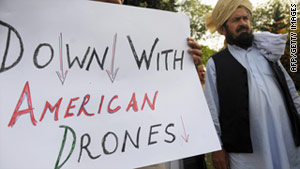
Pakistani Senator Mohammad Saleh Shah protests near parliament in Islamabad in 2009 against U.S. drone attacks.(CNN) -- On the record, Pakistan has persistently criticized the United States' use of unmanned drones to attack militant hideouts in its mountainous border region.

But diplomatic cables obtained by WikiLeaks reveal that in private the Pakistani government was not unhappy about the strikes and secretly allowed small groups of U.S. Special Operations units to operate on its soil.

In a cable sent in August 2008, the U.S. ambassador to Pakistan at the time, Anne Patterson, recounted a meeting with Interior Minister Rehman Malik and Prime Minister Yousaf Raza Gilani. It coincided with a military operation in one of the restive frontier territories.

Patterson wrote, "Malik suggested we hold off alleged Predator attacks until after the Bajaur operation. The PM brushed aside Rehman's remarks and said, 'I don't care if they do it as long as they get the right people. We'll protest in the National Assembly and then ignore it.' "

On Wednesday, a governing party representative said there was some public support in Pakistan for U.S. missile attacks on suspected militants.

"There is a segment in the country who support the drone attacks, and they feel that drone attacks have been helpful in eliminating many of the militants," Pakistan People's Party spokeswoman Fauzia Wahab said.

"But of course there is another point of view in the country who do not favor the drone attacks, and they think that drone attacks are intervention and violating our sovereignty," she said.

She did not directly answer a question about her party's position on drones.

She also said there is some "soft" support for militants in "every institution" in the country, including the military, but said the government did not "support those who are close to the militants."

Asked about Wahab's comment that there was some public support for drone strikes, Pakistan's ambassador to the United Kingdom stuck to the government's official line.

"No one supports drone attacks by the Americans," Wajid Hasan said Wednesday.

But other U.S. records revealed by WikiLeaks make clear that there were meetings between American and Pakistani officials about drones.

A U.S. diplomat, based in Peshawar near the border territories, mentions in a 2008 cable a meeting he had with a senior official whose name is redacted. The official "said he wanted to say in an unofficial capacity that he and many others could accept Predator strikes as they were surgical and clearly hitting high value targets. He mentioned that fear among the local populace in areas where the strikes have been occurring was lessening because 'everyone knew that they only hit the house or location of very bad people.'"

The same official painted a gloomy picture of the situation, saying, "Our house is on fire and we need to take drastic actions," according to the cable.

It seems that Pakistan saw the drone attacks as so effective, it wanted some of its own. At a meeting in Islamabad in June 2009 attended by then-U.S. National Security Adviser Gen. James Jones, President Asif Ali Zardari "made repeated pleas for drones to be 'put in Pakistan's hands' so that Pakistan would own the issue and drone attacks (including collateral damage) would not provoke anti-Americanism," one cable says.

Zardari said the technology behind them was "not cutting-edge" and said he had raised the issue with the chairman of the Joint Chiefs of Staff.

Similarly, Pakistan has been very sensitive to allegations that U.S. combat forces are at work inside the country. But one cable from Patterson written in October 2009 noted with satisfaction, "The Pakistani Army has for just the second time approved deployment of U.S. special operation elements to support Pakistani military operations. The first deployment ... occurred in September."

That cable goes on to say that a request had come from the Pakistani military commander in North and South Waziristan, Lt. Gen. Masood Aslam, for intelligence and reconnaissance assistance from U.S. Special Operations units. That support would "include a live downlink of unmanned aerial vehicle (UAV) full motion video," it says.

Patterson adds that the move "appears to represent a sea change in Pakistani thinking. Patient relationship-building with the military is the key factor that has brought us to this point."

But she cautions: "These deployments are highly politically sensitive because of widely held concerns among the public about Pakistani sovereignty and opposition to allowing foreign military forces to operate in any fashion on Pakistani soil. Should these developments and/or related matters receive any coverage in the Pakistani or U.S. media, the Pakistani military will likely stop making requests for such assistance."

During discussions on the militant threat, the Pakistani leadership stressed that a short-term victory was unlikely. According to one 2009 cable, Zardari "cautioned that the fight against militant extremism would be a long one, lasting not months but many, many years and that lack of vigilance on the GOP's part would be devastating." In this case, GOP refers to the government of Pakistan.

Zardari also did not miss the chance -- in speaking with Jones -- to have a poke at Pakistan's nemesis, accusing "India of providing the precursor chemicals necessary to produce heroin, which he said was funding the Taliban in Afghanistan."

At the same meeting, according to the cable, Zardari praised the Indian prime minister, Manmohan Singh, but with reservations. "Singh is an excellent economist," he said, but he added that he thought Singh did not understand the constraints under which Zardari was operating.

The cables also reveal great sensitivity on the part of Pakistan to any perceived tilt by Washington in favor of India. A cable prepared this year for FBI Director Robert Mueller says, "Cooperation has frequently been hampered by suspicion in Pakistan's military and intelligence establishment about U.S. intentions and objectives. Among other things, the Pakistanis believe that we have favored India over Pakistan -- most notably, by approving civil-nuclear cooperation with India -- and that we aim to dismantle Pakistan's nuclear weapons program, which, in light of their conventional military disadvantage vis-a-vis India, they consider critical to their national security."

Referring to the Pakistani Taliban, the same cable says gloomily, "In the midst of this difficult security situation, Pakistan's civilian government remains weak, ineffectual, and corrupt."

Support for strikes

There is some public support in Pakistan for U.S. missile attacks on suspected militants in the country, a governing party representative conceded Wednesday, diverging from the country's official position on drone strikes.

There is also some "soft" support for militants in "every institution" in the country, including the military, Pakistan People's Party spokeswoman Fauzia Wahab told CNN.

Pakistan's ambassador to the United Kingdom, Wajid Hasan, stuck to the government's official line, that U.S. drone attacks infringe on Pakistani sovereignty, when asked about Wahab's remarks.

Indians have to torch themselves and beg to death to stop Hindu temple demolishment in PKR, DAP and PAS Selangor and UMNO One Malay-sia

In over the last 53 years UMNO had been systematically “ethnically cleansing” and demolishing thousands of Hindu temples nationwide.

When I was a boy ( 35 years ago ) I remember an Indian actor from Chennai visiting Malaysia, interviewed on radio, that he was impressed to see so many Hindu temples that dotted the Malaysian landscape and that it reminded him of India. And he quoted the Tamil Proverb “Never live in an village that does not have a temple.

That was some 35 years ago. No more now through.

And today Chakra Gunasegaran had to set himself ablaze and kill himself ablaze (see Tamil Nesan headlines 1/12/10 ) and beg the PKR, DAP and PAS state government to stop the demolishment of his Hindu temple.

Where is the change? Worse still such self immolation has never happened even during the 50 year old rule of Selangor by the UMNO / BN regime. PKR, DAP and their Indian mandores should ask themselves why. Perhaps they are missing something?

PKR, DAP and PAS ruling Selangor, Penang and Kedah have 100 % powers to grant land to all Hindu temples, Hindu cemetaries, and the 180 Tamil schools which will qualify all these 180 Tamil schools in these three states to become fully financially aided schools, and out of it’s current cowshed like dilapidated conditions in these three states and offer a permanent solution while they are still in power because if UMNO/BN comes back to power there is no way there are going to do it. But they have blatantly refused to do so simply because they fear losing the “Malay muslim” votes. But never mind the Indians kena nyaya.

90 % of the minority Indians voted for PKR, DAP and Pas and for the first time in 50 years the UMNO/ BN regime lost their two thirds majority in Parliament and won in five new states including the Federal Territory of Kuala Lumpur.

But PKR, DAP and PAS after getting what they had wanted ie the bulk and chunk of the Indian votes hardly made a difference to their lives of the Indian poor. They continued with the 50 year old UMNO neo colonialising the Indian poor by using their Indian mandores to offer temporary and piece meal solutions like dishing out hampers, petty cash for Hindu temples, Tamil schools cemeteries or kosong promises of land here or land there and getting the same widely covered in the three Tamil dailes.

PKR, DAP and PAS would do everything else on an ad hoc and a temporary solution, but not grant a permanent solution like granting land to all Hindu temples, Hindu cemeteries, Tamil schools and Indian villages and settlements.

Especially with no cost of RM to them, only land is to be granted. One stroke of the MB/CM’s pen and a permanent solution to this 53 year old out standing problem.

But why not while they are still in power playing to the 60 % Malay muslim voters is more important than the Indians from now onwards having to burn themselves to death so that their temples, cemeteries, Tamil schools, Indian villages and settlements are not demolished and destroyed.

May Chakra Gunasekara’s soul rest in peace his sacrifice in defence of his Hindu temple from destruction.It is the first of it’s kind in Malaysia and has created history.

Only HRP’s project 15/38 will have some hope of ending these Indian poor misery.

Rights not merc
P.Uthayakumar
CHAKRA GUNA
indian have to

Samy Vellu giving up saddle but not the reins


COMMENTARY, Dec 1 — Outgoing MIC president Datuk Seri S. Samy Vellu is expected to take a leaf out of Tun Dr Mahathir Mohamad’s playbook by anointing his own successor in order to maintain control after he retires.

The MIC veteran, who is handing over the reins of the party to deputy president Datuk G. Palanivel on Monday, appears to have not taken heed of Dr Mahathir’s follies in holding on after officially leaving.

Instead of allowing the MIC delegates decide, in a free and fair election, his successor as MIC president, Samy Vellu is orchestrating the progression and leaving “back doors” open for him to exert his influence on MIC decisions after he “retires.”

After his retirement, Dr Mahathir had tried to run the show from behind a politically weak Tun Abdullah Ahmad Badawi, but the latter’s ambitious son-in-law Khairy Jamaluddin, then only 29, put paid to that attempt.

In seeking to re-exert control, Dr Mahathir hobbled the Abdullah administration with massive recriminations, leading to rebellion in Umno’s ranks and Barisan Nasional/Umno nearly losing power to the opposition Pakatan Rakyat in the 2008 backlash.

Dr Mahathir, Umno watchers now feel, should have handed the party to the man most capable of running the party and government — Datuk Seri Najib Razak — instead of promoting Abdullah in order to pull the strings from the shadows.

Now, Samy Vellu is attempting to do the same by pitting one MIC faction against another in a divide-and-rule gambit designed to extend his hold despite officially surrendering the presidency.

What the MIC needs is a strong, decisive and imaginative leader to win back the support of the working class among the Indian community — and the only way for such a leader to emerge is through a hard, election battle.

Instead, Samy Vellu is stretching the party constitution and railroading the central working committee (CWC) — which he controls — into “appointing” Palanivel as president and his rival, Datuk Dr S. Subramaniam, as deputy president.

Palanivel is the elected deputy president while Dr Subramaniam is one of three elected vice-presidents.

At present, MIC’s constitution is silent on the “provisions” by which the two appointments will be made.

The party constitution allows for an “acting president option” but makes no allowances for either the president or deputy president to be appointed rather than elected.

The solution may be found in history. In 1979, Samy Vellu was deputy president when then-president Tan Sri V. Manicavasagam passed away.

Samy Vellu then became acting president until 1981, when the delegates elected him as president and Datuk S. Subramaniam as his deputy, both unopposed, in a peace deal that lasted nearly a decade.

It is unclear why this formula is not being adhered to.

Samy Vellu’s expected appointment as a special envoy to South Asia is also expected to further complicate matters for the party, as it will be seen as providing him a platform from which to “meddle” with the party and the Indian community.

There is no doubt that both Palanivel and Dr Subramaniam, the human resources minister, are political rivals and want to succeed Samy Vellu.

By appointing both as president and deputy president, not only is Samy Vellu bending the party’s rules but also postponing the inevitable clash between them.

The appointments as president and deputy president might be a show of unity for the upcoming general election, but Indian voters may no longer be so easily convinced, especially after the 2008 awakening.

A better way is to let democracy work. A free and fair election to decide the issue — as took place in MCA — would be more acceptable to the Indian community. It would strengthen the MIC and win legitimacy with Malaysians.

Another way is to help the two top leaders mend their fences and share the party presidency between them with the endorsement of the delegates.

By appointing Palanivel president and trying to appease Dr Subramaniam that he will be the “future president”, Samy Vellu is also shutting the door on his long time rival Datuk S. Subramaniam, who is once more become politically-active, now that Samy Vellu is leaving.

Subramaniam’s strategy is to align with Palanivel against Dr Subramaniam, in the hopes to riding back into a MIC without Samy Vellu.

In or out of MIC, Samy Vellu has the capacity to influence its course, although he has promised not to interfere in the party’s affairs.

Although he relinquishes control of MIC on Monday, this is not the last of Samy Vellu.

DAP wants Johor principal slapped with criminal charges

KUALA LUMPUR, Dec 1 – DAP raised the Johor racist school principal incident again today and demanded that the government slap criminal charges on the educator for citing “racial unrest” with her statements against the Indian and Chinese communities in August.

Several DAP elected representatives, led by party adviser Lim Kit Siang (picture), sent a memorandum addressed to Education Minister Tan Sri Muhyiddin Yassin in Parliament today, calling on the government to stop dithering on the issue and to take immediate action against the school principal.

“We strongly urge that strict disciplinary action including dismissal should be taken against her (the school principal).

“We also urge that she be charged under Section 504 of the Penal Code for instigating racial unrest.

“If YAB (Muhyiddin) is serious about the concept of 1 Malaysia, please do the right thing,” they said in the memorandum.

The leaders also submitted a petition containing 2,250 signatures collected from parents and members of the public, mostly from the Chinese community in Johor, to Minister in the Prime Minister’s Department Datuk Seri Mohamed Nazri Aziz in Parliament.

In a statement written by Senai assemblyman Ong Kow Meng, who was also present in Parliament today, it was declared that the school principal in the case, Siti Inshah Mansor, was no longer “fit” and should not continue to remain in the teaching profession.

“She does not have the aptitude to be a headmistress; she does not understand the cultures of the various communities; she does not have common sense to discern what is right and wrong; she does not respect the rights of citizens of this country.

“Her attempt to sow the seeds of hatred in the hearts and minds of the young and innocent school children must be strongly condemned by the government,” he said.

Ong also repeated the derogatory statements allegedly made by Siti Inshah during a Merdeka celebration at SMK Tunku Abdul Rahman in Kulai, Johor, during the incident on August 12 this year.

“Among other things, the following was quoted by the said headmistress during the school assembly – ‘Chinese students are not needed here and they can return to Foon Yew school or China’, ‘the Indian students whose prayer strings tied around their neck and wrist make them look like dogs because only dogs are tied like that’, ‘the government has targeted 30 per cent wealth for Bumiputera and 70 per cent for non-Bumiputeras under the National Economic Policy. If I were to helm the government I will instead allocate 70 per cent wealth for Bumiputera and only 30 per cent for non-Bumiputera’ and ‘if I own a Proton Saga car and if I give a ride to Munusamy (Indian) and Chong (Chinese), they remain a passengers only. They cannot claim right to the car. Likewise the non-Malay students are merely passengers in the country’,” said Ong.

He added that Siti Inshah’s “warped and distorted” views raised questions on the type of values and knowledge she was imparting to her students as an educator.

“Her remarks clearly indicate venomous bigotry and are an utter insult to the entire Chinese and Indian community in the country.

“It is very difficult for us to reconcile how a principal of a secondary school could be so insensitive as to utter derogatory words to denigrate students under her care,” he said.

Siti Inshah, he added, had clearly violated the spirit of 1 Malaysia.

The August 12 incident had sparked off an uproar in public and the Najib Administration came under fire when it failed to take speedy action against the school principal.

To make things worse, another school principal in Kedah was later accused of making similarly derogatory statements against the non-Malay community. In the incident, the educator was accused of censuring the non-Malay students for eating during Ramadan month in the school canteen.

Shortly after the two incidents, another case involving a civil servant hit the headlines in September.

BTN assistant director Hamim Husain had allegedly uttered racial slurs during a closed-door Puteri Umno function when he referred to the Chinese and Indian communities as “Si Mata Sepet” and “Si Botol”.

Since then, the Kedah principal has been punished with a heavy warning and a transfer while Hamim was suspended from his duties since October 6.

Earlier this month, yet another educator uttered racial slurs agains the non-Malay communities while invigilating for the SPM examinations at a school in Lukut, Negeri Sembilan.

The teacher had allegedly told the Chinese students to return to China and the Indian students to India if they failed to understand her instructions in Bahasa Malaysia.

She has since been relieved of her invigilating duties.

Parliament yesterday rejected a motion by DAP MP Er Teck Hwa to debate on the iss

Sunway Indians fed up with both BN and PR

By B Nantha Kumar - Free Malaysia Today

PETALING JAYA: Indians living in Kampung Lindungan, Sunway, are disappointed that the Pakatan Rakyat administration in Shah Alam is no better than its predecessor was when it comes to fulfilling promises.

They are getting tired of waiting for the Seaport Tamil school to be built and may boycott the next general election, according to a resident who identified himself only as Rajan.

The issue has been raging for close to two decades.

Soon after Pakatan ousted BN in 2008, Menteri Besar Khalid Ibrahim and state executive councillor Dr Xavier Jeyakumar promised that the state would provide a two-acre site for the school. “But nothing has been issued in writing,” Rajan said.

According to him, about 10,000 Indians are resident in Kampung Lindungan, formerly known as Desa Mentari.

"We are tired of hearing promises from BN and Pakatan Rakyat on the school issue,” he said. “I hope they realise that the general election will be soon and we are very very unhappy."

In 1995, after several years of pressure from the locals, the then BN government agreed to allocate seven acres in Mentari Court for the construction of a cluster of schools, including one with Tamil as the medium of instruction.

However, the state subsequently approved plans to build medium-cost apartments instead at the location.

Following an uproar, the government allocated another site in Desa Mentari for the schools. This time the land size would be 7.3 acres. However, the cluster would not include a Tamil school. The proposal was to have it isolated to a different site of a little under one acre.

The Indians waited, but nothing materialised despite appeals to MIC big shots in Kelana Jaya and Subang.

Given to mosque

In 2006, the community received what seemed like a reprieve when newly minted Kelana Jaya MIC chief N Sinnasamy said the government was considering the matter.

Soon, however, Menteri Besar Mohd Khir Toyo declared that MIC had “generously” given up half of the allocated land for a mosque.

Furious residents then took up the matter with the Kelana Jaya representative in the state assembly, Seripah Noli Syed Hussin, who assured them that the land still belonged to the school and that Khir’s announcement was the result of a misunderstanding.

In the run-up to the 12th general election, MIC President S Samy Vellu visited the area and announced that he had convinced the state to allocate 1.8 acres for the school.

But it was all just talk, Rajan said, adding that the situation had not changed since the Pakatan victory in Selangor.

"The state government has not even attempted to build new schools,” he said.

"Both governments have failed the residents of Desa Mentari. All our requests have fallen on deaf ears.

"All they want is money, position and our votes.”

Hard to beat tech-savvy team, illegal loggers

by FMT Staff

MIRI: “Naughty” illegal loggers and their tech-savvy “collaborators” are constantly outwitting Sarawak's enforcement agencies, Deputy Chief Minister George Tan said.

He said these collaborators used state-of-the-art telecommunication technology to escape the government's clutches.

“We have good land reserves and we have very good principles... but it is hard to catch these naughty people who are cutting down trees and clearing the land every now and then.

"Even with a helicopter, they somehow warn their people (on the ground) that we are coming," Chan said at the closing of a workshop on “Best Management Practices” for Sungai Miri River Basin Stakeholder Project here recently.

He said knowing this, the enforcement bodies should keep abreast of technological advancements and be serious about implementing policies that involved all sectors.

“As we progress and improve, we need more enforcers to implement our policies. This is something we have to work hard on...," he said.

He added that while the government was committed to minimising environmental degradation caused by human activities and development, “it was hard to bring the culprits to justice”.

"We know what is happening... we know these illegal activities may have contributed to the degradation of the environment such as erosion in some rivers in the state, such as the Rajang and Baram Rivers... but it is hard to catch the culprits," Chan said who was referring to the massive ecological disaster in Sarawak in early October.

Ecological havoc

The massive logjam disaster that stretched 250km of the Rajang River had adversely affected the livelihood of thousands, many of whom were innocent riverine folks.

This is the third such ecological havoc. The first disaster was at Ga’at in 2008 and the second at Sungai Tunoh last year.

State Land Development Minister James Masing has openly blamed the logjam on rampant illegal logging in the forests of Sungai Melatai.

Masing, who reportedly flew over the mountains of Ulu Melatai, said the logjam was caused by landslides and soil erosion resulting from uncontrolled logging.

He said the place resembled a “war zone”.

"Landslides and soil erosions have destroyed at least three hills in the area,” a news report quoted him as saying.

Zaid: Life after PKR

By Stephanie Sta Maria - Free Malaysia Today

PETALING JAYA: It's been a little over two weeks since Zaid Ibrahim slammed the door on PKR in a dramatic declaration of good riddance to a party that failed to live up to his expectations.

The verbal hammering that ensued hasn't yet abated and when met at his house recently, he looked tired. But he swatted off the observation with a flippant explanation.

“I always look like this,” he said. “But I'm not tired. I'm excited.”

And with good reason. The dawn of the new year will also herald the birth of a new political party, helmed by Zaid and fuelled by “people who share my views on politics”.

Scant is known about the party to date and its future leader is intent on maintaining this shroud of secrecy.

“No, no I can't disclose all that,” he laughed when pressed to reveal the party's name, the exact launch date, expected membership base and identities of his supporters. Then he changed his mind and generously dropped a few hints.

“But I can tell you that I won't have 400,000 members, that my supporters are friends who aren't well-known personalities and that we will launch in January. But there is still much to do so we will see how things go.”

Starting this new party is like deja vu for Zaid as its premise is a mirror image of his law firm. He confessed that he felt exactly the same way back then as he does today in embarking on the pursuit of “something different”.

“I've been around in politics for a while now,” he said. “And it's a good time for me to start a party that's not obsessed with taking power or unseating anyone and that challenges people to address and understand issues.”

Clinging to power

The last remark was no doubt a thinly-veiled dig at PKR and its leadership, whom Zaid has accused

of being obsessed with clinging to power at all costs.

He is therefore adamant that none from his previous party would be crossing over into his new one due to their vastly differing ideals. And reports of him extending an invitation to Mustaffa Kamil Ayub (who lost the race for PKR deputy president) has tickled him to no end.

“I laughed when I read it,” he chuckled. “I wouldn't take in a leader who threatens to take drastic action within 48 hours if the party doesn't respond to his complaints and then ends up embracing (new deputy president) Azmin Ali. PKR leaders are good at manufacturing stories.”

“I will only accept people who will add value to my party. People who are not easily swayed by offers and positions. It will be difficult but this is what I've set out to do.”

Insisting that quality overrides quantity, Zaid explained that the challenge isn't just about finding good people but those with the courage to join a “start-up”.

“There are people who want instant success. But I'm looking for people who want to labour with me and who value integrity and honesty.”

“I cannot recite poetry and I don't read philosophy but I believe in good old-fashioned values as a basis for a political party. Without it politics becomes whatever is permitted in the context of a particular situation. And I am not that sort of person.”

'I will be a friend to all'


Despite demurring to answer the earlier probing queries about his new party, Zaid willingly articulated the four core issues he would champion upon its launch next year.

The first involves leadership credibility and integrity, a concept that he seemed to be returning to repeatedly. Here he stressed the importance of possessing the “grain of upholding core values” which he believed is the country's salvation from the “endemic of corruption”.

“I grew up in an era where leaders were simpler and more honourable,” he said. “It was because there was a sense of accountability and a belief that serving the public was a noble pursuit. We need to revert to that. You cannot have transformation unless the underlying process is guided by core values.”

The second issue is the empowerment of democracy. Stamping the country as “tyrannical” and “almost like a police state”, Zaid highlighted the various restrictions that he predicted would inhibit the country's growth. However, he noted that it would take years for people to even understand what democracy meant and its benefits.

“Some people don't even think democracy is good so you first have to address that,” he stated. “Democracy frees the individual and unleashes talent which inspires the flourishing of ideas. This is why democratic countries are more developed.”

“But democracy brings with it a risk to the people in power who don't want to lose what they wield. I hope that my party will influence the people to accept the notion of a truly democratic state and fight for this.”

Zaid also touched on the economy which he felt was still not being enjoyed by all levels of society. While he acknowledged that Malaysians are better off today, he questioned whether the government was doing enough to protect the vulnerable segments of society.

“Free competition and free market is fine, but among equals,” he asserted. “The government must provide more safety nets for the unfortunate and marginalised. This is why I have always pushed for minimum wage.”

The fourth issue on his plate is unity, an ingredient that he claimed the country sorely lacked. In pledging to canvas for a Race Relations Act, Zaid hastened to clarify that his fight against discrimination would not come into conflict with Article 153 of the Federal Constitution.

“We can still maintain that but we mustn't discriminate indiscriminately,” he pointed out. “Our society cannot grow if we have policies that aren't in sync with the times. We have to pull together as a nation and rebuild bridges based on policies and trust.”