Share |

Thursday, 16 August 2012

Why Dr M is Umno’s (and Anwar’s) fault


Dr Mahathir is probably the greatest politician our country ever had or will ever produce. But Malaysia needs statesmen, not politicians. Not Anwar, who, for all his showboating, achieved little during his ministerial tenures. Not court jesters like Perkasa or most of Pakatan’s own crazies. But leaders with vision, compassion and a sense of honour. Sadly, those traits do not seem to manifest in Malaysian politicians. 

Erna Mahyuni, The Malaysian Insider
“But don’t you think (Tun Dr) Mahathir (Mohamad) should be condemned for all he’s done?”
So asked a young, idealistic undergrad over supper.

My answer was, “No.” The young lady was intrigued enough to let me explain to her just why Dr Mahathir, for all his missteps, did not deserve to be vilified.

This is what I told her.

Dr Mahathir’s greatest flaw is his unwavering belief that the end justifies the means. Yet, as a Malaysian, I find myself unwilling to demonise this highly complex individual who, for better or worse, shaped this nation.

It all starts with the best of intentions and I think our former prime minister really did believe his decisions were for the greater good. But part of the reason he became the über-controlling, extremely paranoid individual we know is due to circumstances. Circumstances on which I blame Umno as well as de facto Pakatan Rakyat head Datuk Seri Anwar Ibrahim.

Umno may have started out with patriotic, altruistic aims, but by the 80s it had become much like the cesspit we all know and love. It’s every man for himself, with members voluntarily playing a vicious round of musical chairs and the modus operandi being to push your opponent off his chair to win.

Anwar would probably be prime minister now if he hadn’t made the biggest career mistake of his life: Attempting to force Dr Mahathir to step down. Perhaps his ego persuaded him to believe that he could pull off what other Umno members had tried but failed to do. Tun Musa Hitam’s own joint coup attempt ended with his own political career virtually ended.

If Dr Mahathir hadn’t been constantly assailed by other Umno members jockeying for the prime ministership, would he have become a better leader? I wonder that, sometimes.

Smarter politicians would have recognised Dr Mahathir’s propensity to hold a grudge and his vengefulness. But Umno being the doofus-magnet that it is, Dr Mahathir probably realised quickly that he was surrounded by selfish incompetents all too ready to make clumsy attempts to backstab him.

While most of us do wish the supposedly retired Dr Mahathir would just clam up already, you can understand why he’s so vocal. Our prime minister is vulnerable like Dr Mahathir never was. While Dr Mahathir could bend the party to his will, Datuk Seri Najib Razak has to contend with his own set of fools with daggers.

For Dr Mahathir, it’s probably status quo. He’s still gnashing his teeth, feeling as though he’s surrounded by dimwits who won’t stop and listen to him. Because if there was one thing Dr Mahathir truly believed, it was that he was always right.

History proved him wrong, though. And it is a tragedy that what should have been a great legacy is tainted by civil rights abuses, rampant corruption, systemic racism and institutionalised government incompetence.

Before Barack Obama came up with “Yes, we can”, Dr Mahathir had his “Malaysia Boleh.” It should have become a rallying call, our way of believing what Dr Mahathir tried to impart ― that we had potential to be so much more than we are. Instead, it has become a mocking cry we utter when we comment on our nation’s many failings.

Dr Mahathir is probably the greatest politician our country ever had or will ever produce. But Malaysia needs statesmen, not politicians. Not Anwar, who, for all his showboating, achieved little during his ministerial tenures. Not court jesters like Perkasa or most of Pakatan’s own crazies. But leaders with vision, compassion and a sense of honour. Sadly, those traits do not seem to manifest in Malaysian politicians.

Malaysians also reflect the shortcomings of our politicians. We shortchange, empower corruption (boleh settle, boss?), top Asian rankings of laziest workers... because we have come to believe that it’s fine to only care about our own and do whatever it takes to protect our own interests. So long as my family/race/religion/business comes out on top, to heck with everyone else.

It is high time Malaysians start asking of themselves what they expect of their leaders: putting the nation above their own concerns, prove incorruptible and ensure fairness for all.

We should not condemn Dr Mahathir, because in many ways, he reflects all the worst in ourselves. Like him, we are learning too late that the end should never justify the means.

Erna Mahyuni blogs at ernamahyuni.com when she's not subbing for TMI. A slave to Bioware, Bethesda and her mini-zoo of two cats and a rabbit. 

Discrimination at McDonald's


http://beyondlean.files.wordpress.com/2011/11/mcdonalds_logo.jpg"You Chinese, kan? Tak boleh,"
 

Lee Yan Lin

On the 9 August 2012, Thursday, I had my dinner at McDonald's at Mid Valley (the one on LG floor, not the one opposite cinema). I went there slightly over 6pm, as the dinner value meals only starts at 6pm. I ordered the "Coca-cola Glass Meal", and as it comes with an ice-cream (sundae), I requested to collect the ice-cream after meal. The lady who was serving me consulted another Malay (I purposely mention her race here; it is pertinent to my case) lady whom I assume to be either the manager or supervisor. To my utter horror, the second lady turned to me and said, "You Chinese, kan? Tak boleh,". I was dumbfounded. All I had asked for was to collect the ice-cream a little later, so what did me being Chinese had to do with anything? It wasn't my first time making such request; other McDonald's outlets I'd been to were perfectly fine with it.
I understand that it was a peak hour. I also understand that because of it, they wanted to reserve the privilege of "double-service" to the Muslims who are fasting. But what I absolutely cannot fathom is why was my race being brought into question? If she had told me something along the line of "I'm sorry, you cannot collect it later because it's peak hour", I am sure I would have had a pleasant dinner instead of having to chew my burger in disgust. What's even funnier is that just a few days ago, the whole nation was said to be united when Dato' Lee claimed Malaysia's first Olympic medal. Now, I'm being discriminated at a fast food outlet simply because I'm not a Muslim and I don't fast.

And here's the 2nd issue. The lady who was originally serving me gave me a black glass when she was filling up my tray. There's nothing wrong with the glass, ONLY that the one on offer this week (the week ending yesterday) was the RED glass; the black one was offered more than a month ago. When I asked her why the black glass instead of the red, she smiled at me and said, "Oh, you nak yang merah ke??". I'm sorry, but the signboard clearly said the RED one was the one given out this week. Did she think that because I was a child (I have a small frame, but I'm 21 for goodness sake) I am stupid enough to be an easy prey for her to get rid of old stocks? I really don't know.

I sincerely hope that the McDonald's management will look into this matter. If they cannot ensure their employees' work ethics, I do not see how they can continue to operate in a multiracial society like Malaysia.

Project IC


http://www.freemalaysiatoday.com/wp-content/uploads/2011/02/my-kad.jpgSabah possesses the largest number of migrant workers in Malaysia, exceeding even Selangor. One simple question, “Why would the poorest state in Malaysia have such a large number, even to the extent of eclipsing the richest state in Malaysia”? Are there so many ongoing projects in Sabah that the state requires so many migrant workers? If yes, why is it still the poorest state in Malaysia?

Hakim Joe

As the name implies, this is a clandestine project that involves the alleged citizenship drive to naturalize illegal migrants for political purposes, which started in the 1990s, and was targeted against the two East Malaysian states, especially Sabah.

By introducing new elements into the concoction, one adulterates its overall effect and by integrating migrant Muslims from Indonesia and the Philippines into Sabah as Malaysian citizens, it dilutes the concentration of the indigenous people there. By the same token, this does not automatically mean that these new migrants will vote BN but the odds are pretty high that they will and it is a risk worth taking.

The population of Sabah in the early 70s was about 655,000 and the major ethnic groups comprise of 32% Kadazan/Dusun, 23% Chinese and 4.9% Muruts (total 59.9%). These are majority non-Muslims but either Christians or Buddhists. Henceforth, should Umno set up its branches in Sabah during the 70s, they will be in the minority as Malay Muslims only made up 0.4% and Bajaus (also Muslims) made up 13.1% of the Sabah populace (total 13.5%). Lousy odds.

Fast forward it to 2006 and the demographics have been utterly distorted. The ethnic composition of Sabahans are now 17.8% Kadazan/Dusun, 9.6% Chinese and 3.3% Muruts (total 29.7%) whereas Malay Muslims increased to 11.5%, Bajaus increased to 13.4% and “Other Bumiputras” comprised of 14.6% respectively (total 44.5%).

What and who the Hell are “Other Bumiputras” anyway? Let’s not even get into how these new migrants are accorded Bumiputra statuses whilst non-Muslims that have been here for a couple of generations are deemed second class citizens.

In a normal society, the number of the majority ethnic group will increase in tandem with the population increase. Since the Kadazan/Dusun were prominent back in the 60s and 70s comprising 32% of Sabahans, this ethnic group should make up approximately 40% to 45% of Sabah’s population in the 90s. However, this is not what actually transpired. In fact the number of ethnic Kadazan/Dusun almost halved from 32% to only 17.8%.

Sabah’s population increased to 1,307,582 in 1980; 1,736,902 in 1991; 2,449,389 in 2000 and 3.21 million in 2010 making it the state with the highest population growth rate at 3.1% compared to the national average of 2.3%. As per indicated in the previous paragraph, the total number of Kadazan/Dusun declined drastically. Does this mean that the majority of Kadazan/Dusuns in Sabah owns VCD & DVD players whereas most of the Malay-Muslims do not (hence finding other nocturnal activities to entertain themselves)?

Project IC or “Project M” is an ominous long term plan to modify the demographic pattern of Sabah to make it more favorable to the ruling government and certain political parties, especially with regards to changing the electoral voting patterns. In West Malaysia, we have frogs and gerrymandering. In East Malaysia, we covertly change the demographics. It is therefore not surprising that Umno calls both Sabah and Sarawak their “fixed deposits” as in “you will still vote for us regardless of how we abuse and mistreat you.” Example, Sabah was the second richest state after Selangor in 1970. Now it is the poorest state. Even Perlis with only 317 square miles of real estate to call its own and without a single drop of oil in its soil is richer than Sabah.

Any Sabahans out there? Does reading this makes you want to puke?

Let’s discuss migrant workers now before going on to Project IC. Sabah possesses the largest number of migrant workers in Malaysia, exceeding even Selangor. One simple question, “Why would the poorest state in Malaysia have such a large number, even to the extent of eclipsing the richest state in Malaysia”? Are there so many ongoing projects in Sabah that the state requires so many migrant workers? If yes, why is it still the poorest state in Malaysia?

When asked, the top official of the federal Ministry for Women, Family and Community,Dato Dr. Noorul Ainur Mohd Nur said that 27.7% out of the 3.21 million in Sabah comprised of migrant workers with a large majority of them being Indonesians. Furthermore, the immigrant population in the Kinabatangan district in 2010 has already surpassed the local population (73.8% immigrants & 26.2% locals). What this basically means is that there are more Indonesians and Filipinos in a Malaysian district, on Malaysian soil, than Malaysians.

In the 70s, there was no such thing as migrant workers in Sabah. Nowadays they make up more than a quarter of Sabah’s population. In an earlier interview, TDM said that these migrant workers, regardless of whether they overstayed or entered the country illegally, qualify for Malaysian citizenship “if they spoke Bahasa Malaysia”. Does this mean that nothing else really mattered except for the mastery of the language? Does this mean that a convicted murderer or child molester qualifies for Malaysian citizenship should he or she is capable of speaking fluent Bahasa Malaysia?

So, how could anyone get away with it unless it has been sanctioned from up above? An illegal immigrant would first need his history cleansed and that involves the Immigration Department. Then he needs to be “made” a citizen and that involves the National Registration Department. Finally, he needs to register as a voter and that involves the Election Commission. Fortunately (for someone), only one ministry is involved as the Immigration Department, the National Registration Department and the Election Commission all comes under the purview of the Ministry of Home Affairs.

If the government of Malaysia is allegedly giving citizenship to anyone who spoke fluent Bahasa Malaysia, then hypothetically there should then be a mixture of Muslims, Buddhists, Christians, Hindus, Hare Krishnas and atheists coming in from all around the world. How then does one justify that only the majority of these immigrants are all Muslims from Indonesia and the Philippines? This is however purely a conjecture as the NRD would not confirm or deny it. Hell, they even said in advance that they would consider not attending any Parliamentary Select Committee if indeed the department were called upon to testify. Basically, it is a subtle way of telling the Sabahans to fuck off. Additionally, the NRD would seriously only consider attending if a Royal Commission of Inquiry is initiated, that is if the RCI really happens.

Should all Sabahans take it as it is? Certainly not! Are all Sabahans taking it as it is? Absolutely so! Sometimes I wonder if you people across the straits have your head properly screwed in. Don’t blame the West Malaysians. We delivered five states in the last general elections (it is just that they took one back no thanks to the Jelapang female dog). Five out of eleven over here is not too shabby. Zero out of two across the sea definitely is.

Anyway, the RCI failed to materialize but in 2007 a PSC was initiated to investigate the existence and functions of Project IC. Bernard Dompok was selected as its chairman but he soon quit as the NRD lived up on its promise and informed everybody that the department will not be appearing before the PSC.

On the first of June this year, our dearly beloved PM announced that the federal government has (finally) agreed to set up a RCI to investigate problems related to illegal
immigration in Sabah. Then nothing happened until Tuaran MP Datuk Seri Wilfred Mojilip Bumburing, formerly UPKO’s Deputy President, Beaufort MP Datuk Seri Lajim Ukin,
formerly an Umno supreme council member and Senator Datuk Maijol Mahap, a Vice-President in BN’s Sabah-based United Pasokmomogun Kadazandusun Murut Organisation (UPKO) defected from BN’s fold. Suddenly the federal government officially announced the formation of the RCI including the members of the commission and the Terms of References. Now we wait (again).

Anyway, the members of the commission include Steve Shim (Chairman), a former Chief Judge of Sabah and Sarawak; Saripuddin Kasim (Secretary), the Secretary General of the Domestic Trade, Cooperatives and Consumerism Ministry; Kamaruzaman Ampon (Commissioner) the vice-chancellor of Universiti Malaysia Sabah; Herman Luping (Commissioner) the former Sabah State Attorney General; KY Mustafa (Commissioner) the former Sabah State Secretary; and Henry Chin Poy Wu (Commissioner) the deputy chairman of the Malaysian Crime Prevention Foundation.

The eight Terms of References include:
1) To investigate the number of foreigners in Sabah given blue Malaysian ICs or citizenships;
2) To investigate if the award of such ICs or citizenships were according to the law;
3) To investigate if those given blue ICs, temporary identification receipts or citizenships through unlawful means have been registered in Sabah’s electoral roll;
4) To investigate if the authorities have taken any action or made improvements to standard operating procedures (SOPs), methods and regulations to prevent any
irregularities in accordance with the law;
5) To conduct a deeper probe into the SOPs, methods and regulations on the award of blue ICs or citizenships to foreigners in Sabah by taking into consideration international norms and standards that are applicable to Malaysia, and to recommend amendments or changes to improve current practices;
6) To investigate the reasons behind Sabah’s population growth according to the following categories:
a) Sabah citizens residing in the state, including those given blue ICs or citizenships through birth certificates (late registration);
b) foreign workers (including family members);
c) illegal immigrants (including family members); and
d) fugitives
and to study their impact on the number of those registered in the electoral roll;
7) To investigate the social implications on the Sabah community following the award of blue ICs or citizenships to foreigners in the state; and
8) To investigate the number of “stateless” foreigners in Sabah given blue Identity Cards or citizenships.

In conclusion, Project IC or otherwise known as “Project M” first begun in the early nineties when Umno decided that they are unable to depend on Sabahan politicians to win their elections for BN. United Sabah National Organization (USNO) was formed as a result of this long term planning and later BERJAYA took over the reins to spearhead BN’s charge to take total control of the state by means of mass immigration and migrant naturalization processes.

Between 1970 and 2000, Sabah’s population increased by 285%, whilst Malaysia's population increased by only 113%. Furthermore, the Kadazan/Dusun/Murut people
increased by 236% as compared to the increase of “Other Bumiputras” by a whopping 631%.

Fact: “Senior citizens (in Sabah) who lose their MyKads are given the MyPR as replacement”…as quoted by NRD Kota Kinabalu.
Fact: Senior citizens in Sabah who has to mandatory change their blue ICs (to MyKads) will sometimes be given the MyPR as replacement. NRD Kota Kinabalu fails to specify under what circumstances or situation will this occur.
Fact: 65,000 Filipino refugees were issued the IMM13 refugee documents in the 1970s.
Fact: In 2008, the federal government stated that 65,000 Filipino refugees were again issued the IMM13 refugee documents that year (coincident?)
Fact: Children of intermarriages between local natives are classified as sino-indigenous and not indigenous people. However, children of marriages between “Other Bumiputras” and foreigners are automatically Bumiputras.
Fact: Any foreigner qualifies for the MyKad if he or she exhibit mastery of Bahasa Malaysia.
These foreigners should however show evidence that they qualify to be classified under the “Other Bumiputra” category first…

If Malaysians of Chinese descent who is born here are called Pendatangs, what do you call those who were born elsewhere but just obtained their MyKads because they can speak BM?

Indian Army's Growing Morale Problems


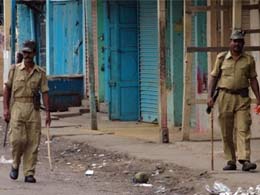
These guys look pretty sharp
(Asia Sentinel) Low pay, incompetent leaders, other problems, lead to fragging, suicides
Rising incidents of violent face-offs between officers and soldiers in the Indian Army are becoming a cause for worry. The reasons relate to harsh service conditions, risk to life and limb, low pay, incompetent leadership and a culture of humiliation of enlisted men by their officers.

At least three incidents of violence have been reported in the recent past, prompting the defense minister, A.K Antony, and Army top brass to conduct brainstorming sessions to prevent such occurrences from turning into a wider trend. By one count, four times as many soldiers die by their own hand as those killed in combat. In the past 10 years, more than 1,000 soldiers have committed suicide, while another 73 have died of “fragging,” a Vietnam War term born of the practice of disaffected US enlisted men killing their superiors with fragmentation grenades.

The latest incident took place at Samba in Jammu & Kashmir and was triggered by the suicide of a jawan, or low-ranking enlisted man. In April, a jawan turned his rifle on four of his comrades and killed them after being given what was perceived as a humiliating dressing-down by superior office. In May, a violent incident took place in Ladakh, while a similar fracas happened in June last year in Punjab.

Last week, Antony publicly expressed concern about the brawls in the first official acknowledgement of the government’s worry over the issue.

“Each incident is a matter of concern to me but armed forces are better trained to handle such situations. They are handling it in their own way. I also had a brief discussion with the Army chief and they are handling it,” Antony said.

Statistical evidence of suicides and fragging in the 1.1-million strong Indian army points to growing levels of frustration among the jawans. In 2003-5, suicides hovered around the 100 mark. They rose dramatically over the next three years to touch 150 in 2008. Since then the number of suicides has gone down but remains over 100 every year. At last count, 26 soldiers had died so far in 2012.

Multiple reasons have been attributed for the discontent. According to studies by the Defense Institute of Psychological Research (DIPR), the major causes of suicides in the army were domestic problems, marital discord, stress and financial problems, with soldiers serving far from home and unable to return to their families to solve the issues. Antony recently quoted the report in the Lok Sabha, or lower house of Parliament.

Psychological aspects relate to the Army being increasingly deployed in low-intensity but long-running and intractable conflict zones in the northeast, Jammu & Kashmir and lately extended to regions afflicted by leftist Maoist rebellions. Rather than being deployed to prevent or fight a war, the army is too often bogged down in domestic insurgencies, guarding its borders with Pakistan and Bangladesh and sometimes being required to bring civilian riots under control. That has created a peculiar situation in which defense forces must deal with multiple goals of eliminating the enemy while ensuring safety and retaining popular support of civilian population.

An Army jawan trained for all-out war situations is often found wanting in handling the emotional animosities of local populations that perceive security forces as instruments of state oppression and interference. In Kashmir, for example, even an inadvertent road accident could lead to riots across the state.

The same soldier ironically is feted by the country and turned into a hero when he succeeds, often posthumously or by sustaining grievous injuries, in killing terrorists, as happened during the Mumbai terror attacks in November 2008 or fighting against a foreign enemy during the 1999 high-altitude Kargil conflict in the mountainous border between Pakistan and India, dubbed the world’s highest war.

In fact, along with the army, growing incidence of suicides is being recorded in the paramilitary forces the Central Reserve Police Force or the Border Security Force, which are also deployed in high risk internal conflict areas. The economic factors too cannot be ignored.

The bulk of jawans continue to volunteer for duty from rural areas that are undergoing rapid change due to the effects of urbanization and industrialization. A decade back an Army man’s job was eulogized by folks back home for the sacrifices involved and economic stability that a regular military salary provided.

Today the cost of living has risen much more than the wage increments. Given increased land prices and other avenues of income, the army has lost some of its sheen as a sought-after employer. A recent comment in the Indian media reads:

“An objective review of the manner in which the pay, allowances and status of the military have been lowered over the last two decades reveals some startling facts. The average 'fauji' (soldier) retires at a much younger age than the civilian counterpart who serves up to age 60. Many anomalies abound.”

Indeed, it is important for New Delhi to closely look for solutions to pre-empt the disgruntlement among the jawans turning alarming levels. There are already rising instances of industrial unrest in India.

Dissatisfied workers of car manufacturer Maruti brutally assaulted management cadres recently, killing a senior executive and injuring several others. The Maoist violence in large tracts of Central and Eastern India is linked to mining companies exploiting the local tribal populations resulting in deep grievances.

Unlike its neighbors Pakistan, Bangladesh or Nepal, the Indian army has remained largely apolitical and has worked well under civilian political leadership since India’s independence in 1947. The Indian jawan deserves his due.

(Siddharth Srivastava is a New Delhi-based journalist. He can be reached at sidsri@yahoo.com)

==========================================================================

MIC Welcomes PSC Announcement To Increase Indian Participation In Civil Service

KUALA LUMPUR, Aug 15 (Bernama) -- MIC on Wednesday welcomed the announcement by the Public Services Commission (PSC) chairman , Tan Sri Mahmood Adam, that the PSC would look at ways to increase the number of Malaysian Indian counter staff and officers at government offices from 1,000 at present to about 3,000 people.

Its president, Datuk Seri G. Palanivel, said since taking the helm of the party, he had made numerous requests to Prime Minister Datuk Seri Najib Tun Razak to increase the representation of Indians in the civil service and in its promotion exercise.

"The Prime Minister has also given a KPI (Key Performance Indicator) to increase the Indian's intake into the government service. Based on this, I had met the relevant agencies to discuss the increase in the intake," he said in a statement, here, today, commenting on Mahmood's statement in his interview with The Star yesterday.

Among others, the PSC Chairman was reported as saying that more non-bumiputras will be appointed as frontline counter staff at government offices nationwide.

Palanivel also thanked the Prime Minister for the move to increase Indian frontline counter staff at government offices nationwide which was an initial step toward achieving the seven percent target of Indians being recruited in the government service.

Two Couples Held For Impersonating Enforcement Officers, Two Fake Pistols Seized

KUALA LUMPUR, Aug 15 (Bernama) -- Two married couples believed to have posed as enforcement officers were detained with two fake pistols for criminal purposes in two separate raids in Ampang, here, yesterday.

Ampang police chief, ACP Amiruddin Jamaluddin said in the first raid at 12.30pm in Jalan Memanda, police detained a married couple aged 41 and 27, and found a fake pistol, two Customs authority cards, a military identity card, a Crime Prevention Charity Council authority card and a Perak State Sports Council card.

"Also found was 0.18 gm of syabu, believed for their own use," he told a press conference at the Ampang Jaya district police headquarters Wednesday.

Amiruddin said police later detained their friends, also a husband and wife, aged 39, at a house in Ukay Perdana at 11pm and seized a similar fake pistol, handcuffs, taser and face masks.

"With the arrest of the four individuals, police believe they have solved several cases of impersonating enforcement officers," he said.

Where to, Nasharudin?

Former Pas deputy president Nasharudin Mat Isa’s recent public appearances with BN leaders have set tongues wagging.

Nasharudin appeared on television news yesterday reportedly asking Pas to leave Pakatan if DAP was adamant about opposing hudud.

Images are also being circulated apparently of him in Mecca seated on the floor next to Najib during a talk

In May, Muhyiddin, Nazri, Khairy and Hasan Ali were reportedly among those who attended Nasharudin’s daughter’s wedding in Bangi. (See NST report and photo.)

Nasharudin was in the forefront of the aborted Umno-Pas unity talks. But his star within the party has faded since Mat Sabu was elected as Pas deputy president.

A grassroots source in Pas told me this morning that top party leaders were uneasy with Nasharudin’s overtures.

The source added that sections in Kelantan too would be uncomfortable if the Bachok MP were to be fielded again under the party banner in the coming election.

The KL Pos website seems to confirm this sentiment when it reported that Kelantan Pas Youth had called for Nasharudin to state his stand. “If he is not interested in being with Pas, it would be more appropriate for him to resign as MP of Bachok than to betray the trust of the people of Bachok in the last general election,” the Kelantan Pas Youth secretary Mohd Nuri Mat Yaacob was reported as saying.

Wednesday, 15 August 2012

Man dies in lock-up five hours after arrest

(Malaysiakini) A 36-year-old man died in police custody yesterday morning, much to the shock of his family, who lodged a report over his death in Jalan Pattani Northeast police headquarters, Penang, today.

The man's brother-in-law Looi Chooi Aik said the family met with one Inspector Azmin in the Tanjong Tokong police station at about 11am this morning and was told that Cheah Chin Lee had died.

Cheah, who works at a furniture shop, was as arrested at about 12am early yesterday morning and was brought to the Jalan Pattani police headquarters for a urine test until 2am, Looi claimed.

It is believed that Cheah was arrested for suspicions of car theft involvement.

"According to this Inspector Azmin, Cheah was brought back to Tanjong Tokong (police station) at about 5am and was found dead 20 minutes later," Looi, 45, told reporters outside the police headquarters.

Looi, who is a training manager, said he lodged the report to urge police to carry out a thorough probe into the death of his brother-in-law.

He added that as a member of Cheah's family, he cannot accept the result of the post-mortem report that says the latter died of "asphyxia due to hanging".

"We cannot accept the report. We want police to be responsible for his death.

"I cannot accept the police's explanation that Cheah died from suicide because there is no proof," Looi said.

Looi said there was no reason for Cheah to commit suicide as he had a "permanent job and was emotionally stable".

He urged the police to provide the family with a CCTV recording of the incident and expressed shock that "a man detained could have committed suicide in five hours".

No cover up

Georgetown OCPD Gan Kon Meng said an officer would be assigned to investigate the case, saying there would be "no cover up".

Gan said that police would investigate the case from all angles to see if foul play was involved, adding that investigation papers would be submitted to the public prosecutor as soon as possible.

"The papers would include recommendations for an inquest and further instructions on how to proceed with the case," he told reporters.

Suaram secretariat member Ng Eng Kiat, who accompanied Looi to the police station, said family members of the deceased were unable to accept the police’s explanation.

Ng said the family had received the post-mortem report from the hospital but the one-line report was most unsatisfactory.

"The family is questioning how the forensic department can come to that only conclusion when the cause of death could have been other reasons," Ng said.

Ng added Suaram is "deeply disturbed" over the incident as there have been other incidences of death in police custody over the years.

"We are disturbed because a citizen who has never been convicted of any crime can suddenly die after being arrested for only less than six hours.

"The police is supposed to protect the community and carry out investigations on cases to identify the perpetrators. The police station should be the safest place but it is clearly not so," he added.

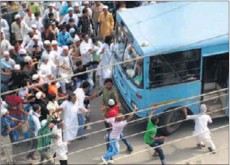
It is not the right time to end up these Islamic menace through a great retaliation by Hindus?

  
Pic [L]. Agitated protesters of a Muslim group damaging a bus at Albert Ekka Chowk in Ranchi on 10-08-2012 in a protest against the killings of Muslims in Myanmar.
Pic [R]. Agitated protesters of a Muslim groups start for a Jihadi activities in Mumbai on 11-08-2012 in a protest against the killings of Muslims in Myanmar and Assam.
Anti National Muslims of India want to create Jihadi hell here.
It is not the right time to end up these Islamic menace through a great retaliation by Hindus?
~ Upananda Brahmachari.

An exalted Jihadi Rioters in Mumbai
The hell of Islamic Jihad is spreading all over India to simply burn out the Hindu Kafirs here. And unfortunately Hindus are voluntarily jumping to that Islamic hell of fire in an utmost embarrassment.

In the row of so called protest over the killings and riots against Rohingya Muslims in Myanmar and the illegal Bangladeshi Muslims in Kokrajhar, Assam, their Indian Counterpart waged against a jahadi war against the State and public in general. By the by, these Rohingya Muslims are also the illegal Muslim population migrated from Bangladesh and have established a huge settlement of 4500 Rohingyas in the capital city of India,Delhi.

As per available information, 50,000 illegal BD Muslims have been efficiently disappeared from the North Bengal bus stops, railway stations, markets, urban and rural areas and obviously from the refugee camps for Kokrajhar victims (?), so warmly maintained by the West Bengal Govt and ruling TMC party as well. As per record these migrant BD Muslims are the head ache for the State administration from United Kingdom to United States. While the Bangladesh Govt. is negating the entry of Rohingyas in BD, the Muslim leaders in India have have lost their sound sleep in these matters.

The Indian Muslims are crying and retaliating for the illegal Myanmar and Kokrajhar Muslims. Ferocious Muslim leaders are raising a hue and cry in the state assemblies and Indian parliament for the rehabilitation of these illegal intruders as a new contingent of Islam to fight against the Indian Nation to break it up with fresh formation new Pakistans.

The anti national Muslims of Ranchi attacked the unwarranted Indian public all on a sudden to the Myanmar Muslim issue on Friday, 10th August; the Muslims of Mumbai plan fully gathered in Friday’s weekly prayer at Azad Maidan to protest the violence in Assam, while the Raza Academy also convened a protest meeting on Saturday (11/08/2012) to retaliate over Rohingya killings at Myanmar.

Sources disclosed that Raza Academy members were stunned to see the crowd swelling from their expected 1,000-odd number to over 50,000. Though police ascertains only a 12-15 thousand mob did all these holy Islamic activities against the State and its people.

The agitation was supported by other organisations like Sunni Jamaitul Ulma and Jamate Raza-e-Mustafa. Awami Vikas Party (AVP), a political outfit floated by former police officer Shamsher Khan Pathan, also took part in the protest.

As per reports Maulana Gulam Abdul Kadri (U.P) was main Culprit for Mumbai menace on 11/8 Mumbai riots, whose inflammatory speech changed the situation so virulent. When Maulana Gulam Abdul Kadri was giving a provocative speech, a mob of around 3,000 became agitated and came out of the Azad Maidan with banners, flags and bamboos in their hands and raised slogans. They were joined by a group of 1,000 young men who came out of the Chhatrapati Shivaji Terminus railway station. They raised slogans, used abusive language, and soon turned violent despite the police’s appeals for peace, the report stated. It is believed that the mob too wanted to join the protest.
Senior police officials said they were in the process of ascertaining if any provocative speech was made from the dais that instigated the mob. Official sources said 17 speakers were on the dais during the protest. Only five had finished their speeches. When the fifth speaker — Maulana Kadri — was giving a provocative speech, he was allegedly stopped by a policeman. The speeches made by Maulana Niyamat Noori, Guddu Bhaiyya, Maulana Akhtar Ali, Maulana Amanullah Barkati and Maulana Gulam Abdul Kadri are under the police scanner. The police said that if their speeches were found to be provocative, they would be arrested and booked under Section 153(a) of the Indian Penal Code. According to the report, the rioters allegedly molested women constables on duty, snatched two Self-Loading Rifles and one service revolver, 160 live rounds of cartridges, including 150 rounds of SLR and 10 rounds of service revolver. They also desecrated the ‘Amar Jawan’ memorial at CST and tried to burn down police vans with policemen in them. “It was sheer luck that we were able to rescue the policemen from the vans. The mob had locked them in and was not allowing them to come out,” a senior police officer told. Unofficially, it has been ascertained that 50,000 Muslims of Mumbai were participated and helped the rioters in various ways.
………………..

The police arrested 23 people in connection with Saturday’s violence at the Azad Maidan rally that left two people dead and many injured.

All have been booked for rioting, murder and attempt to murder, molestation of women constables and

damaging public property.

All the 23 rioters so far arrested by Mumbai Police are devout Muslims and fanatic Jihadis, some of them exploited and vandalised the iconic Amar Jawan Jyoti memorial near CST.
Now Mumbai police, having drawn flak for its massive failure to contain the riots on Saturday, is now going on an overdrive to nab the miscreants.According to reports, the entire force and its network is hot on the heels of these unidentified protestors, who kicked at the memorial, smashed it with a lathi, and then damaged the rifle and helmet inside the fibre glass casing.
……………
Mumbai might have been organised at the behest of elements linked to All India United Democratic Front. AIDUF chief and perfume baron Badruddin Ajmal, who represents the Dhubri Lok Sabha constituency, has been demanding dissolution of the Bodo Territorial Council, saying that its structure was skewed against non-Bodos (or Bengali-speaking Muslims) who formed the majority. Ajmal is said to have wide business interests in Mumbai. However, Ajmal has denied any AIUDF link to the violence in Mumbai. In these days Badruddin Ajmal of AIUDF and Asaduddin Owaisi, MP of Hyderabad and Leader of AIMIM (All India Majlis-e-Ittehadul Muslimeen) are going hand to hand to polarize Muslim vote bank and communalize the Indian Politics as Muslim League’s strategy as before.


Curfew in four areas in Bareilly,  Uttar Pradesh.
In a very shrewd manner, the Muslims of India are now crying purposely for victim of Assam or Myanmar Muslims only to rouse a crude communal feelings in Muslims society so that the major portion of them can start a direct action against Hindus of their prime localities.

In this connection the riot situations have been plotted in Ranchi (Jharkhand) and Bareilly (Uttar Pradesh) also. The frenzy Muslim Mob directly attacked vehicles, shops and public life in Albert Ekka Chowk in Ranchi on Friday (10-08-2012) in the matter of Myanmar and Assam Muslims. But, in Bareilly the Jihadi Muslims foiled with Hindus over a Janmastami (Birth day of Lord Krishna) procession on (11-08-20112) and the Muslims speakers started provocation with the reference of Myanmar and Assam incidents.

Understanding these unholy design of Muslim provocateurs, we have to ugly and subversive strength behind it. Apparently the Indian Muslims are crying for Muslim brethren in Myanmar or Assam, but they are fighting the Islamic flag atop the Parliament or President’s House in India.

We have only one demand. We want a Muslim India.
In the demands of higher Muslim reservation in every sphere by notorious Azam Khan, the Uttar Pradesh Minister of Minority Welfare Deptt., or the demand of dissolution of Bodo Council in Assam by Badaruddin Azmal , or restrictions imposed on Ramnavami in Hyderabad by Akbaruddin Owaisi, the local MLA of the Majlis-e-Ittehadul Muslimeen,or demanding a Muslim Chief minister in West Bengal by Nazrul Islam, an IPS Officer in concurrent service, or the deadly lust for the killing of a law consultant Pallavi Purakayastha by a Muslim night-watchman (actually Kashmiri) to fulfill a Love Jihad, or a huge coordination between all the Muslim NGOs and the Religious groups to form an alternative political power in India to conquer the Indian scenario, have a certain unison for the simulation of Pan Islamism in India.

This making of Dar-ul-Islam in India cannot be completed with bloody Jihad. So the streets and corners of Mumbai, Korajhar, Bareilly or Ranchi are bound to see the repetition of bloodshed and social crisis with every possible ares in India.

Still then why Hindus are sleeping all along?

1. Our imposed secularism in Indian constitution always caring for the 2nd largest population of India, i.e. Muslims. But, what kind of treatments are given to the 2nd largest population of Pakistan and Bangladesh, i.e. Hindus there? Hindus of Pakistan and Bangladesh are leaving their soil after a sever Islamic persecution as a well-known factor now a days.

But the same persecuting Muslim people demand a prospective Pakistan once again. Now reservation, next new home land for Muslims like the demand of Pakistan as earlier. The Muslims strength about 3.75 crore now reached 18.75
crores. Just 5 times growth in 65 years. It can never be possible in any discriminating situation like the minorities in separated parts of India.

Muslims are flourishing enough in India within minimum reservation and maximum appeasement.

2. Again Muslims of India does not believe in Indian constitution and Vande Mataram unanimously. They believe and put high the Sharia above the Indian Constitution. So, their claims of constitutional reservation for job, education, politics, grants, subsidies, trades etc. are ultra vires.

3. This ancient land of Bharatvarsa was divided in Bharat – Pakistan on the basis of Two Nation Theory, very unfortunately in 1947. Higher majority of Muslims of then India voted Muslim League to perpetuate the Two Nation Theory. The claimed even exchange of population. They denied stay in an Undivided Nation with the Hindu Kaffirs. This is the reality of History so far ignored. MUSLIMS GOT THEIR PAKISTAN. THIS BHARAT IS OBVIOUSLY MEANT FOR HINDUS. Muslims have no right to stay in India. How the Muslims have got the rights to stay here to raise their cheater’s voice to make a new Pakistan here so openly. STOP MUSLIM RESERVATION MUSLIM RESERVATION IMMEDIATELY.

4. Hindus of Pakistan is now turned a microscopic race there with a meager 1.86% at present. In 1947 Hindus were the 16% of total population of Pakistan. But through an Islamic chain of persecution including killing, looting, molestation, ransom, abduction, hate preaching, forceful marriage and conversion, Hindus have been dying every moment in Pakistan. The Hindu batches coming to India and seeking long-term visa in India tell the truth. This truth relates to Islam which inspire Muslims to convert this whole world into Islam and the seize the live rights of Non Muslims. Statistics may differ, but the truth is virtual. From the beginning Islam captured their land by mitigating the rights of Non Muslims at any cost. Arab was fortified with 100% ethnic cleansing of non-believers. Gradually this Islamic theme was adopted in every Muslim Country for which Non Muslims are not safe in any Muslim Country or in any Muslim majority area. In Islamic Bangladesh the Hindus and Other Non Muslims are facing the same situation. Muslims always target the land, populace, women and money of others as a hard rock reality. The 27% Hindu population of Bangladesh in 1971 came down to 9% today under the same Islamic persecution.

This set examples of insane and brute Islam only demand a ravage retaliation to Islam by paying back them in their own coins.

5. While offence is the best defense, why Hindus of India do not undertake the ‘an eye for an eye, a tooth for a tooth’ policy to ensure Hindus’ safety, security and future. Hindus must start retaliation against persecuting Islam everywhere with an ultimate goal of Hindu Rashtra (Hindu State) in India, as one billion Hindus have no Hindu State in this world. The claim, war and establishment of Hindu Rashtra in Bharat (India) is the ultimate solution of Islamic menace in India.

Bizarre: Inmate has son after sneaking sperm to wife

A baby boy was born by Caesarian section on Monday, the product of a successful smuggling attempt by a Palestinian prisoner who managed to sneak out a sperm sample to his wife.

Baby Muhannad was born in a Nablus hospital to Dallal Ziben, a 32-year-old mother-of-two from a village in the northern West Bank, whose husband Ammar is currently serving 32 life sentences in an Israeli prison.

Palestinians are not permitted to receive conjugal visits, and although Dallal Ziben has not set eyes on her husband for 15 years, she says she fell pregnant after being artificially inseminated by sperm her 37-year-old husband managed to sneak out of Hadarim prison in central Israel.

"Praise be to Allah who has blessed us after a long absence with my husband in prison," Ziben told AFP shortly before going in for an elective Caesarean.

"My husband and I, our two girls and the family have been waiting for this for such a long time," she said.

Ziben, who comes from Meithalun village between Nablus and Jenin, already had an 18-month-old daughter called Basha'er when her husband, who belongs to the Islamist Hamas movement, was arrested.

At the time, she was also five months pregnant with their second daughter, Bissan.

"I am very happy. This is the first genuine happiness in our house for more than 15 years," smiles Basha'er, now 16.

"When my mother told us she was going to get inseminated and give us a baby brother, we couldn't believe it," she said. "We have always wanted a brother and now the dream has come true."

After the expectant mother was wheeled into the operating theatre, a group of women from the family gathered outside to wait, breaking into celebratory ululation at the first sound of a baby crying.

Standing outside the operating theatre, the proud grandmother said her son-in-law had named the baby after one of his friends "who was a martyr."

Asked if the family objected to the way her daughter fell pregnant, she responded angrily.

"We are honourable people who are known for our good reputation and everyone supports us," she snapped.

For her son-in-law, who no longer has any immediate family living in the Palestinian territories, having a boy gives him a way of prolonging his line, she said, explaining that his mother, father and brother had died, and that a second brother was living overseas.

Details of how the sperm was smuggled out of the prison was kept a closely guarded secret, with the family refusing to give the slightest information.

A spokeswoman for the Israel Prisons Service said she was not aware of the pregnancy, and that security prisoners were not allowed conjugal visits, with the Palestinian Prisoners' Club confirming the same information.

"Visits by prisoners' wives are closely supervised by prison guards and there is no way a prisoner could get time alone with his wife," said a Nablus-based spokesman.

Dr Saalem Abu al-Kheizaran, head of the Razan fertility clinic in Nablus which carried out the insemination procedure, said the sperm had been subjected to a gender separation process to ensure the couple would have a son.

"We received a sample of sperm from the husband in a reliable and clinically secure way," he told AFP, without going into details.

"The couple wanted a baby boy, so we carried out a gender separation procedure. We tried the insemination process three times from the same sample, but the first two attempts failed," he said.

Abu al-Kheizaran said the right to have a baby was a universal human right.

"For us it is a humanitarian issue - everyone has the right to be a parent. Prison must not stand in the way of this right," he told AFP.

Samer Samaro from the Nablus branch of the prisoners' ministry agrees.

"Having the child is a prisoner's right. We hope to someday reach an agreement with the Israeli side about this issue," he said.

Samaro said that even Israelis were allowed that right, including Yigal Amir, the right-wing extremist who gunned down prime minister Yitzhak Rabin in November 1995.

Amir, who was caught trying to smuggle sperm out of prison in 2006, was later given permission to artificially inseminate his wife, who gave birth to a son in 2007.

Says Samaro: "Even Rabin's murderer had a baby while he was in prison, so why should Palestinians be deprived of that right?"

13-year-old beat his mother with hammer

Police say a 13-year-old South Texas boy has been accused of using a hammer to beat his mother.

Corpus Christi police said Monday that the child has been charged with aggravated assault with a deadly weapon-family violence.

Senior Officer Julie Garcia says the boy remains in juvenile custody. His name hasn't been released. Garcia says the mother suffered head, arm and facial injuries that are not believed to be life-threatening.

Investigators say the incident happened Saturday night when the boy and his 33-year-old mother apparently got into an argument.

Police say the boy fled after the attack, but later returned to the family's apartment and was found hiding under a bed.

Mom spanked 5-year old with bag of glass for playing video games

A 24-year old woman is behind bars accused of spanking her 5-year-old son with a bag of glass for playing video games.

Alicia Anne Croney was arrested shortly after taking the boy to the emergency room with a deep gash in his leg that required surgery.

The young mother told the doctor she hit the boy with what she thought was an empty bag of Doritos that she had pulled from the trash.
Turns out the bag contained shards of glass from a broken jar.

Tulsa County Sheriff's Office Major Shannon Clark says he finds the story difficult to believe.

"That someone would spank someone with a Doritos bag is highly unlikely".

"Not that it didn't happen, but it seems like of all things that you would have at your disposal in your home, a Doritos bag…I'm just not finding the relevance as far as how that would discipline a child."

Croney is being held on $50,000 bail on child abuses charges.

Man kept woman locked in bedroom for years

Police searching the apartment of a reputed gang member for drugs made an unexpected discovery, a woman padlocked in a bedroom.

The 44-year-old woman was discovered at the home of 42-year-old Michael Mendez, believed to be a member of the Latin Kings street gang.

Investigators believe the woman was kept in the bedroom for extended periods of time for the last two years and possibly as long as a decade.
Investigators said the woman was sometimes let out of the room, but only when her boyfriend was home.

Some neighbors say they had caught glimpses of the woman, others told police they had no idea another person lived in the apartment.

Mendez is charged with kidnapping, false imprisonment and drug counts.

During the raid, state police seized 4,200 prescription pills, 190 grams of marijuana and $23,000 in cash inside his apartment.

Bogor, after 6 years radical Muslims force closure of Saint John the Baptist Parish Church

by Mathias Hariyadi
In a letter, parish priest denounces the groups opposed to the church, forcing its closure. Over 200 faithful of the area gave their consent, but not enough to get the building permit. He adds, a Christian place of worship promotes harmony and provides employment opportunities for all.

Jakarta (AsiaNews) - The non-issuance of the building permit (IMB) and - consequently - closure of the church of St. John the Baptist in Parung, in the regency of Bogor (West Java), are due to the opposition of a local village chief and the Forum for Interfaith Dialogue. The charges are contained in a letter written by the parish priest, Fr. Aloysius Simbol Gaib Pratolo Pr, according to whom "All procedures to be made has been properly addressed, but we have not yet obtain support from local village chief of Waru". Added to this, the priest continues, is the obstruction of the Bogor inter faith forum which "continues to decline the invitation to sign the document." As a result the possibility is now remote that the local faithful will have a place of worship in which to meet and pray.

The process for building a church in Indonesia - Catholic or Protestant - is quite complicated and may take five to ten years to obtain all permits required by law. The procedure is governed by the Izin Mendirikan Bangunan (IMB), a species of written protocol that allows for construction to commence and is issued by local authorities. The story gets more complicated if it is a place of Christian worship: permission must be obtained from a number of residents in the area where the building is to be constructed and the local Group for Interfaith Dialogue. And even if the permission is granted "unspecified reasons" can come into play that will lead officials to block the projects. Often, this occurs after pressure from the Muslim community or radical Islamic movements.


On 6 August the security officials (the Satpol PP) in Bogor, West Java province, sealed off the Tulang Kuning "house of prayer" in Waru village, used by more than 6 thousand Catholics in the parish of St. John the Baptist. The faithful had used the chapel for six years on a regular basis for weekend liturgies and major Christian holidays, but in recent times they were being targeted by the authorities who - on three occasions - ordered the interruption of worshipp (see AsiaNews 07/08/2012 West Java: Catholics targeted by Bogor authorities, "house of prayer" closed down).

In the note the priest explains that the Christian community has gathered hundreds of signatures authorizing the construction of the building, including those of 13 village chiefs of the sub-district of Parung. What is missing is the signature of the head of the village of Waru, essential for the clearance, long promised but never received. "At least 200 local people - said Fr. Aloysius - have expressed their consent," but every effort seems useless. The block on the place of worship, the priest denounces, arrived 20 minutes from their being granted a letter of extension, which would have granted more time to obtain all the necessary permits.

Finally, the priest denies the charges made by the lunatic fringe of "fomenting religious intolerance". On the contrary, the presence of a Christian place of worship in the area "would also benefit the Muslim inhabitants of the area", because it creates a flow of people and encourages economic and commercial activities such as "stalls for the sale of food or other items. "

Screen ‘Tanda Putera’ uncut or we will make an Anwar movie, Perkasa says

KUALA LUMPUR, Aug 14 — Datuk Shuhaimi Baba's latest film 'Tanda Putera' must be screened

uncensored, Malay rights group Perkasa said today despite an uproar from Pakatan Rakyat (PR) leaders about the movie for allegedly portraying the Chinese community and DAP in a negative light in scenes depicting the May 13, 1969 race riots.

The award-winning director's controversial retelling about the administration of Malaysia's first two prime ministers amid the bloody May 13, 1969 race riots has been criticised by some PR politicians for its allegedly historically-innacurate depiction.

But Perkasa president Datuk Ibrahim Ali today backed Suhaimi, saying the film was historically accurate.

"The film is about history, even if the plot or scenes were controversial, we cannot change history and PR does not need to make that an issue," he told a news conference.

"We will negotiate and help Tanda Putera's film director to screen it without being it being censored," he added.

The independent MP for Pasir Mas rapped the PR opposition pact for claiming that the film could stoke racial tensions.

"Don't make this about party interests, this historical film must be screened for the people to remember and appreciate the country's peace and not just think negatively.

"I propose if PR still wants to make an issue out of this film, I will make a film about the opposition leader," Ibrahim said, referring to PKR's de facto chief, Datuk Seri Anwar Ibrahim.

He did not say what such a film on Anwar would focus on, but Perkasa has been a vocal critic of the opposition leader.

Several film critics have accused the RM4.8 million movie — fully funded by the National Film Development Corporation (Finas) and the Multimedia Development Corporation (Mdec) — of demonising early leftist movements and more hero-worship than tribute to the country's second prime minister, the late Tun Abdul Razak Hussein, who was also father to the current PM, Datuk Seri Najib Abdul Razak.

The trailer for the movie is reported to show scenes of Chinese groups marching through the streets of Kuala Lumpur after the success of the opposition parties in municipal elections carrying the Labour Party flag and other banners proclaiming anti-Malay slogans.

The banners written in Chinese characters depicted slogans that translated into ‘Malays go back to the village’, ‘Malays go die’ and ‘Take revenge’.

There has also been unverified reports that the film also shows DAP leader Lim Kit Siang desecrating a Malaysian flag.

The film's release has been put off pending a review by the authorities.

Angry Proton customer goes ballistic

'I'm really frustrated... I didn't get this car for free you know, I paid for it... bloody screwed up car,' rants the man in a video posted on YouTube.
VIDEO INSIDE

PETALING JAYA: Everybody knows the saying that “the customer is always right”, but what does one do when a customer starts yelling at the sales team?

In a Proton showroom, you stand and gawk at the irate customer in total silence.

A video-clip had been posted on YouTube recently depicting a livid customer firing a verbal salvo at the sales team in the showroom.

One link of the video garnered over 80,000 views since it was uploaded a month ago.

In the “Proton and angry customer” clip, the man was seen berating an entire floor of Proton employees, apparently frustrated about how he had been treated.

Peppered with profanities, he was heard shouting: “You…being a salesman, at least ask your customer, what is wrong with your car…you don’t just walk off here and take your customers as an idiot.”

“You’ve got no bloody ethics as a sales manager…I’m really frustrated… I didn’t get this car for free you know, I paid for it… bloody screwed up car.”

The only visible response he received from the blue uniformed staff and security personnel was an awkward silence.

Even the security guard was seen standing a distance away, appearing unsure what to do.

At one point, on employee, unseen in the video, had smiled, infuriating the man further. He responded:” Dont’ give me that smile again please, I’ll wipe that smile off your face!”

Calling himself a “very patient guy” who smiles at everyone, the man warned the staff several times: “Dont’ treat your customer like shit.”

He also said that the sales manager should be embarrassed of himself and resign.

“If you can’t speak English go and resign lah. You don’t understand, what is faith? [It] means I have no trust in the car, go and look in the dictionary.”

He even challenged the security to call the police, “I’m not scared”

National carmaker Proton had always been criticised for churning out inferior cars not befitting of their price tags and its after sales service had also been the subject of ridicule.

Bankruptcy notice against IGP, et al

Lawyer pressures government to pay damages over lock-up death.

KUALA LUMPUR: A notice of bankruptcy has been filed against the Inspector-General of Police, the Selangor police chief and a Bukit Aman police officer over the government’s failure to settle damages ordered by the High Court in a case involving death in police custody.

Lawyer M Manoharan filed the notice on behalf of dependents of R Sundaraju, who died in November 2002 while he was under police remand.

The Kuala Lumpur High Court in October 2010 found the police officials guilty of failing to ensure Sundaraju’s safety and awarded general and special damages amounting to RM200,000 to his mother R Muthammal and brother R Dharmarajan.

The total amount now due, including interest, is RM311,706.85.

Manoharan said he would also apply for leave to execute the judgment on properties of the government.

The government lost its appeal against the assessment of damages last April and against the judgement last June.

“The government has lost all of the legal avenues and it still doesn’t want to pay,” said Manoharan, speaking at his office in Lembah Pantai this afternoon.

“The fruits of judgment has not been enjoyed until today. Attorney General Abdul Gani Patail should ensure that the government pays.”

He said the government’s failure to pay up was tantamount to contempt of court. He also said further delays would increase the burden of interest on taxpayers.

Sundaraju was beaten to death by nine detainees in a cell at the Klang police station, which was then under the control of district police chief A Paramasivam. Paramasivam now serves as an assistant police commissioner at Bukit Aman.

Sundaraju had been remanded after his wife, M Latha, lodged a police report alleging that he had subjected her to domestic violence.

Latha died of cancer two years ago, leaving her only child in the care of Dharmarajan.

Astro offered IPO shares to Bumi investors, says source

The pay-TV firm expects to raise US$1.5 billion.

KUALA LUMPUR: Astro Malaysia Holdings Bhd, a pay-TV firm controlled by tycoon Ananda Krishnan, has offered IPO shares to indigenous bumiputera investors with an indicative value of nearly US$700 million, a source with direct knowledge of the matter said, in an IPO the market expects to raise around US$1.5 billion.

The IPO, which is seen listing by end-September, would be Malaysia’s third-largest this year after share sales by Felda Global Ventures Holdings Bhd in June and IHH Healthcare Bhd in July.

The offer at RM3.60 a share opened late last week and will close at 4pm tomorrow, said the source, who declined to be identified as details of the deal were not yet public.

Based on the indicative price, the 597.69 million shares reserved for bumiputera investors would be worth about RM2.15 billion (US$688.88 million).

A draft prospectus that the company filed last week to regulators did not give any details on the size of the listing or the time frame of the IPO process.

Bumiputera, or “sons of the soil”, are majority ethnic Malays and other indigenous people in Malaysia favoured by a decades-old government policy in housing, education and business.

Cornerstone investors will be offered more or less a similar price, a second source with knowledge of the deal said.

“They have been approaching cornerstones,” said the source, who declined to be identified as the deal has not been made public.

Astro officials were not immediately available to comment.

Dividend appeal

Astro, with a residential pay-TV subscriber base of 3 million in Malaysia, stated in its draft prospectus that it targeted a dividend payout ratio of not less than 75% of its consolidated profit each fiscal year beginning Feb 1, 2013.

“We intend to adopt a policy of active capital management,” Astro said in the prospectus filed to Malaysia’s Securities Commission last Wednesday.

The plan is seen as a move to stoke investor interest amid increasing competition from other Internet protocol television providers in Malaysia, even though Astro has launched its own version of on-demand video via broadband, an analyst said.

“Pay-TV companies are always at the mercy of content providers. So costs are rising faster than revenue,” said the analyst, with an investment bank in Kuala Lumpur.

Astro made a pro forma net profit of RM629.62 million (US$201.74 million) for the fiscal year ended on Jan 31, 2012, a 23.9% drop from a year earlier despite revenue rising 6.1% on a better pay-TV business, the prospectus read.

The lower profit margin was due mainly to higher costs of marketing and financing.

Astro said it intended to use 58% of the proceeds raised in its forthcoming listing for capital expenditure – ranging from investments in new corporate and technical buildings to additional transponders, the prospectus showed.

Beyond the 58% allocated to capital expenditure it said 29.3% would be used to repay bank borrowings, 8.6% for working capital and the rest for listing expenses.

The company had hired CIMB as the transaction manager for the listing. Joint principal advisers are CIMB, Maybank and RHB.

CIMB led Astro’s delisting in 2010 in a deal that valued it around US$2.8 billion. The investment bank also handled its original IPO in 2003, along with Goldman Sachs, DBS and UBS.

Reuters

Sabah wants the truth


TAY TIAN YAN, Sin Chew Daily

Contrary to many people's negative response, I look at the formation of the Royal Commission of Inquiry (RCI) into Sabah's long-standing illegal immigrants problem in a positive way, and I am really looking forward to it.

To put it simple, just because of former Prime Minister Tun Dr Mahathir Mohamad alone, there are definitely reasons to set up the RCI.

I have no intention to innuendo, I just read his comments on his blog written, "On the basis of the length of stay and mastering of the national language, they qualify to be citizens of this country, and so the acquired citizenship”.

That's all. It is very easy to gain Malaysian citizenship. You can get an identity card as long as you stay for a period of time in the country, regardless of whether you enter the country legally or illegally; and master the national language, regardless of whether with Indonesian or Filipino slang.

No wonder there are rumours about the Project IC or Project M since a decade ago. Under the project, the country welcomes Filipinos and Indonesians with widely open arms and identity cards are issued to them very quickly. Similar to other Malaysians whose ancestors have long been here, they master the national language, love the country and when the time comes, line up to vote.

Here lies the problem. Illegal immigrants come to earn money while the authorities give them political rights. They are mutually benefiting, establishing a symbiotic relationship.

According to the population statistics, the Sabah population in 2010 increased to 3.12 million, a jump of 390% from 651,304 in 1970.

The 390% increase is not because of an extraordinarily high fertility rate, but is most likely because many foreigners, who have lived here for a period of time and mastered the national language, have become Malaysian citizens, through Mahathir's logic.

It is indeed necessary for the RCI to investigate whether such a citizenship acquisition is legal and who is actually responsible to it.

The illegal immigrant problem was worse with most changes during Mahathir's administration. The RCI should summon Mahathir to hear his noble words, as well as explanation for some key points.

It is also controversial that the large number of immigrants has changed the state's political ecology. The ratio of Muslim Bumiputeras has greatly increased while the number of Sabah Umno members has also increased by times.

The Sabah political arena was ruled by three racial groups in the 1960s to 1980s. The balance power among Muslim, Kadazan and Chinese enabled them to maintain tolerance and pluralism.

Under Mahathir's leadership, Umno entered Sabah and together with the change of the state's political ecology, Sabah Umno gained the dominance and since then, leads the overall situation.

The political power of the Kadazan and Chinese have been weakened and thus, discontent is sown.

Under pressure, Najib tries to appease the non-Muslims' discontent by setting up the RCI. However, the move has at the same time triggered rebound from the right wing and vested interest groups of Sabah Umno.

The RCI is definitely necessary for the state's own good. The RCI members must do their best while the people should give support.

Does it takes a blackout, sir? — Jaleel Hameed

AUG 14 — Thank you, Mr Prime Minister, for realising the effects of the Internet Blackout Day today.

But, sir, how did this come about? Why does it take an uproar for your ministers and government to snap into action.

Well, not the government. Only you, sir, and a few other lawmakers, figured it out but that too way after Section 114A of the Evidence Act was passed.

Is this People First, Performance Now?

Because tonight, sir, you reaffirmed that people come first.

"I have asked Cabinet to discuss section 114A of the Evidence Act 1950. Whatever we do we must put people first," you said on Twitter.

See, sir, you have to watch what's going on now within your government and supporters, including the sycophantic cybertroopers who support anything done by your colleagues without thinking about it.

Fact is, your ministers are also not thinking deeply when they propose such laws and amendments like S114A.

Your administration must be careful, sir, and engage the people and experts before drafting silly laws that presume guilt rather than innocence. It makes the enforcement's job easier but it is an injustice.

Don't you think sir?

See what happened now. Your tweet that the Cabinet will discuss this law smacks of a flip-flop, a U-turn. You don't need this, sir, because there has been a number of reversals since you took office.

So do us and yourself a favour, sir. Don't let it slide into a blackout protest for you to finally take action. Make sure your administration engages the public and come up with laws that nurture and make Malaysia better, not laws that curb our freedom.

You want our support, sir. Not our anger to bubble and push you out of office. Get your colleagues in line to make sure people come first and performance is now, not after a furore like today.

* Jaleel Hameed reads The Malaysian Insider.
* This is the personal opinion of the writer or publication and does not necessarily represent the views of The Malaysian Insider.

Najib Instructs Cabinet To Review Section 114A Of Evidence Act

KUALA LUMPUR, Aug 14 (Bernama) -- Prime Miister Datuk Seri Najib Tun Razak has once again proven that his government regards the people's views as top priority when he directed the Cabinet to review controversial amendments to Section 114A of the Evidence Act 1950.

Section 114A is one of two amendments passed in April and gazetted on June 31.

"I have asked the Cabinet to discuss Section 114A of the Evidence Act 1950. Whatever we do we must put people first," said Najib in his Twitter Tuesday.

Najib is presently in Mecca for the two-day Organisation of Islamic Cooperation (OIC) Extraordinary Summit beginning today.

The directive by the prime minister who is an active Facebook, blog and Twitter user, on the contentious amendments which are being hotly debated on the Internet reflects prompt response by a national leader to an issue.

Campaigns on the Act spurred by the Centre for Independent Journalism (CIJ) and banners via Facebook with the heading "Stop 114A" have been downloaded by the diverse internet users in the country.

A popular forum in Malaysia, cari.com.my has resorted to using plain black and white colour on its site as a mark of protest against the Act.

Section 114A is argued to be lopsided as it can liberally bring to court those who publish and replicate or post seditious and defamatory contents in the Internet regardless of whether or not the material originated from them.

Internet Black-out Day makes global news

The Internet Black-out Day to protest against Section 114A of the Evidence Act has made global news. 
 
Global media groups BBC News, Times of India, ABC, The Nation, Bangkok Post, and a host of US websites, as well as tech news websites such as CNET reported on the unusual coordinated black-out.

As a side note, did you all suffer from withdrawal symptoms from staying away from blogosphere and social media? Well, imagine what it was like in the old days when there was no internet?!

Fatal flaw in the RM180 million allocation to Indians

By Jeyaseelen Anthony
Recently our Prime Minister had announced an allocation of RM180 million to uplift the economic standing of the Indian community.

It was indeed a major announcement and a big step forward on the part of the government to help the Indian community. However in practice whether this allocation will help Indians in the long run is doubtful.

Malaysia is still plagued by discriminatory policies which favour the majority bumiputera races. Announcing an allocation is rather easy but making the money usable for business or social purposes is another.

Take for example a real incident highlighted by Senator Dr S Ramakrishnan recently and I quote:

"One of my cousins wanted to import goats from Myanmar sometime in 2006. When he went to the Customs and Agriculture department for permits to import, he was told that he can only import under a bumiputera name.

"My cousin then went looking for a trusted bumiputra partner to import goats or at least lend his name for that purpose and he managed to find one. He imported goats and sold them in Malaysia.

"After the first import the bumiputera partner went to Myanmar and started importing himself. My cousin lost a reliable source of supply and income.

"This is how many small time Indian businessmen incur losses and face difficulty in doing business in Malaysia. My cousin was so frustrated that he brought many friends to the Hindraf rally on 25th November 2007.

"He also has buses transporting workers. He has to get a bumiputera to get a permit and pay a monthly fee to him for doing nothing. No other country in the world has this kind of cunning and malicious restrictions on its own citizens to do business."

Article 153: Intent, spirit and unfair implementation

Many non -bumiputeras face this problem. All this is done in the name of Article 153 of the Federal Constitution which provides for preferential treatment in favour of the bumiputera. Let's take a look at what Article 153 is all about.

It is implicit in Article 153(1) that "It shall be the responsibility of the Yang di-Pertuan Agong (YDPA) to safeguard the special position of the Malays and the natives of Sabah and Sarawak and the legitimate interest of other communities".

To set the record straight, the phrase ‘legitimate interest of other communities' means that it does not allow simply any kind of preferential treatment in favour of the ‘bumiputera'.

It is not a ‘blank cheque' but it merely confers limited powers on the government and Parliament, pursuant to Article 153, to derogate from the principle of equality and equal protection of the law.

The implementation of Article 153 has often been the bone of contention as many have argued that its implementation has been at expense of the other races in Malaysia.

For example, although Article 153 provides for quotas only for the issuance permits and licenses to the bumiputera, however, even government commercial contracts have been awarded solely to bumiputera companies, which is clearly not sanctioned under the Federal Constitution.

Even government linked companies (GLCs) and statutory bodies assign their work solely to bumiputera companies and some major banks assign their legal work only to bumiputera legal firms.

GLCs and local authority procurement and infrastructure building contracts are mostly given to bumiputera companies.

For example, local authority contracts for infrastructure building are solely given to Class F (not to forget the other types licenses like Class A etc under the purview of the Finance Ministry) licensed contractors, which is a type of license only given to bumiputera contractors although nothing in Article 153 of the Federal Constitution permits Parliament to restrict business and trade solely to bumiputeras for the purpose of reservation of quotas.

The issuance of vehicle AP's solely to the bumiputera is another example of a policy and system that is unconstitutional as it is against Article 153.

I now question how is the RM180 million allocation useful to the Indian community in view of these restrictions?

Allow me to digress here: The majority of employees at the GLCs and some major banks are Malay bumiputeras although the Federal Constitution only provides for reservation of quotas in the public service.

Ethnic quotas are imposed on private companies by government agencies and licensing is used as a way to get private companies to observe bumiputera quotas, a policy which is clearly against the Federal Constitution as Article 153 only provides for reservation of quotas in the public service.

Although Article 136 of the Federal Constitution provides for impartiality in the public sector, there have been complaints by the non-bumiputeras in the various government departments that they have been deprived from getting promotions or have been sidelined in favour of bumiputera candidates.

This explains why the non-bumiputeras shy away from seeking employment in the government sector and unfortunately it also explains the current brain drain that is currently plaguing our country.

These are several examples where the implementation of affirmative action policies has clearly gone beyond the limits of Article 153 of the Federal Constitution and has gone wrong.

The problem that is quite apparent here is that although the Yang Dipertuan Agong, after acting on advice of the Cabinet, is bound to give binding directions to the relevant authorities to ensure the reservation of quotas in the public sector, scholarships and permits or licenses in favour of the bumiputera, no one knows for certain what the percentage of the quotas are.

Is it 50%, 70% or 95% in favour of the bumiputera?

It is surprising to note that the Prime Minister had announced this RM180 million allocation without even looking at the realities on the ground.

I believe that the weaknesses of the government's policies must be repaired first before announcing any allocations to uplift any community.

With the type of restrictions and limitations pervading the non-bumiputera communities under the guise of Article 153 of the Federal Constitution, it would not be difficult to realize that the allocation given to the Indian community for business purposes will be futile.

Deterioration in race relations: What is the cause?

It cannot be denied that the improper and arbitrary application of affirmative action policies as provided under Article 153 has contributed significantly to the deteriorating race relations in Malaysia.

The deprivation of equal opportunities has caused racial tensions to run high in recent years. Therefore in order to improve race relations between the bumiputera and the non-bumiputera in Malaysia there should be legislative intervention.

The number of quotas and restrictions and qualifications in favour of the bumiputera are not well defined or specified under the Federal Constitution.

This loophole has led to the unfair, unbalanced and unreasonable implementation of Article 153. A race relations law must be introduced in Malaysia in order to remedy the imbalances and unfairness that has led to discrimination.

The intention and purpose of Article 153(1) when read as whole clearly provide for a balance between two competing interests, namely the protection of the special position of the bumiputera and at the same time safeguarding the legitimate interest of other communities as well.

However ambiguity arises when one realizes that the scope and meaning of the words "legitimate interest of the other communities" are not defined in the Federal Constitution.

Even the courts have not decided on this issue as the scope and ambit of provisions like Article 153 has not been litigated before in Malaysia, in the way it has been done in the USA and India. This lacuna in the Federal Constitution poses a problem to good race relations in Malaysia.

This is where I believe that an effective and well drafted Race Relations Act is needed.

Reasons for enacting race relations law

A comprehensive race relations law will provide the balance that the original drafters of the Federal Constitution had intended when they inserted the words "legitimate interest of the other communities" into Article 153 of the Federal Constitution.

A law on race relations would help prevent discrimination and promote equality in all spheres of life which affect Malaysians from all the different races.

There are two sides of the coin in support of this argument. On the one side, the bumiputera are protected from discrimination and at the same time their special position under the Federal Constitution is also preserved.

On the other, the non-bumiputera are also protected against discrimination in the spirit of protecting the legitimate interest of other communities as provided under Article 153.

A race relations law will not affect the special position of the bumiputera as widely believed by many i.e. a reasonable reservation of quotas can still be maintained in the areas specified under the Federal Constitution but if there are areas where a particular racial group is under represented in a particular trade or work area then the governing authority on race relations or the minister tasked to manage and regulate race relations under a race relations legislation will be empowered take remedial actions to solve the problem.

The Race Relations Act 1976 and the Race Relations Amendment Act 2000 (now replaced by the Equality Act 2010) in the UK, for example provides for such measures.

A Race Relations Commission can be created under the Act to implement the provisions of the Act and ensure the enforcement of the Act.

In fact the Yang Di-Pertuan Agong under Article 153 is bound to act on the advice of the Cabinet or a Minister acting under the authority of the Cabinet.

As such if the cabinet or the minister finds that there is indeed under representation of a particular racial group in a particular vocation or trade or sector and decides to take remedial actions, the Yang Di-Pertuan Agong is bound to act on that advice.

The current system clearly shows that the bumiputeras are over represented in many areas of employment in the public sector, in the government and the local authorities, in government and local authority procurement and in the public universities, etc.

This over representation has created a perception that the government is imposing exorbitant and unreasonable reservation of quotas in the areas mentioned in the Federal Constitution.

Surely, this is not what the Reid Commission had intended. In fact it is clear from the wordings of Article 153(1) that the drafters of the Federal Constitution did not envisage a system where reverse discrimination would be the order of the day.

The time has indeed arrived to see whether implementing quotas under affirmative action provisions are the way to go in light of the fact that globalisation has created a more competitive world where meritocracy is the order of the day, as compared to the time when the Federal Constitution was drafted in 1957 in particular Article 153.

Affirmative action should not be cause for economic stagnation. In fact the Reid Commission had intended that the communal-based policies would be eventually eradicated from the country's political and economic spheres.

Malaysia aspires to become a high income nation and to achieve this status we need to do away with raced-based policies that are currently plaguing our system.

The only way to create a conducive and market friendly business environment and to get the private sector to be the catalyst for the creation of a high income nation is to ultimately eliminate race based policies in all sectors of business and society.
_________________________________________________________________________________
Jeyaseelen Anthony is an advocate and solicitor (non-practicing) and was also a member of the Bar Council Law Reform Committee. This article first appeared in Centre for Policy Initiatives( CPI).

Tuesday, 14 August 2012

Pope's butler leaked papers to shock 'corrupt' Church, prosecutor says


Pope's butler leaked papers to shock 'corrupt' Church, prosecutor says


By Richard Allen Greene and Hada Messia, CNN

Pope Benedict XVI's butler will be tried on an aggravated theft charge over the leaking of hundreds of secret papers from the pope's personal apartment to an Italian journalist, a Vatican spokesman said Monday.

The butler, Paolo Gabriele, acted out of a desire to combat "evil and corruption everywhere in the Church," according to a prosecutor in the case.

"I was certain that a shock ... would have been healthy to bring the church back onto the right track," the prosecutor, Nicola Piccardi, wrote in a report released Monday by the Vatican.

A second man, Vatican IT expert Claudio Sciarpelletti, will be charged with aiding Gabriele, according to the Rev. Federico Lombardi, a Vatican spokesman.

Sciarpelletti is not suspected of conspiring with Gabriele, merely assisting him, and is not under arrest, Lombardi said.

The investigation is continuing, said Lombardi, raising the possibility of more arrests.

The trials are not expected to start before September 20, Lombardi said.

Gabriele, one of the pope's closest personal assistants, was arrested in May on suspicion of passing the papers to an Italian journalist. He faces the possibility of one to six years behind bars, Lombardi said.

The scandal has rocked the Catholic Church hierarchy and could even affect who becomes the next pope.

CNN’s Belief Blog: The faith angles behind the biggest stories

It could be an effort to unseat Benedict's secretary of state, Cardinal Tarcisio Bertone, who will run the conclave to choose the next pope if he is in office when Benedict dies, according to the Rev. Thomas Reese, author of "Inside the Vatican."

Gabriele was held in a special Vatican cell for about a month and a half before being released to house arrest in July.

The Vatican said Gabriele cooperated with investigators and admits leaking the papers, which consisted of faxes, letters and memos, including some from a high-ranking church official expressing concerns about corruption within the Vatican.

The arrest followed a top-level Vatican investigation into how the private documents appeared in the best-selling book "Sua Santita" ("His Holiness") by Italian journalist Gianluigi Nuzzi.

The Vatican called the publication of his book "criminal" when it was released in Italian.

Copies of some documents used in the book were found in the butler's apartment, according to the judge's report released Monday.

Follow the CNN Belief Blog on Twitter

Gabriele was not paid for handing over the papers, according to the judge, Piero Antonio Bonnet.

Cardinal Julian Herranz got a "pontifical mandate" in April to uncover the source of hundreds of personal letters and confidential documents that made their way to Nuzzi.

Nuzzi would not confirm the identity of his sources, but he told CNN that his primary source - whom he referred to as "Maria" in his book - "risked life and limb" if ever found out.

The source worked inside the Vatican, according to Nuzzi, who refused to give other details such as the source's gender, age and if he or she was clergy.

Nuzzi's book highlights an internal power struggle within the Vatican through numerous documents, including faxes, personal letters and inter-Vatican memos. He told CNN that he received the documents during a year of private meetings in secret locations.

The Vatican has not denied the authenticity of the documents but instead says the breach of privacy is a criminal act.

–Journalist Barbie Nadeau in Rome contributed to this report.

Immigration nabs 52 illegals