Share |

Friday, 16 December 2011

Horrors of sexual abuse in conflict-stricken FATA

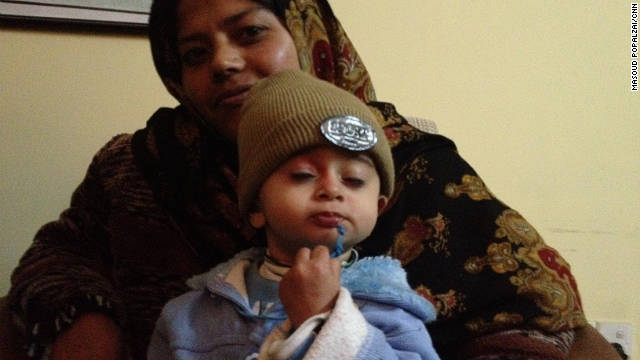
" A security officer forced me to have sex in exchange for cooking oil and pulses," 22-year-old Pashmeena.
PESHAWAR:  Kashmala Bibi* says her cousin’s breasts were cut into pieces when five militants walked into their house and saw the woman breastfeeding her child. One of the insurgents then asked the other women around to eat the pieces.
This is one of the many tales of horror recorded in a report titled “Impact of crisis on women and girls in Fata”.
The report, released by human rights organisation “Khwendo Kor” (Sisters’ Home in Pashto) with financial support from UN-women, is based on case studies of women from the tribal belt living in Khyber-Pakhtunkhwa’s IDP camps.
Women in the Federally Administered Tribal Areas (Fata) are more susceptible to violence and abuse in a post-conflict scenario, whether or not they are part of the conflict, it says.
Another stark revelation made in the report is that women in camps were forced to have sexual intercourse in exchange for food and non-food items. Girls and widows were at greater risk.
The surveys from Nahqai and Jalozai camps further show that women were uncomfortable going to restrooms because there was little privacy as men constantly lurked around.
“A security officer forced me to have sex in exchange for cooking oil and pulses when I was collecting food at the main entrance of the camp,” a 22-year-old woman Nighat* from the Jalozai Camp is quoted as telling the discussion group.
The report claims that there was an increase in honour killings in which women were first raped and since the rape was considered a disgrace to the family, they were later murdered.
Forced marriages, honour killings, exchange of women between tribes and marriages with first cousins resulting in disabilities of offspring have made the women in the tribal areas increasingly dependent. The role of women in society has decreased from 39% to 19%.
Akhunzada Chattan, an MNA from the Bajaur tribal region, says that certain rituals practiced with the veneration of religion have deprived women of their rights.
“In Bajaur, the area that I come from, usury is not something against which the cleric will stand up, but if a woman demands her share of property she is stigmatised as culturally blasphemous,” he says.
The amendments to the Frontier Crimes Regulation have not significantly helped. Even now women first have to go through a jirga to seek justice. The jirga then decides how to proceed. “Women in Fata cannot directly appeal to any court of law,” says Chattan while speaking to The Express Tribune.
Maryam Bibi, the woman behind the project, who belongs to Jani Khel (FR) Bannu, says the findings of the report are based on ground realities.  “Although it is hard to digest the facts, this is what the women have to go through. Someone has to speak for change.”
(Read: Safer times)
*Names have been changed to protect privacy
Published in The Express Tribune, December 15th, 2011.

Perkasa leads 1,000 in protest against Felda DG

Bad batch of moonshine kills at least 125 in India

A family member comforts her relative, who fell ill after consuming bootleg liquor, inside a hospital at Diamond Harbour, a town about 50km south of West Bengal’s capital Kolkata, December 15, 2011. – Reuters pic
MOGRAHAT, India, Dec 15 — An adulterated batch of bootleg liquor has killed at least 125 drinkers in eastern India, with dozens more arriving at a cramped rural hospital with poisoning symptoms. The deaths come just days after a hospital fire killed 93 people in the same state of West Bengal. Both disasters highlight lax health and safety standards as the nation of 1.2 billion people rapidly modernises.
Residents of Mograhat, a town about 50km south of West Bengal’s capital Kolkata, fell severely ill after drinking liquor from several illegal shops. Ambulances brought more patients from villages to the town every few minutes today.
“He drank the alcohol late in the afternoon yesterday...we didn’t realise his health was deteriorating,” Zamir Sardar said about his 32-year-old uncle Jahangir Sardar, a leather cutter, who passed away today.
“In the morning, his condition seemed very unusual, he cried out in pain. Then we brought him to the hospital as soon as we could, but he passed away within a couple of hours,” he told Reuters today.
The victims were mostly poor labourers, rickshaw drivers and hawkers, the news channel CNN-IBN reported. It put the death toll at 131 people.
Half-conscious patients were carried into hospitals on stretchers, and treated on the floor as there were not enough beds.
A senior hospital official, who did not want to be quoted by name, said patients were in critical condition. “More and more victims are coming. Many are waiting for treatment, but with a lack of beds it’ll take time to manage,” the official told Reuters by phone.
Mass deaths from drinking moonshine are common in India, where the poor often drink “country liquor” which is cheaper than alcohol from licensed shops. — Reuters 

New theory: Saiful’s ‘plastic’ self-sodomy

Calling the accuser as the 'puppet' in the plot, Anwar's defence team claims Saiful had inserted a plastic object into his anus to make it seem like he had been sodomised.

KUALA LUMPUR: Mohd Saiful Bukhari Azlan has been accused of using a plastic object to injure his anus to make it seem as though he was sexually assaulted.

This was the new theory put forward by Opposition Leader Anwar Ibrahim’s defence lawyer Sankara Nair during his closing submissions at the High Court this morning.

Sankara said this was a plausible reason why Saiful mentioned that he was assaulted with a plastic object to the first doctor who examined him — Dr Mohamad Osman Abdul Hamid, who was then with the Pusrawi Hospital.

Sankara submitted that Saiful had done so on the advise of police officer SAC Mohd Rodwan Mohd Yusof, whom he described as the “puppeteer”, while he called the former Inspector-General of Police Musa Hassan, the “director” of the political conspiracy against Anwar.

“In this sordid episode… the puppeteer is SAC Rodwan and by extension behind Rodwan is Musa Hassan, the director… the puppet is Saiful,” he said.

The plastic object issue had been debated during the trial as it affected the credibility of Saiful as a witness.

As a defence witness, Dr Osman had testified that Saiful told him about being assaulted with a plastic object, which he had joted down in his his medical notes. Saiful had previously denied telling Dr Osman about the plastic object and accused the doctor of lying.

Sankara today attempted to answer the question of “why would Saiful mention ‘assault by plastic’?”, explaining that: “One plausible view is that he was well advised by Rodwan on June 24, 2008 to use a plastic object to cause injury to his anus – to make it seem consistent with proof of penetration.”

“That was why Saiful, after attempting to injure his anus with a plastic, did not go to Hospital Kuala Lumpur straight away to make the allegation but instead went ‘doctor shopping’ to first ascertain whether he succeeded in causing some injury to his anus,” he said.

Sankara claimed that Saiful’s “modus operandi” was to pretend to complain of “tenesmus, constipation and pain in the anus when passing motion so that he could get a doctor to examine his anus to see whether there were injuries.”

“It is worth noting that he employed the same modus operandi at both Pusrawi and HKL, by at the first instance complaining about pain when passing motion and later alleging sodomy,” he said.

Dr Osman had previously testified that Saiful complained of being sodomised only after he had finished the examination, and after telling the latter that his anal condition was normal and good.

“Being somewhat disappointed and astounded that Dr Osman found no injuries… this must have then caused Saiful to mutter aloud about the ‘plastic’ (assault) which then led to Dr Osman recording it contemporaneously,” said Sankara.

KY Gel theory

The lawyer said when Dr Osman’s examinations were negative, Saiful had no choice but to seek another opinion, while he went missing between 4pm and 6pm, “possibly to get further instructions”.

“This ties in well with our KY Gel theory because unfortunately for him the plastic injury plan did not work out.

“It is submitted that the whole plot started after the meeting with SAC Rodwan on June 24. Saiful was asked to find an opportunity to be seen or to be in contact with Anwar on a possible one-to-one situation to be able to make the allegation and being asked to go to Unit 1151 of the Desa Damansara condo was the opportune moment and he seized it,” he added.

During the trial, Saiful had testified that he had contacted both Musa and Rodwan over the alleged sodomy incidents before lodging a police report on June 26.

Sankara said since the plan to self-injure did not work, the prosecution later produced the KY Gel as a method to explain why Saiful had no injuries in his anus.

He submitted that the prosecution’s earlier allegation that Dr Osman had added the word “plastic” later was “ludicrous and defied logic”.

“The prosecution says Anwar got to Dr Osman on June 28, or soon after that and got him to insert the plastic story. This is a preposterous story as Anwar never knew Dr Osman. How can that be? Unless Anwar was a fantastic ‘Tok Nujum’ (fortune teller) who can predict or foresee things in advance,” he said.

After hearing submissions from both defence and prosecution, High Court judge Mohamad Zabidin Mohd Diah said he would deliver his verdict on Jan 9.

Additional exco post for Indians in Selangor?

An additional exco seat will be the best move to reach out to the Indian community, says Selangor MIC secretary K Parthiban.
UPDATED
PETALING JAYA: In an attempt to win the hearts and minds of Indian voters, the Barisan Nasional (BN) is planning to give an additional state executive council (exco) seat in Selangor.
The ruling coalition would also promise an Indian-held exco seat for Indians in Pahang.
“In total, Selangor will have one extra Indian exco seat, making it two Indian exco members in the state while Pahang would have an Indian exco member. The Pahang’s exco is new.
“We expect this to be contained in the BN’s manifesto for the next general election,” a reliable source told FMT.
Prime Minister and BN chief Najib Tun Razak, the source said, has already promised the additional exco post for Indians in Selangor in his meeting with BN Indian leaders.
“But this is provided the BN takes back Selangor. He (Najib) also intends to push for an Indian exco post in his home state in Pahang. These strategies are in the pipeline and is expected to be announced during the campaign period for the next general election.
“This is BN effort to woo Indian voters,” he said, adding that the BN realised that it would need the votes of the community to retain power at the coming general election.
The source said Najib was “very sensitive” to the plight of the Indian community and would offer the best to rope in the votes.
More inclusive politics
Selangor has one of the largest Indian concentrations in terms of population, constituting 13 percent of the total 5.5 million people in the state.
MIC, a BN component party and the largest Indian-based political party in the country, has over nearly three decades asked the ruling BN to allocate an extra exco seat in the state.
“At the 2008 general election, the Indians were frustrated… they wanted their voice to be heard. They deserted the BN for the first time. Although Pakatan Rakyat had a golden opportunity to remedy BN’s mistake, it failed to capitalise on it.
“If Najib’s promise is kept, then many Indians, if not all, will return to the BN fold. Only a small number might remain with Pakatan,” said the source.
For the Pahang exco seat, Najib is expected to direct Menteri Besar Adnan Yaakob to allocate an extra exco post for Indians.
The Pahang state exco was increased from eight members to 10 in 1995. Indians hoped that an Indian could be accommodated in the enlarged exco. But this hope was dashed when the state government appointed two Umno leaders to the posts.
When contacted, Selangor MIC secretary K Parthiban said it was high time that the state had two Indian exco members.
“If the news is true, it’s most welcomed. An additional exco seat will be the best move to reach out to the Indian community and promote a more inclusive politics,” he added.
Pahang MIC Youth wing chief K Sivakumar said that the state exco post was no more a state issue but a national concern as it would convince Indians in other states that BN was indeed concerned about their plight.
MIC veep welcomes additional slots

Meanwhile, MIC vice president SK Devamany welcomed any decision by the BN to give an extra exco position in Selangor and a new slot in Pahang.
“This reflects the prime minister’s aspirations to do more for the Indian community. The exco slots are important to ensure the Indian community are not left behind as the nation progresses economically,” he told FMT.
He added that it was important for the Indian community to have a second exco slot in Selangor to cater for the increasing number of Indian population in the state.
“And the new exco slot in Pahang, when given, is a culmination of efforts put by MIC for a long time to get a representative in the state government. It will be a recognition for the work done by our elected representatives,” said the Deputy Minister in the Prime Minister’s Department.
He added that the Indian support was returning to the BN and this was largely due to the hard work put in by Prime Minister Najib.

Jerit disputes tycoon’s statement on Tumbuk estate

Housing issue would not have arisen if G-Team had delivered on its promise to the estate workers in 2010, says Arutchelvan.

PETALING JAYA: Oppressed People’s Network’s (Jerit) founder-member S Arutchelvan disputed G-Team Resources Sdn Bhd’s explanation on the controversy surounding Tumbuk Estate near Banting.
He said that there would not be an issue if G-Team Resources had kept to its promise to provide housing for the estate workers.
“The fundamental issue is that Maika Holdings Bhd signed an agreement in 2006 with the Tumbuk estate workers where they were supposed to build houses for them by 2010.
“G-Team then took over all the properties of Maika Holdings, including Tumbuk Estate, in 2010. If the houses had been delivered as promised, the water issue wouldn’t arise.
“The problem with Maika Holdings then and G-Team now is that they did not fulfil their promise,” said Arutchelvan, who is also Parti Sosialis Malaysia’s secretary-general.
Arutchelvan was responding to a FMT’s report where G-Team Resources’ owner G Gnanalingam claimed his company was not responsible for the water cuts in Tumbuk Estate.
Gnanalingam said G-Team Resources did not sign the initial agreement in 2006 with the residents, represented by the National Union of Plantation Workers and Maika Holdings.
The dozen or so estate workers have been facing cuts since November and they had alleged that G-Team was responsible for their predicament.
Arutchelvan said that the company should be responsible for all issues when it took over Tumbuk Estate from Maika Holdings.
“G-Team was advised by Labour Department (under the Human Resources Ministry) to settle outstanding water bills which it had refused.
He added that even the previous Maika Holdings CEO S Vell Paari had been consistent in paying for the water supply.
‘Pressured to accept the payment’
Arutchelvan disputed G-Team’s claim that the outstanding water bill stood at RM16,000 when in fact it is RM4,500 and the supply could have been reconnected if they paid just RM2,000.
“The Labour Department will testify that the amount was around RM4,500,” he said, adding that the state government will not approve development plans as long as there are outstanding issues on Tumbuk Estate.
He said that the G-Team did not heed the advice of the Selangor water supplier, Syabas, to settle the water bill.
Arutchelvan also dismissed claims by Gnanalingam that the workers had declined the land and houses that G-Team had offered in 2010 as a deliberate “distortion”.
On claims that 14 of the 22 workers had received RM25,000 along with an ex-gratia payment of RM201,000, he said that many had been pressured to accept the payment.
He also disputed the events that transpired at a meeting that was held in Selangor exco member Xavier Jayakumar’s office.
Gnanalingam had claimed that Jayakumar agreed to accept the decision of the majority who took up the offer.
“Jerit cannot be blamed because G-Team’s representative, Tamil Selvam, walked out of the meeting before it had ended.
“Tamil Selvam also on many occasions during the meeting said that G-Team was no longer in the picture and that he himself had ceased to be a representative of G-Team.
“This can be confirmed by the Labour Department officers,” said Arutchelvan.

Taking the DNBN Kuburkan BN initiative to the Malay heartlands

Over the last one month, in a stealth exercise, more than 200,000 copies of a DNBN KUBURKAN BN DI PRU13 documentary have been distributed to our Pakcik2, Makcik2 and Adik2 in the kampungs throughout Malaya.
For some time now, we have realised that even as many of us are able to get at the truth as to what is happening in our country, our brothers and sisters in the Malay heartlands, on a daily basis, are fed doses and doses of lies, fear mongering, divisive reports and hate rhetoric by the main stream media.
With a view to countering this, over the last 7 months, a team has worked to put together a video documentary to deliver a message to the kampungs : that if we are to save this nation, UMNO and BN must be removed from Putrajaya nad buried.

Read more

Siapa ikhlas? Siapa sayang Rakyat?

TAKUT

1. Kita semua tahu takut. Kita takut sakit. Kita takut kehilangan mereka yang disayangi. Kita takut dicedera atau dibunuh orang. Kita takut iman digugat. Kita takut mati. Kita takut dan kita patut takut. Sedikit sebanyak ia menyelamat kita.

2. Tetapi kadang-kadang kita takut kepada yang kita tidak patut takut. Kita takut gelap. Kita takut makhluk yang sebenarnya tidak wujud melainkan dalam fikiran kita atau dari cerita-cerita yang kita dengar, terutama semasa kecil.

3. Ramai kita orang Melayu percaya ada manusia yang mempunyai kelebihan tertentu – mampu meresap, menghilangkan diri. Dan kita takut kepada mereka ini.

4. Semasa saya kecil saya dengar kononnya orang Siam mempunyai “ilmu” tertentu. Mereka bukan sahaja boleh meresap tetapi mereka kebal dan tidak boleh ditikam. Ada yang berkata tembak dengan peluru pun tak tembus. Mereka juga boleh membuat perempuan gila kepada mereka.

5. Di Kedah peperangan sering berlaku dengan Siam (Thai) di zaman dahulu. Tentera Sultan amat takut kepada askar Siam. Mereka yakin mereka tidak boleh kalahkan tentera Siam kerana mereka itu kebal, boleh meresap. Kononnya kadang-kadang mereka boleh terbang dan tiba-tiba berada di belakang.

6. Maka anggota pasukan Melayu pun baca doa macam-macam. Namun mereka tidak dapat mengatasi ketakutan mereka. Belum pun bertempur dengan pasukan perang Siam, mereka sudah yakin mereka akan kalah.

7. Dan mereka pun kalah kerana tidak percaya mereka boleh menang. Mereka tidak pun dapat mempertahankan diri mereka. Mereka kaku disebabkan ketakutan. Dan askar Siam boleh menyembelih mereka.

8. Yang lain melarikan diri, tidak berani mengadap orang kebal, boleh meresap, boleh tiba-tiba berdiri di atas pokok di belakang pasukan Melayu.

9. Demikian apabila kita takut dengan “bayang-bayang” kepercayaan kita sendiri. Adalah mustahil sesiapa boleh kebal, atau meresap (menghilangkan diri). Sedangkan Nabi tidak kebal dan luka dalam peperangan Jabal Uhud, apakah Tuhan memberi kelebihan kepada musuh orang Melayu dan orang Islam.

10. Mungkinkah ada makhluk yang berkuasa seperti Allah s.w.t. Sekarang ada orang kebal apabila memakai baju kalis peluru. Tetapi askar Siam di zaman dahulu tidak pakai baju kalis peluru. Jika mereka ditikam atau ditembak mereka akan cedera dan akan mati. Tetapi mereka kebal kerana dengan ketakutan kita, kita tidak terdaya menikam atau menembak mereka. Kalau tembak pun, kerana gigil dalam ketakutan, peluru tidak kena sasaran. Ini kononnya bukti mereka kebal.

11. Tetapi ini cerita lama. Apa guna saya bangkit perkara ini. Sebabnya saya masih dengar askar kita ada menghadapi orang yang berpakaian serba putih yang boleh terbang. Dan mereka jadi takut. Apabila askar diserang ketakutan, mereka tidak lagi dapat menjalankan tugas mereka.

12. Kita juga kerap mendengar cerita orang halus, toyol, hantu, pelesit dan berbagai lagi. Kes hilang akal (hysteria) kerap berlaku di kalangan murid perempuan Melayu di asrama.

13. Apa yang berlaku ialah pada malam hari mereka berkumpul dan mencerita berkenaan hantu atau sesuatu yang menakutkan. Mendengar cerita mereka berasa gerun dan ternampak bayang bergerak seolah ada makhluk di samping mereka. Apabila di pandang tidak ada apa-apa. Seorang dari mereka akan menjerit ketakutan. Dan yang lain akan turut sama. Dan jadilah fenomena hysteria beramai-ramai.

14. Sebenarnya kita biasa melihat gerakan di hujung mata (peripheral vision) dan apabila kita beralih untuk melihat, didapati tidak ada apa-apa. Ini adalah fenomena biasa.

15. Saya malu kenapa hysteria terjadi kepada anak Melayu yang semuanya beragama Islam. Agama kita menegah kepercayaan kepada makhluk yang mempunyai kuasa yang hampir dengan Allah s.w.t.

16. Diwaktu rusuhan kaum 13 Mei 1969, rami orang Melayu yang mencari ubat kebal. Di Alor Star terdapat seorang bomoh Indonesia yang kononnya boleh memberi kekebalan kepada sesiapa hanya dengan memasukan jarun “emas” ke dalam badan.
17. Saya pergi untuk melihat bagaimana bomoh ini dapat melakukan sesuatu yang ajaib. Seorang yang dikenali oleh saya telah “dirawat” dengan memasuk jarum “emas” kepada badannya.

18. Selepas ini dia diuji dengan ditetak oleh bomoh dengan pedang di belakangnya. Terlihat luka yang cetek yang berdarah sedikit sahaja walaupun ditetak dengan amat kuat.

19. Kemudian dia ditetak dibahagian perutnya. Luka yang sama di lihat. Dia kemudian memepak kaca lampu elektrik tanpa mulutnya berdarah.

20. Mereka yang lihat dan saya juga kagum dengan kekebalan beliau. Saya jemput supaya beliau datang ke klinik saya keesokan hari.

21. Apabila dia datang saya bertanya bolehkah saya cucuk jarum kedalam badannya. Dia mendakwa jarum tak mungkin masuk kerana dia tidak mengizinkannya.

22. Saya cucuk dan jarum masuk seperti biasa. Dia tidak kebal.

23. Tidak ada orang yang kebal. Mereka yang berjalan atas bara api dan dicucuk dengan besi tajam pun tidak kebal.

24. Dalam Islam ada jin dan iblis. Mereka merasuk fikiran kita supaya membuat apa yang dilarang. Dalam Islam tidak disebut tentang hantu, pelesit, toyol dan sebagainya. Semua ini berasas kepada kepercayaan di zaman pra-Islam.

25. Kita dapati ramai yang gemar mendengar cerita seram. Menyedari akan kegemaran ini banyaklah filem yang dibuat sekitar hantu, toyol dan makhluk luar biasa yang menakutkan. Filem seperti ini sering ditunjuk di TV dan pawagam.

26. Mungkin pengeluar filem seram ini mendapat keuntungan. Tetapi cerita-cerita seperti ini tidak menolong remaja menolak kepercayaan kepada yang karut yang tidak membina peribadi yang baik. Kes-kes hysteria ada kaitan dengan kepercayaan yang karut.

27. Menjadi penakut memalukan. Bangsa yang penakut tidak boleh dibanggakan. Janganlah kita sengaja menjadikan bangsa kita bangsa penakut. Sebaliknya cubalah supaya bangsa kita jadi lebih berani. Ahli-ahli politik pun tak usahlah cari bomoh kerana ingin menang. Bukan bomoh yang boleh beri kemenangan. Budi yang baik, tingkah laku yang sopan, keperihatinan akan masalah yang dihadapi rakyat yang boleh memberi kemenangan dan kejayaan.

28. Melayu mempunyai banyak sebab-sebab yang menghalang kejayaan mereka. Tidaklah perlu kita tambah halangan terhadap kejayaan mereka dengan kepercayaan kepada yang karut-karut.

Anwar: Saya akan lawan demi keadilan, tak kira apa keputusan


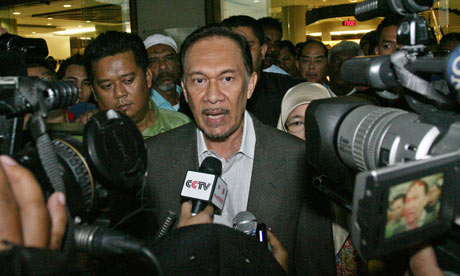
KUALA LUMPUR, 15 Dis — Selepas pernah berada di penjara selama enam tahun, Datuk Seri Anwar Ibrahim bertekad akan terus berjuang demi keadilan tidak kisah bakal keputusan kes liwat, yang akan diumumkan 9 Januari depan.

“Ia tidak berbeza, di penjara ataupun di luar, saya akan berjuang untuk keadilan,” kata beliau kepada pemberita di kompleks mahkamah Jalan Duta di sini, di akhir sesi penggulungan kes peringkat pembelaan, tengah hari ini.

Ketua Pembangkang ini menambah, beliau pernah melalui kehidupan di penjara dan mendapati ia bukan sesuatu yang sukar untuk dilalui.

Anwar (gambar), bekas timbalan perdana menteri, telah dikenakan hukuman penjara atas kesalahan liwat dan salah guna kuasa selepas dipecat pada 1998. Beliau dibebaskan pada 2004.

Bagaimanapun pemimpin berusia 64 tahun ini berkata kenyataan beliau tidak harus dianggap sebagai satu kekalahan.

“Ia bukan satu persoalan secara sukarela mahu ke penjara. Untuk apa sebab? Sebab saya memutuskan untuk tidak menyertai semula Umno, sebab saya memutuskan untuk melawan mereka atas sifat rasis dan dasar-dasar tidak adil mereka?” katanya.

Jakim used to create false fear over non-Muslim threat, says Mat Zain

KUALA LUMPUR, Dec 15 — Former senior police officer Datuk Mat Zain Ibrahim today berated Datuk Seri Najib Razak for allegedly “misusing” the country’s religious authorities to create false fear over threats by non-Muslims against Islam and the Malay rulers.

He told the prime minister in an email released to the media that such threats only come from the Malays and Muslims themselves, adding that he has “never experienced or known of” situations where the non-Malays came together to conspire against anyone.

“The ones who dare to be rude and rebel in such a manner against him (Ruler) come from among the Malays themselves,” he wrote.

The outspoken ex-KL CID chief even singled out Umno politicians as those who often squabble among themselves “not due to differences in opinion or to protect the fates and futures of the Malays or uphold Islamic teachings but to fight over millions and billions of the people’s money”.

“Do not, YAB Datuk Seri (Najib) create issues that could create havoc among us as Malays, just to divert attention away from your personal problems and those who surround you.

“The people know that YAB (Najib) is currently going through a period of instability and uncertainty, confusion and worry. But this does not mean YAB and your personal advisers are fit to misuse a certain government institution to present a Friday sermon like the one recited last week,” he said.

The sermon, delivered at all mosques last Friday and prepared by the Department of Islamic Development Malaysia (Jakim), suggested that the position of Islam and the royal institution was being questioned because Muslims were selling out the religion to “certain quarters” which it did not name.

It appeared to note that Muslims who associate with non-Muslims or stand up for non-Muslim causes were betraying their faith, and echoed some of the racially divisive views espoused at the recent Umno general assembly.

A copy of the sermon — sighted by The Malaysian Insider — also seemed to hit out at Muslims who “conspire with certain groups in questioning Islam as the official religion in this country on the excuse of defending the fundamental rights of others” for personal gain.

It described those Muslims as “deviating from the teachings” of Prophet Muhammad, as well as “committing a big sin, oppressing Muslims and threatening national harmony” in the sermon that was to mark the end of Tuanku Mizan Zainal Abidin’s five year reign as Yang Di-Pertuan Agong.

“Remember, if Muslims lose their integrity, their pride and are manipulated by others, in the end, Islam in this country will suffer the same fate that has befallen other nations where their people were insulted and driven from the country of their birth,” it said.

The sermon did not directly refer to any one person in particular but appeared to echo the political rhetoric heard at the Umno general assembly last week.

Slamming the sermon, Mat Zain told Najib that its words could cause chaos among the country’s religious communities and among the Muslims.

“We are not worried about fights between the Malays and non-Malays or between Muslims and Christians or those of other fates. This is unlikely to happen in this country is the Muslims do not start it.

“What we should fear is a clash between the Malays and the Muslims... the Felda Lubuk Merbau and Memali incidents (in 1985), if they are repeated, would injure the Malays and Muslims multiple times more,” he said.

Lee: No restrictions on religious gatherings

The Star

KUALA LUMPUR: Freedom for religious gatherings in Malaysia is gua­ranteed under the Peaceful Assembly Bill 2011 which was passed last month, Deputy Home Minister Datuk Lee Chee Leong said.

He denied that the Bill, which was hotly debated in the Dewan Rakyat, had more restrictions than what is being regulated under existing laws.

“For a street demonstration, you do not need to apply for a permit but notify the police 10 days ahead so they can guarantee the safety of members of the public involved.

“It is the Government’s intention to allow more freedom to the people (to hold public gatherings). To say that there will be more restrictions is not true,” Lee said after opening the Giving Art Exhibition for the National Cancer Society of Malaysia here yesterday.

He was asked to comment on the allegations by two churches in Klang last week that they were asked by the police to submit details of participants in house-to-house carolling visits.

Lee clarified that no permit was needed.

Inspector-General of Police Tan Sri Ismail Omar has advised the public to inform the police of any procession to facilitate security planning.

Deadline To Sign Public Service New Renumeration Scheme Stays

PUTRAJAYA, Dec 15 (Bernama) -- The deadline to return signed offer letters of the Public Service New Renumeration Scheme (SBPA) on 30 December will not be extended, said Public Service Department director-general Tan Sri Abu Bakar Abdullah.

However, he said the offer, which was opened today, would only be extended to civil servants on reasonable grounds like being ill or away overseas.

According to him, if the period was extended, it would not be fair to civil servants who receive their annual increments in January or those at maximum salary levels, he told Bernama when contacted here.

Abu Bakar also said the time period given for civil servants to make their selection whether to choose the SBPA or remain with the old scheme, was sufficient.

"I feel whether the period is short or not is up to the respective employee to decide. It is up to them to accept or reject the offer," he said.

He said he also hoped civil servants would make the decision for their own benefit and not to be influenced by any quarters.

Abu Bakar said those who did not accept the SBPA option would stay in the old scheme and would not receive any improvements to the existing scheme.

He also said individuals who join the civil service from January 1 next year would automatically be placed under SBPA.

He added that civil servants who were still not clear about the SBPA could contact the SBPA hotline from 8.30am to 9pm on working days beginning today.

They can contact 03-8885 3293 to enquire about pension and retirement; personnel organisational development and the service scheme at (03-8885 3072); service performance policy and prospects (03-8885 3201/03-8885 3227); allowances, salary and leave and medical benefits (03-8885 3232) while enquiries for other services can be obtained by calling 03-8885 3283.

Civil servants can also direct their enquiries on SBPA to the human resource division in their respective agencies or ministries.

"The PSD is also organising a road tour at the federal and state levels to provide information in the SBPA to civil servants. Today, we are having a briefing in Sabah," he said.

Nazri’s ‘free advice’ to Guan Eng

Minister in the PM’s Department Nazri Aziz has given some free advice to Guan Eng – don’t pay too much attention to the views of NGOs and environmentalists.

Let me try and guess why he’s giving this advice at this point.
Could this have something to do with mega projects in the pipeline for Penang? And the local concerns that have been or will be expressed about their social, environmental, traffic and hydrological impact?
NGOs and environmentalists are always calling for independent impact assessments by recognised experts to ensure that development is sustainable and won’t adversely affect local communities.
Now that GLCs (or the listed companies that they have an interest or stake in) are showing interest in certain mega projects in Penang …
Ah, seen in this light, maybe we can better understand Nazri’s ‘free advice’.

Thursday, 15 December 2011

Jailed Afghan rape victim freed


Gulnaz, freed from jail, was sentenced to 12 years in prison for adultery after a relative raped her two years ago

Kabul, Afghanistan (CNN) -- An Afghan woman imprisoned for adultery after a relative raped her has been freed after President Hamid Karzai intervened on her behalf.

The woman, identified only as Gulnaz for her own protection, had been sentenced to prison for 12 years after she reported that her cousin's husband had raped her two years ago. Wednesday, she was free at a women's shelter in Kabul, with her daughter.

Her plight gained international attention when the European Union blocked the broadcast of a documentary about her ordeal, saying it would further jeopardize her safety.

Afghan Justice Minister Habibullah Ghaleb and a judiciary committee both proposed a pardon. Karzai then ordered authorities to decree Gulnaz's release.

After the attack two years ago, Gulnaz hid what happened as long as she could. She was afraid of reprisals. But soon she began vomiting in the mornings and showing signs of pregnancy. It was her attacker's child.

In Afghanistan, this brought her not sympathy but prosecution. She was found guilty by the courts of sex outside of marriage -- adultery -- and sentenced to 12 years in jail. She was only 19.

As shocking as it may seem, Gulnaz's case is far from isolated.

Last month, CNN asked a spokesman for the prosecutor to comment on the case. The reply was that there were hundreds of such cases, and the office would need time to look into it.

Reported cases of violence against women, from domestic abuse to rape to honor killings, are on the rise, according to the Afghan Women's Network.

One problem is that Afghan law fails to clearly distinguish between rape and adultery, which is a crime under Shariah, or Islamic law. The courts say Gulnaz was to blame for having sex with a married man.

Interview with Gulnaz

In conservative Afghan society, Gulnaz faces considerable pressure to marry her attacker, soothing the rift between the two families, restoring her honor and legitimizing her daughter.

She was willing to do so in order to end her incarceration, she told CNN last month from Kabul's Badam Bagh jail, though she does not want that option. She would like to marry an educated man, according to U.S. attorney Kimberly Motley in Kabul.

Gulnaz's choices now are stark. Women in her situation are often killed for the shame their ordeal has brought the community.

A United Nations human rights document on Afghan women said "women are perceived as receptacles of family honor, their opposition to family dictates about marriage often puts them at risk of brutal physical punishment. So-called 'honor' killings recognize a man's right to kill a woman with impunity because of the damage that her immoral actions have caused to family honor."

Gulnaz could still be at risk from her attacker's family.

From jail, Gulnaz's convicted rapist denied raping her. Her life would probably end if she ever made it out of jail, he said. But it would be her family, not his, that would kill her out of the shame she has wrought.

How Gulnaz will be able to re-assimilate into the life she once had remains a difficult question. She is free from jail but not from her ordeal.

Defendant Marries His Victim

Bandung. The defendant in an abduction and abuse case married his victim in a mosque located inside the Bandung district court on Tuesday.

“It amazed me. This was the first time I witnessed this kind of wedding,” said justice Nur Aslan, the judge who handled the case.

Rizki Ahmad Fauzi, the suspect, was reported for abusing and abducting Tessa Rizki.

He was charged with abduction and abuse which carries a maximum sentence of nine years.

“The parents of the victim have forgiven him,” Nur said. “But that doesn’t mean he’s free.”

Tessa fainted right after the religious wedding vow ceremony. But Nur said that she fainted because of happiness.

One of the judges at the Bandung district court gave Rizki a wedding suit, while Nur did Tessa’s make-up.

Antara

Manoharan: Detention under ISA was worth it

A lawyer who was arrested under the Internal Security Act for involvement in the Hindu Rights Action Force (Hindraf) has described his detention as ‘worthwhile’ because it has raised political awareness among Indian Malaysians.

temple demolition court case 260307 m manoharanSpeaking about his arrest on Dec 13, 2007, along with four others, M Manoharan said Indians, particularly the youth, have realised that each individual has a role to play in highlighting the community’s plight.

“Many Indians took BN for granted. They now know they have been cheated. They woke up and became politically alert. I must thank them for supporting us through our arrest,” Manoharan said in a telephone interview.

“They now know their rights and are finally brave enough to voice (their demands).”

Manoharan was able to win the Kota Alam Shah state assembly seat while held for four months at the Kamunting Detention Camp in Perak.

kota alam shah service centre 280608 service centreHis victory was due to the unprecedented number of volunteers and Hindraf supporters who campaigned for him.

The DAP had previously fielded him several times - unsuccessfully - in various seats.

Manoharan described his incarceration as a “very painful” experience but said he does not regret it.

“It was worth it. The only regret I have is right now, there is so much to do for the Indian community, and I am unable to do enough,” he said.

‘Najib had a hand in our arrest’


Manoharan said it was incumbent upon him and others in the Hindraf movement to continue their struggle to help the Indian community because of the support they received during their detention.

hindraf klang court sedition 261107 supporter“They were with us all the way. They walked with us, carried us, went on fasts for us and prayed for us. Now it is my turn to give back as a state assemblyperson,” he said.

He believes that, over the past four years, there have been fewer police shootings and deaths in police custody, the two factors that sparked the Hindraf movement.

Manoharan urged Indians to remember that Prime Minister Najib Abdul Razak was deputy premier at the time of the crackdown against Hindraf.

“He had a role in our arrest and in the persecution of Hindraf supporters,” he claimed.

He also warned the community that the federal government had yet to address long-standing issues that affect Indian Malaysians, such as laws on religious conversion and the preventive detention cases under the Emergency Ordinance.

‘G-Team did not turn off the taps’

G-Team Resources maintains that it is not responsible for the water cuts because it did not sign the initial agreement.

PETALING JAYA: G-Team Resources Sdn Bhd owner G Gnanalingam who was painted as a white knight-turned-villain following water cuts in Tumbuk Estate near Banting has denied that his company is responsible.

“The workers have been enjoying free water and electricity. G-Team categorically is not responsible for the water meter as explained by Syabas representative in the meeting last month.

“The water was cut off because the residents are not paying the bills. The total bill is RM16,000,” Gnanalingam said in a press statement to FMT.

He said this in response to FMT’s report on Monday on the plight of Tumbuk Estate residents who claimed that G-Team did not pay their water bill in a bid to evict the workers.

PSM secretary-general and Oppressed People’s Network (Jerit) spokesman S Arutchelvan also told FMT that G-Team is duty-bound to supply water in accordance with the Estate Housing and Amenities Act 1990.

On the issue of the agreement in 2006, Gnanalingam acknowledged that only 22 workers were interested in the workers’ housing scheme.

(The residents are former estate workers whose services were terminated in March 2006. Subsequently, Maika signed an agreement with the National Union of Plantation Workers (NUPW) to allow the former workers to continue living in their quarters rent-free until houses were built for them. Under the agreement, Maika would commence construction of the housing scheme in April 2008, but this has not happened.)

Land offer turned down

“Only 22 workers showed interest in participating in the housing scheme and deposited their ex-gratia payments totalling RM201,000 with Maika Holdings Bhd (MHB) to facilitate the downpayment for the houses to be built,” said Gnanalingam.

He also said that Maika had offered land to the people there but they had turned it down.

“In 2008, land was given next to the Tamil school but the workers rejected it because it is next to a pig farm. Another 3.88 acres of land were allotted to them but they also rejected it because of subdivision criteria.”

He also claimed that the families were more interested in obtaining cash than in owning houses.

“A total of 16 out of 22 families already owned their own houses outside (the estate) and had shown no interest in the land.

“The rest stayed on because they could not pay for the house as some were unemployed,” said Gnanalingam.

Gnanalingam, who is also Westports chairman in Port Klang, said that G-Team had offered RM25,000 with an ex-gratia payment of RM201,000 with an interest of four percent to the workers shortly after G-Team had taken over the estate, which was accepted by 14 of the 22 family members.

“All the workers signed the document which had their name and the value.

“Following this, 14 out of 22 workers accepted the cash ranging from RM35,000 to RM42,000 each. The money given was not in MHB’s book,” he said, adding that eight workers refused to accept the compensation.

Outstanding bill settled

Gnanalingam said that at a meeting of the Selangor executive council, councillor Xavier Jayakumar’s office decided to accept the decision of the majority who took up the offer.

Gnanalingam also blamed Jerit for the failure in the negotiations that took place on Thursday.

“Last month, G-Team was called by Selangor Labour Office to discuss the current issue. The matter was explained in the meeting together with the NUPW officer.

“NUPW had asked five days to come back with a proposal to resolve the issue, but it did not return.

“The next meeting was called on Thursday but again, it failed to resolve anything because the workers were not represented by NUPW as they chose to follow the advice of some NGOs.”

Meanwhile in a related development, Jerit coordinator E Nalini informed FMT that the outstanding bill was settled by representative from G-Team.

“The Tumbuk Estate residents were told that RM4,000 was paid to settle their water bills,” said Nalini.

Call to include Tamil announcements at KLIA

An ex-deputy minister says such a move will be a sign of respect for visitors from India.
UPDATED
KUALA LUMPUR: A former deputy minister has called on the government to reconsider its decision not to introduce announcements in Tamil at the KL International Airport in Sepang for the benefit of passengers from India.

T Murugiah, former deputy minister in the Prime Minister’s Department, said there is a need to include Tamil in the airport announcements for the benefit of the large number of Tamil-speaking tourists who visit the country.

Having announcements in Tamil will also be considered as a sign of respect for the visitors from India who are mostly business entrepreneurs and industrialists as well as tourists, he told Bernama today.

Murugiah was responding to the statement by the Transport Ministry yesterday that the government has no plans to make announcements in Tamil at the KLIA as passengers from India speak diverse dialects.

Currently, the announcements are made in Malay, English and Mandarin while announcements in Arabic and Japanese are made seasonally.

Murugiah said the Transport Ministry decision does not reflect the 1Malaysia spirit that is being promoted by the government.

“I also call for the inclusion of the Tamil language on the KLIA signboards in recognition of the 1.8 million Malaysian Indians, the third largest community, in the country,” he added.

Ministry must review its stand

In a related development, MIC secretary-general S Murugessan said the ministry’s decision was disappointing.

“The stated reason that passengers from India speak various other dialects cannot be accepted. First of all, Tamil is not a dialect. It is a well developed and one the finest languages in the world.

“Secondly, a vast majority of passengers from India are from Tamil Nadu, who speak Tamil.

“A simple perusal at the passenger load from Tamil Nadu at KLIA will reveal that a big majority of passengers from India are from Tamil Nadu,” he said in a statement today.

He added that the passenger breakdown will also reveal that the number of passengers from Tamil Nadu far exceed those passengers from Arabic countries or Japan.

“The Transport Ministry must review its stand and make announcement in Tamil at KLIA,” he added.

Mano still fighting the good fight

On the fourth anniversary of his incarceration under the ISA, the Kota Alam Shah assemblyman reminisces about the price he had to pay to fight injustice

GEORGE TOWN: Heads of government departments and agencies should be picked from among ethnic Indians, Chinese and other minority communities, said DAP’s Kota Alam Shah assemblyman M Manoharan.

He said the positions to be considered included the chief secretary to the government, heads of public service departments, police and armed forces, attorney general, auditor general and even chief justice.

“Only when this happens we can claim the country as true 1Malaysia,” he said.

These were among his wishes on the fouth anniversary of detention without trial under the draconian Internal Security Act (ISA). He was arrested in 2007 and released on May 9, 2009.

He said both federal and state governments, including Pakatan Rakyat administrations, should provide more jobs and career opportunities for non Malays in the civil service.

He called on the authorities to abort current piece-meal recruitments and liberalise the civil service employment system.

He also said the government should ensure a minimum 8% interests on EPF savings to give private sector employees worthy retirement benefits.

Manoharan, 51, was among four Hindraf lawyers – P Uthayakumar, R Kenghadharan, V Ganabatirau, and another person, K Vasanthakumar, detained on Dec 13, 2007 pertaining to Hindraf activities.

Manoharan called on the government to immediately release all persons detained without trial under various draconian legislations.

“It was an extremely painful experience being kept in solitary confinement for 514 days in Kamunting Detention Centre away from family, relatives and friends.

“I must thank all those who have fought my release,” he told FMT here today.

Najib’s hand in Hindraf detentions

A lawyer by profession, Manoharan reserved special praises for his mentor, DAP national chairman Karpal Singh and Hindraf activists for relentlessly campaigning for his release.

“Karpal and Hindraf were always there for me from day one when I was detained and until even after my release in May 9, 2009,” said Manoharan.

He is disappointed that Umno-BN federal government had still not abolished ISA and other draconian laws like the Emergency Ordinance (EO) despite promising to do so.

He said many, especially minors and Indian youths, have been detained without trial in detention centres in Johor’s Simpang Renggam, Perak’s Batu Gajah and Kelantan’s Machang.

He accused the police of having wielded the EO at will to detain many Indian youths for even minor scuffles on unproven grounds of gangsterism.

He argued that the police’s unabated malicious EO detentions was part of Umno’s racist policy to brand ethnic Indian youths as gangsters and hooligans.

“As a result, the people have lost confidence in the legal and justice systems,” said Manoharan, who hopes all draconian laws repealed by the 5th anniversary of his detention.

He called on Hindraf supporters and ethnic Indian community not to forget that current Prime Minister Najib Tun Razak also had a hand in the detention of Hindraf lawyers four years ago.

He said being the Deputy Prime Minister and Umno deputy president then, Najib was part of the decision making process to send Hindraf lawyers to Kamunting.

He said despite four years after the Hindraf rally, the government had not taken any affirmative action to address all core issues raised by the civil rights movement.

He said the government had not implemented any religious policy in accordance with the essence of Article 121 (1a) of the Federal Constitution, which guarantees freedom of religion.

Until today, he said the Syariah Court was usurping the constitutional powers of federal civil courts pertaining to religious cases such as conversion, marriage and child custody.

“Everyone, especially the government of the day, must address and tackle all issues that contravened Article 121,” said Manoharan, formerly the Selangor DAP chairman.

Remove Interlok

He also called on the government to convert all education loans into scholarships to avoid students turning into permanent debtors.

He said the government should provide proper and free education to all regardless of their racial and religious backgrounds.

He chided the government for deploying illegal means and arm twisting tactics to force defaulters to repay their education loans.

He said for instance the government tactic to stop defaulters from leaving abroad at airports ran foul with the law.

He said the law only provided authorities to disallow a person declared bankrupt, charged with tax evasion or had his passport impounded by court from leaving the country.

Manoharan called on the government to also be transparent on the public university intakes and courses offered to students.

He said it was time to get rid of the double standard policy of capital-aided and fully aided vernacular schools due to land ownership.

He said both federal and state governments, including Pakatan Rakyat administrations, should have resolved the problem by now by allotting free land for these schools.

Lastly, he called on the DPM and Education Minister Muhyiddin Yasin to remove the controversial Interlok novel from school shelves for the next school term.

“The novel insulted non-Malays Muslims … it’s unsuitable for students,” he said.

ABU: Movement of the Rakyat for the Rakyat

“We (ABU) are not linked to any political party. We are independent and this is a movement, not an organization. This is the rakyat’s movement,” he said. Meanwhile, Haris of MCLM who had just been deported from Sabah on Dec 7 said ABU was set to reach to the rakyat with information that will show how Umno have been “manipulating” the country for the past six decades.
by Django Setemolya, Malaysian Digest    
Something big may be brewing in this time of uncertainty surrounding our political landscape. And this time it has nothing to do with Anwar Ibrahim, Pakatan Rakyat, Perkasa or extremist, racist, religious groups or terrorist groups of sort. Instead, this one comes in the form of a sincere initiative by the people, for the people; and the main objective of this movement which fittingly call itself ABU or Asalkan Bukan Umno (Anyone But Umno) is to call out to the rakyat to come out from their silence to reject Umno.
“We are calling out to all workers, farmers, fishermen, associations, organizations, government bodies, non-governmental organizations (NGOs), Barisan Nasional (BN) component parties – excluding Umno, opposition parties or Independent parties, professionals, academicians and intellectuals, artists and all those who are marginalized including Mat Rempits, the homeless, unemployed and others to establish clearly (through media statements or demonstrations) our loss of confidence towards Umno which has lost its purpose, corrupt, conceited, oppressive, ruthless and more lately IGNORANT and ARROGANT!” Badrul Hisham told a press conference held at the KL Selangor Chinese Assembly Hall on Dec 9.
Badrul, or better known as CheGubard, who is the president of Solidariti Anak Muda Malaysia (SAMM) is believed to be one of the main men behind ABU. Among those alongside him at the media conference on Dec 9 were Haris Ibrahim of Malaysian Civil Liberties Movement (MCLM) President Haris Ibrahim as well as representatives from Parti Rakyat Malaysia (PRM), Parti Sosialis Malaysia (PSM) and members of various non-governmental organizations.

Calling All Malaysians

The nationwide movement which had held media conferences in every state in the Peninsula on Dec 9 (the same announcement will be made in Sabah and Sarawak at a later date). ABU can be seen as the voice of Malaysians who are saying ‘enough is enough’. The way they see it, Umno has taken their selfish and excessive desire for material gains too far and it is time to put a stop to this as it has become clear that Umno is beyond repair (NFC and PKFZ are just two of the many scandals that has been exposed of recent, imagine the others that have not been detected). 

“Now is not the time to remain silent anymore and disregard, unless you are willing to bequeath Malaysia which has been impoverished to our future generations. Do we still fail to see or intentionally allow the little that’s left of our democratic rights which have mostly been denied while our demands continue to be ignored?” Badrul added.

Not Linked to Pakatan

Even though Badrul is one of the most influential figure in Angkatan Muda Keadilan (AMK) among the Opposition youth supporters, he is not playing his role in ABU in his capacity as a political party member, neither are the rest of the key people in the movement. He insisted that ABU is a non-structured movement and people from all segments of life are invited to join the movement.

“We (ABU) are not linked to any political party. We are independent and this is a movement, not an organization. This is the rakyat’s movement,” he said.

During the media conference which declared ABU’s intention, he also announced that ABU will be holding a big forum at Taman Melewar, Gombak on Dec 15 which will be attended by the rakyat from all over the country. He added that the movement will also be making another big announcement which will change the “unhealthy political situation” in the country.

Meanwhile, Haris of MCLM who had just been deported from Sabah on Dec 7 said ABU was set to reach to the rakyat with information that will show how Umno have been “manipulating” the country for the past six decades.

“Even before the Independence, Umno has been largely responsible in manipulating towards the rakyat.

“It is now that ABU will expose all (of Umno’s wrongdoings) and spread it to the rakyat to prove that the sentiments that Umno helps and protects Malaysians are wrong,” said Haris.

NFC Scandal: A Sign That Things Are Getting Out of Control

Things are getting from bad to worse for the country under Umno/BN’s rule. Looking at the latest development on the NFC issue, now even Umno senior leaders like its former president Dr Mahathir Mohamad and Umno supreme council member Bung Mokhtar Radin have come out to ask its main culprit Shahrizat Abdul Jalil to leave the party. Others like Batu Pahat MP Dr Mohd Puad Zarkashi and Cheras Umno Division chief Syed Ali Alhabshee have asked NFC’s executive chairman who happens to be Shahrizat’s husband Dr Mohamad Salleh Ismail to come clean on the controversy involving the family-owned company as it has tarnished Umno's image.

Those Umno men are not the only ones who had expressed concern about the party’s bad rep. Other members especially the veterans have also shown that they are getting sick and tired of what has been happening to their once venerable party. The others just choose to remain silent as it has become a culture or rather a sickness in the party for them to be ‘yes men’ and remain silent on any decisions they personally disagree on or are blatantly wrong. Just read the blogposts by these Umno vets and you can sense that all the wrongdoings that has cost damage to people’s wellbeing and even lives (eg Teoh Beng Hock, Ahmad Sarbaini Mohamed and Baharuddin Ahmad) has finally taken its toll on the ruling government.

Sure, not everything Umno/BN has done have been bad. They had done good too in the past. But the way things have been going lately the bad heavily outweighs the good, contrary to the level scales which is the symbol being used by BN. Because of this ABU feels that it is absolutely necessary to boldly take the country back on track. It is calling for the people to see through all unbridled rhetoric from Umno/BN and it is saying that the time has come for Malaysians to take the power away from party’s 52-year rule and give it back to the people. This is People Power and this is what this country needs.

Malaysia's Mahathir Defends Sarawak Chieftain


Image
The Doc says it's a go for Taib
Charges of looting Sarawak could just be electioneering, he says
Malaysia’s former Prime Minister, Mahathir Mohamad, has defended Sarawak’s embattled chief minister, Abdul Taib Mahmud, questioning calls by international NGOs for investigations of Taib’s vast fortune.

"When an election is near, you get funny things like this coming out," Mahathir told reporters at a press conference Tuesday. "If it is just a political game to try and undermine somebody's political image then I think it is not right."

If the allegations are true, the 86-year-old Mahathir said, the authorities could be expected to take action. In May, Swiss authorities announced they were investigating accounts held in Swiss banks by the Taib family for evidence of corruption. Shortly after that, the Malaysian Anti-Corruption Commission announced it would also investigate Taib’s holdings, although observers in Kuala Lumpur said it was unlikely that the MACC would follow through, Indeed, one source told Asia Sentinel recently that the investigation had “gone cold.” A Taib spokesman said the funds had been legitimately deposited and that there was no evidence of criminality.

Many political observers expect Prime Minister Najib Tun Razak to call national elections in the early part of 2012, possibly in March. Sarawak, the country’s largest state, is key to efforts by the Barisan Nasional, the country’s ruling national coalition, to maintain a healthy majority in parliament. Both Najib and Mahathir earlier this year reportedly tried to dissuade the scandal-ridden chief minister to quit before state elections.

When Taib refused to step down, both had to criss-cross the state, campaigning for Taib’s coalition. However, the coalition produced a two-thirds majority in the state assembly. Although he had publicly offered to step down, the magnitude of the victory impelled him to stay in power.

Mahathir’s defense of Taib was generated by the fact that on Tuesday, NGOs from six different countries issued a joint letter demanding that Malaysia’s sultan appoint a royal commission of inquiry and that authorities arrest and prosecute Taib and 13 members of his family for massive fraud, theft, corruption, illegal appropriation of land and abuse of public office. They allege that the looting of Sarawak’s rich timber and other natural resources has earned Taib’s family billions of US dollars through investment in as many as 400 companies in 25 countries.

They also demanded that a multi-agency task force be appointed to attempt to repatriate the vast sums from other countries to the people of Sarawak.

Research released earlier this month by the Switzerland-based Bruno Manser Fund said official documents show the Taib family stake in 14 Malaysian companies alone is worth US$1.46 billion. The fund has uploaded all of the documents onto the Internet. They can be found here. Billions more are believed to be held in other countries.

The fund said its research only covers publicly available information from Malaysia’s Registry of Companies and other official documents and the total of all of the Taib family’s holdings could run well in excess of that amount.

“Not counting their more hidden wealth, this puts the Taib family firmly into the category of one of the richest families in the world and makes them far richer than the Queen of England (whose assets are a mere half billion pounds),” the fund said.

In all, according to the fund, named for a Swiss environmentalist who disappeared in Sarawak in 2000 while trying to aid the Penan tribe, the family also has stakes in companies in Australia (22 companies), Bermuda (1), the British Virgin Islands (7), Brunei (1), Cambodia (1), Canada (9), the Cayman Islands (1), Fiji (3), Hong Kong (7), India (2), Indonesia (3), Jersey (1), the Kingdom of Saudi Arabia (1), Labuan (1), New Zealand (5), the People’s Republic of China (2), the Philippines (1), Singapore (2), Sri Lanka (1), Thailand (2), the United Arab Emirates (1), the United Kingdom (4), the United States of America (6) and Vietnam (1).

Allegations are that as chief minister, Taib granted timber access permits to a plethora of companies, most of them owned by ethnic Chinese, that denuded much of the state of its tropical rainforest. The two NGOs previously reported that Taib's children are the shareholders and directors of numerous companies controlling residential and commercial buildings in Canada, Australia, Britain and the United States together worth hundreds of millions of US dollars. Many of the assets came into their possession when they were in their early 20s and were still college students with no visible access to legitimate resources to invest.

Taib has been chief minister, finance minister and planning and resources management minister of since 1981 and he hardly conceals his vast wealth, riding around the capital of Kuching in a cream-colored Rolls-Royce sedan.

Taib, his four children, eight siblings and his first cousin Hamed bin Sepawi have stakes in 332 companies worth several billion US dollars in Malaysia, the report says. “The Taib family’s share in 14 large companies’ net assets alone has been calculated at US$1.46 billion (RM4.6 billion). The three largest Taib family-linked companies are the 84 percent Taib-owned Cahya Mata Sarawak (net assets RM2.4 billion), the 25 percent Taib-owned Custodev Sdn Bhd (net assets RM1.6 billion) and the at least 35 percent Taib-owned Ta Ann Holdings Bhd (net assets: RM1.4 billion).

Cahya Mata Sarawak is a construction conglomerate listed on the Kuala Lumpur stock exchange (KLSE 2852) that allegedly has benefited enormously from a cement monopoly and from untendered public contracts awarded by the Taib-led Sarawak state government. Ta Ann Holdings Bhd (KLSE 5012), which is chaired by Hamed Sepawi, is an internationally active logging company. Since its foundation in the 1980s, Ta Ann has been granted more than 675,000 hectares of logging and plantation concessions by the Taib government. Privately-held Custodev Sdn Bhd is a Sarawak-based property development company. Achi Jaya Holdings (net assets RM550 million), which is wholly owned by the Taib family, holds a monopoly over log exports from the timber-rich state.

“We consider these corporate interests of the Taib family to be illicit assets”, said Bruno Manser Fund director Lukas Straumann in the prepared release. “There are many clear indications that Taib has abused his public office to build a corruption and fraud-based billion-dollar empire.”

“We are shocked to see that the Taib family has so shamelessly enriched itself while the people of Sarawak have to struggle with widespread poverty and an appalling lack of infrastructure and government services.”

The Bruno Manser Fund called on anti-corruption and anti-money-laundering authorities worldwide to investigate the Taib family’s business activities and freeze Taib family assets in their countries.

Najib risks Malaysia's reputation in his treatment of Anwar Ibrahim

Malaysia's opposition leader Anwar Ibrahim 
If the opposition leader is convicted of sodomy he will become yet another victim of an egregious, politically suspect injustice

Malaysia's opposition leader Anwar Ibrahim is on trial for sodomy. Photograph: Azhar Rahim/EPA
The portents do not look good for Malaysia's opposition leader, Anwar Ibrahim, whose trial on highly dubious sodomy charges draws to a close this week. If Anwar is found guilty – and the trial judge seems to have made up his mind already – he will not be the only or even the most important victim of an egregious, politically suspect injustice. Malaysia's democratic reputation will have been critically wounded, and for that outrage, Malaysians will have their prime minister, Najib Razak, to thank.
The plodding Najib's overriding objective is winning the general election expected next year, possibly within a few months. The son of Malaysia's second prime minister, the nephew of its third, president of the dominant United Malays National Organisation (Umno), and a former defence minister, Najib was born to power and is accustomed to wielding it. As the charismatic leader of the opposition coalition, Anwar represents the biggest challenge to his continuing ascendancy.
It hardly seems coincidental that the sodomy charges were levelled at Anwar shortly after the opposition inflicted unprecedented defeats on Umno and its allies in the 2008 elections. Anwar's main campaign plank – combating the official, institutionalised discrimination that favours ethnic Malays over the country's large ethnic Chinese and Indian minorities – threatened the post-colonial order that has kept Umno and its National Front coalition on top since 1957.
In a court appearance earlier this year, Anwar, 64, a married father of six, denied accusations he had had sexual relations with a former male aide. Homosexuality is punishable by law in Malaysia by caning and up to 20 years in jail. The allegations were "a vile and desperate attempt at character assassination" and a "blatant and vicious lie" spread by his political enemies, he said. "This entire process is nothing but a conspiracy by Najib Razak to send me into political oblivion by attempting once again to put me behind bars."
Najib flatly rejects the idea of a political vendetta. But the recycling of sodomy accusations – Anwar was jailed on a similar charge in 1998 and detained until the conviction was quashed in 2004 – suggests a lack of originality characteristic of the prime minister. The case turns on the testimony of the alleged victim and DNA evidence produced by the prosecution. Defence lawyers suggested this week that Anwar's accuser was a "compulsive and consummate liar" who may have been put up to it. Yet the trial judge has already declared the prosecution's evidence "reliable" and credible", leading Anwar to claim he is being denied a fair trial.
Najib gives every appearance of preparing for snap polls on the assumption that Anwar will be out of the way and the opposition decapitated. He told Umno's annual congress to prepare for battle because "the time is near" and urged delegates to work harder, for example by using social media, to attract a "new generation of Malaysians who are more critical and have rising expectations of the government". The party must adapt or face "tragedy", he warned.
To Najib's evident alarm, that tragedy almost occurred in July when tens of thousands of protesters took to the streets of Kuala Lumpur. The highly unusual public display of discontent was spurred by a range of factors: spending cuts, official corruption and cronyism, a defective electoral system, curbs on public assembly and debate, and state-imposed censorship considered draconian even by regional standards. The example of recent political upheavals in neighbouring Thailand and Singapore also played a part. In response, thousands were beaten and detained by police.
Now Najib is taking no chances as his lieutenants warn that Anwar is fomenting an Arab spring-style uprising – a so-called "hibiscus revolution". Having more or less reneged on shaky, post-July promises of civil rights reform, Najib is now pushing through remodelled restrictions in the form of the Peaceful Assembly act.
The act effectively makes peaceful assembly impossible by restricting it to undefined "designated places". No gatherings are permitted within 50 meters of prohibited places including hospitals, schools or places of worship. The police can dictate the date, time and place. Najib's idea of engaging the "new generation" of young Malaysians is to ban anyone under the age of 21 from organising a protest.
Opposition parties, lawyers and activist groups have condemned the new law, as has Amnesty International. But Khairy Jamaluddin, Umno's youth-wing leader, articulated Najib's paranoia last month when he accused Anwar's coalition of "trying hard to manufacture panic and disorder" by promoting street rallies instead of elections. "The opposition often quotes social movements in the Middle East to instigate people to take part in street revolutions and in the process manufacture a Malaysian version of the Arab spring," Khairy said.
Najib's authoritarian tendencies, blatant political scaremongering, and the judicial travesty that is Anwar's trial all suggest Malaysia's western allies, including Britain and the US, should take a closer look at their friend. Malaysia is valued as a trading partner, counterproliferation collaborator, and noncombatant member of the Afghanistan coalition. But the government's human rights record and democratic practices merit closer scrutiny.
In a visit last year, US secretary of state Hillary Clinton extracted a promise that Anwar would receive a fair trial. "The US believes it is important for all aspects of the case to be conducted fairly and transparently and in a way that increases confidence in the rule of law in Malaysia," she said. In a recent speech, Clinton urged all states to end discrimination on grounds of sexual orientation.
As Anwar's ordeal approaches an ugly climax, it seems increasingly unlikely that these benchmarks will be met. The next question is: what will Malaysians and their friends do about it?
• This article was amended on 14 December 2011. It originally referred to Umno's youth-wing leader as Najib Khairy Jamaluddin. This has now been corrected

Rules for royal succession

 ImageThe Star
REFLECTING ON THE LAW By SHAD SALEEM FARUQI


For the first time in royal history, a reigning Sultan ascended the Federal throne the second time. The Sultan of Kedah had previously reigned as Yang di-Pertuan Agong from 1970 to 1975.

YESTERDAY, the distinguished reign of the Sultan of Terengganu as the 13th Yang di-Pertuan Agong came to an end and the Sultan of Kedah ascended to the Federal throne.

This draws our attention to the unique rules relating to the election of the Yang di-Pertuan Agong and Timbalan Yang di-Pertuan Agong as found in Articles 32, 33, 38(2) and the Third Schedule of the Federal Constitution.

The rules are exceedingly complex and constitutional conventions have added to their richness. The salient features are as follows:

> Only the Rulers of the nine Malay states are eligible to contest or vote. The Governors of Penang, Malacca, Sabah and Sarawak are excluded.

> Voting is by secret ballot and a simple majority of five out of nine Sultans is needed to disqualify or elect a Ruler.

> Seniority (by reference to date of accession to the state throne) carries some weight but is not an overriding factor.

> Election is on a rotational basis to ensure that every Ruler (who is willing and suitable) has had an opportunity to become the Yang di-Pertuan Agong before any state occupies the Federal throne twice.

> A Yang di-Pertuan Agong cannot be re-elected to continue beyond his five-year term.

Exceptions to rotation rule: Under the Third Schedule, a Ruler is qualified to be elected Yang di-Pertuan Agong except in three circumstances.

First, if he is a minor. Second, if he has notified the Keeper of the Rulers’ Seal that he does not desire to be elected.

In 1957 the Sultan of Johor, in 1970 the Sultan of Pahang and in 1975 the Sultan of Johor stood down in favour of the next eligible Ruler. In such a case, the state’s name goes to the end of the “Election List” and the next Ruler in line is offered the post.

Third, if at least five members of the Conference of Rulers have by secret ballot resolved that a Ruler is unsuitable by reason of infirmity of mind or body or for any other cause to exercise the functions of the King.

There is no verifiable record of any such resolution though it is rumoured that there was at least one such precedent.

First election: For the first election of the Yang di-Pertuan Agong in 1957, an “Election List” was drawn up to indicate the seniority or precedence that Their Highnesses recognised among themselves. In his book, the late Lord President Tun Suffian Hashim informs us that the list had this precedence: Johor, Pahang, Negri Sembilan, Selangor, Kedah, Perlis, Kelantan, Terengganu and Perak.

Though Johor and Pahang were high up on the List, the Federal throne was offered by the Conference of Rulers to Negri Sembilan. Johor had declined and perhaps this was also the case with Pahang.

Second to ninth elections: The Election List drawn up for the first election is not permanent and is subject to constant revision in accordance with Section 4 of the Third Schedule which provides that the state that contributed the previous Yang di-Pertuan Agong should be transferred to the bottom of the list.

The state whose Ruler is elected as the current Yang di-Pertuan Agong should be omitted.

Whenever a Ruler dies or abdicates and there is a change in the Ruler of a State, then, due to the juniority of the new Ruler, his State’s name should be transferred to the end of the list.

For example, in 1958 the Sultan of Kedah and in 1959 the Sultan of Johor breathed their last. Their states were placed on the last rung of the Federal succession ladder.

If a Ruler declines or is disqualified, his State is moved to the bottom of the list. This is what happened to Johor and Pahang in 1957.

The above rules governed all elections till April 25, 1994, when the ninth Yang di-Pertuan Agong completed his term of office and the first rotation among the Sultans was completed.

Under section 4(3) of the Third Schedule new rules and a new election list took over.

Tenth and subsequent elections: When all states have taken their turn to grace the office of the Yang di-Pertuan Agong, the election list is then reconstituted in accordance with section 4(3) of the Third Schedule.

States are placed in the order in which their Rulers have occupied the office of the Yang di-Pertuan Agong.

The Malaysian Kings thus far:

1. Yang DiPertuan Besar of Negri Sembilan: Aug. 3, 1957 to April 1, 1960 (died in office).

2. Sultan of Selangor: April 14, 1960 to Sept 1, 1960 (died in office).

3. Raja of Perlis: Sept 21, 1960 to Sept 20, 1965.

4. Sultan of Terengganu: Sept 21, 1965 to Sept 20, 1970.

5. Sultan of Kedah: Sept 21, 1970 to Sept 20, 1975.

6. Sultan of Kelantan: Sept 21, 1975 to March 30, 1979 (died in office).

7. Sultan of Pahang: April 26, 1979 to April 25, 1984.

8. Sultan of Johor: April 26, 1984 to April 25, 1989.

9. Sultan of Perak: April 26, 1989 to April 25, 1994.

10. Yang DiPertuan Besar of Negri Sembilan: April 26, 1994 to April 25, 1999.

11. Sultan of Selangor: April 26, 1999 to Nov 21, 2001 (died in office).

12. Raja of Perlis: Dec 13, 2001 to Dec 12, 2006.

13. Sultan of Terengganu: Dec 13, 2006 to Dec 12, 2011.

14. Sultan of Kedah: Dec 13, 2011.

Unique features: In an age of egalitarianism and democracy, one would have expected monarchies to wither away. But they remain robust and popular and are symbols of stability, continuity and national unity in many lands including Belgium, Brunei, Denmark, Japan, Cambodia, Malaysia, the Netherlands, Norway, Spain, Sweden and the United Kingdom.

The Malaysian monarchy is rather unique because of multiplicity of sovereigns at the state level and the elective and short-term nature of the royal position at the Federal level.

Another remarkable feature is that a time lapse is allowed between the end of one reign and the commencement of another.

In England, the rule is that “the monarch never dies”. On the death, removal or abdication of one monarch, the successor assumes office retrospectively to the date on which the vacancy arose.

This is not so in Malaysia where twice in 1960, once in 1979 and again in 2001, on the death of the Federal sovereign, the new sovereign’s reign commenced a few weeks after the vacancy arose.

Perhaps this is because the Constitution provides for a Timbalan Yang di-Pertuan Agong to fill the breach temporarily till a new election is held.

On the creation of a vacancy, the Deputy King does not automatically ascend to the throne. His term is tied up with the tenure of the Yang di-Pertuan Agong.

Under Article 33(3), if the post of the King falls vacant, the Timbalan Yang di-Pertuan Agong acts on his behalf till the office of the King is filled, at which time the Deputy King’s term expires as well.

Yesterday was a unique moment in our royal history. A reigning Sultan, the Sultan of Kedah, ascended the Federal throne a second time, the first being from 1970 to 1975. May all blessings be with our new King and his consort.

Shad Saleem Faruqi is Emeritus Professor of Law at UiTM and Visiting Professor at USM.

SBPA Formulated After Considering Various Quarters - Public Service Director-General

KUALA LUMPUR, Dec 15 (Bernama) -- A lot of thought went into the formulation of the New Remuneration Scheme for Civil Servants (SBPA), which includes taking into consideration the views of various quarters including the civil servants.

Public Service Director-General Tan Sri Abu Bakar Abdullah said among the platforms for consulation were public service association representatives, Departmental Joint Councils (MBJ) and National Joint Councils (MBK).

"We also took into account the experience and problems of civil servants at the agency level, which includes maximum salary, promotions and grade...we studied all these.

"The Prime Minister (Datuk Seri Najib Tun Razak) announced this when tabling the 2012 Budget in October. It is now December, so the new option papers will be distributed after careful assessment," he said during the dialogue programme broadcast on RTM1 Wednesday night.

Abu Bakar, who was a guest on the live show, said this when asked to respond to a question posed on Facebook from Ibrahim Busu who felt that the scheme was introduced hastily without having adequate consultation.

He said the SBPA was introduced as the first move under the Main Retirement Plan aimed at improving the public sector.

On worries over poor appraisal under the SBPA, Abu Bakar said the government had assured civil servants that no one would be victimised and those whose performance fell below 69 per cent would be re-evaluated by a panel.

"The panel will examine whether the below 69 per cent score in 2012 is consistent with previous years' achievement.

"If the performance is consistent, the public servant is without doubt an under performer. But if that is the first time he is under-evaluated, the panel will make a specific study and make recommendations.

"Among others, if lower marks were received the following year due to personal problems, we will provide counselling first. If the civil servant concerned is not suited to his job, we can transfer him to another position," he said.

He said if the panel found that the assessment made by the employee's superior was unfair, a new appraiser would be appointed to rate his performance again.

The performance evaluation of civil servants will only start next year after civil servants opt for the SBPA, he added.

On the notion that the SBPA will retard promotion, Abu Bakar said the lateral entry policy or direct appointment and cross-linking with government-linked companies was aimed at enticing experts to join the civil service without affecting civil servants' promotion opportunities.

"This policy is being introduced to keep pace with the government policy on returning experts as the government found that many Malaysian citizens working abroad have specific expertise.

"Their participation in the civil service is not to grab management opportunities. If an expert is needed, there is no problem for us to create a position for him without denying opportunities of those in the service," he said.

Abu Bakr also stressed that the inclusion of experts from outside the service was the last resort if no experts could be found in the civil service itself.

He did not rule out the possibility of abolishing 29,000 positions due to the restructuring of the civil service but this would not cause any civil servants to be expelled or forced to take an early retirement.

However, he said the move would not result in the dismissal or retirement of any civil servant.

"What happens is that after posts are restructured following the SBPA, we find that there are many which are obselete such as machine operator, file seeker and they haven't been filled for quite some time. It's time to do away with these posts," he said.

The new scheme will be effective on Jan 1, 2012 and civil servants will be given the option to take the scheme or otherwise.

Forms for the new scheme will be distributed starting Thursday.