Share |

Monday, 16 August 2010

Delaying disclosure of evidence: Who gains?

MANY questions have arisen from the sudden introduction in the inquest into Teoh Beng Hock‘s death of a note purportedly found in the DAP aide’s bag. More than a year after the inquest started, the Attorney-General (AG)’s Chambers surprised the coroner’s court on 9 Aug 2010, saying it wanted to introduce the note which “may throw some light on [Teoh's] death”.
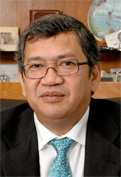
Gani Patail
Gani Patail
In a press statement, the AG’s Chambers said the note first came to their attention on 7 Oct 2009, more than two months after Teoh‘s death. It said that due to the AG being suspicious about its authenticity, the note was not disclosed or tendered in the inquest. However, due to a “recent” admission by investigating police officer Ahmad Nazri Zainal that he actually found the note on 17 July 2009 but did not realise its significance, the AG decided to now tender the note as evidence.
Public incredulity at this turn of events was only to be expected especially since Teoh’s mysterious death, after being interrogated by a government agency, has generated widespread public interest. But can the AG’s Chambers legally introduce the note at this late stage in the inquest? Can the court reject the note considering the questions surrounding its sudden emergence?
And what does this incident reveal about the conduct of the AG’s Chambers? Can they be entrusted with carrying out inquests and criminal prosecutions fairly and openly?
Finding the truth
Criminal lawyer Datuk Baljit Singh Sidhu says the AG’s Chambers is allowed to introduce the note, even at this late stage. “The magistrate cannot disregard the evidence. He [or she] must examine all evidence which could have led to the death,” Baljit says in a phone interview.
Baljit Singh (pic courtesy of Baljit Singh)
According to Practice Direction No 1 of 2007 which sets out inquest guidelines, an inquest is not like a criminal trial, which is adversarial in nature. The prosecution in an inquest is there merely to assist with the examination of witnesses to help the magistrate ascertain the cause of death and whether any specific persons were involved. The magistrate also need not strictly follow the usual evidence rules but may use his or her discretion.
Baljit however says the magistrate still needs to allow interested parties to have the document examined by experts and to recall witnesses to deal with possible new lines of questioning. “Everything must be done in the interest of justice to ascertain the cause of [Teoh's] death,” he stresses.
But what can we make of the extremely late disclosure of this potentially crucial piece of evidence? “I’m speechless,” Baljit says. “One moment the AG’s Chambers say they want to be transparent and fair in all proceedings, the next, this happens.”
Playing fair
Shouldn't it be mandatory?
What happens if the prosecution fails to disclose evidence before the trial?
Playing fairly and openly however has not always been the prosecution’s forte, not just during inquests, but also in criminal proceedings. This is hardly the first time the prosecution has delayed disclosure of documents to interested parties.
This is despite the fact that under a 2006 amendment to the Criminal Procedure Code (CPC), the prosecution is now obliged to disclose to the defence all the evidence they intend to tender before the trial begins. But what happens if the prosecution fails to do so? Are there sanctions imposed on the prosecution? Can the evidence be disregarded?
Baljit says no. “The courts have been saying [the requirement under section 51A to disclose all the evidence that will be tendered before trial] is only directory, not mandatory. If the evidence is not produced within the time stipulated, it’s not fatal.”
Richard Wee
Richard Wee (pic courtesy of Richard Wee)
But aren’t the requirements supposed to be mandatory? After all, Section 51A states, “The prosecution shall before the commencement of the trial deliver to the accused the following documents.” Otherwise, what would be the point of amending the law if it was only meant to be a directive?
The CPC amendments also require the prosecution to produce a “written statement of facts favourable to the defence.”
“Yes, they do sometimes give us the statement,” says lawyer Richard Wee in a phone interview. “But all the statement says is, ‘There are no facts favourable to the defence’. But my clients still get acquitted so there must have been some facts in our favour otherwise how were they found not guilty?”
“I demand to see my lawyer”
Wee adds that CPC requirements giving arrested persons the right to see their lawyers are also frequently not complied with. “The police just don’t respect it,” he says. “They do allow us to see our clients sometimes, but it’s often done grudgingly and with limits. It feels like we’re asking for favours to see our clients.”
“The prosecution’s job is to uphold justice in the public interest,” notes Baljit. “They should not be overzealous. It’s prosecution, not persecution.”
Winning on merit
The objective of the CPC amendments was to provide balance to the prosecution and defence. Crucial evidence should not be hidden from the defence, or in the case of an inquest, interested parties. After all, isn’t the purpose of such proceedings to establish the truth and dispense justice?
The prosecution should not have to rely on underhanded tactics and “cat and mouse games” to successfully secure a conviction. In an ideal world, the investigation of an offence should be so thorough that even if all the available evidence were revealed to the defence, the prosecution would still be able to prove beyond reasonable doubt that the accused was guilty.
Our law can probably still be amended further to make the balance between the prosecution and defence more equal. But if the police and prosecution could just start by complying with the spirit of the 2006 amendments, it would already create a more equitable situation.
It is not just the final verdict or outcome in a court case that is important. It is also the manner in which that conclusion was reached that determines whether or not the public have confidence in that verdict. The justice system can only gain credibility if its actors are transparent, open and fair in their dealings with each other.
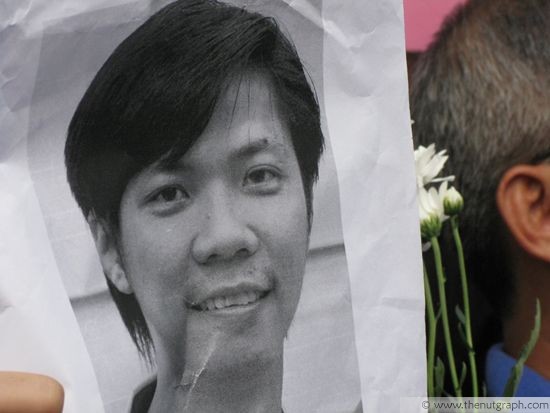
The late Teoh Beng Hock, who was found dead two days before he was supposed to register his marriage.
The late Teoh Beng Hock
It is a heavy responsibility that these actors bear. After all, under the law, the state and the courts have the power to arrest us, charge us, try us and imprison us.  In Teoh’s inquest, the courts have the power to examine the evidence and make pronouncements on what caused his death. Instances such as the sudden appearance of Teoh’s “note” and the non-disclosure of evidence before a trial will only serve to break down citizens’ trust in the state’s ability to conduct proceedings fairly. Who gains, then?

Kredibiliti Pendakwaan Terjejas

Seperti yang diduga mahkamah telah menolak permohonan untuk membatalkan pertuduhan fitnah ke atas saya. Walaupun hakim akur pihak pendakwa gagal menafikan samada wujudnya hubungan sulit di antara Farah Azlina dan Saiful Bukhari, namun hanya kerana berasaskan pengakuan Mohd Hanafiah dan Jude Pereira, Hakim Mohd Zabidin Mohd Diah merasakan ianya memadai membuktikan Saiful tidak mempunyai akses kepada dokumen penyiasatan serta perbicaraan.

Sebelum inipun hakim yang sama menolak permohonan Pasukan Pembela agar Farah dan Saiful dipanggil untuk menjawab dan berhadapan dengan persoalan samada wujudnya hubungan sulit serta wujudnya kebocoran maklumat dokumen perbicaraan dan penyiasatan. Mahkamah seperti mahu memberi perlindungan kepada Farah dan Saiful sedangkan kedua-dua mereka sewajarnya memfailkan affidavit membela kehormatan jika benar tuduhan itu palsu. Mengapa gentar berhadapan dengan kebenaran!

ANWAR IBRAHIM

For The Love of Allah, And Only for That!

Rabi’a al-’Adawiyya
By M. Bakri Musa

During this Ramadan, like all previous ones, mosques will be full of worshipers and the treasuries of Muslim charities will be flooded with generous donations. This is true of my little Muslim community here in the southern tip of Silicon Valley, California, as well as in the heart of Islam, Mecca.

In my community, praise be to Allah, we have no difficulty finding sponsors for our weekly community iftar (breaking of the fast). We have also conveniently made our annual fundraising event, “Feeding of the Soul,” during Ramadan. As my folks back in the old kampong would say, we are mengambil kesempatan durian runtuh (taking advantage of the durian season).

However, as my young Imam Ilyas observed in his Friday sermon, this heightened spirituality and generosity during Ramadan, while certainly praiseworthy, would be more so if we could extend them throughout the year.

Ramadan holds a special reverence for Muslims. It is the month in which the Quran was first revealed to our Prophet Muhammad, May the Blessings of Allah be upon Him. That should be reason enough to hold the month in high esteem.

We are also told that prayers and other spiritual deeds offered during Ramadan would carry “forty times more reward” than at any other time. And on the special “Night of Power (Lailatul Qadar), said to be one of the odd nights of the last ten days of Ramadan, those deeds are “better than that of a thousand months!”

Muslims presumably need this further assurance for the month’s special place!

I have difficulty when religious deeds, or indeed any good deeds for that matter, are reduced to the simplistic accumulation of “brownie points.” In this case, the collecting of merit points, Boy Scout style, to be later redeemed presumably at the Gates of Heaven.

I am reminded of this eloquent prayer of the eighth century Muslim hazrat (saint), Rabi’a al-’Adawiyya:

O God! If I worship Thee for fear of Hell, then burn me in Hell

And if I worship Thee in hope of Paradise, then exclude me from there.

But if I worship Thee for Thine own sake,

Then grudge me not Your Everlasting Beauty!

Her prayer brought back fond memories of my late grandfather, Haji Salam bin Tachik. Yes, his name – Salam – was a reflection of him, a man at peace with himself. Whenever he was offered an odd job by a neighbor, he would promise to give his best, and then sealed it with a handshake uttering, “Kerana Allah” (because of Allah).

And he did his best and gave all he had. I would often criticize him for expending so much effort that was way out of proportion to what he would be paid. He was not at all perturbed by my carping. Instead he would reply, “Grandson, I did it not to please the man in the hope that he would give more work or better pay in the future, but because I had made a promise to Allah.”

Kerana Allah, he would repeatedly remind me. He did not say that he was worried of “sinning” and fearing God’s wrath if he were to cheat his employer by doing a less-than-satisfactory job. His love of Allah was enough for him to give his best and to avoid deeds that would earn His wrath. That was what kept him on the “straight path.”

I remind myself of my grandfather’s simple lesson and Rabi’a’s moving prayer this Ramadan whenever I am called to tend upon yet another indigent patient. What with the present trying economic times, there are plenty of such patients. And as per my Imam’s advice, I have tried to live through my grandfather’s creed throughout the year.

There are plenty of generous deeds being done in Malaysia and elsewhere during Ramadan. Many are high profile events like elaborate iftars in fancy restaurants and generous donations to the disadvantaged. Let us hope that those are done for the sake of Allah, and only for His sake, in the spirit of Rabi’a al-’Adawiyya, and be continued outside of Ramadan, as per my Imam’s sermon.

Rabi’a al-‘Adawiyya

Rabi’a was the fourth (hence her name) daughter of a poor family. They were robbed while traveling in a caravan and she ended up being sold as a slave to a cruel master.

She spent her evenings praying after her chores were done. One night her master was awakened by the sound of her prayer lamenting the fact that she was unable to carry out His command as she was enslaved. Her prayer so affected her owner that he felt ashamed and sacrilegious in keeping a slave, and offered instead to be her slave and her be the mistress of the manor.

She instead opted for her freedom, which she spent meditating and learning. And learn she did, and in her own unique way. She was not all impressed with the superficialities of the faith or the mindless rituals of its followers. Despite being a woman and single, her fame spread.

It was said that when she undertook the pilgrimage to Mecca, the Ka’aba was so enthralled with her pending arrival that it moved halfway to meet her! Now to have the Ka’aba come to you and not the other way around is highly symbolic in the Islamic scheme of things. It is of course a less lofty version of the hadith theme that if Muhammad (pbuh) would not come to the mountain, then it would come to him!

Rabi’a however was not in the least impressed or enthralled by the gesture, and was reported to have retorted, “It is the Lord of the house whom I need; what have I to do with the house? I need to meet with Him Who said, ‘Who approaches Me by a span’s length, I will approach him by the length of a cubit.’ The Ka’aba which I see has no power over me; what joy does the beauty of the Ka’aba bring to me?”

She rightly separated and was not confused by the object of veneration from the subject. Some would say that hers was the height of arrogance; to me, putting things in perspective! It is not the Ka’aba that Muslims should be praying to, rather Allah.

In misogynist medieval Arabic culture, Rabi’a stood out as a shining light and an exemplary teacher. Teachers would do well to heed her maxim: “You call yourself a teacher; therefore learn!” She also stood out in many other ways. In a faith and culture that frankly abhor celibacy and non-marriage, Rabia’ remained single and celibate. She was, in the tradition of nuns, already ‘married’ to God. Meaning, fully and exclusively devoted to Allah!

Legend has it that she was found one day running on the streets of Basra carrying a torch in one hand and a pail of water in the other. When asked what she was doing, she replied, “I want to put out the fires of Hell and burn down the rewards of Paradise. They block the way to God. I do not want to worship from fear of punishment or for the promise of reward, but simply for the love of God.” Hence her famous prayer!

Unfortunately today religion, in particular Islam of the official Malaysian variety, is simplistically reduced to a series of dos and don’ts, as well as the accompanying mindset of garnering reward and avoiding punishment. The intrinsic value and satisfaction of doing good, and the avoidance of evil for its own (meaning, Allah’s) sake, are lost.

Rabi’a’s concept of “Divine love” (For the love of God), also found in other faiths, was her guiding principle. God should be loved for His own sake, not out of fear of Hell or the promise of Heaven, as beautifully encapsulated in her prayer. Indeed such primordial emotions as fear and sublime ones like hope can be like a veil, hindrance to the full vision of Allah.

This Ramadan as we fast, pray, give zakat, and do all the meritorious deeds Allah has commanded us to do, let us do so not in the promise of the reward of Heaven, or the fear that we would end up in Hell should we fail to do them, but for the love of Allah, and only for that. Nor should we do good merely for public recognition and rewards, rather for its own sake – kerana Allah.

For me, this Ramadan is also a time to remember and relive the lesson my grandfather taught me so well some 50 years ago. May the soul of Haji Salam bin Tachik rest in peace!

Court Rejects Anwar's Bid To Drop Sodomy Charge

KUALA LUMPUR, Aug 16 (Bernama) -- The High Court here on Monday rejected Datuk Seri Anwar Ibrahim's bid to strike out the sodomy charge against him.

Justice Datuk Mohamad Zabidin Mohd Diah ruled that the integrity of the prosecution had not been compromised as a result of the alleged affair between star witness Mohd Saiful Bukhari Azlan and a member of the prosecution team, deputy public prosecutor Farah Azlina Latif.

The judge said that Farah Azlina's role in the proceeding was limited to taking notes.

"She had no access to the investigation papers and that means, Saiful also had no access to it," he said.

The issue of Anwar not being fairly tried, therefore, did not arise, he said.

This is Anwar's second attempt to drop the charge.

The latest attempt revolved around his allegation that the integrity and impartiality of the entire prosecution team had been compromised because of an alleged affair between Mohd Saiful and Farah Azlina.

In his first attempt to have the charge dropped, he stated that the charge was defective because there was no evidence to show that penetration had taken place. The bid was rejected by the High Court, Court of Appeal as well as the Federal Court.

Anwar, 63, the Parti Keadilan Rakyat (PKR) advisor, is accused of sodomising Mohd Saiful, his former personal aide at unit 11-5-1, Desa Damansara Condominium, Jalan Setiakasih, Bukit Damansara, between 3.01pm and 4.30pm, on June 26, 2008.

Anwar is represented by a team of lawyers led by Karpal Singh while Solicitor-General II Datuk Mohamed Yusof Zainal Abiden is leading the prosecution team.

Police honour-bound to combat graft

The New Straits Times 
By R.S. Kamini

A THREE-PRONGED approach has been put in place to ensure that the National Key Results Area for Corruption (Corruption NKRA) is achieved in line with the government's effort against corrupt practices.

The NKRA for Corruption aims to reestablish the people's confidence in regulatory and enforcement agencies, reduce leakages in government procurement and tackle grand corruption.

Various plans were launched under the initiative to wipe clean the sticky fingers. This includes the introduction and strengthening of compliance units.

This is one of the 26 initiatives by the NKRA Corruption Laboratory to tackle malpractice in the regulatory and enforcement agencies, as well as government procurement.

The compliance unit plays a crucial role in meeting the Corruption NKRA objectives, says Superintendent of Police Chew Tham Soon, the head of Compliance Unit under the IGP Secretariat for Disciplinary Division (Bukit Aman).

"This is to enable us to quickly prevent any opportunities for misconduct and malpractice and maintain the discipline and image of a highly respected organisation."

Currently, the Malaysian Anti-Corruption Commission (MACC), which oversees the delivery of the Corruption NKRA, is focusing efforts on working with four agencies, namely police, Customs Department, Road Transport Department (RTD) and the Immigration Department on their compliance units.

All four agencies, perceived to have the lowest integrity in the 2007 Malaysian Transparency Perception Survey, have established their own compliance unit to address any wrongdoing that could lead to corrupt practices.

"We have a three-pronged approach to combat corruption for enforcement agencies. We do it by strengthening the compliance unit in lead enforcement agencies, taking disciplinary action where appropriate and rewarding officers who refused bribes."

Chew said in the police force, the officers are bound by the IGSO (Inspector-General of Police Standing Order) in carrying out their duties as well as acting in accordance with the law.

"The compliance unit conducts scheduled inspections and spot checks to ensure that each officer complies with the requirements of Law and Regulations as well as procedures that govern the respective departments."

The IGSO serves as a refined set of procedures for every given task in the police force.

"Any violation of Law and Regulations or Standing Orders will lead to malpractice and it can be as mild as not maintaining a routine diary to any misconduct against the general orders, such as insubordination, dishonesty, lack of efficiency or industry and negligence in performing duties."

He says police's compliance unit has a duty to ensure that the Drug and Disciplinary Control System, introduced in 2006, is carried out efficiently and effectively and gives no room for malpractice within the department.

"One of our main aims is to reduce discretional power so officers cannot act on their own without referring to their supervisors. Any exercise of discretional power must be justified and needs to be recorded and reported for referrals."

The second approach of taking appropriate disciplinary action involves a quick check on any reports of misconduct.

He says investigations will be carried out accordingly based on the complaints received and that action will be taken against the officers involved within six months.

"We will not pick and choose. Every complaint will be dealt with accordingly."

As for rewarding honest officers, the force gives recognition to officers who refuse bribes and take action against the givers by referring them to the MACC. This is another initiative it executed under NKRA Corruption.

"To date, the inspector-general of police has given Letters of Commendation as well as cash rewards to 22 senior officers and 120 lower ranking officers for refusing to accept bribes."

"We have also been recognised by the MACC for displaying the highest level of integrity for refusing bribes and assisting the commission in exposing the offenders."

Chew says ultimately, each enforcement agency should move towards realising the goals stated in the National Integrity Plan, which aims to reduce corruption, malpractice and abuse of power, besides increasing efficiency of the public delivery system.

He adds that the duty of disciplinary control and supervision lies on every officer as enshrined under Section 3c of the Public Officers (Conduct and Discipline) Regulations (Amendment) 2002.

Not all is murder, says Gani

The New Straits Times 
By Kalbana Perimbanayagam

KUALA LUMPUR: The Attorney-General's Chambers is prepared to prosecute anyone who abandons their baby, causing it to die, for murder.

However, a detailed study on the heavier penalty is required in drawing the line between murder and other possible charges.

Attorney-General Tan Sri Abdul Gani Patail told the New Straits Times not all cases involving baby dumping could be classified as murder under section 302 of the Penal Code, which carries a death penalty.

"If a baby is simply dumped or abandoned, but safe, then the parent cannot be prosecuted for murder. In such cases, the parent may be booked under other sections of the Penal Code, depending on the circumstances."

The cabinet, concerned with the number of baby-dumping cases in the country, had recently asked the police to investigate such cases for murder or attempted murder.

This was in the hope that such a move would serve as a deterrent.

Prior to the cabinet's decision, cases of baby dumping which led to death were mostly investigated under sections 317 (abandonment), 318 (concealment of birth by secret disposal of body), 309 (infanticide) of the Penal Code or section 31 of the Child Act (abandonment).

Gani said baby-dumping cases which resulted in death also had to satisfy the ingredients and provisions stated under section 300 of the Penal Code, to be tried for murder.

The section states that a person can be prosecuted for murder under the following circumstances:

- If the act by which the death is caused is done with the intention of causing death;

- If it is done with the intention of causing such bodily injury as the offender knows to be likely to cause the death of the person to whom the harm is caused;

- If it is done with the intention of causing bodily injury to any person, and the bodily injury intended to be inflicted is sufficient in the ordinary course of nature to cause death; or,

- If the person committing the act knows that it is so imminently dangerous that it must in all probability cause death, or such bodily injury as is likely to cause death, and commits such act without any excuse for incurring the risk of causing death, or such injury.

"The judiciary will also consider the likelihood and all possibilities, which could or could not result in the baby's death, in prosecuting the parent," said Gani.

Asked whether the A-G's Chambers had received any such proposal, Gani said he had yet to receive it.

However, he said the proposal required a detailed study to avoid confusion in delivering justice.

Factory hand’s death stirs big protest

The Star 


JOHOR BARU: The death of a Nepalese factory hand due to high fever triggered a protest by several thousand foreign workers against the management of a factory here yesterday.

The mass protest at the factory’s hostel in the Tebrau industrial area near here was to show their displeasure at the employers who had allegedly been slow in sending the sick worker to hospital.

The majority of the protesters were from Nepal while the others included those from Myanmar, Vietnam, Bangladesh and India. No casualties were reported in the incident.

“No one was hurt and no arrest was made,” said Johor CID chief Senior Asst Comm II Datuk Amer Awal.

“The police have everything under control,” he told reporters here, adding that there was a misunderstanding because the emplo­yers had not been informed earlier about the said worker’s condition.

“The worker had high fever at about 3am. However, he and his colleagues only informed the security guard at about 7am when his condition worsened.

“The guard then informed the employer who called an ambulance,” said SAC Amer.

He added that the workers were impatient with the arrival of the ambulance and decided to rush their colleague to the Sultan Ismail Hospital.

The worker died on the way to the hospital, stirring feelings of anger against the management over their alleged delayed response. Company officials were not available for comment.

HRP wants India to sponsor top students

Tmn Permata Dengkil - Unfit for occupation

Memorandum to PM of India on 63rd Independence Day of India requesting 2,237 full scholarships and University places in India for top and high achieving Malaysian Indian students segregated. (15/8/2010)

manmohan-singh P8150053

New Scan-20100815151718-00001

15th August 2010

His Excellency Mr.Manmohan Singh,

Prime Minister of India.

Via

His Excellency Mr.Vijay Gokhale

High Commission of India to Malaysia By Hand

No2, Jalan Duta, Off Jalan Duta, By fax: 03-20933507

50480 Kuala Lumpur Email: highcomm@po.jaring.my ,

Your Excellency,

RE: 1) Memorandum to Prime Minister of India on Independence Day of India requesting for 2,237 full scholarships and University places in India for top and high achieving Malaysian Indian students segregated and denied JPA scholarships etc, PTPTN loans, Matriculation and University places by the Malay-sian Government.

2) Request to meet Indian Prime Minister Manmohan Singh when he visits Malaysia on 9/11/2010

3) Request to meet Indian High Commissioner in Kuala Lumpur not responded to.

4) Request to address Pravasi Bharathiya Divas Conference in India 7-9th January 2011 on pressing Malaysian Indian problems on the first day of the Conference.

We take this opportunity to wish the people of the Republic of India happy 63rd India’s Independence Day. But even on this day we the even sixth generation Malaysian born Indians are even denied and segregated in every aspect of our lives from an estimated 450,000 being made stateless, denial of jobs and top jobs in the private and public sectors,demolishment of Hindu temples and cemeteries, Tamil school in cow shed like conditions in the background of the KLCC world’s tallest Twin Towers etc. Most importantly to our very basic rights to education by reason of our being the tiny (8%) ethnic minority Indians in Malaysia.

An estimated 2,237 top and high achieving students of Indian Origin in Malaysia especially from the poor and working class who have been denied Malaysian Government scholarships and other scholarships, Matriculation and Public University places contrary to the Malaysian Federal Constitution. The Malaysian Government refuses to engage us in a discussion to resolve this critical issue.

We now turn to the Government of India as your goodselves have a publicly stated interest in People of Indian Origin the world over. In many parts of the world, People of Indian origin contribute towards development in India. In the same vein, in other parts of the world, the People of Indian origin need development assistance as in our case and the Government of India can contribute.

We would like to appeal to your Excellency to allocate 2,237 full scholarships and University places in India in the Medical, Pharmaceutical, Engineering, Aeronautical, I.T, Actuarial Science, Bio Technology and Dentistry faculties in Indian Institutions of Higher learning that is recognized by the Government of Malaysia for our top and high achieving Malaysian Indian students who are segregated and denied JPA scholarships etc, PTPTN loans, Matriculation and University places by the Malay-sian Government.

Article 8 of the Federal Constitution of Malaysia (Equality before the law) and Article 12- rights in respect of education of the Federal Constitution. Article 12(1) reads, "without prejudice to the generality of Article 8, there shall be no discrimination against any citizen on the grounds only of religion, race and descent or place of birth."

Year in and year out over the past 40 years or so, thousands of especially top and high achieving poor Malaysian Indian students have been denied JPA and other scholarships, Matriculation & University places. Prime Minister Datuk Seri Najib Razak’s claims One Malaysia policy, but top and high achieving poor Indian students are being denied the opportunities from becoming graduates, professionals and reputable citizens who would take Malaysia into the international arena.

This denial of fair and equal educational opportunities has forced an alarming number of poor Indians into the world of crime.

In any part of the world scholarships and study loans are granted by the government to deserving students without fail but only in One Malaysia is this discrimination, exclusion and segregation against the Malaysian Indian students are going on and on.

A prime example is Prahsanna who ever since her childhood days grew up with the ambition to of becoming a medical doctor. Her parents, teachers and the community leaders motivated her to pursue medicine and shine in her academic qualifications. She took up the challenge. She worked hard day and night and proved that she is capable of achieving her ambition of becoming a doctor by scoring 11As in the Science stream. However her dreams were shattered when her applications to enter Matriculation, local Universities and JPA scholarship were turned down without any reason. And when she approached the Putrajaya officials she was told to drop her ambition! How would a sober person justify this! Her father is a retiree and her mother is a housewife. Who would help this poor young high achiever’s dream to come true if not the government? And this is just one and being the latest example and the tip of the iceberg to the even the sixth generation especially poor Malaysian Indian students being segregated and excluded from the national higher education opportunities of Malaysia.

Malay Muslim students from Pasir Salak MRSM who scored 7 Ds and 8 Es managed to secure a place in Matriculation colleges whereas Menaka who scored 8As from the same college is rejected. She was like a beggar knocking every government agencies’ door to get mercy. Is this the One Malaysia concept Prime Minister Najib is advocating?

Niquesan Nair was in the PLKN National Service Training while waiting for his SPM results. At the Camp they were taught of One Malaysia, that we are all One and happily sang the song Satu (One) Malaysia. But when he got his results, he scored 10A’s but was denied JPA scholarship, Matriculation and University places while his Malay Muslim friends in PLKN who scored 2A’s and 3A’s got seats in Matriculation/University and were relieved from PLKN training. At this young and tender age Niquesan Nair for the first time felt that just because of his Indian minority ethnicity he was denied the opportunity to contribute to his country.

While Malaysian Indians are denied their constitutional rights as enshrined in Article 8 and Article 12 of the Federal Constitution, the Higher Education Minister Khalid Nordin allocates scholarships to 363 foreign Muslim students to study in local Universities and upon completion they are to be given the opportunity to work here and the option to take up Malaysian Permanent Residence status (Malaysian Nanban 6/7/2010 page 1). In University Institute Technologi Mara (UITM) out of the 200,000 places, 10% are allocated to foreign Muslim students while even the sixth generation Malaysian born Indian students are completely (100%)denied entry. This is Najib Razak’s One Malaysia policy.

About 7,600 students were identified as “Excellent Students” or “Pelajar Cemerlang" upon the SPM results being announced this year (2010). There are 40,000 Matriculation seats available (UM 2/11/08 at page 4). Surely all 7,600 students should have secured places in matriculation colleges at the very least and there should have been zero complaints. But we alone have 69 SPM, STPM and Polytechnic students in our list who have complained to us that they were denied JPA scholarships, Matriculation and University places.

The above cases are only the tip of iceberg. We estimate 2,237 top and high achieving Indian students who have been denied JPA and other Scholarships, Matriculation & University places for the 2010 academic year.

We have requested that pre University STPM to be abolished and create a one pre-university examination in One Malaysia for all Malaysian students so that the higher education opportunities are given out fairly to all deserving students especially so as not to exclude and segregate the Indian poor.

As it is education, which is the responsibility of the federal government (and similarly by any other government in any other part of the world), it is not fair because it is race, supremacy and segregation based as opposed to what should rightly be needs based. Through one Google or Wikipedia search the whole world would know that our education system is not fair. How can it be fair when we have different pre-university programmes? Many qualified poor Malaysian Indian students have been denied their basic rights to higher education in contravention of Article 8 (Equality before the law) and Article 12 (no discrimination in higher educational institutions entry financed by the government) of the Federal Constitution. They have to go through the tougher path of STPM without any guarantee of securing a place in the Universities. They are growing up with inequality and injustices in every corner of their lives. How then do they become a part of the true meaning of One Malaysia?

Whereas almost all Malay Muslim students opt for the matriculation programmes. Almost all of the over 40,0000 places in the eleven Matriculation colleges nationwide are reserved for malay muslim students in the 10 month course as opposed to the two year STPM course (Wikipedia). This has become a source of contention because matriculation students, who will enter university one over year earlier compared with their STPM peers, are considered on equal standing with STPM only in Malaysia for the purposes of University admission though it is significantly easier than STPM with a streamed down Form 6 syllabus.

Not all applicants for matriculation are admitted and the selection criteria have never been made public which has led to the perception that the entry has not been fair. The matriculation programme is not as rigorous as the STPM. The matriculation programme has come under some criticism as it is the general consensus that this programme is much easier than the sixth form programme leading to the STPM and serves to help malay muslim students enter the public university easily. Having been introduced after the supposed abolishment of racial quota based admission into local public Universities, the matriculation programme continues the role of its predecessor, albeit in a modified form. It is considered easier because in the matriculation programme the teachers set and mark the final exams that their students sit for whereas in the STPM the final exam is standardised and exam papers are exchanged between schools in different states to ensure unbiased marking. Also, the matriculation programme adopts a semester basis examination (2 semesters in the programme) whilst STPM involves only one final examination, covering all 2 years’ syllabus in one go. The scope and depth of the syllabus in matriculation is also lesser to that of STPM. The disparity between the programmes does not end there, for it is a known fact that in critical courses offered by local public universities (such as Medicine, Pharmacy, Dentistry, Engineering, Accountant, Law, Bio Science etc), almost 70% of the students comprise matriculation students. On the contrary, STPM students form the majority in courses which are less in demand, such as a Bachelor in Science. Defenders of the matriculation programme have described the two programmes as distinct and different, drawing the analogy of an apple and an orange. However, having served the same purpose (i.e. as an entrance requirement to Universities), we criticize the matriculation programme as a blatant practice of double standards.

The following is a fact – bright Indian students are systematically denied their entitlements for Government Scholarships, for admission to Public Universities especially in critical courses and for the Matriculation programme and this is becoming a more serious problem as more Indian students begin to excel academically as has been highlighted by HRP in the past few weeks.

Our sincere question is why does the UMNO led Government not become transparent about the selection process? Why do we need double standards in 1 Malaysia? Why hasn’t the public Universities and scholarship list and it’s selection criteria not been made transparent and public?

70% of the Indians are from the poor and hardcore poor, category and the only way for them to break out of poverty is through education and they are denied even this very basic right.

We have requested to Prime Minister of Malaysia Najib Razak and our King DYMM Yang Dipertua Agong Tuanku Mizan to constitute a Royal Commission of Enquiry further to Article 93 of the Federal Constitution to address the exclusion and segregation of especially the poor even the sixth generation Malaysian born ethnic minority Indian students from JPA, Mara, Petronas, 13 Yayasan Negeri, Yayasan TNB, Telekom Malaysia, Bank Negara, Sime Bank and other Scholarships, PTPTN study loans, Matriculation and University places. Till today we have not receive any reply from them on this critical issue.

We hereby also request to meet Indian Prime Minister His Execellency Mr.Manmohan Singh when he visits Malaysia on 9/11/2010

We also urgently request to meet Indian High Commissioner in Kuala Lumpur which has not responded to.

We finally request to address the Pravasi Bharathiya Divas Conference in India 7-9th January 2011 on pressing Malaysian Indian problems on the first day of the Conference.

We hereby look forward to your favorable reply on this critical Indian problem at

your earliest convenience.

Thank you

Yours sincerely,

…………………………

S.JAYATHAS

Information Chief

Human Rights Party Malaysia HRP (pro tem) and HINDRAF

0126362287

CC:

The Hon. Mr.Shri S.M.Krishna Minister of External Affairs Room no169, South Block, By fax: 911123013254 New Delhi- 110011 Email: eam@mea.gov.in

The Hon.Shri Vayalar Ravi Minister of Overseas Indian Affairs 9th Floor, Akbar Bhavan, Chanakya Puri,

New Delhi-110021, By fax: 91-11-24197985 India. Email: minister@moia.nic.in

The Hon. Mr. Sri Lal Krishna Advani 30 Prithvi Raj Road, New Delhi-110003, By fax: 01123017419 India. Email: advanilk@sansad.nic.in

Madam Susma Swaraj Opposition Leader,India 44, Parliament House, By fax: 23017470 New Delhi -110011 Email:sushmaswaraj@hotmail.com

Mr.Vijay Jolly International Cell Head, Head BJP, Khasra No. 322, Neb Sarai, Near Ignou, New Delhi- 68 Email: ewec@del3.vsnl.net.in

Mr.Rajesh Gogna Advocate 8, Todermal Lane, Bengali Market, Mandi House, By fax: 011-23752935 New Delhi-110001 Email: mail@gogna.co.in
IMG_2473 IMG_2479
IMG_2488 IMG_2486
IMG_2477 P8150026
P8150040 P8150041
P8150038 P8150058
P8150045 P8150050
P8150044 P8150047
P8150055 P8150053
IMG_2476 P8150061

Ibrahim Ali calls Chinese groups ‘ungrateful’, ‘extremists’

KUALA LUMPUR, Aug 15 — Datuk Ibrahim Ali described the MCA’s Chinese Economic Congress as “ungrateful” after the congress called for economic liberalisation, adding that the demands showed they are “extremists”.

MCA president Datuk Seri Chua Soi Lek said yesterday that a merit-based and needs-based system would contribute to the path for Malaysia to be globally competitive.

“Perkasa denounces and condemns outright their request for the government to lower the 30 per cent equity for Bumiputera. This shows their ungrateful attitude to the Malay community and Bumiputeras who have compromised and tolerated because of the social contract in our constitution.

“The demands are greedy and extreme because the 30 per cent target asked by the Bumiputera represents 67 per cent of the population,” the Perkasa chief told reporters here.

The Pasir Mas MP questioned the logic behind the congress’s call for government-linked companies (GLCs) to include more non-Bumiputeras and international expertise on their board of directors.

“They also ask that non-Malays are elected in GLCs. I want to ask how many company owned by non-Malay cartel which are given special treatment by the government have elected Malays into their board of directors. I also want to know how many Malay professionals have been appointed into the cartel companies?” he asked

The Malay rights group also rejected the government’s proposal to have open tender for sale of strategic lands and GLCs.

“Perkasa will go against the government proposal to have open tender for strategic land and GLCs. This is because the proposal will chip away from the little economic wealth is still owned by the Malays and the Bumiputeras,” he said.

He added that government must review the proposal and have a mechanism whereby the open tender system will continue to maintain the interests of Malays and the larger Bumiputera community.

Ibrahim said Prime Minister Datuk Seri Najib Razak must remove the little Napoleons around him.

“The prime minister must quash all the concerns and ensure that there are no Napoleons around him that are attempting to sabotage the Malay and Bumiputera agenda. If the government does not fix all of this then I believe Umno will feel the consequences in the upcoming general election,” he said.

He added that Umno will alienate Malay voters in their attempt to garner support from non-Malays.

“In their efforts to get non-Malays to support Barisan Nasional, Malay voters will get frustrated and run to a different party. This will happen so the prime minister and the deputy prime minister must act on this,” he said.

Perkasa has been a staunch defender of the New Economic Policy (NEP) and has criticized Najb’s New Economic Model (NEM) for neglecting the Malay agenda.

Its director of economic bureau, Dr Zubir Harun, has said that Perkasa is worried that the NEM will have a Chinese agenda and warned that the Chinese community will use the next general election to take over the country.

Elite Clubs: The article is so flawed

  samy vellu
Tami Nesan


Dear Sir,

Re: Elite Clubs: EWRF, CHILD and TF

I wanted to post a response to the article, but it appears membership to your site is highly restricted. Hence this note.

The article is so flawed, so riddled with easily verifiable errors that I could only consider it a hit piece by someone with a vendetta against the three individuals named in the story. Be damned the good work the three organisations have done and continue to do. Be damned the thousands of ordinary folks who are members of these organisations, who donate and who spend their precious time to further the cause of Tamil education in Malaysia. And, foremost, be damned the opinion and actions of the majority Tamil School headmasters, PTAs and School Boards that work hand-in-hand with the three organisations. Be damned the usage of the funds in question, outcome achieved and the tangible benefits received by the community.

I'm terribly sorry, and disappointed, that you, who should know better, should be party to this.

-e.

Ps: If Mr. Traveler is indeed concerned with Tamil Schools, as he claims, please request him to contact me, at my e-mail address, and I'll get him involved in one of our many programmes that directly benefit Indian-Malaysian children. He could, for example, start a Tamil-medium preschool at an urban poor or rural setting. Our studies indicate that only around 50% of Indian children attend preschool compared to the national average of around 75%. In Tamil Schools itself there are only 140 classrooms serving 3,300 children, meeting a bare 10% of the actual need. Or if Mr. Traveler is a tech-oriented person, he could perhaps work to set up a computer labs in one of the Tamil Schools. At present there are only 157 Tamil Schools with government computer labs. No -- we don't need any money from him; what we need is time and effort, minus cynicism.


Elite Clubs: EWRF, CHILD and TF

**********

FMT


Yet another twist to RM4 million Tamil school fund


/* */
By B Nantha Kumar

SHAH ALAM: A new twist has surfaced to the “mode of disbursement” of the RM4 million funding for Tamil schools in Selangor.
A group of PKR members have apparently met with Menteri Besar Khalid Ibrahim and tried to convince him and other top-level leaders to set up an independent body to manage the fund.

Speaking on condition of anonymity, a source said they were trying to convince the MB to channel the funds through a soon-to-be-established independent body, which the source said will be helmed by prominent people.

"Yes, we have invited some prominent peoples to join the independent body. Some of them have agreed, while others have asked for time to think about it," he said.

The source, while not disputing the role and capability of State Executive Councillor for Education Halimah Ali (who is now in charge of the RM4 million funds), however, said the allocation would be better managed by the independent body.

Before Halimah stepped in, the RM4 million allocation was managed by another councillor Dr Xavier Jeyakumar, whose decision to disburse RM1.6 million to Tamil schools via three Indian NGOs came under heavy attack.

"We do not argue Halimah is the best person to manage the fund, but we believe it is better managed by our own people.

“We are committed to our work because we have extensive experience in dealing with Tamil school," the source told FMT.

According to him, the independent body will be established under Halimah's portfolio and it will advise her on how to assist Tamil schools.

He said chairmen of Parent-Teacher Associations or NGOs wishing to conduct programmes in Tamil schools could send their paperwork to the independent body for perusal.

“This independent body will decide whether to approve the allocation for the programme.

"We’re inviting MPs and state assemblymen not only from PKR but also from DAP and PAS to join us," said the source, who declined to name the elected representatives who were approached.

He also said that all the Selangor state Indian MPs and assemblymen will be part of the independent body when it is formed.

Selangor currently has three MPs – S Manickavasagam (Kapar), Charles Santiago (Klang), and R Sivarasah (Subang); and three state assemblymen – M Manoharan (Kota Alam Shah), M Muttiah (Bukit Melawati) and Jeyakumar (Seri Andalas).

The source said the other parties keen to join the independent body are businessman OMS Thiagarajan and organisations such as the Hindu Youth Organisation; Child Information, Learning and Development Centre (Child); the Tamil Foundation (TF); and Education, Welfare and Research Foundation (EWRF).

Anwar’s order

Meanwhile, it is understood that PKR de facto leader Anwar Ibrahim has instructed Khalid to channel the funds through MPs and state assemblymen.

According to another insider, Anwar had directed Khalid that the Tamil school funds be handled by MPs and assemblymen for fear that the money will be abused by the PTA chairmen who are mostly MIC members.

The insider said Anwar had suggested this to Khalid at the party’s political bureau meeting last week.

“We know that most of the Tamil school PTA chairmen are MIC members. We are afraid that our money may be misused by them.

"We see Anwar’s suggestion as relevant because this is the only way for MPs and assemblymen to visit Tamil schools," the insider told FMT.

He added that at present, it is difficult for Pakatan representatives to visit schools because of Umno-BN political interference.

With the money in hand, the representatives can help the Tamil schools by handing over the cash for their programmes.

After Pakatan captured Selangor in the March 2008 polls, the state government set aside a RM4 million to upgrade Tamil schools.

IMF to M'sia: Take decisive action on reforms

WASHINGTON: The IMF has asked Malaysia to take "decisive" action on reforms under a model program aimed at revamping a controversial four-decade-old affirmative action policy.

Prime Minister Najib Tun Razak announced in March his New Economic Model or NEM, aimed at reforming elements of the policy favouring the country's majority ethnic Malays in a bid to boost economic competitiveness.

Details of the reform program, including its timing, have not been announced yet.

The Washington-based International Monetary Fund said on Friday it was looking forward to the NEM's rollout.

In a report after annual consultations between the IMF executive board and the Malaysian government, the fund acknowledged the "ambitious vision" of Najib's administration for a far-reaching economic transformation over the longer term.

The board directors "agreed that the comprehensive structural reform agenda, at the heart of the New Economic Model, holds out promise of faster and inclusive growth," the report said.

"Directors looked forward to a decisive effort and sustained momentum in implementing this agenda," it said.

They also called for an "effective communication strategy" to forge "broad public support" for these efforts.

"Further gradual liberalization of product and labor markets will help exploit policy complementarities, encourage private investment and harness the benefits of reform," the report said.

Najib, who came to office last year, said the New Economic Model was designed to boost growth, create a high-quality workforce, and attract badly needed foreign investment.

The model also aims to stem Malaysia's "brain drain" with measures to retain skilled professionals, and make markets more competitive by phasing out price controls and subsidies.

Favourable growth prospects
The affirmative action policy which hands Malays privileges in housing, education and business has been criticised as uncompetitive and improperly benefiting the elites.

Under the planned changes to the policy, the government will seek to raise the income levels of all disadvantaged groups, rather than focusing solely on ethnic Malays, the dominant ethnic group in the Southeast Asian nation.

Najib's reforms face opposition from conservative Malay rights groups.

The country has sizeable ethnic Indian and Chinese minorities, who mostly deserted Najib's ruling coalition in 2008 elections.

The IMF also said that Malaysia’s near-term growth prospects were favourable.

The economy was projected to expand by 6.7 percent in 2010 but growth is expected to moderate to 5.3 percent in 2011, the IMF report said.

It also said that IMF staff felt Malaysia's ringgit currency appeared to be "weaker than its equilibrium level in real effective terms."

The IMF executive board, according to the report, agreed with the Malaysian authorities’ view that a stronger ringgit could boost over time the role of domestic demand as a growth driver and promote a shift toward higher-value added industries.

- AFP

NEM: Get rid of extremists at the kitchen table

By G Krishnan - Free Malaysia Today

COMMENT Reading the tea leaves from the past few days has to lead one to no other possible conclusion but that these are tough days for the prime minister when it comes to the economy.

With our growth rate for the next year expected to barely hover around five percent, which, to be fair in these lean times may not be all that bad, there is nonetheless growing apprehension in the prime minster’s circles that it is going to be increasingly difficult to hold the political dam if such lacklustre economic performance lingers on for the foreseeable short and medium term. 

Indeed, gauging from the prime minister’s tone and message at the recent Chinese Economic Congress, it’s clear that the prime minister is feeling some of the heat building up in the economic kitchen.

For one, the prime minister - who could have been forgiven for feeling he was not necessarily addressing a most enthusiastic and sympathetic audience – came with a rather benign and blend message about the imperatives of having a vibrant private sector to ensure the country’s drive toward being a high-income economy.

This is especially striking and telling considering that the backdrop to his address was already cast by the unambiguous position staked out by the MCA president and the prime minister's brother as well, regarding the need to revise the across the board 30% bumiputera equity requirement, which of course, has become almost sacred to a significant element of the prime minister’s political base.

Whilst we can certainly expect the political dance and gamesmanship around this issue to continue right up until the prime minster lays out the specifics and details of his NEM, there is little doubt that the prime minister is feeling the heat from both sides of the divide on this issue.

You know Chua Soi Lek is politically going for the jugular on this issue when he resorts to quoting Confucius that, “Only the wisest and stupidest of men never change and for one to know what is right and not to do it, is the worst type of cowardice.”

Knowing that MCA’s credibility among its base has grown increasingly soft means that Chua himself cannot afford to turn a blind eye to the issue.

Coupled with the pressure from the MCA and the wider populous calling for the dismantling of the NEP, it sure must have felt like poor timing (but could there ever be good timing for such a thing?), when your own blood adds to the heat building up in the kitchen by proclaiming that the very blueprint of the 30 percent Bumiputera equity quota itself has become “bastardised’.

Following his own remarks at the Chinese Economic Congress, Nazir Abdul Razak is quoted as saying, "I have strong opinions about how the NEP has been bastardised over the years," and further added that, “it is so embedded in everything that we do - in every part of the government, in every part of businesses - that it has become a problem.

Whilst Nazir’s remarks may potentially serve as a small window into the prime minister’s eventual roadmap for revisiting and reforming that which has apparently become “bastardised,” these developments reveal precisely the delicacy of the situation confronting the prime minister.

Extremists at the kitchen
Under these circumstances, one could understand the prime minister’s cautious tact at the Chinese Economic Congress.

Yet, the optimists calling for a major overhaul of the NEP might be tempted to interpret the prime minister’s remarks as tacitly signalling to investors that the government is willing acknowledge – let along address the dilemma of – the white elephant in the kitchen (that is, the NEP), which remains a palpable hindrance to long-term and sustained private sector investment that the prime minster himself insists is imperative.

Further, those calling for an overhaul of the NEP have a real opportunity now – more than ever – to impress on the prime minister that sustained private sector investment in the economy is unlikely to be realised if we persist with ‘business as usual’ under the current highly problematic model.

Quite frankly, one would be hard-pressed to overestimate the desperation and urgency of the situation before the prime minister.

Whilst his brother clearly seems forthcoming and unambiguous about the need to revisit critical elements of the NEP – and in the process ignore the extremists who remain wedded to NEP - in order to put our economic house order, the fact remains that the extremists are prominently seated at the kitchen table.

So it remains to be seen if Najib does have it within him to deal with the necessary reforms – ones that will be consistent with his desire to sustain a vibrant private sector, or will the extremists run him out of the kitchen.

The proof will be in the pudding.


G Krishnan is a freelance writer who routinely writes online columns about Malaysian affairs.

Time to free Petronas from BN's firm grip

By Tan Kee Kwong - Free Malaysia Today

COMMENT I am alarmed by the fact that for the past three years, national oil company Petronas has given RM290 billion to the Barisan Nasional-led federal government.

What a fantastic sum of money? Can the prime minister and his two predecessors tell us the rakyat how they spent or wasted this huge sum of money?

As I have said before, Petronas as an entity was and still is quite a well run company but the past three prime ministers have ruined it all.

A special Act of Parliament passed in the 1970's – the Petroleum Development Act (PDA), ensured that Petronas was only accountable to the prime minister of the day. In the past, we had two ministers in charge of oil but without any say at all.

Even under PDA, the Finance Minister has no say, even the Cabinet cannot examine the true accounts of Petronas. What a shame. This is totally unacceptable.

Under Dr Mahathir Mohamad , dividends paid by Petronas to the government was about RM2 to RM3 billion annually.

And then when Abdullah Ahmad Badawi took over, he forced Petronas to pay RM10 billion, and  then increased it to RM20 billion before finally forcing the oil company to pay RM30 billion.

Where did all this money go?  Did they go to mainly finance all the budget deficits during his rule?

It was during this time there were many useless defence spendings. Let's not forget that in the 1980s and 1990s, about RM100 billion of Petronas money went to bail out Bank Bumiputra, twice.

During the financial crisis in 1997, the government once again relied on Petronas to buy out shipping company MISC in order to bail out Mahathir's son.

KLCC land scandal
I remember in the mid-1950's my family stayed for two years in Jalan Pinang in the heart of Kuala Lumpur. At that time only the race course was there. As kids we enjoyed plucking the delicious rambutans there. Now however it is so different.

When the Petronas headquarters was housed in the Dayabumi building, there was a severe shortage of office space as Petronas operations expanded very fast.

Initially the plan was to build a new HQ in Jalan Tun Razak, opposite the Royal Selangor Golf Club, which presently sites the Prince Court Hospital.

That plan was aborted as the Department of Civil Aviation objected strongly as it was in the flight path of the Sungai Besi RMAF air base.

Then Petronas went ahead to buy a piece of land in Jalan Ampang, behind Yow Chuan Plaza for only RM30 million.

However suddenly Mahatir intervened and came out with a devious plan to steal the money from Petronas to enrich his special cronies.

Part of the plan was to create noise in the press on how the race course in Jalan Pinang was causing massive traffic jams every weekends. After that the federal government and the Kuala Lumpur City Hall decided that the race course must be shifted to Sungai Besi, its present site.

But the government did not ask the Turf Club to surrender or even sell its land to Petronas. What they did was to force the Turf Club to sell its prime land to a very special Mahathir crony.

In turn, the crony made a huge profit by selling off that land to Petronas for RM600 million. The top brass of Petronas was instructed not to negotiate the price and to just pay.

Oil blocks given away
During Abdullah's time, he oversaw a scandal that cost the nation US$100 billion by giving away two oil blocks to Brunei.

I wonder what made Abdullah to agree to give away our oil to Brunei. Maybe in one of his naps in public, he just assigned our rights to Brunei.

In the past Petronas went into joint sharing agreements with Vietnam, Cambodia, Thailand, Indonesia and others.

This should have been the same agreement with Brunei in the case of Block L and Block M.

The BN government must come clean on the real affairs of Petronas. For starters, the PDA must be abolished and replaced by a better and transparent piece of legislation.

More importantly, the financial affairs of Petronas must be made accountable to the Parliament.


Tan Kee Kwong is a former deputy minister in the BN government. He is now a PKR leader.

Deputy minister accused of vice activities

By B Nantha Kumar and Teoh El Sen - Free Malaysia Today

KUALA LUMPUR: A police report has been filed against Federal Territories and Urban Well-being  Deputy Minister M Saravanan, accusing him of being involved in prostitution and drug activities.

The report was filed by Perak's Kampung Tawas PKR branch chief MS Arjunan with the Brickfields district police headquarters here this afternoon.

Contacted by FMT, Arjunan said that he had received a letter, from an anonymous individual,via Pos Laju on Aug 11.

“I was shocked when I read the letter. It accused Saravanan of supplying college girls to VIPs as well as being involved in drug trafficking.

“What was more shocking was that the writer also alleged that Saravanan was the illegitimate son of MIC president S Samy Vellu,” he added.

He said the letter also revealed that Saravanan had operated his alleged vice activities from a rented house in Gombak.

Arjunan believes that the letter was penned by a father of one of the girls involved in the alleged prostitution syndicate.

The PKR leader said he wanted the police to check the MIC vice-president's background, and to determine if the contents of the letter were true.

He denied that there was any political or personal motive behind the report.
Saravanan: It's purely politics

Saravanan was appointed deputy minister after the 2008 general election. He was one of three MIC parliamentary seat candidates to survive the political tsunami.

The businessman-turned-politician had worked himself up the political ladder from the grassroots level.

Saravanan is also known to be close to Samy Vellu, and had openly acknowledged the 74-year-old president as his mentor.

Meanwhile, Brickfields police chief ACP Wan Abdul Bari Wan Abdul Khalid confirmed that a report was lodged against Saravanan.

“The report was filed by a 50-year-old politician from Ipoh, the case has been transferred to the Ipoh police and I do not wish to comment further on this matter,” he told FMT.

Contacted later, Saravanan dismissed the report as "purely politics".

"Anyone can report after receiving a letter. Who is the victim? How can a report be lodged just based on a letter?" said the deputy minister, who is currently overseas.

"The allegations mentioned in the report are baseless. It is done to tarnish my image and reputation," he added.

He said the "police are free to investigate the claims and once found untrue, action should be taken against the complainant for lodging a false report".

Chinese name for Sibu? Bumiputera leaders see red

(Bernama) - Bumiputera community leaders are not happy over a plan by the United Chinese Association (UCA) here to seek a new Chinese name for the town.

A front-page report in a local Bahasa Malaysia daily Utusan Borneo today quoted their leader, Temenggong Datuk Wan Hamid Edruce Tuanku Mohammad, as saying they were unhappy that “a number of sensitive issues” had been raised lately.

“Give us a little respect and do not hurt our feelings."

“We have been around for a long long time. Sibu is not going to be our second home,” he said.

He made the statement yesterday together with Pemamca Sharifah Mariam, Temenggong Sir Adrian Ringgau and Pemanca Wilfred Kiroh of the Iban community, Penghulu Shari Ubu of the Melanau community, and others.

UCA president Datuk Lau Nai Hoh had recently proposed for the new name.

He said in Chinese, Sibu was known as “Shi Wu” but the second word or “Wu” was a witch.

Wan Hamid said the community should have been consulted first over any proposal for changes and especially when they involved mutual rights.

“Sad to say, we have never been consulted. We are not against the government or any of its policies."

“But when sensitive issues regarding church, temple, mosque or cemeteries are concerned, we will appreciate it if we are consulted for our views,” he said.
He said even many road names here had been changed lately without any consultation with them.

DEB dan nasib orang Cina

Ada banyak kisah benar yang diketahui ramai tentang kejayaan kaum Cina di bawah Dasar Ekonomi Baru (DEB).  Dalam konteks ini, DEB bermaksud sistem pilih kasih dan naungan orang-orang yang berkuasa.  Sepertimana dinyatakan oleh adik Perdana Menteri, Nazir Razak (gambar kiri), DEB telah bersimpang dari tujuan asal yang diilhamkan oleh Allahyarham Abdul Razak, ayahanda kepada Najib dan Nazir.  Apa yang tidak dinyatakan oleh Nazir ialah bahawa DEB telah sekarang menjadi satu sistem yang korup, tidak mempunyai akauntabiliti kepada rakyat dan diselubungi rahsia sehingga hanya mereka yang berkuasa dan korup mendapat faedah terbesar dari DEB.
Yang sedih, pagar diharapkan, pagar yang makan padi.  Orang Melayu menaruh harapan kepada UMNO untuk menjaga kepentingan bangsa; tetapi dibawah sistem DEB yang dikorupkan oleh pemimpin-pemimpin UMNO, ada juga beberapa orang Cina yang berjaya meraih kekayaan.  Ini termasuk Vincent Tan, Francis Yeoh, anak muda 28-tahun Jho Low (Low Taek Jho) dan Liew Kee Sin dari SP Setia.  Bagaimana mereka berjaya melalui DEB?  Kita harus tahu.  Orang Cina harus tahu supaya mereka pun boleh berjaya dan menjayakan DEB.
Encik Liew, yang penuh dengan pujian untuk DEB, mengakui bahawa beliau adalah salah seorang yang berjaya melalui DEB.  Beliau adalah pegawai biasa dalam salah satu bank dagangan yang kecil sehingga beliau berkawan dengan dua orang peguam – Rashid Manaf and Zaki Azmi (sekarang Ketua Hakim Negara).  Kedua, Rashid dan Zaki tidak mempunyai latar belakang dalam alam perniagaan.  Syarikat perundangan mereka pun besar tapi tidak lah boleh membuat seseorang rakan kongsinya kaya.  Tetapi apabila mereka dilantik sebagai peguam untuk UMNO, dan bersahabat dengan pemimpin-pemimpin UMNO seperti Mahathir Mohamad, Daim Zainuddin dan Ketua MIC Samy Vellu, maka perniagaan mereka pun mulai mengalami kecemerlangan.
Bukankah SP Setia sebelum ini dipunyai SPK yang dikendalikan oleh sahabat  Mahathir iaitu Abdullah Ahmad (Kok Lanas) dan Ramli Khushairi?  Liew, Zaki dan Rashid membeli syarikat ini, dengan habuan diberi kepada Dollah Kok Lanas, dan yang lain itu, seperti kata orang, "the rest is history".  Perlu di ingatkan bahawa satu ketika dahulu, SPK adalah kooperatif yang mana pegawai kerajaan dan ahli-ahli UMNO menjadi tuan yang punya.
Vincent Tan (gambar kanan) berjaya kerana beliau dapat meyakinkan sahabat beliau, Mahathir Mohamad, yang Perdana Menteri ketika itu, untuk menswastakan Sports Toto kepada beliau, kerana kononnya, disebabkan judi itu haram, orang Melayu dan kerajaan tidak boleh terlibat dalam penjudian.  Tetapi beliau memilih orang Melayu untuk menjadi partner beliau - anak saudara Mahathir yang ketika itu bertugas sebagai pengurus besar agensi berita Nasional, Bernama.  Anak saudara Mahathir ini baik orangnya tetapi tidak lama selepas itu, beliau menamatkan perkongsian itu dan saya rasa beliau tidak dapat apa-apa pun.  Inilah nasib orang Melayu yang menjadi rakan kongsi orang Cina yang pintar saperti Vincent Tan.  Vincent semestinya harus disenaraikan sebagai salah satu cerita kejayaan DEB, seperti juga Liew.
Ayah kepada Francis Yeoh, Yeoh Tiong Lay, memulakan syarikat pembinaan yang tidak begitu menyerlah selama 30 tahun.  Tetapi ini semua bertukar apabila Francis, yang berkawan dengan Mahathir, berjaya dapat kontrak membina hospital di Semenanjung Malaysia pada tahun 1980-an.  Kemudian, Mahathir memberi kontrak paling mewah kepada keluarga YTL - IPP dengan bayaran yang paling lumayan sehingga kini dalam sejarah pengswastaan tenaga elektrik.  Tenaga Nasional terpaksa membeli eletrik dari YTL dengan harga tinggi itu, biar tenaga itu diperlukan atau tidak.  Macam mana tak buat duit?  Pelanggan terpaksa beli, mahu atau tidak, dengan harga paling tinggi.
Pengerusi TNB ketika itu, Ani Arope, membantah perjanjian itu tetapi disingkir oleh Mahathir.  Hari ini, YTL mempunyai rezab wang sebanyak RM9 bilion dan ianya digunakan untuk apa?  Membeli syarikat jana kuasa di Singapuura, membeli separuh daripada Pulau Sentosa di Singapura, dan membeli tanah dengan harga yang paling mahal di Orchard Road.  Satu lagi kejayaan DEB.  Oh ya...siapa rakan kongsi Bumiputra Francis?  Mungkin Mokhzani dan Mukhriz Mahathir boleh jawab soalan itu....
Kata orang bahawa pemuda 28 tahun Jho Low adalah sahabat baik Perdana Menteri Najib Razak; atau pun isteri beliau; atau mungkin pun anak sulung Rosmah.  Beliau berada di sana, sini dan mana-mana.  Di sini, saya ingin mengucapkan tahniah kepada akhbar The Star kerana berjaya mendapat temuramah eksklusif dengan anak muda yang berjaya ini.  Entah siapa yang mengarah mereka membuat temu-ramah ini....
Jho selalu kelihatan bersama PM Najib.  Semasa pelancaran 1Malaysia Development Fund oleh PM, dia ada; semasa PM bercuti di Monte Carlo tahun lalu, dia ada; dan mereka juga bersama sama di St. Tropez dua minggu lalu.  Ahkbar dari luar negara membuat laporan dan andaian bahawa anak muda Jho (kawasan mesra wanita glamor, Paris Hilton) ada penglibatan dalam mendapat Kerajaan Malaysia memberi jaminan kepada 1Malaysia Development fund.  Bagaimana Kerajaan dan Perbendaharaan Malaysia boleh setuju kepada skim meminjam RM5 bilion dengan bayaran terlalu tinggi faedah terlalu tinggi 5.75% tak masuk akal.  Ini bererti jika 1MDB gagal membayar hutangnya, kerajaan akan menanggung hutang interest payment melebihi  RM2.4 bilion dari kadar yang lazim?
Dan sekarang ini kawan kawan dalam sektor Bank bercakap tentang kononnya dalam akaun tahunan 1MDB menunjukkan bahawa hanya masih ada RM4.3 bilion dari jumlah asal RM5 bilion.  Di mana agaknya RM700 juta dibelanjakan?  Itulah dia - Jho Low, suatu lagi kejayaan Dasar Ekonomi Baru (NEP).
Jadi orang orang Cina tahu sebenarnya bagaimana mahu mendapat untung besar  dengan menggunakan Dasar Ekonomi Baru.  Tak payahlah Liew Kee Sin (gambar kanan) bimbang.  Tetapi berapa ramaikah orang Cina yang ada kaitan dan hubungan intim dengan pemimpin besar UMNO untuk mendapat peluang ini?  Itulah persoalannya.  Bukankah lebih baik kita ada sistem pemerintahan dan dasar ekonomi yang terbuka dan adil kepada semua lapisan rakyat?  Dan adil kepada semua kaum?  Dengan cara itu, peluang besar dan keemasan boleh juga dicapai oleh rakyat biasa.  Tak payahlah mereka mesti ada hubungan baik dengan UMNO, atau pihak aristokrat atau pegawai tinggi kerajaan. Sepatutnya sudah memadai rakyat semua kaum yang mahu berjaya hanya memerlukan kebolehan dan azam tinggi untuk berjaya. Malangnya di negara bertuah ini, peluang utama hanyalah kepada mereka yang terpilih.
*Tulisan ini dipetik dan disunting daripada blog Zaid Ibrahim, bekas Menteri Jabatan Perdana Menteri yang kini menyertai Pakatan Rakyat.  Zaid Ibrahim kini sebagai Pengerusi Majlis Pimpinan PKR Wilayah Persekutuan Kuala Lumpur.

Ibrahim Ali raps Nazir Razak for talking ‘nonsense’ about NEP

Ibrahim: If he does not understand why certain group are given AP then he should ask.
KUALA LUMPUR, Aug 15 — Datuk Ibrahim Ali has criticised Datuk Seri Nazir Razak for talking "nonsense" about the New Economic Policy (NEP) — a day after the top banker called for all Malaysians to jointly grow the economic pie.

Nazir, Prime Minister Datuk Seri Najib Razak’s younger brother, told the MCA Chinese Economic Congress of how NEP-type affirmative action policies had been abused by Malay and Bumiputera businesses.

The CIMB group managing director also spoke about how he felt the Approved Permits (APs) system for cars should be done away with.

“I think Nazir is talking nonsense. If he does not understand why certain group are given AP then he should ask. APs have been given during the era of Tun Abdul Razak and Tun Dr Mahathir.

"This is because the Malays could not break into the automotive industry. That is why we can see Naza is very successful today,” the Perkasa chief told reporters today.

Ibrahim advised Nazir to consult before making any further statements regarding the NEP.

“I would like to advise Nazir that even he is banker, he is still new and consider how he was able to get that position. We must consult when it comes to economic matters especially from the former prime minister Tun Dr Mahathir Mohamad. He has been the prime minister for 22 years. When our ringgit was attacked in 1997, we did not surrender to the pressure from IMF and World Bank but our economy has recovered,” he said.

The Pasir Mas MP stressed that the APs is important to ensure that Malay community has a stake in the automotive industry.

“I believe Datuk Nazir does not understand the goal of why APs are given to the Bumiputeras. It is to help the Bumiputeras in the automotive industry which is controlled by the non-Malays so with the AP system, it can help the Malays to be successful. From their success, they can invest into other fields,” he said.

However Ibrahim admitted that NEP has failed in terms of implementation but stressed that it must be continued.

“What does he mean by bastardised? If NEP has failed then that is a question of implementation but in terms of goals and ways to achieve the 30 per cent equity by maintaining affirmative action, that must be continued,” he added.

He said that NEP and APs are important for the community to have a continued source of wealth.

“So this special treatment must be maintained in regards to Malay special rights as stated in article 153 of the constitution. We must remember that the Malays are limited in terms of money spinning,” he said.

“For example, we as Malays and Muslims cannot deal with things which are forbidden in Islam. If we see gambling, liquor sales, and entertainment outlets are controlled by the non-Malays and receive billions in one month. We see how the money spin flows but we as Malay and Muslims are not involved. Where is there money spinning to help the Malay community?” he said.

Drop the Charges Against Anwar Ibrahim

From The Huffington Post
By Azeem Ibrahim


Anwar Ibrahim is the leader of Malaysia’s opposition. Since reemerging in Malaysian politics in 2007 he has done well, quadrupling the new opposition coalition’s representation in Parliament, winning 47% of the popular vote, and taking control of six of Malaysia’s fourteen states and territories in the March 2008 elections. He has become the biggest threat to the sitting government’s 53-years of uninterrupted rule.

Perhaps that is why the Malaysian judiciary is pursuing a charge of sodomy against him, again. In 1998 he faced a similar ordeal in the midst of a popular uprising against the rule of then Prime Minister Mahathir Mohamed. Viewed as a threat to the ruling party’s status quo, Anwar was sacked from his position as Deputy Prime Minister and Finance Minister, arrested and sentenced to 15 years solitary confinement after a trial many believed was marred by political interference, falsification of evidence, blackmailing, coercion and torture of witnesses, harassment of defense lawyers, and refusal to admit witness testimony favorable to the accused. Anwar’s current trial looks to be a repeat of the travesty of justice that landed him in prison last time.

Firstly, there is overwhelming evidence that the charges are a government conspiracy. Just a few days before he filed the police report accusing Anwar of sexually assaulting him, the accuser met the current Prime Minister – Najib Razak, then Deputy Prime Minister. When asked about the meeting, Najib first denied it ever happened, but later changed his story, admitting that the meeting took place, but claiming that it was to discuss scholarship opportunities for the accuser, who is a college dropout. Najib then changed his story again, admitting that the accuser had come to him to complain about the abuse he had received under Anwar. Najib, the son of Malaysia’s second Prime Minister, was at the time Prime Minister in waiting. It was he who had the most to lose from an ascendant Anwar Ibrahim and opposition coalition.

In the days before lodging his police report the accuser also met a police officer who had falsified evidence in the 1998 trial. And the current trial is being led by an Attorney General who is believed to have fabricated evidence in Anwar’s previous trial.

Secondly, the charge does not match the accusation. The accusations – as detailed in accuser’s testimony in court – suggest forced sodomy, effectively rape. By pursuing a different charge from the one made by the accused, the Attorney General is opening himself up to some embarrassing questions. If he believes that Anwar raped Saiful, why not charge him for it? But if he really believes Anwar and Saiful engaged in consensual sex, why only press charges against a popular leader of the opposition, and not also the former intern?

It is likely that he is not charging Anwar for the rape of which he is accused for the simple reason that he knows the charge would not stand. Anwar Ibrahim was almost disabled in 1998 after a near-death beating at the hands of the Malaysian police, is known to have a disabling back problem. It is completely improbable that he could mount an attack on a younger, more agile man. It looks very much like the Attorney General has ignored the charge because he knows that there will be insufficient evidence in court to make it stick.

A third suspicious aspect of the whole affair is the lack of evidence. If the accuser was indeed assaulted then there would be some evidence to prove it. However, forty-eight hours after the alleged incident he was examined twice, once in a private hospital and once more in the Kuala Lumpur General Hospital. In both cases doctors ruled out any possibility of assault or penetration – the minimum amount of evidence necessary for a court to proceed with a trial. Moreover, the lag in time from the alleged incident until the time he was examined leaves wide open the possibility of planting or fabricating evidence.

A fourth reason for suspicion is clear evidence of obstruction of justice in this case. Anwar’s defense team and medical experts have yet to receive much of the information they need to do their jobs effectively. Medical reports, CCTV recordings, and even witness statements have all been withheld by the prosecution. The judiciary has systematically denied Anwar’s attorneys access to the facts of the case before and during the trial, leaving the defense with one arm tied behind its back.

Lastly, the charges emerged just months after the opposition made unexpected gains in the 12th Malaysian General Elections and in advance of Anwar’s threat to call for a vote of no confidence in Parliament and take over the government. There has been a general campaign to discredit and destabilize the opposition in general and vilify Anwar Ibrahim specifically, of which these charges seem to be just another example.

The Malaysian judicial system has acquired a poor reputation, taking in interferences with due process, the pursuit of political persecutions, and succumbing to political interference. This time, it looks like the system has not only abandoned the prospect of giving Anwar a fair trial, it has even abandoned any prospect of showing the world it is making any effort to give him a fair trial.

Only 10% of the Malaysian population believes the charges, and there has been a chorus of international outcry from lawmakers and human rights organizations in Australia, Europe, and the United States.

It is clear that the trial has been unfair from the start. Every day that it continues is a further blot on the Malaysian judiciary. The charges are tainted, inconsistent, and lacking credibility; the evidence flimsy where it exists; and the process skewed in the interest of the government.

I have no axe to grind in Malaysian politics. I am moved to write only by a sense of injustice, and outrage that this process might be allowed to stand. It does not just threaten Anwar Ibrahim. It threatens the development of Malaysian democracy, which would otherwise have the chance of being an example throughout the Muslim world.

In the interests of justice and Malaysia’s international image, the case against Anwar Ibrahim must be dropped.

Azeem Ibrahim is a Research Scholar at the Kennedy School of Government at Harvard University, Member of the Board of Directors at the Institute of Social Policy and Understanding and Chairman and CEO of Ibrahim Associates.

Is NEM a pipe dream?

The Malaysian Insider


AUG 15 — Tun Abdul Razak Hussein could never have imagined that his brainchild, the New Economic Policy (NEP), would ever split the country.

That it has 40 years after coming into being. Meant to eradicate poverty among all Malaysians and uplift the Bumiputeras who were economically backward then, it is now seen as the sacrosanct right of every Malay.

Especially the corporate ones who fear losing their tranche of Approved Permits (APs), shares and government contracts.

The NEP’s great defender today is Datuk Ibrahim Ali, the diminutive Perkasa chief with lofty ambitions of keeping privileges as Malay rights. With him, to a certain extent, is Tun Dr Mahathir Mohamad, who argues the policy is needed until the Malays reach their targets.

Left unsaid is that 22 years of the 40 years of the NEP, which officially ended in 1990, was under Dr Mahathir’s helm and shadow. He brought Malaysia, and Malaysians especially the Malays, kicking and screaming into the 21st century but that wasn’t enough to hit targets set under the NEP.

Except for a few tycoons and AP holders. And government-linked-companies (GLCs) that crowd out the small-time Bumiputera and other Malaysian entrepreneurs hoping to get a slice of the Malaysian economic pie.

Tun Abdul Razak’s banker son Datuk Seri Nazir has argued that the present-day NEP affirmative action policies are a bastardised version of his father’s vision for the country. His elder brother, Datuk Seri Najib, is currently the prime minister who has proposed the “promising” New Economic Model (NEM), as described by the International Monetary Fund (IMF) in the past week.

But the NEM remains on paper, scraps of which announced but yet to be implemented. The IMF is hoping it will be executed soon for Malaysia needs the reforms. The MCA is asking for a swift implementation. The DAP is wondering whether it remains a “trial balloon” or will it actually ever be implemented?

These are questions only Najib can answer.

He has opened both the economic congresses organised by Ibrahim’s Perkasa, which is hell-bent opposed to parts of the NEM, and that by MCA, which wants the reforms to ensure equity for all Malaysians, particularly the non-Bumiputeras.

Ibrahim today criticised both Nazir and MCA for what came out of the Chinese Economic Congress a day earlier, which unfortunately was not read by the Bumiputera demographic because Umno-owned and controlled newspaper Mingguan Malaysia and Berita Minggu did not deem fit to publish it as news.

The Umno president does himself no credit if those who argue for his policies do not get airtime or space in the Umno-owned press. Only voices that defend the NEP get heard and that will reinforce the community’s view that the out-dated policy should remain in place.

Nazir is right, the NEP has been bastardised beyond recognition of its founder Abdul Razak. He never had a chance to see how the NEP ever turned out.

Najib has a choice of seeing through the NEM but only if he defends and nurtures it despite criticisms that it won’t benefit one community. Like the early days of the NEP, the NEM must be seen to benefit all Malaysians for all time.

Otherwise, Najib will share a worse fate than his father. The NEM will be stillborn. Because no one, not even the man who thought of it, defended it before it can be implemented.

Does Najib want the NEM to be a pipe dream? Only he can determine its future.

Rakyat Fed Up With Infighting In Umno - Hishammuddin

KUALA TERENGGANU, Aug 15 (Bernama) -- Umno leaders are urged to stop fighting among themselves as the people are fed up with such antics, said Umno vice-president Datuk Seri Hishammuddin Tun Hussein.

He said political bickering within the party should stop and focus should be given to efforts at developing the country.

"I believe even the public are fed up to see that we are quarrelling among ourselves. We have much more work to be done to build up the nation in the world that is getting smaller and more challenging," he told reporters after chairing a meeting of the Terengganu Umno Liaison Body, here Sunday.

Also present were Terengganu Menteri Besar Datuk Seri Ahmad Said and all Umno divisional leaders in the state.

Hishammuddin, who is also the Terengganu Umno Liaison Body chairman, said this when asked to comment on the problems cropping up in several Umno divisions including in Setiu, Terengganu.

The problem in the division was apparent when four State Assemblymen from the parliamentary constituency did not turn up during the Setiu Umno division's delegates meeting which was opened by Deputy Prime Minister Tan Sri Muhyiddin Yassin, on July 16.