By Saravanan
On the 13th of Feb, Mr Deepak Jaikishan requested Dr Mahathir to advice Najib to step down and give way to Muhyiddin Yassin to take over the PM's post. Malaysia has seen UMNO blindly passing the PM's post from Mahathir to Abdullah Badawi then to Najib and now there are calls within UMNO to pass it to Muhyddin in some sort of a musical chair game. Even though Malaysia is a secular country and consists of many races but the PM's post is being passed on from one UMNO leader to another like a relay baton without seeing any real change taking place. Is there anything in the Federal Constitution that states that only an UMNO president should become the PM and that the PM's post can be passed on from an UMNO President to his Deputy President with such relative ease ? The UMNO party is suppressing the Federal Constitution to suit to its own whims and fancies.
Supreme Muslim religious authorities in Malaysia should issue a Fatwa to deter and punish Muslim leaders who are practising racism and Malay supremacist policies in this country . Even Prophet Muhammad never condoned racism. In fact when a Jewish woman in Mecca, who used to throw garbage on his doorstep, fell sick, the Prophet visited her showing no signs of any racial discrimination.
Malaysia should stop racism and Malay supremacy policies of UMNO as it is making Malays not intelligent and it also against Prophet Muhammad's teachings. The government should allow Malays to comptete with other races fairly and on a level playing field. To defend Malay supremacy policies is unconstitutional. No one in this country is taking away Malay rights. It is only UMNO that is making the Malays fearful and creating an inferiority complex among them.
To have a better Malaysia, everyone should have equal rights. Every individual should be able to compete with one another equally to earn a better living for themselves. By implementing racist policies, Malaysia will never progress. The quota system and other racist and supremacy policies should be abolished. This will make Malaysia more vibrant for the future of our children. UMNO also must adopt equal rights into their mindset.
Wednesday, 20 February 2013
Digging deeper into Hindraf's blueprint
FOCUS There
has been much exchange in the last few days in the media about
Hindraf's Five-Year Blueprint to bring the Indian poor and marginalised
into the mainstream of national development.
However, the one key factor in all this is the fact that most people are vague about this document.
The latest was Opposition Leader Anwar Ibrahim's gaffe about implementing the blueprint within 100 days and the subsequent correction by PKR's R Sivarasa that what Anwar meant applied only to stateless Malaysian Indians.
To help more people understand the content of the blueprint, I present here its main points.
This Hindraf blueprint covers proposals for effective government intervention in six major problem areas of Indians Malaysians and outlines approaches to the realisation of these proposals.
The major problem areas are:
However, the one key factor in all this is the fact that most people are vague about this document.
The latest was Opposition Leader Anwar Ibrahim's gaffe about implementing the blueprint within 100 days and the subsequent correction by PKR's R Sivarasa that what Anwar meant applied only to stateless Malaysian Indians.
To help more people understand the content of the blueprint, I present here its main points.
This Hindraf blueprint covers proposals for effective government intervention in six major problem areas of Indians Malaysians and outlines approaches to the realisation of these proposals.
The major problem areas are:
- Estate workers who have been displaced around the country, numbering about 800,000;
- Stateless Indian Malaysians, numbering about 350,000;
- The denial of adequate and equal educational opportunities;
- Unequal employment and business opportunities;
- The impunity of the police; and
- The standards of human rights practices.
Displaced estate workers (DEW)
The displacement of Indian estate workers has been going on for several decades.
According to the Population and Housing Census Reports from 1970 to 2000 issued by the Department of Statistics, Malaysia, the urban Indian population in 1970 was 323,435 while in 2000, it had escalated to 1,338,510.
The
workers displaced from the plantations have been force-fitted into the
urban community. They now constitute a significant section of the new
urban poor and underclass and have become individually indistinguishable
in the overall population segment of the Indian poor, although they are
the largest part of that segment.
The displaced estate workers (DEW) programme that we propose therefore becomes one of the key development programmes for the poorer sections of the Indian community.
Contract farming programme
Under this proposal, we seek the allocation of up to 10 acres of land for every participating displaced estate worker household to carry out a variety of agricultural activities.
We believe at least 20,000 DEW households can be selected to participate in this programme over five years, which means 200,000 acres of land will be required for this programme, which will be similar to the Felda programme.
DEW housing programme
This proposal is for an affordable housing programme to adequately resettle the displaced estate workers and to rebuild communities that have been destroyed by the massive displacements that have taken place.
Under this programme, we want 100,000 houses to be built for 100,000 households over the next five years and the programme in its design must avoid the creation of new urban slums.
Sociocultural needs such as places of worship, burial grounds, community halls and playgrounds must be provided as part of the infrastructure in each such project, in order to rebuild the social system that is being lost.
Retraining and reskilling the DEW youth
This is a massive new effort and is really a programme to rebuild the Indian youth to draw them into higher value-adding vocations, to draw them away from crime and to give them the wherewithal to get going on more productive life opportunities.
For
this, training opportunities in the various skills required for the
expanding Malaysian economy must be provided through placements at the
176 Giat Mara centres and the 78 community colleges around the country,
with the financial support required provided as well.
A specific programme has to be designed to make this an attractive and practical programme so the objectives of rebuilding the DEW youth are attained.
After retraining, these youths must be provided jobs in government service or in government-linked companies. This will be the fastest way of ensuring that this programme of rebuilding the Indian youth will be successful.
Also, an agency must be set up to provide support to the newly retrained and budding Indian entrepreneurs in this programme, along the lines of the Tekun programme, or the the Tekun programme itself can be extended to them.
Places of worship and burial grounds
Thus far the government has refrained from getting involved in this very serious matter.
Temples
are a significant part of Hindu life. In the estates, the managements
recognised the need for and role of these temples, which have been
destroyed or are facing destruction after the estates were dismantled or
cleared for the various other developments.
In order to resolve this permanently, all Hindu places of worship around the country must be identified and the government has to alienate adequate land for each such structure and gazette these as reserve land for Hindu temples.
Where temples have to be relocated, the government should provide appropriate alternative land and adequate funds for rebuilding the temples and similarly, gazette them as Hindu temple reserve land.
Where the existing temple structures are older than 100 years, they are to be identified as heritage sites or heritage buildings and preserved under the National Heritage Act 2005.
The various burial grounds on former estate land also need to be identified and the land on which they sit should be alienated to the DEW and should be gazetted as Hindu burial grounds.
Alternatively, the state should replace the burial grounds taken away with land in acceptable locations and for the former burial grounds to be re-sited, with adequate compensation paid to the kin to relocate the graves.
350,000 stateless Indians
We want the 350,000 Indian Malaysians with red identity cards (ICs) to be issued with citizenship and blue MyKad immediately, unless there is a real and provable case that the individual may be from another country.
All
those without blue MyKad and birth certificates should have their MyKad
and birth certificates issued, with the simplified requirement of just
two other fellow Malaysians making a statutory declaration of their
knowledge of the birth and parentage of the individuals concerned.
Birth registration procedures must be simplified to prevent a repeat of this problem.
Denial of adequate educational opportunities
All Tamil primary schools must be made part of national education, provided with pre-school facilities and funded directly by the Education Ministry.
These
Tamil primary schools should be provided with land, buildings,
amenities and facilities, located and relocated according to
concentrations of the catchment population and have trained and graduate
teachers on par with the national schools.
These schools must also be single session schools and have programmes for correcting and improving the educational performance of the children, as well as their social activities.
All qualified Indian children must be unconditionally admitted into the Mara Junior Science College (MRSM) secondary schools and other residential secondary schools on the basis of their merit.
Failing this, at least one residential secondary school must be established in Kedah, Penang, Perak, Selangor, Negri Sembilan, Pahang, Malacca and Johor, similar to the MRSM and residential schools, to cater to qualified Indian children.
Tertiary education for the qualified
The proposals for this cover admission to pre-university programmes, skills training institutes, community colleges, polytechnics and public universities, as well as loans and bursaries.
We want matriculation and pre-university programmes, skills training institutes, community colleges and polytechnics opened for merit-based admissions or for an equitable quota to be established for admissions.
Public Service Commission scholarships must be awarded transparently; a DEW Scholarship Fund set up to award scholarships to eligible Indian students to study abroad and for PTPTN loans to be made available for all study courses in local and overseas universities.
TOMORROW In Part II, the remaining points of the blueprint will be covered and the budget required for it, as well as well as why a Ministry of Minority Affairs is needed.
The displacement of Indian estate workers has been going on for several decades.
According to the Population and Housing Census Reports from 1970 to 2000 issued by the Department of Statistics, Malaysia, the urban Indian population in 1970 was 323,435 while in 2000, it had escalated to 1,338,510.
The displaced estate workers (DEW) programme that we propose therefore becomes one of the key development programmes for the poorer sections of the Indian community.
Contract farming programme
Under this proposal, we seek the allocation of up to 10 acres of land for every participating displaced estate worker household to carry out a variety of agricultural activities.
We believe at least 20,000 DEW households can be selected to participate in this programme over five years, which means 200,000 acres of land will be required for this programme, which will be similar to the Felda programme.
DEW housing programme
This proposal is for an affordable housing programme to adequately resettle the displaced estate workers and to rebuild communities that have been destroyed by the massive displacements that have taken place.
Under this programme, we want 100,000 houses to be built for 100,000 households over the next five years and the programme in its design must avoid the creation of new urban slums.
Sociocultural needs such as places of worship, burial grounds, community halls and playgrounds must be provided as part of the infrastructure in each such project, in order to rebuild the social system that is being lost.
Retraining and reskilling the DEW youth
This is a massive new effort and is really a programme to rebuild the Indian youth to draw them into higher value-adding vocations, to draw them away from crime and to give them the wherewithal to get going on more productive life opportunities.
A specific programme has to be designed to make this an attractive and practical programme so the objectives of rebuilding the DEW youth are attained.
After retraining, these youths must be provided jobs in government service or in government-linked companies. This will be the fastest way of ensuring that this programme of rebuilding the Indian youth will be successful.
Also, an agency must be set up to provide support to the newly retrained and budding Indian entrepreneurs in this programme, along the lines of the Tekun programme, or the the Tekun programme itself can be extended to them.
Places of worship and burial grounds
Thus far the government has refrained from getting involved in this very serious matter.
In order to resolve this permanently, all Hindu places of worship around the country must be identified and the government has to alienate adequate land for each such structure and gazette these as reserve land for Hindu temples.
Where temples have to be relocated, the government should provide appropriate alternative land and adequate funds for rebuilding the temples and similarly, gazette them as Hindu temple reserve land.
Where the existing temple structures are older than 100 years, they are to be identified as heritage sites or heritage buildings and preserved under the National Heritage Act 2005.
The various burial grounds on former estate land also need to be identified and the land on which they sit should be alienated to the DEW and should be gazetted as Hindu burial grounds.
Alternatively, the state should replace the burial grounds taken away with land in acceptable locations and for the former burial grounds to be re-sited, with adequate compensation paid to the kin to relocate the graves.
350,000 stateless Indians
We want the 350,000 Indian Malaysians with red identity cards (ICs) to be issued with citizenship and blue MyKad immediately, unless there is a real and provable case that the individual may be from another country.
Birth registration procedures must be simplified to prevent a repeat of this problem.
Denial of adequate educational opportunities
All Tamil primary schools must be made part of national education, provided with pre-school facilities and funded directly by the Education Ministry.
These schools must also be single session schools and have programmes for correcting and improving the educational performance of the children, as well as their social activities.
All qualified Indian children must be unconditionally admitted into the Mara Junior Science College (MRSM) secondary schools and other residential secondary schools on the basis of their merit.
Failing this, at least one residential secondary school must be established in Kedah, Penang, Perak, Selangor, Negri Sembilan, Pahang, Malacca and Johor, similar to the MRSM and residential schools, to cater to qualified Indian children.
Tertiary education for the qualified
The proposals for this cover admission to pre-university programmes, skills training institutes, community colleges, polytechnics and public universities, as well as loans and bursaries.
We want matriculation and pre-university programmes, skills training institutes, community colleges and polytechnics opened for merit-based admissions or for an equitable quota to be established for admissions.
Public Service Commission scholarships must be awarded transparently; a DEW Scholarship Fund set up to award scholarships to eligible Indian students to study abroad and for PTPTN loans to be made available for all study courses in local and overseas universities.
TOMORROW In Part II, the remaining points of the blueprint will be covered and the budget required for it, as well as well as why a Ministry of Minority Affairs is needed.
N GANESAN is Hindraf national adviser.
Protests against Geert Wilders show no tolerance
Protesters against Dutch MP Geert Wilders appearance in Melbourne. Picture: Jake Nowakowski
Source: Herald Sun
PEOPLE trying to listen to a speech by far-right Dutch MP Geert Wilders were pushed to the ground outside a venue in Melbourne yesterday.A group of about 40 protesters blocked the gate leading into the Somerton function centre and stopped people from entering.
A large number of police, including mounted officers, were on patrol but made no initial attempt to move them.
Mr Wilders was due to give a speech last night in the first part of his Australian tour. He will deliver speeches in Sydney and Perth later this month.
At a press conference Mr Wilders said immigration from Islamic countries should stop but asylum seekers, whose lives were at risk, were OK.
He added most Muslims were not extremists but Islamic ideology would never integrate in democratic societies: "Never, ever, no way."
He added that the Koran incited violence.
"Islam and freedom are incompatible," he said.
Dutch politician Geert Wilders says Australia should not be scared of him.
Source: AFP
Mr Wilders was due to visit Australia last October but was forced to postpone the trip because the federal government took its time deciding whether to approve his visa.
Victorian Premier Ted Baillieu said yesterday Mr Wilders was wrong and that there was clear evidence multiculturalism was a positive.
Man arrested for pouring acid on 16-year-old's face
| Victim in serious condition (Photo: Avishag Shaar-Yeshuv) |
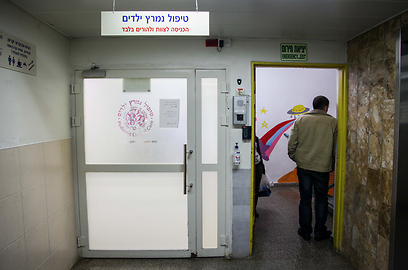
Nazareth resident, 50, arrested for pouring acid over girl's face because she refused to marry member of his family. Haifa hospital fighting to save her eyesight
A 50-year-old Nazareth resident was arrested Tuesday morning for allegedly pouring acid on a 16-year-old girl's face after she refused to be betrothed to a man of his family. He was remanded in custody for five additional days.
The teen was taken to Rambam Medical Center in Haifa fearing eyesight damage. The hospital said she is in very serious condition. Doctors said that he eyesight has been damaged.
A police investigation reveals that at an early morning hour the suspect knocked on the girl's window and poured the acid over her face as she opened it.
The suspect is denying the allegations claiming he was home watching a soccer game at the time. His attorney remarked that the man is related to the victim.
The girl, who was injured in her face and upper torso, was initially taken to a local hospital, but as her condition deteriorated it was decided to rush her to Haifa's Rambam Medical Center.
The hospital reported that some acid reached the girl's mouth, causing her trouble in respiration. She also suffered damage to her eyes, and doctors are currently fighting to save her eyesight.
The hospital's Deputy Director Doctor Miki Halbertal said that "the burns' are pretty severe, she was hurt in the face and neck and is hospitalized in the intensive care unit in the hospital's pediatrics ward."
A police source said that "We suspect the suspect he attacked the girl because she refused to marry a member of his family."
A relative of the girl told Ynet: "This is severe, the police must punish the man who let himself harm the girl and he ought to pay the price for ruining her bright future. The punishment for this should be no less that the punishment for murder."
‘Lahad Datu incident used as diversion’
PKR vice-president Tian Chua finds it bizarre that the Malaysian government is being lenient to the armed intruders in Sabah.
VIDEO INSIDE
PETALING JAYA: The Barisan Nasional government could be using the Lahad Datu incident to divert people’s attention from the IC-for-votes Royal Commission of Inquiry proceedings and the Manuel Amalilio scandal, claimed PKR.
PKR vice-president Tian Chua said that he found it bizarre that the Malaysian government was being lenient with the armed Filipinos now camped in Lahad Datu, Sabah.
“It’s been one week since they arrived. The BN government has a lot to explain,” Tian Chua said at press conference held at the party headquarters here today.
Also present was Subang MP R Sivarasa.
The armed men, claiming to be loyalists of the Sulu Sultanate, arrived at Lahad Datu last week and insisted that they would stay put as the place was their ancestral home.
The Malaysian security forces moved in to contain any untoward incident from happening, confirming that they were in the midst of having negotiations with the Filipinos.
Tian Chua, who is also Batu MP, said that he found it irrational for the Sulu Sultanate to send armed men to intrude into Sabah just because of a historical claim.
“I do recognise Sulu’s historical link to Sabah but to send 100 armed men to take over the state is not rational,” he said.
Tian Chua also took a swipe at the immigration authorities for failing to stop the intruders from arriving at Lahad Datu.
“As for Australian Senator Nick Xenophon, they detained and deported him within hours but when it comes to the armed intruders, we engage in negotiations with them.
“What are we negotiating? When they are leaving or something else? It all look very dramatic to me,” he said.
Deport Ponzi scheme mastermind
On another matter, he urged Prime Minister Najib Tun Razak to deport Manuel Amalilio to the Philippines as soon as possible.
“Not only Muslim Filipinos were cheated by Amalilio but also some Malaysians. If we don’t cooperate with our neighbour, it may strain our bilateral relationship,” he said.
On Jan 25, the Malaysian authorities blocked Amalilio’s deportation to the Phillippines, who was wanted for allegedly scamming 15,000 Filipinos of RM859 million under a company known as Aman Futures Group.
He was instead sentenced by the Kota Kinabalu magistrate’s court to a two-year imprisonment for holding a fake passport.
It was later revealed that Amalilio is a distant relative of Foreign Minister Anifah Aman and Sabah Chief Minister Musa Aman.
Sivarasa said that it was strange that the Malaysian authorities had deemed that Amalilio was holding a fake Filipino passport on their own accord.
“The only person who can decide whether the passport is fake is the institution that issued it. In this case, it’s only the Filipino government that can verify the matter,” he said.
Sivarasa added that based on his check with the Philippines, the passport was genuine and hence it proved that Amalilio held a dual citizenship.
“Article 24 of the Federal Constitution stipulates that if a person conducts in an act to obtain another citizenship, he or she will lose their Malaysian citizenship automatically,” he said.
VIDEO INSIDE
PKR vice-president Tian Chua said that he found it bizarre that the Malaysian government was being lenient with the armed Filipinos now camped in Lahad Datu, Sabah.
“It’s been one week since they arrived. The BN government has a lot to explain,” Tian Chua said at press conference held at the party headquarters here today.
Also present was Subang MP R Sivarasa.
The armed men, claiming to be loyalists of the Sulu Sultanate, arrived at Lahad Datu last week and insisted that they would stay put as the place was their ancestral home.
The Malaysian security forces moved in to contain any untoward incident from happening, confirming that they were in the midst of having negotiations with the Filipinos.
Tian Chua, who is also Batu MP, said that he found it irrational for the Sulu Sultanate to send armed men to intrude into Sabah just because of a historical claim.
“I do recognise Sulu’s historical link to Sabah but to send 100 armed men to take over the state is not rational,” he said.
Tian Chua also took a swipe at the immigration authorities for failing to stop the intruders from arriving at Lahad Datu.
“As for Australian Senator Nick Xenophon, they detained and deported him within hours but when it comes to the armed intruders, we engage in negotiations with them.
“What are we negotiating? When they are leaving or something else? It all look very dramatic to me,” he said.
Deport Ponzi scheme mastermind
On another matter, he urged Prime Minister Najib Tun Razak to deport Manuel Amalilio to the Philippines as soon as possible.
“Not only Muslim Filipinos were cheated by Amalilio but also some Malaysians. If we don’t cooperate with our neighbour, it may strain our bilateral relationship,” he said.
On Jan 25, the Malaysian authorities blocked Amalilio’s deportation to the Phillippines, who was wanted for allegedly scamming 15,000 Filipinos of RM859 million under a company known as Aman Futures Group.
He was instead sentenced by the Kota Kinabalu magistrate’s court to a two-year imprisonment for holding a fake passport.
It was later revealed that Amalilio is a distant relative of Foreign Minister Anifah Aman and Sabah Chief Minister Musa Aman.
Sivarasa said that it was strange that the Malaysian authorities had deemed that Amalilio was holding a fake Filipino passport on their own accord.
“The only person who can decide whether the passport is fake is the institution that issued it. In this case, it’s only the Filipino government that can verify the matter,” he said.
Sivarasa added that based on his check with the Philippines, the passport was genuine and hence it proved that Amalilio held a dual citizenship.
“Article 24 of the Federal Constitution stipulates that if a person conducts in an act to obtain another citizenship, he or she will lose their Malaysian citizenship automatically,” he said.
That horror called Muhyiddin
If Najib Tun Razak fails to secure a two-thirds majority in the coming polls, Muhyiddin Yassin may become the next prime minister. To many, this is an unnerving prospect.
COMMENT
Spring cleaning one’s room is similar to embarking on a treasure hunt, unearthing precious items lurking under the bed or in the dark corners of a closet. During one such recent endeavour, I stumbled upon two books, and sandwiched between them, was the mangled remains of a cockroach.
It is not certain if an unfortunate accident had befallen the cockroach in a case of being at the wrong place at the wrong time or if the poor creature was the victim of a cold-blooded murder.
As for the two books enveloped in a blanket of dust, one was Niccolo Machiavelli’s The Prince. It is a political treatise penned centuries ago but still relevant. It speaks of tyrannical statecraft and reminded me of Dr Mahathir Mohamad.
The second book was Paolo Coelho’s The Alchemist, which narrates the travails of a shepherd in search of his personal legend. This reminded me of Anwar Ibrahim.
Trapped in the middle, the squished cockroach bore a striking resemblance to Najib Tun Razak.
There are times when I feel a tinge of fleeting sorrow for the prime minister. But such moments are few and far in between. He desired the position. It was not thrust upon him. Therefore he must accept the consequences it entails.
The prime minister appears to be the opposite of King Midas, since all that he touches turns into horse manure whereas his wife, like the Greek mythological ruler, is rumoured to possess an insatiable appetite to turn all that she touches into gold. But like Medusa, she turns them into stone instead.
Najib is gasping for breath under the crushing weight of being the prime minister of a nation, whose electorate is now wiser, being the president of Umno, whose members are refusing to transform and being the husband of Rosmah Mansor, an alleged connoisseur of the dark arts.
Adding a few more pounds to his burden is the civil service, replete with racist Little Napoleons adamant on derailing the prime minister’s transformation freight train. .
The Mahathir curse
Then there is Mahathir, who even Rosmah could not put a spell on.
Some have blamed it on fear, others dementia and a few are convinced that it is pure evil that runs through his veins. But whatever the reason that motivates him, the former premier continues to add to the list of wrongs which the current premier wants to right.
Mahathir has blamed all but himself for the conundrum that Barisan Nasional finds itself in and for the people’s disenchantment with the ruling coalition.
He is the chief architect of the towering discontent. His despotic rule, his castration of important institutions, his muzzling of the media, his enrichment of cronies and his racist mindset were the building blocks.
It is Mahathir who provided the impetus for the Reformasi movement when he unleashed brute force against the protesters. His admonishment, humiliation and incarceration of Anwar as well as having him battered blue and black earned the latter the sympathy and support of the people.
While he never fails to point out how his successor was responsible for Barisan Nasional’s 2008 electoral debacle, he never mentions how Abdullah Ahmad Badawi also secured the ruling coalition’s biggest ever mandate in 2004, a year after Mahathir stepped down.
He should reflect on the reasons for the 2004 election outcome and ask himself if it was a celebration of votes over his departure.
Apart from their own sins, his successors are also forced to bear his as well.
The M&M plot against Najib
So it comes as no surprise that the rumour mills are churning out tales of another conspiracy in the making, with Mahathir engineering the fall of Najib and the rise of Muhyiddin Yassin.
Najib is too liberal, accommodating and lenient. He wants to win the hearts and minds of the people with carrots, and not sticks. Mahathir disapproves of this method. People should be whipped into submission with threats.
And so he sees a glimmer of authoritarian hope in Muhyiddin, who is too old to play second fiddle for another term. Perhaps in return for the top post, the latter would help the former’s son rise up the political ladder.
Muhyiddin too wants to become prime minister but has no charm, charisma or a track record to boast about. He hangs like an albatross around Najib’s neck.
He has earned a reputation of being a racist with his “Malay first, Malaysian second” proclamation and his feet-dragging over the Interlok saga. His coming to power is feared as much as Anwar taking over the reins when the latter served as Mahathir’s second in command.
The grapevine has it that Najib’s camp is striking fear in the hearts of non-Malay voters in rural areas about the horrific prospect of Muhyiddin becoming prime minister.
These voters are being told that if BN fails to secure a two-thirds majority, then Muhyiddin’s faction would push for Najib’s head to roll and the nation would lose a prime minister who has been sensitive to the needs of the Chinese and Indians. This campaign is said to be effective.
Even BN component parties are uncomfortable with the notion of Muhyiddin replacing Najib and have on numerous occasions described the latter as the best prime minister thus far, who is generous with allocations.
This argument is not without basis. Since becoming prime minister in 2009, Najib has gone the extra mile with regard to convincing the Chinese and Indians to return to the BN fold. The sincerity of his actions is debatable but expecting such values in a politician is puerile.
Given a choice between Najib and Muhyiddin, many would pick the former. Perhaps Muhyiddin would fare better if he is pitted against Rosmah, Mahathir or Ibrahim Ali.
The opposition too could launch a similar campaign, telling these voters that BN has no chance of securing a two-thirds majority and therefore Muhyiddin would become prime minister after the polls. And the only way to prevent this from happening is by voting BN out of Putrajaya.
Losing federal power could also be a blessing in disguise for the ruling coalition as it would rid it of the curse of Mahathirism which has plagued BN for decades.
But one wonders if its leaders would still remain with the coalition and function as an opposition or would Mahathir and Co board the next flight to Argentina.
As for Najib, his gravest errors were not to call for the general election sooner before the cows came bolting out of the NFC barn and falling into the two-thirds trap himself.
COMMENT
It is not certain if an unfortunate accident had befallen the cockroach in a case of being at the wrong place at the wrong time or if the poor creature was the victim of a cold-blooded murder.
As for the two books enveloped in a blanket of dust, one was Niccolo Machiavelli’s The Prince. It is a political treatise penned centuries ago but still relevant. It speaks of tyrannical statecraft and reminded me of Dr Mahathir Mohamad.
The second book was Paolo Coelho’s The Alchemist, which narrates the travails of a shepherd in search of his personal legend. This reminded me of Anwar Ibrahim.
Trapped in the middle, the squished cockroach bore a striking resemblance to Najib Tun Razak.
There are times when I feel a tinge of fleeting sorrow for the prime minister. But such moments are few and far in between. He desired the position. It was not thrust upon him. Therefore he must accept the consequences it entails.
The prime minister appears to be the opposite of King Midas, since all that he touches turns into horse manure whereas his wife, like the Greek mythological ruler, is rumoured to possess an insatiable appetite to turn all that she touches into gold. But like Medusa, she turns them into stone instead.
Najib is gasping for breath under the crushing weight of being the prime minister of a nation, whose electorate is now wiser, being the president of Umno, whose members are refusing to transform and being the husband of Rosmah Mansor, an alleged connoisseur of the dark arts.
Adding a few more pounds to his burden is the civil service, replete with racist Little Napoleons adamant on derailing the prime minister’s transformation freight train. .
The Mahathir curse
Then there is Mahathir, who even Rosmah could not put a spell on.
Some have blamed it on fear, others dementia and a few are convinced that it is pure evil that runs through his veins. But whatever the reason that motivates him, the former premier continues to add to the list of wrongs which the current premier wants to right.
Mahathir has blamed all but himself for the conundrum that Barisan Nasional finds itself in and for the people’s disenchantment with the ruling coalition.
He is the chief architect of the towering discontent. His despotic rule, his castration of important institutions, his muzzling of the media, his enrichment of cronies and his racist mindset were the building blocks.
It is Mahathir who provided the impetus for the Reformasi movement when he unleashed brute force against the protesters. His admonishment, humiliation and incarceration of Anwar as well as having him battered blue and black earned the latter the sympathy and support of the people.
While he never fails to point out how his successor was responsible for Barisan Nasional’s 2008 electoral debacle, he never mentions how Abdullah Ahmad Badawi also secured the ruling coalition’s biggest ever mandate in 2004, a year after Mahathir stepped down.
He should reflect on the reasons for the 2004 election outcome and ask himself if it was a celebration of votes over his departure.
Apart from their own sins, his successors are also forced to bear his as well.
The M&M plot against Najib
So it comes as no surprise that the rumour mills are churning out tales of another conspiracy in the making, with Mahathir engineering the fall of Najib and the rise of Muhyiddin Yassin.
Najib is too liberal, accommodating and lenient. He wants to win the hearts and minds of the people with carrots, and not sticks. Mahathir disapproves of this method. People should be whipped into submission with threats.
And so he sees a glimmer of authoritarian hope in Muhyiddin, who is too old to play second fiddle for another term. Perhaps in return for the top post, the latter would help the former’s son rise up the political ladder.
Muhyiddin too wants to become prime minister but has no charm, charisma or a track record to boast about. He hangs like an albatross around Najib’s neck.
He has earned a reputation of being a racist with his “Malay first, Malaysian second” proclamation and his feet-dragging over the Interlok saga. His coming to power is feared as much as Anwar taking over the reins when the latter served as Mahathir’s second in command.
The grapevine has it that Najib’s camp is striking fear in the hearts of non-Malay voters in rural areas about the horrific prospect of Muhyiddin becoming prime minister.
These voters are being told that if BN fails to secure a two-thirds majority, then Muhyiddin’s faction would push for Najib’s head to roll and the nation would lose a prime minister who has been sensitive to the needs of the Chinese and Indians. This campaign is said to be effective.
Even BN component parties are uncomfortable with the notion of Muhyiddin replacing Najib and have on numerous occasions described the latter as the best prime minister thus far, who is generous with allocations.
This argument is not without basis. Since becoming prime minister in 2009, Najib has gone the extra mile with regard to convincing the Chinese and Indians to return to the BN fold. The sincerity of his actions is debatable but expecting such values in a politician is puerile.
Given a choice between Najib and Muhyiddin, many would pick the former. Perhaps Muhyiddin would fare better if he is pitted against Rosmah, Mahathir or Ibrahim Ali.
The opposition too could launch a similar campaign, telling these voters that BN has no chance of securing a two-thirds majority and therefore Muhyiddin would become prime minister after the polls. And the only way to prevent this from happening is by voting BN out of Putrajaya.
Losing federal power could also be a blessing in disguise for the ruling coalition as it would rid it of the curse of Mahathirism which has plagued BN for decades.
But one wonders if its leaders would still remain with the coalition and function as an opposition or would Mahathir and Co board the next flight to Argentina.
As for Najib, his gravest errors were not to call for the general election sooner before the cows came bolting out of the NFC barn and falling into the two-thirds trap himself.
Stateless man’s children barred from school
Ulu Kinta district education office denies permission for odd-job worker R Ragu to transfer his three children because he does not posses a blue MyKad.
PETALING JAYA: Three school-going children have been barred from attending classes by the Ulu Kinta district education office, all because their father does not possess a blue MyKad.
R Ragu’s children R Nithiya Rubhini (14), R Nithiya Darshini (11) and R Surya (8) have missed school for a week now. They all have valid Malaysian birth ceritificates.
The eldest, Nithiya Rubhini, even has a blue MyKad.
Ragu, 38, an odd job worker, said that his ordeal started when he wanted to transfer his children from Tambun to schools in Bertam, Perak as they were shifting to a new place.
“The Ulu Kinta district education department’s officer, Abdul Rahim Abdul Samad, refused to allow my children to attend school,” he said.
Ragu claimed Rahim told him to get certification from the Welfare Department that he is the legal guardian of the children.
“But why do I need to get approval from Welfare Department when they are my children?” asked Ragu.
“When I tried to explain myself, Rahim rudely told me off. He said I should be one listening to him, not the other way around,” said Ragu.
Ragu said that when he attempted to make a police report at the Ipoh police headquarters, he was also told off ticked off by the officers.
It should not happen, says minister
An upset Ragu said that it was not fair for his children to be targeted just because he is deemed a stateless person.
“This has happened to me too many times. They just keep kicking me around without providing any solution,” he said.
Deputy Education Minister Wee Ka Siong, when contacted, said that he would investigate the matter.
“This cannot be. I’m sure the problem is more complicated than that. We have already issued a circular that even children of non-citizens are allowed to attend public schools,” said Wee.
In 2008, Ragu made headlines when he camped outside the residence of Sultan of Perak, Azlan Shah to get the Ruler’s assistance in granting him a Malaysian citizenship.
Raised in a welfare home since young, Ragu claimed that the authorities had failed to provide him with a birth certificate, putting him in the current predicament.
The Ruler himself subsequently instructed the National Registration Department to resolve Ragu’s predicament but nothing has come forth to date.
In August last year, Ragu and his two eldest children took part in a 900km walk to Seri Perdana to raise public awareness of his plight.
R Ragu’s children R Nithiya Rubhini (14), R Nithiya Darshini (11) and R Surya (8) have missed school for a week now. They all have valid Malaysian birth ceritificates.
The eldest, Nithiya Rubhini, even has a blue MyKad.
Ragu, 38, an odd job worker, said that his ordeal started when he wanted to transfer his children from Tambun to schools in Bertam, Perak as they were shifting to a new place.
“The Ulu Kinta district education department’s officer, Abdul Rahim Abdul Samad, refused to allow my children to attend school,” he said.
Ragu claimed Rahim told him to get certification from the Welfare Department that he is the legal guardian of the children.
“But why do I need to get approval from Welfare Department when they are my children?” asked Ragu.
“When I tried to explain myself, Rahim rudely told me off. He said I should be one listening to him, not the other way around,” said Ragu.
Ragu said that when he attempted to make a police report at the Ipoh police headquarters, he was also told off ticked off by the officers.
It should not happen, says minister
An upset Ragu said that it was not fair for his children to be targeted just because he is deemed a stateless person.
“This has happened to me too many times. They just keep kicking me around without providing any solution,” he said.
Deputy Education Minister Wee Ka Siong, when contacted, said that he would investigate the matter.
“This cannot be. I’m sure the problem is more complicated than that. We have already issued a circular that even children of non-citizens are allowed to attend public schools,” said Wee.
In 2008, Ragu made headlines when he camped outside the residence of Sultan of Perak, Azlan Shah to get the Ruler’s assistance in granting him a Malaysian citizenship.
Raised in a welfare home since young, Ragu claimed that the authorities had failed to provide him with a birth certificate, putting him in the current predicament.
The Ruler himself subsequently instructed the National Registration Department to resolve Ragu’s predicament but nothing has come forth to date.
In August last year, Ragu and his two eldest children took part in a 900km walk to Seri Perdana to raise public awareness of his plight.
Vishwaroopam gets the green light, finally
The approval is given with the condition that the distributor agrees with additional cuts to the movie, says the National Film Censorship Board.
UPDATED
PETALING JAYA: After a hiatus of three weeks, the National Film Censorship Board (LPF) today finally gave the green light to screen Vishwaroopam with immediate effect.
“Islamic Development Department’s (Jakim) director- general has agreed with the Home Ministry on screening the movie after they were satisfied with the cuts done by LPF.
“The approval is given with the condition that the distributor agrees with additional cuts to the movie.
“The rescind on the suspension of the movie is effective from today,” LPF chairman Raja Azahar Raja Abdul Manap said in a statement today.
Vishwaroopam, a Kamal Haasan spy-thriller, was first screened on Jan 25. However, it was suspended the following day due to opposition from Indian Muslim groups that claimed the movie was insensitive to the feelings of the Muslims.
The Home Ministry suspended the movie after receiving protest memorandums from Malaysian Indian Muslim Congress (Kimma) and Federation of Indian Muslim Organisations (Permim).
The suspension did no go down well with the Indian community. Even members of civil societies such as National Laureate A Samad Said questioned the rationale in suspending the movie.
Exiled Bangladeshi author Taslima Nasreen described Malaysia as a coward nation in her micro-blogging site.
MIC strategy director S Vell Paari even invited Home Minister Hishammuddin Hussein to watch the movie at a cinema belonging to the local distributor, Lotus Five Star.
MIC organised a meeting with a number of Indian Muslim NGOs that opposed the screening with Lotus Five Star where they agreed to mute 16 sensitive scenes.
In the meantime, Home Ministry formed a special panel made up of the LPF and Jakim that had two meetings to study the movie.
Distributor to decide screening date
In an immediate reaction, Vell Paari asked what was the Home Ministry trying to achieve since pirated copies of Vishwaroopam were sold openly.
“While the ban was imposed on Vishwaroopam by the Home Ministry, what did the ministry do to stop piracy?
“Where was the ministry’s eagerness to stop piracy that was seen when it stopped the screening of the movie?” he asked.
He said the sensitivities of the Muslims were not taken care of due to the proliferation of the uncensored copies of the movie.
He also questioned groups which were unhappy with his stand in support of Vishwaroopam.
“I am also very surprised with some representatives of Indian Muslim NGOs that objected to the initially approved version but were silent on the sale of unedited pirated copies of the movie. It would at least help the local Malay film industry,” he said.
In a related development, Lotus Five Star programming manager P Gopal said that his company is awaiting for LPF’s report before deciding on the screening date.
“We have not received LPF’s report yet. We would decide once we receive it,” he said.
UPDATED
“Islamic Development Department’s (Jakim) director- general has agreed with the Home Ministry on screening the movie after they were satisfied with the cuts done by LPF.
“The approval is given with the condition that the distributor agrees with additional cuts to the movie.
“The rescind on the suspension of the movie is effective from today,” LPF chairman Raja Azahar Raja Abdul Manap said in a statement today.
Vishwaroopam, a Kamal Haasan spy-thriller, was first screened on Jan 25. However, it was suspended the following day due to opposition from Indian Muslim groups that claimed the movie was insensitive to the feelings of the Muslims.
The Home Ministry suspended the movie after receiving protest memorandums from Malaysian Indian Muslim Congress (Kimma) and Federation of Indian Muslim Organisations (Permim).
The suspension did no go down well with the Indian community. Even members of civil societies such as National Laureate A Samad Said questioned the rationale in suspending the movie.
Exiled Bangladeshi author Taslima Nasreen described Malaysia as a coward nation in her micro-blogging site.
MIC strategy director S Vell Paari even invited Home Minister Hishammuddin Hussein to watch the movie at a cinema belonging to the local distributor, Lotus Five Star.
MIC organised a meeting with a number of Indian Muslim NGOs that opposed the screening with Lotus Five Star where they agreed to mute 16 sensitive scenes.
In the meantime, Home Ministry formed a special panel made up of the LPF and Jakim that had two meetings to study the movie.
Distributor to decide screening date
In an immediate reaction, Vell Paari asked what was the Home Ministry trying to achieve since pirated copies of Vishwaroopam were sold openly.
“While the ban was imposed on Vishwaroopam by the Home Ministry, what did the ministry do to stop piracy?
“Where was the ministry’s eagerness to stop piracy that was seen when it stopped the screening of the movie?” he asked.
He said the sensitivities of the Muslims were not taken care of due to the proliferation of the uncensored copies of the movie.
He also questioned groups which were unhappy with his stand in support of Vishwaroopam.
“I am also very surprised with some representatives of Indian Muslim NGOs that objected to the initially approved version but were silent on the sale of unedited pirated copies of the movie. It would at least help the local Malay film industry,” he said.
In a related development, Lotus Five Star programming manager P Gopal said that his company is awaiting for LPF’s report before deciding on the screening date.
“We have not received LPF’s report yet. We would decide once we receive it,” he said.
Act on Ridhuan or face music, minister warned
MIC's S Vell Paari wants the home minister to act against the Muslim academic for hurting the feelings of Hindus.
PETALING JAYA: Livid over the insensitive remarks of a Muslim academic, a vocal MIC leader has warned Home Minister Hishammuddin Hussein to act or face the repercussions.
S Vell Paari said that he would put forth a proposal to MIC’s all-powerful Central Working Committee (CWC) on this issue.
If the proposal is rejected, the MIC strategy director stressed that he is prepared to quit MIC and even call on the Indians to vote for Pakatan Rakyat in the next polls.
“If the CWC disagrees, then I would resign and take it to the members directly. Don’t underestimate my influence in the party,” he added, declining to elaborate on the proposal for now.
Vell Paari was responding to an article penned by Ridhuan Tee Abdullah, who is an associate professor with the National Defence University.
In the article titled “The patience of Muslims has limits” published in Sinar Harian yesterday, the academic criticised MIC for seeking to lift the temporary ban on the Tamil movie Vishwaroopam.
He also made derogatory remarks regarding the Thaipusam festival and complained about the proliferation of Hindu temples and shrines since the 2008 election.
‘A cheap imitation’
Launching a vitriolic salvo on Ridhuan, a Chinese Muslim convert, Vell Paari labelled the former as an imitation product.
“When one wants to get cheap imitation products, the first thing that comes to mind is ‘Petaling Street’ and the biggest problem in ethnic relationship in Malaysia now is ‘Petaling Street’ Malays like Ridhuan.
“These are products of a ruling that states if one speaks Malay, embraces Islam and follows the Malay culture, one is considered a Malay. I think this condition must be re-looked,” he told FMT.
Numerous individuals, Vell Paari said, exploited this ruling to become “Petaling Street Bumiputeras” and used the New Economic Policy to enhance themselves while the majority of true Malays remained in the doldrums.
“With more than 30 years of NEP and billions spent to uplift the socio-economic status of the Malays, how many true Malays are in the top 10 richest list in Malaysia.
“Taking into account the number of imitation Malays and the number of legalised illegal Muslim immigrants from Pakistan, India, Indonesia and the Philippines, I wouldn’t be surprised if the true Malays are now a minority like the Chinese and Indians,” he said.
Vell Paari also recalled how Ridhuan had wept during a television programme several years ago, saying that his mother and siblings were bound for hell for not embracing Islam.
“In my book, any person, no matter what religion he practices, who says that his or her mother would go to hell, would for sure rot and burn in hell instead. I won’t be surprised if he is making these comments with the hope of being an election candidate,” he said.
Stern action need
Training his guns on Hishammuddin, Vell Paari asked the minister what actions he would initiate against Ridhuan.
“You banned a movie deemed fit for viewing by the Censorship Board of Malaysia as it was said to be insensitive to the feelings of Muslim. But not only have Ridhuan’s remarks hurt the feelings of Indians but he has also insulted the Hindus,” he said.
Stressing that a slap on the wrist would not suffice, the MIC leader urged the home minister to take stern action against the academic.
“I know police reports have been made against him. And if the government truly believes in the sprint of 1Malaysia then Ridhuan must be barred from all government-related assignments and all media-related assignments on all government-controlled media that normally invite him to host or to be a guest on their shows,” he said.
S Vell Paari said that he would put forth a proposal to MIC’s all-powerful Central Working Committee (CWC) on this issue.
If the proposal is rejected, the MIC strategy director stressed that he is prepared to quit MIC and even call on the Indians to vote for Pakatan Rakyat in the next polls.
“If the CWC disagrees, then I would resign and take it to the members directly. Don’t underestimate my influence in the party,” he added, declining to elaborate on the proposal for now.
Vell Paari was responding to an article penned by Ridhuan Tee Abdullah, who is an associate professor with the National Defence University.
In the article titled “The patience of Muslims has limits” published in Sinar Harian yesterday, the academic criticised MIC for seeking to lift the temporary ban on the Tamil movie Vishwaroopam.
He also made derogatory remarks regarding the Thaipusam festival and complained about the proliferation of Hindu temples and shrines since the 2008 election.
‘A cheap imitation’
Launching a vitriolic salvo on Ridhuan, a Chinese Muslim convert, Vell Paari labelled the former as an imitation product.
“When one wants to get cheap imitation products, the first thing that comes to mind is ‘Petaling Street’ and the biggest problem in ethnic relationship in Malaysia now is ‘Petaling Street’ Malays like Ridhuan.
“These are products of a ruling that states if one speaks Malay, embraces Islam and follows the Malay culture, one is considered a Malay. I think this condition must be re-looked,” he told FMT.
Numerous individuals, Vell Paari said, exploited this ruling to become “Petaling Street Bumiputeras” and used the New Economic Policy to enhance themselves while the majority of true Malays remained in the doldrums.
“With more than 30 years of NEP and billions spent to uplift the socio-economic status of the Malays, how many true Malays are in the top 10 richest list in Malaysia.
“Taking into account the number of imitation Malays and the number of legalised illegal Muslim immigrants from Pakistan, India, Indonesia and the Philippines, I wouldn’t be surprised if the true Malays are now a minority like the Chinese and Indians,” he said.
Vell Paari also recalled how Ridhuan had wept during a television programme several years ago, saying that his mother and siblings were bound for hell for not embracing Islam.
“In my book, any person, no matter what religion he practices, who says that his or her mother would go to hell, would for sure rot and burn in hell instead. I won’t be surprised if he is making these comments with the hope of being an election candidate,” he said.
Stern action need
Training his guns on Hishammuddin, Vell Paari asked the minister what actions he would initiate against Ridhuan.
“You banned a movie deemed fit for viewing by the Censorship Board of Malaysia as it was said to be insensitive to the feelings of Muslim. But not only have Ridhuan’s remarks hurt the feelings of Indians but he has also insulted the Hindus,” he said.
Stressing that a slap on the wrist would not suffice, the MIC leader urged the home minister to take stern action against the academic.
“I know police reports have been made against him. And if the government truly believes in the sprint of 1Malaysia then Ridhuan must be barred from all government-related assignments and all media-related assignments on all government-controlled media that normally invite him to host or to be a guest on their shows,” he said.
Anwar's Last Gamble
Arasaratnam Mahalingam
Anwar Ibrahim has littered his recent political past with promises he cannot possibly keep. And now he has made the mother of all promises. He has promised to champion the race and religious specific cause of Hindraf. This promise could be his undoing.
Anwar was quoted by the social media yesterday as saying that should Pakatan Rakyat assume federal power, Hindraf's five-year blueprint on resolving the Indian community's problems will be implemented within 100 days.
Anwar knows he has bitten off more than he can chew. Why then did he make that promise? Simple. He was blinded by his all-consuming ambition to move into the Prime Minister's residence in Putrajaya.
When asked at the meeting in Shah Alam on Friday night whether he would support Hindraf's six-point demands, he was caught between a rock and a hard place. Since September last year, PKR had been dragging its feet when Hindraf asked it to endorse its blueprint for the Indian community. More recently, Hindraf leaders became impatient at PKR's foot-dragging. They warned that Pakatan's "inordinate delay" in endorsing the blueprint may result in the coalition losing Indian support in the coming election.
So, this time around, if he had not made a firm commitment to Hindraf, his goose would have been cooked. He would have permanently lost Hindraf support. Faced with that prospect, he was forced to respond positively.
Now, Anwar has to face the consequences of his hasty reply. And the repercussions are grave for him, for his political party and for the opposition coalition.
In essence, the Hindraf's six demands in its blueprint are Indian-specific. Therefore, by agreeing to back Hindraf's demands, Anwar has committed himself and unwittingly his Pakatan partners to fight for Indian causes.
If he pursues this line, he will be dumped by the Malays and sabotaged by the Chinese, the Dayaks, Ibans and all the other natives of Sabah and Sarawak because he has not made similar promises to them.
He will also have to face the wrath of his coalition partners who have made no similar concession to any other race-based NGO. Even the Buku Jingga, which the three partners cobbled together, is not race-specific.
So how will Anwar try to extricate himself? Just as he has always tried to do. And that is by trying to be too clever by half.
He tried that trick again at the gathering in Shah Alam. He refused to reduce his commitment to Hindraf in writing. He said he would not sign on the dotted line. Now that is his exit strategy. Or so he thinks. Indians are no more the gullible people Anwar takes them to be.
They are wise to Anwar's double talk. They won't rest till they get the PKR Supremo to give them a written undertaking to support their blueprint. They will not settle for anything less.
Anwar's 2013 commitment to Hindraf also means he agrees to their demand to end 'institutionalised racism', a term which is their label for special privileges benefitting only Bumiputeras. But what has been Anwar's public stand on this issue of Bumiputera special privileges? In 2009, Anwar defended Malays’ special privileges and added that these rights should not be questioned by non-Malays. He has since not changed his stand.
So, Anwar stands for Malay special privileges and also supports Hindraf's call to abolish them? Surely Anwar has dug his own grave. He has made a promise to Hindraf that he can't keep. But maybe he always knew this to be the case and was simply playing for time.
Anwar will also be in hot soup with his coalition partners for not seeking their sanction before making his commitment to Hindraf. Their prior consent is necessary, said PKR Vice-President Tian Chua. Tian Chua was recently quoted as saying that "when it comes to formulating a political programme, we have stressed to Hindraf that PKR will not act unilaterally or without consensus from all 3 “partners” in Pakatan Rakyat. The blueprint proposed by Hindraf must first be presented to the Pakatan Rakyat leadership council for discussion and approval. This process is yet to take place, therefore it is too early to announce the signing of any agreement."
Observers say this promise was another of Anwar's ploys. He has no intention of keeping his promise, and that's why he is refusing to sign the document. He is simply lying to Indians just to get their votes. He will ditch them afterwards.
What has hitherto been his or his coalition partners' record when it comes to championing Indian causes anyway? The answer; a very disappointing and weak record.
Distrusted by many Malays, viewed with suspicion by many Indians, and treated with caution by many Chinese, is Anwar Ibrahim on a roller coaster ride to political oblivion? The answer…
Maid gets 20 years' jail for attempted murder of baby
KUANTAN: An Indonesian maid was sentenced to a total of 20 years' jail by the Sessions Court here after
she pleaded guilty to attempting to murder and abusing a four-month-old baby boy last Friday.
A closed circuit television recording showed her throwing down the baby nine times.
Judge Mohd Azhar Othman, when handing down the sentence Tuesday on Yuliana (pix), 23, said the offence committed was very serious and had a huge impact not only on the victim's family, but also on society.
"Your action has resulted in society being afraid and not having a peace of mind when leaving their children with their maids.
"The court feels that the sentence is commensurate with the offence committed and be a lesson to you," he added.
Yuliana, from Sukarame in Acheh, had only just started work as a maid with the victim's family when she committed the offences.
Earlier, when a recording of her action was shown in the court, Yuliana, clad in an orange lock-up uniform, did not show any reaction or facial expression.
However, in mitigation, she said, "I'm afraid".
Yuliana, who has two children, was charged with throwing and hurling the baby, Mohamed Hareez Mohamed Zamri, nine times, an act which could cause death, at 7.45am on Feb 15 at 7 Lorong Bukit Setongkol 38, Jalan Bukit Setongkol here.
The charge was made under Section 307 (1) of the Penal Code for attempted murder, which carries a jail sentence of up to 20 years upon conviction.
She was also charged under Section 31(1) (a) of the Child Act 2001 with abusing the child at the same place and time.
Yuliana was sentenced to 15 years' jail on the first count and five years on the second count.
However, Mohd Azhar ordered the jail sentences to be served concurrently from the date of her arrest.
Prosecution was conducted by deputy public prosecutor Nor Azizah Mohamed.
According to the facts of the case, at 7.45am on the day of the incident, Mohamed Hareez's parents were out having breakfast when they watched their son being thrown and hurled by the maid through a closed circuit camera recording on their handphone.
The boy's mother, Nina Suraya Sulaiman, 24, then called a neighbour for help and rushed home with her husband, who contacted the police.
The maid was arrested at 9.15am the same day. - Bernama
Launch of Institut Rakyat: Towards a New Malaysia
KEADILAN (Parti Keadilan Rakyat), Malaysia’s multi-ethnic reformist party is establishing a party- affiliated think tank, named Institut Rakyat. While affiliated to the party, Institut Rakyat is an independent policy institute – both in finance and in work – to complement and provide a balanced perspective to the party’s administrative wing.
The Institute is to offer independent advice or policy recommendations to the party, in line with a vision of a Malaysia that flourishes under sustainable economic growth and development matched with social, environmental, ethnic, and religious harmony.
It must be noted that the Institute is a culmination of the efforts of many in policy research, position papers and even speech writing done by countless volunteers, interns and party workers over the years. This latest initiative is aimed towards cementing a solid leadership base premised on concrete policies.
We are motivated by the need for policies that are guided by a comprehensive understanding of human development, social justice, fundamental rights and equal opportunity.
We initiated this endeavour in recognition of the necessity to:
Improve public confidence (especially the middle-class, business and diplomatic communities) in policy-making abilities of political parties.
Consolidate a shift in Malaysian politics from fear, threat & personality-cult to a focus on policy competition and debates.
Provide well-researched papers/briefings with options and implications for leaders to make political and policy choices.
Ensure an entity that provides for check and balance in the running of policies.
Malaysia is at a crossroads – facing mounting challenges across the political, social, to the economic spectrum. The lack of institutional independence, a failing justice system, socio economic policy that is lacking in the effort to eliminate hardcore and urban poverty, and a flawed policy direction which is exacerbating the major indices in the country today -press freedom, competitive ranking, to the ever increasing crime rate. Fundamental to addressing these is the need for serious public policy debate and discussion.
As such, we are pleased to announce the launch of a public policy think tank to meet these demands. The launch is themed “Towards a New Malaysia”, as we hope to present public policy alternatives for a better Malaysia, for its future generations to come. Its first policy paper on “Increasing Disposable Incomes” will also be presented.
The launch, slated to take place this Thursday, 21st February 2013, at 3pm at the Empire Hotel, Subang Jaya will feature Keynote Speaker Opposition Leader, Dato’ Seri Anwar Ibrahim, followed by a special guest speaker.
Institut Rakyat envisions a Malaysia that flourishes under sustainable economic growth and development matched with social, environmental, ethnic and religious harmony. We subscribe to the philosophy that no Malaysian must be left behind on account of their ethnicity, region, political affiliation, gender, and religion.
INSTITUT RAKYAT
The Institute is to offer independent advice or policy recommendations to the party, in line with a vision of a Malaysia that flourishes under sustainable economic growth and development matched with social, environmental, ethnic, and religious harmony.
It must be noted that the Institute is a culmination of the efforts of many in policy research, position papers and even speech writing done by countless volunteers, interns and party workers over the years. This latest initiative is aimed towards cementing a solid leadership base premised on concrete policies.
We are motivated by the need for policies that are guided by a comprehensive understanding of human development, social justice, fundamental rights and equal opportunity.
We initiated this endeavour in recognition of the necessity to:
Improve public confidence (especially the middle-class, business and diplomatic communities) in policy-making abilities of political parties.
Consolidate a shift in Malaysian politics from fear, threat & personality-cult to a focus on policy competition and debates.
Provide well-researched papers/briefings with options and implications for leaders to make political and policy choices.
Ensure an entity that provides for check and balance in the running of policies.
Malaysia is at a crossroads – facing mounting challenges across the political, social, to the economic spectrum. The lack of institutional independence, a failing justice system, socio economic policy that is lacking in the effort to eliminate hardcore and urban poverty, and a flawed policy direction which is exacerbating the major indices in the country today -press freedom, competitive ranking, to the ever increasing crime rate. Fundamental to addressing these is the need for serious public policy debate and discussion.
As such, we are pleased to announce the launch of a public policy think tank to meet these demands. The launch is themed “Towards a New Malaysia”, as we hope to present public policy alternatives for a better Malaysia, for its future generations to come. Its first policy paper on “Increasing Disposable Incomes” will also be presented.
The launch, slated to take place this Thursday, 21st February 2013, at 3pm at the Empire Hotel, Subang Jaya will feature Keynote Speaker Opposition Leader, Dato’ Seri Anwar Ibrahim, followed by a special guest speaker.
Institut Rakyat envisions a Malaysia that flourishes under sustainable economic growth and development matched with social, environmental, ethnic and religious harmony. We subscribe to the philosophy that no Malaysian must be left behind on account of their ethnicity, region, political affiliation, gender, and religion.
INSTITUT RAKYAT
'Detention not constitutional'
The New Straits Times
KUALA
LUMPUR: A lawyer, representing canteen assistant Muhammad Hilmi Hasim,
yesterday filed an application against the warden of Jinjang Detention
Centre and the Inspector-General of Police seeking for his release from
detention.
Speaking
to reporters after filing the habeas corpus application at the High
Court registry, counsel Fadiah Nadwa Fikri said Hilmi's detention under
the Security Offences (Special Measures) Act was unconstitutional.
He
showed reporters a supporting affidavit by Hilmi's adoptive mother,
Rahamah Abdul Majid, in which she stated that her son was arrested along
with canteen operator, Yazid Sufaat, at the Jalan Duta court complex at
12.30pm on Feb 7. She also said that another person, Halimah Hussein,
was arrested on the same day in Kajang.
(Yazid,
a former Internal Security Act detainee, was charged on Feb 8 at the
Ampang magistrate's court with promoting an ideology intended to incite
the people of Syria while Halimah was charged with abetting him.)
In
her affidavit, Rahamah said Hilmi, 32, was not told the reason for his
arrest and the reluctance by police to charge him meant they did not
have any reason to believe that he was involved in any security offence.
Provision Of Islam In Federal Constitution Not In Vain - Former CJ
KUALA LUMPUR, Feb 19 (Bernama) -- Article 3(1) of the Federal
Constitution which states that Islam in the religion of the Federation
is not a provision in vain, said former Chief Justice Tun Abdul Hamid
Mohamad.
He said with this provision, Malaysia is known to the world as an Islamic country.
"To the world, Malaysia is not only seen as an Islamic country but an exemplary Islamic country. Malaysia is also regarded as an example of a developed Islamic country of this era," he said.
Abdul Hamid said this when tabling his working paper titled 'Islam and Interpretation of the Constitution by Courts in Malaysia' at a a discourse organised by the Institute of Islamic Understanding Malaysia (IKIM) here today.
He said the Malaysian government had spent millions of ringgit for the development of Islamic banking, Islamic finance and takaful so much so the country was a leaders in these fields.
Abdul Hamid said the people could also carry out Islamic activities such as building universities, colleges, mosques and schools.
"Imagine if Article 3(1) of the Federal Constitution is not there, could all this be done?" he said.
On secularism, Abdul Hamid, referring to the judgement of the Supreme Court in the case of Che Omar Che Soh against the Public Prosecutor in 1988, said in the judgement the word secular was mentioned three times.
"The first, secular institutions was mentioned when quoting a book by M.B.Hooker. Two other instances, secular law was used when referring to laws effective on the day of independence," he said.
Abdul Hamid said the word secular was used in the judgement not to describe the country, but to describe the institutions and laws.
"In my opinion, its use is not accurate and the word was used uncessarily. Because of group and political interests, it was quoted out of context to say that Malaysia is a secular country although the Federal Constitution never once used the word," he added.
Also referring to case judgement which was heard by five judges and written by former chief justice Tun Salleh Abas, Abdul Hamid said they also agreed with the judgement that Article 3(1) itself does not make all laws contridicting with the Syariah not valid and void.
He said civil lawyers often did not know that existing laws were compliant and similar to the Syariah, while syariah members did not know that Syariah principles were made into laws.
"I believe that if it was declared that Malaysia will fully implement Islamic law, more than 90 per cent of the existing laws would not change," he said.
During a question and answer session on the delegation of authority between the Civil Court and Syariah Court, Abdul Hamid suggested that should there be a syariah issue in the Civil Court whereby a Syariah Court judge should be present to sit with the Civil Court judge.
He also said the two courts can be combined and placed under the jurisdiction fo the Federal Court.
However, the former chief justice said this would not happen because it required amendments to the Federal Constitution and jurisdiction from the Syariah Court be transferred to the Federal government.
Assoc Prof Dr Shamrahayu Abdul Aziz from the International Islamic University of Malaysia's (IIUM) Islamic Law Department, when tabling her working paper, said there was no proof that Malaysia had been a secular country.
"There are two forms of secularism, rigid or flexible. Both don't exist in this country," she said.
The three-and-a-half hour muzakarah explained the stand, interpretation and actual implication of Article 3(1) of the Federal Constitution, correcting the misperceptions and misinterpretations of judgement of the Che Omar case.
IKIM director Datuk Faiza Tamby Chik was the moderator of discourse.
-- BERNAMA
He said with this provision, Malaysia is known to the world as an Islamic country.
"To the world, Malaysia is not only seen as an Islamic country but an exemplary Islamic country. Malaysia is also regarded as an example of a developed Islamic country of this era," he said.
Abdul Hamid said this when tabling his working paper titled 'Islam and Interpretation of the Constitution by Courts in Malaysia' at a a discourse organised by the Institute of Islamic Understanding Malaysia (IKIM) here today.
He said the Malaysian government had spent millions of ringgit for the development of Islamic banking, Islamic finance and takaful so much so the country was a leaders in these fields.
Abdul Hamid said the people could also carry out Islamic activities such as building universities, colleges, mosques and schools.
"Imagine if Article 3(1) of the Federal Constitution is not there, could all this be done?" he said.
On secularism, Abdul Hamid, referring to the judgement of the Supreme Court in the case of Che Omar Che Soh against the Public Prosecutor in 1988, said in the judgement the word secular was mentioned three times.
"The first, secular institutions was mentioned when quoting a book by M.B.Hooker. Two other instances, secular law was used when referring to laws effective on the day of independence," he said.
Abdul Hamid said the word secular was used in the judgement not to describe the country, but to describe the institutions and laws.
"In my opinion, its use is not accurate and the word was used uncessarily. Because of group and political interests, it was quoted out of context to say that Malaysia is a secular country although the Federal Constitution never once used the word," he added.
Also referring to case judgement which was heard by five judges and written by former chief justice Tun Salleh Abas, Abdul Hamid said they also agreed with the judgement that Article 3(1) itself does not make all laws contridicting with the Syariah not valid and void.
He said civil lawyers often did not know that existing laws were compliant and similar to the Syariah, while syariah members did not know that Syariah principles were made into laws.
"I believe that if it was declared that Malaysia will fully implement Islamic law, more than 90 per cent of the existing laws would not change," he said.
During a question and answer session on the delegation of authority between the Civil Court and Syariah Court, Abdul Hamid suggested that should there be a syariah issue in the Civil Court whereby a Syariah Court judge should be present to sit with the Civil Court judge.
He also said the two courts can be combined and placed under the jurisdiction fo the Federal Court.
However, the former chief justice said this would not happen because it required amendments to the Federal Constitution and jurisdiction from the Syariah Court be transferred to the Federal government.
Assoc Prof Dr Shamrahayu Abdul Aziz from the International Islamic University of Malaysia's (IIUM) Islamic Law Department, when tabling her working paper, said there was no proof that Malaysia had been a secular country.
"There are two forms of secularism, rigid or flexible. Both don't exist in this country," she said.
The three-and-a-half hour muzakarah explained the stand, interpretation and actual implication of Article 3(1) of the Federal Constitution, correcting the misperceptions and misinterpretations of judgement of the Che Omar case.
IKIM director Datuk Faiza Tamby Chik was the moderator of discourse.
-- BERNAMA
Sri Lanka govt denies killing Prabhakaran's son, slams TV channel
The Channel 4 documentary titled 'No War Zone? The killing fields of Sri Lanka' is to be aired in Geneva at the next session of the UN Human Rights Council (UNHRC) in March.
The pictures have once again raised questions over the conduct of Sri Lankan armed forces during the final stages of the operation against Tamil Tiger rebels and is another blow for the government in its attempts to head off a critical resolution at the UN Human Rights Council.
One of the photos shows Balachandran Prabakaran sitting in a bunker, alive and unharmed in the custody of Sri Lankan troops.
Another picture which was taken a few hours later shows the boy's body lying on the ground, his chest pierced by bullets.
Sri Lankan Army dismissed the pictures featured in the documentary as "lies, half truths, rumours and numerous forms of speculation" on Tuesday.
Commenting on the pictures, military spokesman Brigadier Ruwan Wanigasooriya said, "This is not the first time such unsubstantiated allegations are leveled against the Sri Lankan forces. Interestingly, these come up as we near UNHRC meeting and die down thereafter. No substantive evidence have been presented for us to launch an investigation" he said.
"Unfortunately, it appears that the parties who float such baseless allegations never want these to be investigated or solved. They want to keep them as mysteries in order to tarnish the country's good image as and when it suits their agendas."
Wanigasooriya stressed that if the Channel 4 was interested in having these investigated, it should cooperate with credible evidence and the Army will institute a probe.
The documentary aims to test India over its next move in the UNHRC resolution against Sri Lanka, Channel 4's documentary director Callum Macrae said.
India had voted against Sri Lanka at last year's resolution.
"The new evidence in the film is certain to increase pressure on the Indian government not only to support a resolution on Sri Lanka and accountability, but also to ensure that it is robustly worded, and that it outlines an effective plan for international action to end impunity in Sri Lanka," Macrae said.
http://www.hindustantimes.com/world-news/SriLanka/Sri-Lanka-govt-denies-killing-Prabhakaran-s-son-slams-TV-channel/Article1-1013842.aspx